








वैक्यूम कास्टिंग मोल्ड: पॉलीयूरेथेन प्रोटोटाइपिंग और कम-मात्रा उत्पादन के लिए अंतिम मार्गदर्शिका
मुख्य शब्द: वैक्यूम कास्टिंग साँचा
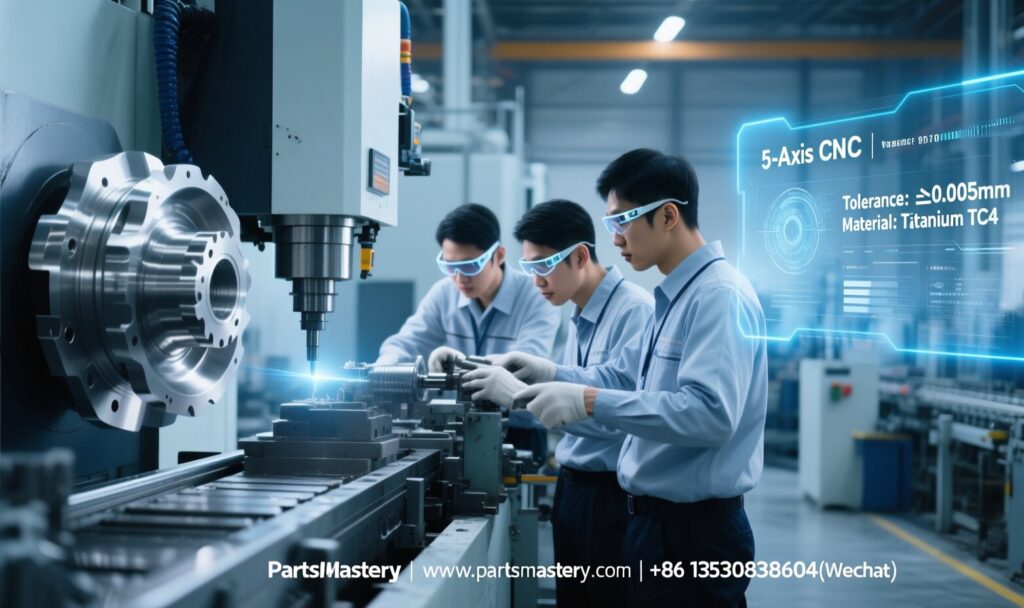
जब गति सटीकता से मिलती है, तो वैक्यूम कास्टिंग साँचा अकेले खड़ा है। उत्पाद डेवलपर्स और इंजीनियरों के लिए जिन्हें स्टील टूल की लागत और लीड टाइम के बिना कार्यात्मक प्रोटोटाइप या कम-मात्रा वाले उत्पादन पुर्जों—50 यूनिट तक—की आवश्यकता है, के लिए, वैक्यूम कास्टिंग साँचा एक बेजोड़ समाधान प्रदान करता है। पर पार्ट्समास्टरी, हमने उच्च-गुणवत्ता का उपयोग करके अनगिनत ग्राहकों को 3D-प्रिंटेड प्रोटोटाइप और बड़े पैमाने पर उत्पादन के बीच की खाई पाटने में मदद की है वैक्यूम कास्टिंग साँचा तकनीकें.
यह व्यापक मार्गदर्शिका समझाती है कि एक वैक्यूम कास्टिंग साँचा क्या है, यह कैसे काम करता है, आप किन सामग्रियों का उपयोग कर सकते हैं, और इंजेक्शन मोल्डिंग या सीएनसी मशीनिंग के बजाय इस प्रक्रिया को कब चुनना है।.
1. वैक्यूम कास्टिंग मोल्ड क्या है?
A वैक्यूम कास्टिंग साँचा यह एक सिलिकॉन रबर का उपकरण है जिसका उपयोग वैक्यूम परिस्थितियों में पॉलीयूरेथेन (PU) भागों के निर्माण के लिए किया जाता है। पारंपरिक स्टील या एल्यूमीनियम सांचों के विपरीत, एक वैक्यूम कास्टिंग साँचा लचीला, नरम, और तेजी से निर्मित होता है। प्रक्रिया एक मास्टर पैटर्न से शुरू होती है—आमतौर पर SLA, SLS, या CNC मशीनिंग के माध्यम से उत्पादित। इस मास्टर को एक कास्टिंग बॉक्स में लटकाया जाता है, और उसके चारों ओर तरल सिलिकॉन रबर डाला जाता है। एक बार क्योर हो जाने पर, सिलिकॉन को काटकर खोला जाता है, मास्टर हटा दिया जाता है, और एक गुहा बच जाती है। यह गुहा है वैक्यूम कास्टिंग साँचा.
नाम के “वैक्यूम” भाग का संदर्भ स्वयं कास्टिंग प्रक्रिया को दर्शाता है। के बाद वैक्यूम कास्टिंग साँचा जब इसे बंद कर दिया जाता है, तरल पॉलीयूरीथेन रेज़िन डाला जाता है, और पूरी असेंबली को वैक्यूम चैंबर में रखा जाता है। वैक्यूम रेज़िन से गैस निकालता है, जिससे फँसे हुए वायु के बुलबुले हट जाते हैं जो अन्यथा रिक्त स्थान या सतही दोष पैदा कर सकते थे। परिणाम एक घना, रिक्त-रहित भाग होता है जो मास्टर की प्रतिकृति माइक्रोन-स्तर की सटीकता के साथ तैयार करता है।.
2. वैक्यूम कास्टिंग मोल्ड प्रक्रिया चरण-दर-चरण
समझना वैक्यूम कास्टिंग साँचा वर्कफ़्लो आपको अपने प्रोजेक्ट की समय-सीमा और बजट की योजना बनाने में मदद करता है।.
चरण 1: मास्टर पैटर्न निर्माण
एक उच्च-गुणवत्ता वैक्यूम कास्टिंग साँचा यह एक उत्तम मास्टर से शुरू होता है। हम आमतौर पर SLA (स्टेरिओलिथोग्राफी) या लेजर सिंटरिंग का उपयोग करके 0.8 माइक्रोन जितनी महीन सतह फिनिश वाला मास्टर बनाते हैं। सिलिकॉन संकुचन को ध्यान में रखते हुए मास्टर को थोड़ा बड़ा (आमतौर पर 0.1–0.2%) रखना होता है।.
चरण 2: सिलिकॉन साँचे का निर्माण
मास्टर को एक कंटेनमेंट फ्रेम में निलंबित किया जाता है। तरल सिलिकॉन रबर (RTV – रूम टेम्परेचर वल्कनाइजिंग) को बुलबुले निकालने के लिए वैक्यूम में डाला जाता है। कमरे के तापमान पर या 40–60°C पर 12–24 घंटे तक क्योर होने के बाद, वैक्यूम कास्टिंग साँचा पूर्वनिर्धारित विभाजन रेखा के साथ सावधानीपूर्वक काटा जाता है। मास्टर हटा दिया जाता है, जिससे एक लचीली, नकारात्मक गुहा बच जाती है।.
चरण 3: पॉलीयुरेथेन कास्टिंग
द वैक्यूम कास्टिंग साँचा इसे बंद, क्लैंप किया जाता है और वैक्यूम चैंबर में रखा जाता है। तरल पॉलीयुरेथेन रेजिन को हार्डनर के साथ मिलाया जाता है और स्प्रू के माध्यम से साँचे में डाला जाता है। वैक्यूम (आमतौर पर -0.1 MPa या 991 TP3T वैक्यूम) रेजिन को प्रत्येक विवरण में खींचता है। वैक्यूम कास्टिंग साँचा साथ ही साथ फँसी हुई सारी हवा निकालते हुए।.
चरण 4: क्योरिंग और डीमोल्डिंग
भरा हुआ वैक्यूम कास्टिंग साँचा रेज़िन रसायनशास्त्र के आधार पर, 30-120 मिनट के लिए ओवन (आमतौर पर 40-80°C) में रखा जाता है। क्योर होने के बाद, लचीला सिलिकॉन वैक्यूम कास्टिंग साँचा यह तैयार पॉलीयुरेथेन भाग से आसानी से अलग हो जाता है। कठोर स्टील सांचों के विपरीत, सिलिकॉन इजेक्टर पिन के बिना ही आसानी से अलग हो जाता है।.
चरण 5: पोस्ट-प्रोसेसिंग
ढलाई का हिस्सा से हटाया जाता है। वैक्यूम कास्टिंग साँचा, स्प्रे और वेंट्स को छाँटा जाता है, और कोई भी द्वितीयक संचालन (पेंटिंग, असेंबली, टेक्सचरिंग) किया जाता है।.
3. वैक्यूम कास्टिंग मोल्ड का जीवनकाल
हमारे यहाँ आने वाले सबसे आम सवालों में से एक पार्ट्समास्टरी है: “मैं एक वैक्यूम कास्टिंग मोल्ड से कितने हिस्से बना सकता हूँ?”
उत्तर ज्यामिति और रेज़िन पर निर्भर करता है। एक विशिष्ट वैक्यूम कास्टिंग साँचा उच्च-तापमान वाले सिलिकॉन (जैसे Momentive RTV 664 या Smooth-On Mold Max 60) से बने:
-
सरल ज्यामिति (कोई अंडरकट नहीं): 20-25 प्रति प्रति वैक्यूम कास्टिंग साँचा
-
जटिल ज्यामिति (अंडरकट्स के साथ): 15-20 प्रति प्रति वैक्यूम कास्टिंग साँचा
-
उच्च-तापमान वाले रेज़िन (80°C से अधिक पर क्योरिंग): 10-15 प्रति भाग वैक्यूम कास्टिंग साँचा
जब वैक्यूम कास्टिंग साँचा जब यह घिसने लगता है—आमतौर पर सूजना, पतले हिस्सों में फटना, या सतही विवरण खोना—तो इसे बदलना आवश्यक है। हालांकि, क्योंकि सिलिकॉन साँचे सस्ते और जल्दी (1-2 दिन) बनाए जा सकते हैं, एक को बदलना वैक्यूम कास्टिंग साँचा यह शायद ही कभी एक समस्या होती है।.
4. वैक्यूम कास्टिंग मोल्ड्स के साथ संगत सामग्री
द वैक्यूम कास्टिंग साँचा process works with a wide range of polyurethane systems that mimic engineering thermoplastics. Here are the most common options:
ABS-like (rigid, impact-resistant):
Ideal for enclosures, housings, and structural prototypes. An ABS-like resin in a वैक्यूम कास्टिंग साँचा produces parts with 80-90% of the strength of injection-molded ABS.
Polypropylene-like (semi-flexible, chemical-resistant):
For living hinges, bottle caps, and fluid-handling components. Parts from a वैक्यूम कास्टिंग साँचा using PP-like resin can withstand repeated bending.
Rubber-like (Shore A 30-80):
For gaskets, seals, overmolding, and soft-touch grips. A वैक्यूम कास्टिंग साँचा can produce elastomeric parts with tear strength comparable to silicone or TPU.
Transparent (water-clear):
For lenses, light guides, and medical visualization models. A वैक्यूम कास्टिंग साँचा with transparent resin requires careful vacuum control to avoid micro-bubbles.
Heat-resistant (HDT up to 150°C):
For under-hood automotive components or electronics that experience elevated temperatures. Not all वैक्यूम कास्टिंग साँचा silicones tolerate these high curing temperatures.
5. Advantages of Vacuum Casting Mold Over Other Processes
Why choose a वैक्यूम कास्टिंग साँचा instead of 3D printing or CNC machining? Here are the key benefits:
सतह की फिनिश:
A वैक्यूम कास्टिंग साँचा directly replicates the master pattern’s surface. If your master is polished to a mirror finish (SPI A-1), every part from the वैक्यूम कास्टिंग साँचा will also have a mirror finish. This is difficult and expensive to achieve with direct 3D printing.
Material Properties:
Parts from a वैक्यूम कास्टिंग साँचा are isotropic—meaning they have uniform strength in all directions. 3D-printed parts often have weak interlayer adhesion. A वैक्यूम कास्टिंग साँचा produces solid, void-free polyurethane that behaves like injection-molded plastic.
Cost for Low Volumes:
For 10-50 parts, a वैक्यूम कास्टिंग साँचा is significantly cheaper than a steel or aluminum injection mold. Tooling costs for a वैक्यूम कास्टिंग साँचा typically range from $200 to $800, compared to $3,000-$10,000 for a simple aluminum mold.
Complexity and Undercuts:
Because the वैक्यूम कास्टिंग साँचा is flexible, it can release parts with deep undercuts, internal threads, and negative draft angles—features that would require complex side-actions or unscrewing mechanisms in a rigid steel mold.
6. Limitations of Vacuum Casting Mold Technology
A वैक्यूम कास्टिंग साँचा is not a solution for every project. Be aware of these limitations:
-
Low volume only: You cannot mass-produce with a वैक्यूम कास्टिंग साँचा. After 20-25 parts, the silicone degrades.
-
Shrinkage control: Polyurethane resins shrink 0.5-1.0%. A वैक्यूम कास्टिंग साँचा requires compensation in the master pattern.
-
Chemical sensitivity: Some resins attack silicone. Always test compatibility before committing to a वैक्यूम कास्टिंग साँचा.
-
Pot life constraints: Mixed polyurethane has a working time of 5-20 minutes. The वैक्यूम कास्टिंग साँचा must be filled and evacuated quickly.
7. Applications Best Suited for Vacuum Casting Molds
आप पाएँगे वैक्यूम कास्टिंग साँचा technology across many industries:
Product Design and Development:
Before investing $20,000+ in an injection mold, designers use a वैक्यूम कास्टिंग साँचा to produce 10-20 functional prototypes for user testing, regulatory submission, or investor demonstrations.
चिकित्सा उपकरण:
Low-volume surgical instruments, custom orthotics, and diagnostic device housings often use a वैक्यूम कास्टिंग साँचा for the first 50-100 units before commercial launch.
ऑटोमोटिव:
Interior trim prototypes, lighting lenses, and dashboard test fits. A वैक्यूम कास्टिंग साँचा produces parts that look and feel like production components.
उपभोक्ता इलेक्ट्रॉनिक्स:
Wearable device housings, remote controls, and headphone components. A वैक्यूम कास्टिंग साँचा allows rapid iteration of ergonomics and button feel.
8. Design Guidelines for Vacuum Casting Molds
To maximize success with your वैक्यूम कास्टिंग साँचा, follow these design rules:
-
Minimum wall thickness: 0.8mm. Thinner walls risk incomplete filling of the वैक्यूम कास्टिंग साँचा.
-
Maximum wall thickness: 15mm. Thicker sections require exothermic management to prevent overheating during cure.
-
Draft angle: 0-1 degree is acceptable because the flexible वैक्यूम कास्टिंग साँचा releases easily. Zero draft is possible for simple shapes.
-
Ribs and bosses: Keep rib thickness at 60% of nominal wall to prevent sink marks in the वैक्यूम कास्टिंग साँचा part.
9. Troubleshooting Common Vacuum Casting Mold Defects
| दोष | कारण | समाधान |
|---|---|---|
| Bubbles in part | Incomplete vacuum; resin too viscous | Check vacuum pump (-0.1 MPa); pre-heat resin before pouring into वैक्यूम कास्टिंग साँचा |
| Incomplete fill | वैक्यूम कास्टिंग साँचा too cold; insufficient venting | Pre-heat वैक्यूम कास्टिंग साँचा to 40°C; add vents at farthest flow points |
| Sticking part | Silicone degradation; undercuts too deep | Apply release agent; redesign वैक्यूम कास्टिंग साँचा parting line |
| Surface texture mismatch | Master pattern contamination | Clean master thoroughly before वैक्यूम कास्टिंग साँचा fabrication |
10. The PartsMastery Approach to Vacuum Casting Mold Services
पर पार्ट्समास्टरी, हम हर एक का इलाज करते हैं वैक्यूम कास्टिंग साँचा as a precision instrument. Our process is designed for reliability and repeatability:
-
Master inspection: We verify your master pattern dimensions and surface finish before वैक्यूम कास्टिंग साँचा fabrication.
-
Silicone selection: We match the वैक्यूम कास्टिंग साँचा material to your resin chemistry and curing temperature.
-
Vacuum optimization: Our vacuum chambers achieve 0.1 mbar absolute pressure, ensuring bubble-free वैक्यूम कास्टिंग साँचा results.
-
Quality control: Every part from your वैक्यूम कास्टिंग साँचा is measured against the original CAD model. We provide dimensional reports.
निष्कर्ष
द वैक्यूम कास्टिंग साँचा is a remarkable technology that democratizes low-volume plastic part production. For 10 to 50 functional prototypes or pilot-run components, no other process matches the combination of speed, surface finish, material properties, and cost-effectiveness. While a वैक्यूम कास्टिंग साँचा cannot replace steel tooling for mass production, it is the ideal bridge between concept and commercialization.
Whether you need ABS-like enclosures, rubber-like gaskets, or transparent lenses, a वैक्यूम कास्टिंग साँचा delivers parts that look, feel, and perform like injection-molded production components—without the six-figure tooling investment.
Ready to bring your design to life with a वैक्यूम कास्टिंग साँचा? संपर्क करें पार्ट्समास्टरी आज पर +86 13530838604 (वीचैट) . Send us your CAD file or master pattern, and we will provide a quote for your वैक्यूम कास्टिंग साँचा project within 24 hours. Your next prototype is closer than you think.