








Sheet metal bending is an indispensable core metal forming process in the production of various industrial products, including automobile bodies, home appliance shells, electronic equipment housings, and architectural profiles. It reshapes metal sheets through external force, enabling the creation of complex structures without welding or splicing, making it a processing solution that balances efficiency and cost.
Different sheet metal bending processes vary significantly in forming principle, precision performance, applicable scenarios, and processing costs. Choosing the wrong process may not only result in substandard dimensional accuracy and material cracking and scrapping, but also drive up production costs and extend delivery cycles.
This article systematically sorts out the core features, advantages, disadvantages, and applicable fields of 8 mainstream sheet metal bending processes, along with process selection logic and answers to frequently asked production questions, providing practical references for sheet metal design and processing practitioners.
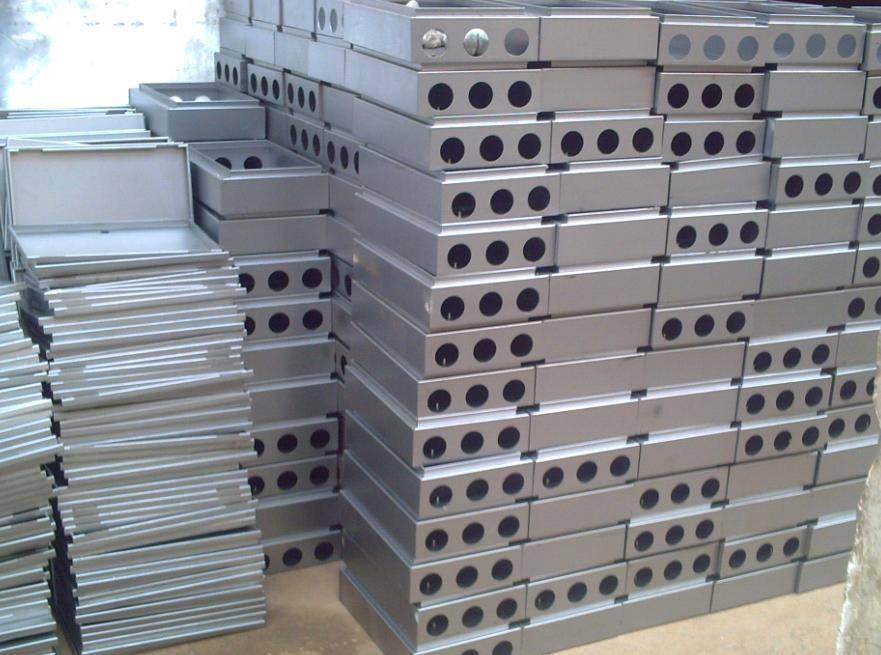
1. Basic Knowledge of Sheet Metal Bending
1.1 Process Definition
Sheet metal bending falls into the category of metal plastic processing. It refers to a processing technology that applies directional mechanical force to metal sheets through special equipment and dies, causing the material to exceed its yield strength and undergo irreversible plastic deformation, ultimately obtaining the preset angle, curvature, and structural shape.
Bent sheets can not only achieve specific structural functions, but also improve their own structural stiffness and strength through bending, which is an important approach to realize lightweight design.
1.2 Core Processing Equipment
The forming effect of sheet metal bending is highly dependent on equipment and dies. The mainstream processing equipment in the industry is mainly divided into three categories:
- CNC Press Brake: The universal main equipment in the industry, which completes bending through the pressure of upper and lower matching dies. Equipped with a CNC system, it can achieve precise angle control and automated processing, adapting to most conventional bending scenarios.
- Roll Bending Equipment: With multiple sets of adjustable rollers as the core executive components, it is specially used for the forming of curved sheet metal components such as arcs, cylinders, and cones.
- Special Forming Dies and Punches: Customized dies for non-standard shapes such as U-shaped structures and special flanges, which can ensure the forming accuracy and batch consistency of special structures.
2. In-depth Analysis of 8 Mainstream Sheet Metal Bending Processes
2.1 V-die Bending
V-die bending is the most widely used basic bending process in the current sheet metal processing industry, which can be operated with a standard V-shaped lower die and corresponding punch.
During processing, the sheet to be processed is placed flat above the opening of the V-shaped die, and the upper die punch applies pressure vertically downward, forcing the sheet to embed into the V-shaped groove and form the corresponding bending angle following the die angle.
मुख्य लाभ: Extremely strong versatility, covering most conventional angle bending requirements; simple die replacement process and low equipment debugging cost, suitable for multi-variety and small-batch production.
Applicable Fields: Processing of mass-produced conventional sheet metal products such as automotive structural parts, home appliance metal shells, and general hardware accessories.
2.2 Air Bending
Air bending, also known as free bending, is a bending process with extremely high processing flexibility. During processing, the bottom of the sheet will not fully fit the bottom of the die groove, and a certain gap is always retained.
During operation, the sheet is placed on the two supporting surfaces of the lower die, and the punch presses down to drive the sheet to bend. The final bending angle is adjusted by controlling the downward depth of the punch, and multiple angles can be processed without replacing the die.
मुख्य लाभ: One set of dies can adapt to multiple bending angles, greatly reducing the frequency of die replacement; lower wear on equipment and dies, and relatively controllable material springback.
Applicable Fields: Processing of small and medium-batch precision parts that require flexible adjustment of bending angles, such as electronic equipment housings and precision instrument accessories.
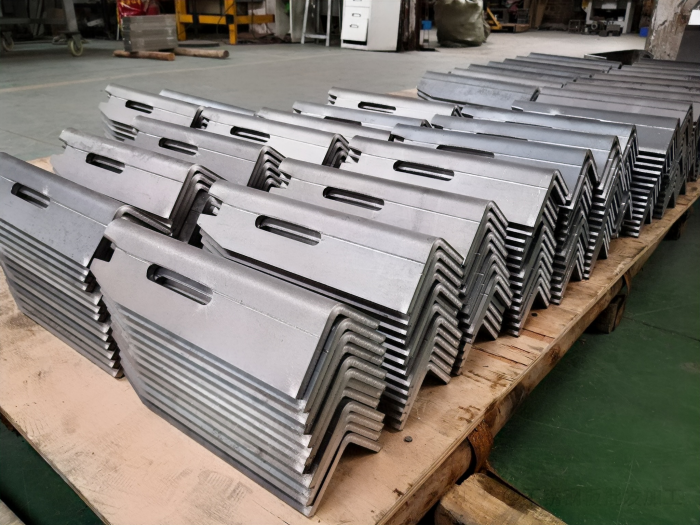
2.3 Bottoming Bending
Bottoming bending is a high-precision bending process that ensures forming accuracy by fully fitting the sheet with the die, and is a commonly used processing method for high-end precision sheet metal parts.
During processing, the punch has a larger downward stroke, pressing the sheet completely to the bottom of the V-shaped die groove, so that the inner and outer sides of the sheet fully fit the inner wall of the die, fully replicating the angle shape of the die.
मुख्य लाभ: Extremely high bending angle accuracy and good consistency of products in the same batch; can greatly offset the springback effect of metal materials and reduce subsequent angle correction processes.
Applicable Fields: Scenarios with strict requirements on dimensional accuracy, such as aerospace components, high-end precision mechanical parts, and medical equipment accessories.
2.4 Wipe Bending
Wipe bending is a bending process specially designed for sheet edge forming, also often called flanging process, focusing on efficient bending of sheet edge parts.
During operation, the main part of the sheet is first firmly fixed on the die by a pressing device, only the edge area to be processed is exposed, and then a special punch applies bending force to the end of the sheet along the die edge to complete the edge flanging or hemming shape.
मुख्य लाभ: Specially adapted to edge bending scenarios, simple and direct process flow, high processing efficiency, and can achieve regular and unified edge shapes.
Applicable Fields: Sheet metal workpieces requiring edge forming, such as metal cabinet hemming, decorative metal strips, and equipment shell flanging.
2.5 Roll Bending
Roll bending is the core forming process for curved sheet metal parts. It relies on the continuous pressure of rollers to complete large-radian and large-radius curved surface processing, and is the preferred process for cylindrical and arc-shaped parts.
During processing, the sheet is fed into the gap of multiple sets of rollers (usually three or more), and by adjusting the relative position and applied pressure of the rollers, the sheet is gradually bent during continuous feeding, finally forming an arc, cylinder or conical curved surface.
मुख्य लाभ: Can process large-radius bending components, can realize the forming of continuous complex curved surfaces, the processing length is less limited by equipment, and adapts to large curved sheets.
Applicable Fields: Processing of metal pipes, cylindrical tanks, curved decorative components, large equipment curved covers and other products.
2.6 U-die Bending
The forming logic of U-die bending is the same as that of V-die bending. The core difference is that it uses a U-shaped special die, and the standard U-shaped structure can be formed in one stamping.
Matching the U-shaped lower die and the corresponding punch, after the sheet is placed above the die, the punch presses down to drive the sheet to embed into the U-shaped groove, forming a symmetrical U-shaped bending structure at one time without secondary processing.
मुख्य लाभ: High forming efficiency of U-shaped structure, which can be completed in a single process; good dimensional stability of standardized processing and excellent consistency in mass production.
Applicable Fields: Standard U-shaped sheet metal components such as U-shaped fixing brackets, pipeline clamps, equipment card slots, and guide rail bases.
2.7 Rotary Bending
Rotary bending is a bending process with excellent protection on the sheet surface, especially suitable for workpieces with high surface quality requirements and large-angle bending.
During processing, one end of the sheet is clamped on a rotatable die mechanism, and the sheet is bent through the rotational movement of the die, and the final bending angle is controlled by the rotation angle. During the whole process, the die and the sheet are in rolling contact instead of sliding friction.
मुख्य लाभ: Almost no scratches on the sheet surface, which can protect the appearance of pre-treated sheets such as film-coated and sprayed ones; can realize large-angle or even acute-angle bending, adapting to appearance parts with complex shapes.
Applicable Fields: Bending processing of decorative panels with high appearance requirements, stainless steel decorative parts, and film-coated/sprayed sheet surfaces.
2.8 Roll Forming
Roll forming is a continuous and automated bending process for long profiles, suitable for the production of large-batch standardized long-size components.
During processing, the metal strip or sheet passes through multiple sets of forming rollers arranged in sequence. Each set of rollers performs slight bending and shaping on the sheet. After the accumulation of deformation in multiple processes, a continuous fixed cross-sectional shape is finally formed.
मुख्य लाभ: Can realize fully continuous automated production of long profiles with extremely high production efficiency; good product consistency in batch processing, and the unit production cost decreases with the increase of mass production scale.
Applicable Fields: Large-scale mass production of long-size standardized profiles such as architectural metal profiles, metal guide rails, light steel keels, and door and window frame strips.
3. Advantages and Limitations of Sheet Metal Bending Process
As the core process of metal forming, sheet metal bending is widely used in the industrial field due to its outstanding process advantages, but it also has certain application limitations.
3.1 Core Advantages
- Controllable Forming Accuracy: With high-precision CNC bending equipment and precision dies, extremely high bending angle and dimensional accuracy can be achieved, fully meeting the tolerance requirements of precision manufacturing.
- Low Tool Investment Cost: Most conventional bending can use industry standard universal dies without separate custom mold opening, which greatly reduces the tool investment cost for small and medium-batch production.
- Outstanding Processing Efficiency: The single-process forming process is simple, and with automated CNC equipment, rapid processing can be realized. The changeover and debugging are convenient, especially suitable for multi-variety small and medium-batch orders.
- Supporting Lightweight Design: The overall stiffness and strength of the component can be improved only by sheet bending without additional reinforcing materials, which effectively reduces the weight of the part and conforms to the trend of lightweight design.
- Reduced Post-processing Procedures: Most of the bent components can be directly assembled without additional machining, grinding and other processes, effectively shortening the overall production cycle.
- Reduced Component Complexity: Complex structures can be created by bending a single sheet, reducing welding, riveting and other connection processes, and reducing the assembly complexity and potential failure points of components.
3.2 Application Limitations
- Obviously Restricted by Sheet Thickness: The thicker the sheet, the higher the equipment tonnage required for bending, and the minimum achievable bending radius increases accordingly. It is difficult to achieve small-angle complex bending for thick plates.
- High Requirements for Sheet Homogeneity: Sheets with uneven thickness and large fluctuations in material properties are prone to angle deviation, cracking at the bend and other problems after bending. Equal thickness design is recommended for complex components.
- High Production Cost for Ultra-large Batches: The single-piece processing cost of CNC bending is stable, but for ultra-large-scale mass production, the unit processing cost is higher than that of stamping forming process, which is more suitable for small and medium-batch and customized orders.
- Material Springback Problem: Metal materials will have certain elastic springback after bending and unloading. Some processes have large springback, which requires additional parameter compensation or secondary correction processes.
- Prone to Quality Defects in Hard and Brittle Materials: Metal materials with high hardness and poor plasticity are prone to quality problems such as surface scratches and cracking at the bend during the bending process, so more careful process selection is required.
4. Key Dimensions for Sheet Metal Bending Process Selection
To select the most suitable bending process, it is necessary to comprehensively judge based on material properties, product design requirements, precision standards and production scale. The core reference dimensions are as follows:
4.1 Sheet Thickness and Material Properties
- Thin Sheet Processing (usually below 3mm): Air bending and bottoming bending are preferred, which require small equipment tonnage, strong die adaptability, and easy control of processing accuracy.
- Thick Sheet Processing (above 6mm): Processes such as roll bending and U-die bending are more suitable, which can withstand greater forming pressure and meet the forming needs of thick plate large structural parts.
- Materials with Poor Plasticity and High Hardness: Processes with uniform forming stress and good surface protection, such as rotary bending, are preferred to reduce the risk of cracking and surface scratches.
4.2 Bending Angle and Shape Complexity
- Small-angle Conventional Bending: Both air bending and bottoming bending can be competent, with high angle control accuracy and convenient and flexible equipment debugging.
- Large-angle, Large-radius Curved Bending: Roll bending and rotary bending are preferred, which can realize large-angle bending and continuous curved surface forming.
- Standard U-shaped and V-shaped Fixed Structures: Directly select the bending process with corresponding special dies, which has the highest forming efficiency and the best batch consistency.
- Continuous Cross-section Forming of Long Profiles: Roll forming is the optimal solution, which can realize large-batch fully continuous automated production with the lowest unit cost.
4.3 Forming Accuracy Requirements
- High Precision Grade (angle tolerance within ±0.5°): Bottoming bending is preferred. The sheet fully fits the die, with minimal springback and the best forming accuracy and batch consistency.
- Conventional Industrial Precision Requirements: Both air bending and U-die bending can be met, taking into account processing accuracy and production flexibility, and adapting to most general industrial parts.
4.4 Springback Control Requirements
- Need to Strictly Control Springback and Reduce Subsequent Correction: Bottoming bending is the first choice, the material stress is fully released during the forming process, and the springback amplitude is minimal; U-die bending with high die fit can also be selected.
- Springback Acceptable Through Parameter Compensation: Both air bending and wipe bending are applicable, suitable for scenarios that do not require extreme precision and pursue processing efficiency and flexibility.
5. FAQs in Sheet Metal Bending Production
5.1 How to effectively avoid material cracking at the bend?
First of all, match a reasonable bending inner radius. Usually, it is recommended that the inner R of ordinary mild steel is not less than 1 times the sheet thickness, and for materials with slightly poorer plasticity such as stainless steel and aluminum alloy, it should be further enlarged to more than 1.5-2 times the thickness, so as to avoid excessive stress concentration at the bend.
Secondly, reasonably plan the bending position in the design stage, avoid the burr surface of the sheet and the stamping stress concentration area, and ensure that sufficient process allowance is left for the bending edge. For materials with high hardness and low plasticity, annealing treatment can be carried out in advance to improve plasticity before bending processing.
5.2 How to control the processing cost of the bending process?
First, optimize the sheet layout and blanking scheme, improve material utilization, reduce scrap waste, and reduce main material costs.
Second, select the appropriate process according to the actual precision requirements of the product, to avoid the performance and cost waste caused by processing ordinary parts with high-precision processes.
Third, optimize the bending process sequence of products in the same batch, reduce workpiece flipping and die replacement frequency, and improve the output per unit time of a single equipment.
Fourth, batch orders are produced with automated CNC equipment to reduce labor costs and operation error rates, and improve overall production efficiency.
5.3 How to improve the production efficiency of the bending process?
First of all, reasonably plan the processing order of products in the same batch, and focus on processing workpieces using the same set of dies and the same bending angle, reducing the auxiliary time for die replacement and equipment debugging.
Secondly, adopt CNC bending equipment with automatic positioning and automatic feeding functions to reduce the time-consuming manual clamping and positioning and reduce the error of manual operation.
In addition, optimize the bending process path in advance, avoid repeated bending and invalid processes, simplify the processing flow of a single workpiece, and shorten the single-piece processing time.
निष्कर्ष
Sheet metal bending is an indispensable forming process in the modern metal manufacturing system. Its flexible forming ability, controllable accuracy and cost advantages support the product research and development and production of automobiles, electronics, aerospace, construction and other fields.
Different bending processes have their own applicable scenarios and technical characteristics. There is no absolutely optimal process in production, only the most suitable solution for project requirements. Sheet metal practitioners need to comprehensively consider multiple dimensions such as material properties, product design requirements, precision standards, and production batches to select the most suitable bending process, so as to achieve the best balance between production efficiency and cost control while ensuring product quality