








As one of the most widely used 6xxx series heat-treatable aluminum alloys, 6061 stands out for its well-balanced combination of mechanical strength, corrosion resistance, machinability, and weldability. Over decades of industrial application, it has become a staple material across aerospace, automotive, industrial equipment, electronics, and other high-reliability engineering sectors.
To help engineers make informed material selection decisions, this guide breaks down its chemical composition, core properties, temper specifications, machining characteristics, and typical use cases in detail.
1. What Is Aluminum 6061?
Put simply, aluminum 6061 is a precipitation-hardening alloy primarily alloyed with magnesium and silicon. Unlike non-heat-treatable aluminum grades, it can be strengthened through controlled heat treatment and tempering processes, accordingly lending itself well to structural, machined, and assembled components.
While it does not deliver the ultimate tensile strength of high-performance alloys like 7075, its versatility across manufacturing processes and reliable performance in real-world applications nevertheless make it the default choice for most general engineering projects. Instead, it strikes a practical middle ground between performance and manufacturability, avoiding the steep tradeoffs that come with more specialized alloy grades.
2. Chemical Composition
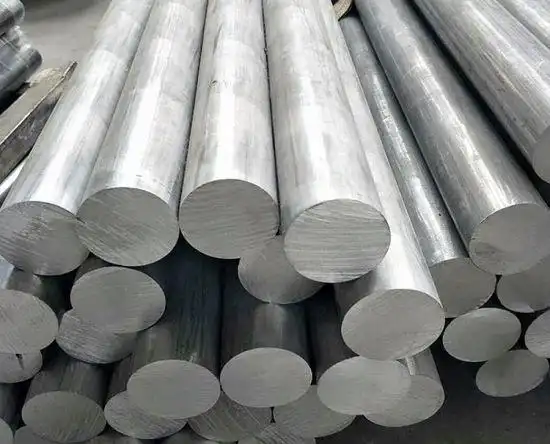
The balanced performance of 6061 stems directly from its carefully calibrated alloy formulation. Specifically, magnesium and silicon serve as the primary strengthening elements, forming magnesium silicide precipitates during heat treatment to boost mechanical strength.
In addition, trace amounts of copper, chromium, iron, and other elements are added to fine-tune corrosion resistance, machinability, and thermal stability. Overall, this composition is intentionally engineered for all-around utility rather than peak performance in a single metric. As a result, it delivers better structural performance than pure aluminum and simpler alloy grades, while retaining good corrosion resistance and processability that higher-strength alloys often sacrifice.
3. Key Performance Characteristics
6061’s enduring popularity in manufacturing comes from its balanced property profile, which addresses multiple engineering requirements simultaneously. Below we break down its core defining characteristics in detail:
3.1 High Strength-to-Weight Ratio
First and foremost, with roughly one-third the density of steel, 6061 delivers meaningful structural strength without excess weight. In its T6 temper, for example, it offers sufficient yield strength for medium-load structural components. Consequently, this balance makes it a go-to choice for transportation, aerospace, and robotic applications where weight reduction directly improves system efficiency.
3.2 Good Corrosion Resistance
Moving to corrosion performance, 6061 forms a natural protective oxide layer when exposed to air, providing reliable corrosion resistance in most indoor and outdoor environments. Notably, it performs well in general atmospheric conditions and mild moisture exposure. While surface treatments like anodizing can further enhance corrosion protection, the base material already outperforms many higher-strength aluminum alloys in most corrosive environments by comparison.
3.3 Excellent Machinability
From a machining perspective, 6061 is one of the most forgiving and efficient aluminum alloys available for CNC milling, turning, and drilling operations. It produces consistent chip formation, causes minimal tool wear, and achieves high-quality surface finishes even with standard cutting parameters. For this reason, it works equally well for both rapid prototyping and high-volume production runs.
3.4 Reliable Weldability
In terms of joining capabilities, unlike many high-strength aluminum alloys that are difficult to weld, 6061 can be joined using common welding methods with good results. This property makes it highly suitable for fabricated frames, brackets, and assembled structures. That said, it is important to note that welding does reduce local strength in the heat-affected zone, especially in T6 temper material, so design expectations should account for this effect.
3.5 Broad Versatility
Finally, 6061 is compatible with nearly all common manufacturing processes, including CNC machining, welding, sawing, and moderate forming. Additionally, it is available in a wide range of standard stock forms, including bars, plates, sheets, and extrusions. As a whole, this cross-process compatibility simplifies supply chains and reduces material switching costs for projects with mixed manufacturing requirements.
4. Understanding 6061-T6 Temper
To clarify temper specifications, the designation 6061-T6 refers to both the base alloy and its specific heat treatment condition. More specifically, the T6 temper denotes that the material has undergone solution heat treatment followed by artificial aging, a process that maximizes its tensile strength and hardness.
For CNC machining applications in particular, T6 is the most widely supplied temper for 6061, as it delivers excellent dimensional stability and consistent mechanical properties. For this reason, engineers should always specify the required temper on drawings — 6061 in a softer temper will behave differently during machining and in end use, and should not be treated as equivalent to 6061-T6.
5. 6061 vs. Common Aluminum Alloys
To put 6061’s capabilities in broader context, the table below compares it to four other widely used aluminum grades across key performance and manufacturing metrics:
| Comparison Category | एल्यूमिनियम 6061 | एल्यूमिनियम 6063 | एल्यूमिनियम 7075 | एल्यूमिनियम 5052 |
|---|---|---|---|---|
| मिश्र धातु श्रृंखला | 6xxx heat-treatable | 6xxx heat-treatable | 7xxx heat-treatable | 5xxx non-heat-treatable |
| Core Strength | Balanced all-around engineering performance | Excellent surface finish and extrusion capability | Very high tensile strength | Good formability and corrosion resistance |
| Strength Level | मध्यम से अधिक | Lower than 6061 | Significantly higher than 6061 | Lower than 6061 for structural use |
| संक्षारण प्रतिरोध | अच्छा | अच्छा | Lower than 6061 in harsh environments | Excellent, suitable for marine applications |
| यंत्रीयता | Excellent for CNC operations | Fair, primarily used for extrusion | Fair, higher tool wear | Fair, less ideal for machined structural parts |
| वेल्ड करने की क्षमता | अच्छा | अच्छा | Poor, not recommended for welded assemblies | अच्छा |
| Best Manufacturing Fit | Machined parts, welded structures, general engineering | Architectural extrusions, appearance-focused parts | High-strength structural components | Sheet metal, bending and forming operations |
| Ideal Use Case | Projects requiring strength, machinability, weldability, and corrosion resistance | Applications where surface finish and extrusion take priority over strength | Applications where maximum strength is the top requirement | Projects focused on forming and bending over structural strength |
| Key Tradeoff | Not the highest strength or formability | Lower mechanical strength | Poor weldability and lower corrosion resistance | Limited structural capability for machined parts |
6. CNC Machining Performance of 6061
6.1 Why 6061 Dominates CNC Machining
There is a clear reason 6061 serves as the benchmark material for CNC aluminum machining. Its consistent cutting behavior, low tool wear rate, and ability to hold tight tolerances make it a favorite for both job shops and high-volume production facilities alike. In practice, it produces clean, burr-free edges and excellent surface finish, which reduces post-processing time and supports secondary operations like anodizing and painting.
For prototyping workflows, its predictable cutting behavior reduces iteration time significantly. For production runs, by contrast, its high material removal rates translate to faster cycle times and lower per-part costs. All in all, this combination of performance and process reliability is unmatched among general-purpose aluminum alloys.
6.2 Typical Machined 6061 Components
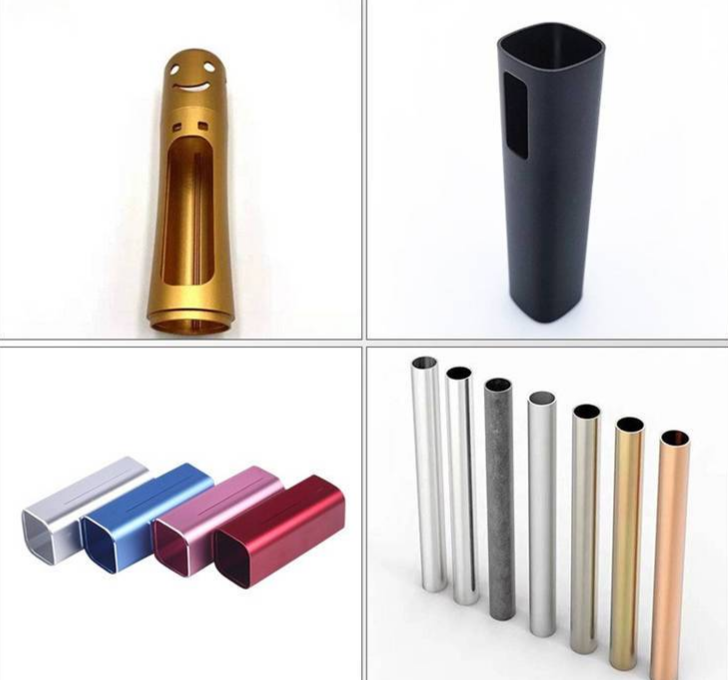
Across industries, 6061 is used to manufacture a wide range of precision parts, including mounting brackets, equipment enclosures, fixture plates, support blocks, adapter plates, and custom structural assemblies. For instance, it appears frequently in automation, robotics, industrial equipment, electronics enclosures, and transportation systems.
As a rule of thumb, 6061 is the default choice for any aluminum CNC project that does not require the extreme strength of 7075 or the sheet formability of 5052. Thanks to its all-around performance, it remains the most cost-effective option for most general machining applications.
6.3 Practical Machining Considerations
Even with its excellent machinability, proper process planning still plays a major role in final part quality. For example, features like ultra-thin walls, deep pockets, and large flat surfaces can introduce deflection or vibration if not programmed correctly. Beyond part geometry, tool selection, spindle speed, feed rate, coolant application, and workholding all play a role in achieving optimal dimensional accuracy and surface finish.
Temper selection also matters for machining outcomes. Specifically, 6061-T6 is the preferred choice for most precision machining applications due to its high dimensional stability and consistent cutting behavior. On the other hand, softer tempers may be more prone to burring and dimensional drift during machining.
7. Welding & Forming Capabilities
Beyond its machining performance, one of 6061’s biggest advantages over higher-strength alloys is its ability to be both machined and welded effectively. This versatility makes it ideal for hybrid projects that combine CNC machined components with welded structural assemblies.
That said, welding 6061-T6 will cause partial softening in the heat-affected zone, reducing local strength below the base T6 level. This softening does not render the part unusable, but it should always be accounted for in structural design. For heavily welded structures, for instance, a post-weld heat treatment can restore some strength, but adds cost and lead time.
Turning to forming capabilities, 6061 in T6 temper has limited ductility and is prone to cracking with tight bend radii. For projects centered primarily on sheet metal forming, 5052 is generally a more suitable choice. While softer tempers of 6061 can be formed with larger bend radii, they are far less common for structural applications.
8. Advantages & Limitations
8.1 Key Advantages
- Well-balanced mechanical, corrosion, and manufacturing properties
- High machining efficiency and low tool wear for cost-effective production
- Good weldability for mixed-process assemblies
- Reliable corrosion resistance for indoor and outdoor use
- Wide availability in standard stock sizes and forms
8.2 Notable Limitations
- Not suitable for applications requiring ultra-high tensile strength
- Weld heat-affected zones experience reduced strength in T6 temper
- Not ideal for heavy sheet metal bending and deep forming operations
- Not the best choice for highly cosmetic extrusion-based applications
9. When Should You Choose Aluminum 6061?
In most general engineering scenarios, 6061 is the right choice when your project requires a balanced combination of strength, light weight, corrosion resistance, machinability, and weldability. Specifically, it is particularly well-suited for parts that will be primarily CNC machined, with potential secondary welding or assembly steps.
Furthermore, it is also the most practical choice when a single material must support multiple manufacturing processes, or when supply chain availability and cost predictability are high priorities.
Conversely, 6061 is not the optimal choice if your application demands extreme tensile strength (choose 7075), heavy sheet metal forming (choose 5052), or high-end cosmetic extrusion finishes (choose 6063). Instead, the strongest use case for 6061 is not peak performance in one single area, but reliable, cost-effective performance across all critical engineering and manufacturing metrics.
10. अक्सर पूछे जाने वाले प्रश्न
Can aluminum 6061 be anodized?
Absolutely. 6061 responds very well to both Type II decorative and Type III hard anodizing. In fact, it produces a uniform, durable oxide layer that enhances corrosion resistance and wear performance, making it a popular choice for finished consumer and industrial parts.
Will aluminum 6061 rust?
Unlike steel, 6061 does not rust in the traditional sense, as it contains no iron. Instead, it forms a thin, self-healing aluminum oxide layer that protects against corrosion in most environments. For highly corrosive conditions such as saltwater exposure, however, additional surface treatment is recommended for extended service life.
Can aluminum 6061 be bent?
It can be bent, but its formability depends heavily on the temper. For example, T6 temper material has limited ductility and requires larger bend radii to avoid cracking. For applications requiring tight bends or extensive forming, therefore, a softer temper or a grade like 5052 is a better fit.
How is aluminum 6061 heat treated?
As a heat-treatable alloy, 6061 can be modified through controlled thermal processes. The standard T6 temper, for instance, involves solution heat treatment at elevated temperature, followed by quenching, and then a controlled artificial aging cycle to precipitate strengthening phases throughout the material.
अंतिम विचार
All things considered, aluminum 6061 remains one of the most practical and widely specified engineering aluminum alloys available. Although it does not lead the industry in any single performance category, its balanced property set and broad manufacturing compatibility make it the most cost-effective choice for the majority of general machining and fabrication projects.
As an experienced manufacturing partner, PartsMastery provides precision CNC machining services for 6061 and a full range of engineering materials. Our engineering team offers complimentary DFM feedback and material selection guidance to help you balance performance, quality, and cost effectively for your project.