




Fabrico de moldes OEM
Palavra-chave: Fabrico de moldes OEM
A vantagem estratégica do fabrico de moldes OEM nas cadeias de abastecimento globais
O fabrico de equipamento original (OEM) representa uma relação fundamental na produção industrial: uma empresa concebe um produto e outra empresa fabrica as ferramentas e os componentes que dão vida a esse design. Dentro desta estrutura, Fabrico de moldes OEM ocupa uma posição crítica única. Os moldes utilizados para produzir peças de plástico, metal ou compósitos não são apenas ferramentas - são a tradução direta da propriedade intelectual de uma marca para a realidade física. Um molde mal executado compromete a qualidade da peça, atrasa o lançamento da produção e prejudica a reputação do OEM junto dos clientes finais.
À medida que as cadeias de fornecimento globais se tornam mais complexas e os ciclos de vida dos produtos encurtam, o fabrico de moldes por OEM evoluiu de um serviço transacional para uma parceria estratégica. Os OEMs mais bem sucedidos já não vêem os fabricantes de moldes como meros vendedores; tratam-nos como aliados de engenharia colaborativa que contribuem com ideias de design, conhecimentos de materiais e eficiência de fabrico. Compreender o que distingue o fabrico profissional de moldes OEM é essencial para qualquer marca que dependa de componentes moldados para os seus produtos.
O que é o fabrico de moldes OEM?
O fabrico de moldes OEM refere-se à conceção, engenharia e produção de moldes especificamente para um fabricante de equipamento original. Ao contrário das ferramentas genéricas ou de catálogo, os moldes OEM são construídos de acordo com as especificações exactas do proprietário da marca, que normalmente mantém a propriedade do design do molde e, frequentemente, da própria ferramenta física. Esta propriedade permite ao OEM controlar a qualidade da produção, escolher os fabricantes contratados e manter a consistência a longo prazo em vários ciclos de produção ou em diferentes locais de fabrico.
As principais caraterísticas do fabrico de moldes OEM incluem:
-
Propriedade total do projeto - O OEM detém os modelos 3D, desenhos 2D e toda a propriedade intelectual relacionada com o molde.
-
Engenharia específica da peça - Todas as caraterísticas do molde são adaptadas à geometria da peça, à seleção do material e às normas de qualidade do OEM.
-
Confidencialidade e exclusividade - Os moldes OEM não são vendidos a terceiros. As ferramentas são dedicadas à produção do proprietário da marca.
-
Apoio ao ciclo de vida a longo prazo - Os fabricantes de moldes OEM fornecem normalmente manutenção, reparação e peças sobresselentes durante toda a vida operacional do molde.
Este modelo contrasta com o fabrico de moldes “padrão” ou de “catálogo”, em que um fornecedor constrói moldes genéricos que podem ser utilizados por qualquer cliente com designs de peças compatíveis. Para as marcas que valorizam a diferenciação, o controlo de qualidade e a segurança da cadeia de fornecimento, o fabrico de moldes OEM é o único caminho viável.
Porque é que os OEMs escolhem parceiros dedicados ao fabrico de moldes
Diferenciação de produtos e proteção da propriedade intelectual - Em mercados competitivos, o design do produto é um fator diferenciador fundamental. A geometria de encaixe, a pega ergonómica ou a estrutura de nervuras internas exclusivas de um OEM não podem ser copiadas se o molde permanecer proprietário. O fabrico profissional de moldes OEM garante que as ferramentas - e o conhecimento nelas incorporado - permanecem sob o controlo do proprietário da marca. Os acordos de não divulgação e as cláusulas de propriedade física do molde são padrão.
Qualidade consistente em todos os volumes de produção - Quando um OEM passa da prototipagem para a produção total, o molde tem de fornecer uma qualidade de peça idêntica em contagens de ciclos que vão de milhares a milhões. Os fabricantes de moldes OEM concebem ferramentas com materiais resistentes ao desgaste, refrigeração precisa e sistemas de ejeção robustos que mantêm as tolerâncias ao longo dos anos de funcionamento. Esta consistência reduz as taxas de refugo, as falhas no terreno e os pedidos de garantia.
Custo total de propriedade optimizado - Embora um molde OEM possa ter um custo inicial mais elevado do que uma alternativa genérica, o custo total de propriedade é normalmente mais baixo. Os moldes OEM bem concebidos funcionam mais rapidamente (reduzindo o tempo de máquina por peça), requerem menos manutenção e duram mais tempo. Para produtos de consumo de grande volume ou componentes automóveis, estas poupanças excedem rapidamente o investimento inicial em ferramentas.
Integração perfeita com a estratégia de fabrico - Os OEMs produzem frequentemente componentes em várias instalações ou através de fabricantes contratados. Um molde OEM é concebido com interfaces padronizadas (ranhuras de fixação, disposições de ejectores, ligações de canais quentes) que funcionam em diferentes máquinas de moldagem por injeção. Esta flexibilidade permite que o OEM altere a produção à medida que a procura muda ou que as cadeias de fornecimento evoluem.
O processo de fabrico de moldes OEM: Um fluxo de trabalho de engenharia colaborativa
O fabrico de moldes OEM segue um processo estruturado que dá prioridade à comunicação, documentação e validação em todas as fases. Ao contrário das ferramentas prontas a utilizar, cada passo é personalizado de acordo com os requisitos específicos do OEM.
Etapa 1: Revisão da conceção do produto e DFM - O fabricante de moldes recebe o projeto de peça do OEM, normalmente como um modelo sólido 3D (STEP, IGES ou formato CAD nativo). Uma análise do projeto para a capacidade de fabrico (DFM) identifica potenciais problemas: tiragem insuficiente, espessura de parede irregular, cantos afiados ou cortes inferiores que complicam a utilização de ferramentas. O relatório DFM inclui propostas de modificação e o OEM aprova ou ajusta estas alterações antes do início do projeto do molde.
Etapa 2: Simulação do fluxo do molde - Utilizando software como o Moldflow ou o Moldex3D, os engenheiros simulam o processo de moldagem por injeção. A análise prevê padrões de enchimento, localizações de purgadores de ar, posições de linhas de soldadura, comportamento de arrefecimento e empeno da peça. Com base nos resultados, são optimizadas as localizações das portas, os diâmetros dos canais e as disposições das linhas de arrefecimento. Este passo é particularmente importante para OEMs que utilizam resinas de engenharia (por exemplo, PC, ABS, PA66-GF30) ou que exigem tolerâncias dimensionais apertadas.
Etapa 3: Conceção pormenorizada do molde - O fabricante de moldes cria um modelo de montagem 3D completo do molde, incluindo a cavidade e os insertos do núcleo, a base do molde, os circuitos de arrefecimento, o sistema de ejeção (pinos, mangas, placa de remoção), os mecanismos de deslizamento ou de elevação para os cortes inferiores e o coletor de canais quentes, se especificado. O OEM revê o projeto, muitas vezes através de uma reunião de revisão do projeto ou de um portal online partilhado.
Etapa 4: Seleção e fornecimento de materiais - Com base no volume de produção do OEM e no tipo de resina, o fabricante do molde recomenda um tipo de aço. As escolhas comuns incluem P20 (uso geral, pré-endurecido), H13 (alto volume, resinas abrasivas), S136 (inoxidável, médico/ótico) e D2 (resistência extrema ao desgaste). As certificações de materiais (relatórios de testes de moagem) são fornecidas ao OEM.
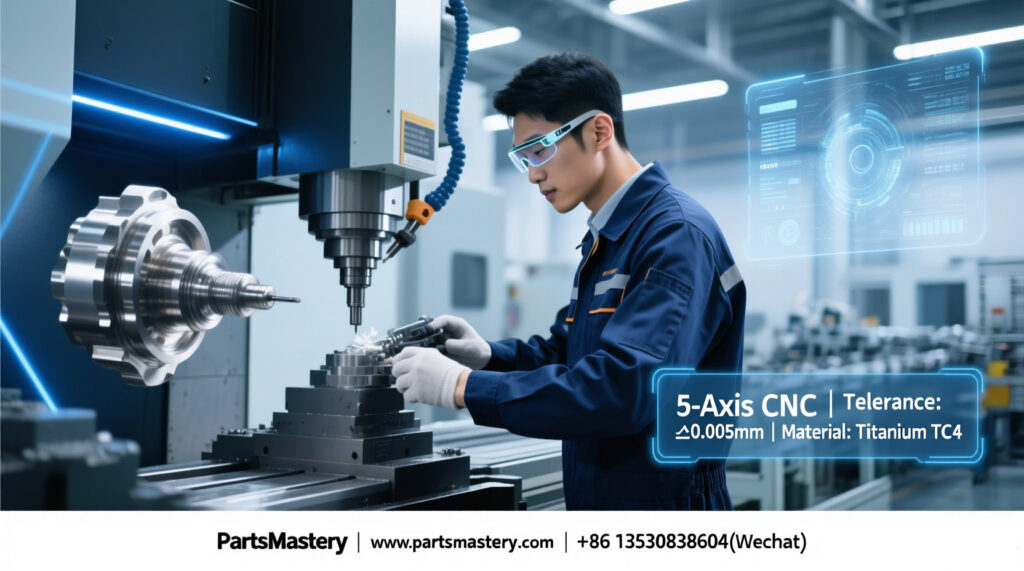
Etapa 5: Maquinação e fabrico - As operações de fresagem CNC, EDM (sinker e wire) e retificação produzem a cavidade, o núcleo e outros componentes. Para geometrias complexas, podem ser necessários vários eléctrodos e configurações de EDM. Os canais de arrefecimento são perfurados ou, para projectos avançados, criados através da impressão 3D de metal como arrefecimento conformacional.
Etapa 6: Tratamento térmico e acabamento - Se necessário, os componentes do molde são submetidos a um tratamento térmico em vácuo para atingir a dureza pretendida. Após o endurecimento, as superfícies são polidas com o acabamento SPI especificado (desde o espelho A1 até ao acabamento em pedra D3). A aplicação de textura (gravação química ou gravação a laser) é efectuada conforme especificado pela equipa de design industrial do OEM.
Etapa 7: Montagem e instalação - Todos os componentes são montados na base do molde. As peças móveis são verificadas quanto ao seu bom funcionamento e os circuitos de refrigeração são testados quanto à pressão. O molde é então montado numa máquina de moldagem por injeção para amostragem.
Etapa 8: Ensaio do molde e validação da peça - Utilizando a resina especificada pelo OEM, são produzidas peças de amostra. É efectuada a inspeção dimensional (frequentemente com CMM) e a inspeção visual. A equipa de qualidade do OEM aprova os primeiros artigos. Os ajustes aos parâmetros de processamento são documentados. Para as indústrias regulamentadas (médica, automóvel), este passo inclui protocolos de validação formais (IQ/OQ/PQ).
Etapa 9: Documentação e transferência do molde - Após a aprovação, o OEM recebe um pacote completo de documentação: desenhos 2D, modelos 3D, certificados de materiais, registos de tratamento térmico, relatórios de inspeção CMM e calendários de manutenção recomendados. O molde físico é enviado para o local de produção designado pelo OEM ou para o fabricante contratado.
Materiais e tolerâncias no fabrico de moldes OEM
O fabrico profissional de moldes OEM exige tolerâncias rigorosas e uma seleção de materiais adequada. As normas típicas incluem:
-
Tolerância dimensional para cavidade e núcleo: ±0,01mm a ±0,02mm
-
Tolerância da peça (como moldada): ±0,05mm para dimensões gerais, ±0,02mm para caraterísticas críticas
-
Acabamento da superfície: SPI A1 (espelho) a SPI D3 (pedra grossa), ou textura personalizada através de Mold-Tech ou similar
-
Dureza do aço: 30-32 HRC para P20, 46-52 HRC para H13, 48-52 HRC para S136
A escolha do material do molde afecta diretamente a vida útil das ferramentas e a qualidade das peças. Por exemplo, um OEM que produza 2 milhões de caixas de policarbonato por ano escolheria normalmente o H13 ou um aço de elevada dureza semelhante com arrefecimento conformal. Um OEM que produza 50.000 peças de ABS por ano pode selecionar P20 com arrefecimento convencional.
Indústrias que dependem do fabrico de moldes OEM
Dispositivos médicos - Os OEM que produzem instrumentos cirúrgicos, sistemas de administração de medicamentos, equipamento de diagnóstico e componentes implantáveis exigem moldes que cumpram as normas ISO 13485. A rastreabilidade, a montagem em sala limpa e os materiais biocompatíveis (por exemplo, USP Classe VI) são obrigatórios.
Automóvel - Os fornecedores Tier 1 e Tier 2 utilizam o fabrico de moldes OEM para acabamentos interiores, componentes sob o capot, caixas de iluminação e sistemas de conectores. A certificação IATF 16949 e a documentação do processo de aprovação de peças de produção (PPAP) são requisitos padrão.
Eletrónica de consumo - As caixas de smartphones, as estruturas de computadores portáteis, as caixas de dispositivos portáteis e os componentes de carregadores exigem tolerâncias apertadas (frequentemente ±0,02 mm), capacidade de moldagem de paredes finas e acabamentos de alto brilho. Os fabricantes de moldes OEM neste sector utilizam frequentemente sistemas de canais quentes e degeneração automatizada.
Aeroespacial - Os painéis interiores da cabina, as condutas e os suportes estruturais requerem moldes para termoplásticos de elevado desempenho, como PEEK, PEI (Ultem) e PPSU. O retardamento da chama, a baixa produção de fumo e a rastreabilidade do material são factores críticos.
Equipamento industrial - As carcaças das bombas, os corpos das válvulas, as rodas dentadas e os componentes dos transportadores são cada vez mais moldados para substituir as peças metálicas com vista à redução do peso e à resistência à corrosão. O fabrico de moldes OEM para aplicações industriais envolve frequentemente moldes de grandes dimensões (1-5 toneladas) com arrefecimento complexo.
Desafios comuns no fabrico de moldes OEM e como evitá-los
Dados de projeto incompletos - Por vezes, os OEM fornecem apenas um desenho 2D ou um ficheiro 3D de baixa resolução. Caraterísticas em falta, tolerâncias indefinidas ou especificações de materiais ambíguas levam a retrabalho e atrasos. Forneça sempre um desenho 2D totalmente dimensionado com GD&T, um modelo 3D nativo ou de formato neutro (STEP, IGES, Parasolid) e uma especificação de material por escrito.
Prazos irrealistas - A moldagem por compressão de um molde complexo de câmara quente com 16 cavidades em quatro semanas raramente é possível. Trabalhe com o seu fabricante de moldes para estabelecer um calendário realista que tenha em conta a revisão do DFM, a análise do fluxo do molde, a maquinação, o tratamento térmico, a amostragem e as modificações.
Comunicação deficiente dos requisitos cosméticos - “Alto brilho” ou “acabamento liso” são termos subjectivos. Utilize as normas SPI ou forneça amostras físicas. Especificar a textura por norma (por exemplo, Mold-Tech MT-11010) e profundidade.
Não efetuar o ensaio do molde nas instalações do fornecedor - Alguns OEMs solicitam que os moldes sejam enviados diretamente para o seu local de produção sem um teste formal. Isto resulta quase sempre em surpresas - problemas de processamento, disparos curtos ou problemas de ejeção - que poderiam ter sido corrigidos nas instalações do fabricante do molde a um custo mais baixo e com um atraso menor.
Como a PartsMastery oferece uma produção excecional de moldes OEM
Para os OEM que procuram um parceiro fiável que compreenda as exigências das ferramentas de marca, a PartsMastery oferece serviços abrangentes de fabrico de moldes alinhados com os requisitos dos OEM. Cada projeto começa com uma análise confidencial do design da sua peça, seguida de um relatório DFM detalhado e de uma análise do fluxo do molde. A equipa de engenharia da PartsMastery trabalha diretamente com os seus designers para otimizar a moldabilidade, preservando a intenção funcional e estética do seu produto.
As instalações de fabrico estão equipadas com centros de maquinação CNC de alta velocidade, EDM de fio e de chumbada e inspeção CMM interna capaz de verificar dimensões até ±0,005 mm. A PartsMastery trabalha com todos os aços de molde padrão - P20, H13, S136, D2 e outros - bem como com alumínio para protótipos ou ferramentas de ponte. O tratamento térmico, o acabamento da superfície e a aplicação de textura são efectuados em ambientes controlados com documentação completa.
Para OEMs em indústrias regulamentadas, a PartsMastery fornece sistemas de qualidade com certificação ISO 9001 e pode suportar requisitos IATF 16949 ou ISO 13485 mediante solicitação. Os pacotes de documentação incluem dados CAD 2D e 3D completos, certificações de materiais, registos de tratamento térmico, relatórios de inspeção CMM e uma lista de peças sobressalentes.
Após a entrega do molde, a PartsMastery oferece apoio contínuo: resolução remota de problemas, fabrico de peças sobresselentes e serviços de reparação para prolongar a vida útil das ferramentas. A propriedade e a confidencialidade do molde são totalmente respeitadas - as ferramentas pertencem-lhe e os dados do projeto continuam a ser propriedade intelectual.
Conclusão
O fabrico de moldes OEM não é um serviço de mercadorias. É uma parceria estratégica de engenharia que afecta diretamente a qualidade do seu produto, a eficiência da produção e a reputação da marca. Ao escolher um fabricante de moldes experiente que compreende a propriedade do projeto, a ciência dos materiais e os protocolos de validação, os OEMs ganham uma vantagem competitiva que se estende muito para além do investimento inicial em ferramentas.
Para empresas prontas para desenvolver ou aumentar a produção com moldes OEM dedicados, a PartsMastery fornece a experiência, o equipamento e o compromisso necessários.
Contacte a PartsMastery para discutir os seus requisitos de fabrico de moldes OEM:
📞 Telefone / WeChat: +86 13530838604
🌐 Visita: https://partsmastery.com
Os vossos moldes. A vossa qualidade. O vosso sucesso.