






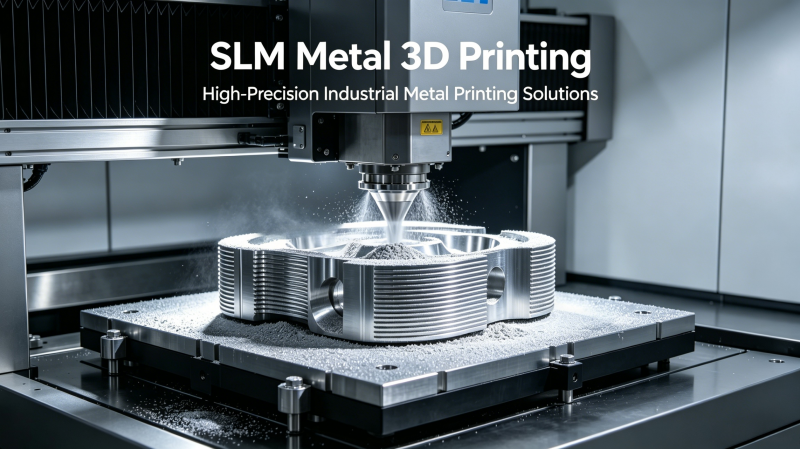
1. SLM/LPBF: Da prototipagem à produção em série personalizada
Para as equipas de engenharia que trabalham com peças aeroespaciais, implantes médicos e componentes automóveis de alto desempenho, a Fusão Seletiva a Laser (SLM) — também conhecida como Fusão a Laser em Leito de Pó (LPBF) — evoluiu muito para além da simples prototipagem.
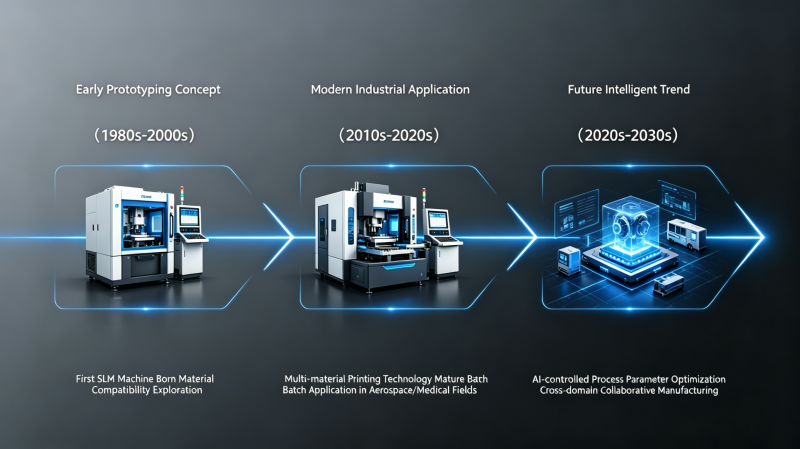
Enquanto a impressão 3D inicial só conseguia produzir modelos visuais, a tecnologia SLM moderna cria peças metálicas totalmente densas e funcionais, capazes de suportar cargas pesadas, baixas temperaturas e ambientes corrosivos. Ao contrário da maquinação tradicional, a SLM não requer moldes personalizados nem ferramentas dispendiosas.
Com a fabricação digital SLM, os ciclos de desenvolvimento de produtos passam de meses para dias. As equipas de aprovisionamento também podem substituir o inventário físico por ficheiros CAD digitais e produzir peças sob demanda.
2. Como funciona a SLM: processo de fusão camada a camada
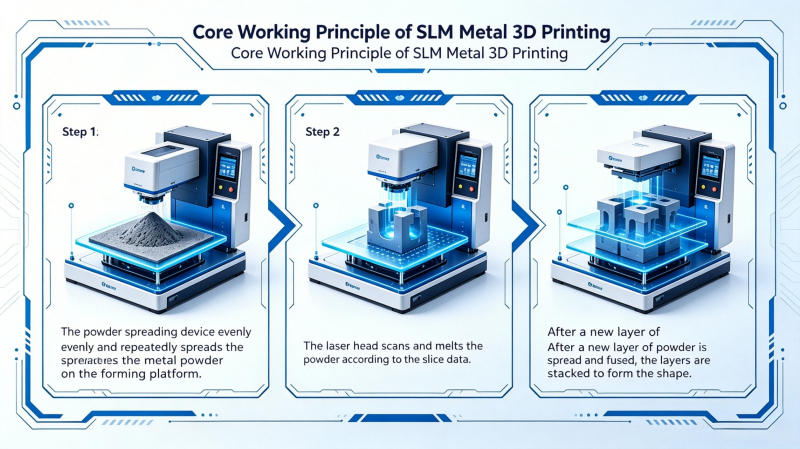
A SLM fabrica peças no interior de uma câmara selada com gás inerte, através de um ciclo repetitivo de três etapas:
- Espalhamento de pó: Uma fina camada de pó metálico atomizado a gás (com 20–50 μm de espessura) é espalhada uniformemente sobre a placa de construção.
- Fusão a laser: Um laser de fibra de alta potência funde seletivamente o pó de acordo com a secção transversal do modelo 3D.
- Empilhamento de camadas: A plataforma desce ligeiramente e é aplicada uma nova camada de pó. O processo repete-se até a peça estar concluída.
A atmosfera inerte (argônio ou nitrogénio) impede a oxidação, resultando numa densidade da peça superior a 99,51 % — igualando ou superando a dos metais forjados e fundidos. No entanto, o aquecimento e o arrefecimento rápidos criam tensões internas, tornando o tratamento térmico pós-impressão essencial para peças sujeitas a cargas.
3. Impressão 3D SLM vs. Usinagem CNC: Como escolher
3.1 Custo e volume de produção
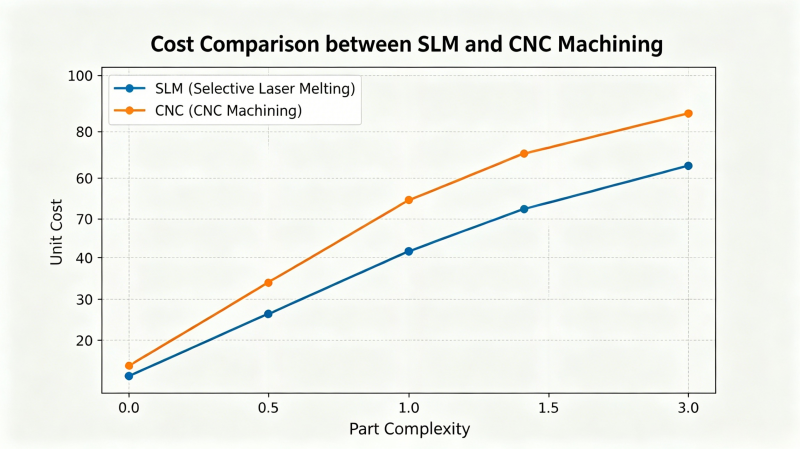
A maquinação CNC é mais económica para peças simples produzidas em grandes quantidades. No entanto, à medida que a complexidade das peças aumenta, os custos da maquinação CNC sobem rapidamente devido à necessidade de dispositivos de fixação personalizados, programação multieixos e trocas de ferramentas.
Os custos da SLM mantêm-se estáveis, mesmo em projetos altamente complexos. Esta tecnologia oferece vantagens evidentes para lotes de pequena a média dimensão, de 1 a 500 peças. Muitas empresas recorrem à SLM para acelerar a entrada no mercado enquanto se preparam os moldes para a produção em série.
3.2 Integração de peças e redução do peso
As peças tradicionais, como coletores aeroespaciais e conjuntos automóveis, requerem frequentemente a soldadura de 10 a 30 componentes distintos. Cada junta cria potenciais pontos de falha e aumenta os custos de montagem e inspeção.
A SLM permite a produção de peças monolíticas, de uma única peça. Através da otimização topológica e das estruturas em rede, os engenheiros podem reduzir o peso sem comprometer a resistência, simplificando assim toda a cadeia de abastecimento.
4. Materiais industriais comuns para SLM
A tecnologia SLM industrial requer pós esféricos atomizados a gás de alta qualidade para garantir uma impressão consistente. Seguem-se os três materiais mais utilizados:
| Material | Propriedades principais | Aplicações |
|---|---|---|
| Titânio Ti6Al4V | Elevada relação resistência/peso, biocompatível, resistente ao calor | Suportes aeroespaciais, implantes médicos, componentes para competição |
| Aço inoxidável 316L | Resistente, robusto, resistente à corrosão | Coletores de fluidos, instrumentos cirúrgicos, peças náuticas |
| Alumínio AlSi10Mg | Leve, com elevada condutividade térmica | Dissipadores de calor, peças de refrigeração para automóveis, componentes para robôs |
5. Pós-processamento de peças SLM
5.1 Tratamento térmico de alívio de tensões
Todas as peças SLM sujeitas a cargas devem ser submetidas a um recozimento a vácuo enquanto ainda estiverem fixadas na placa de construção. Este processo elimina as tensões internas e evita deformações ou fissuras após o corte.
5.2 Acabamento de superfícies
As peças SLM em bruto, tal como são impressas, apresentam uma rugosidade superficial de Ra 5–15 μm. No caso de superfícies de precisão, como rolamentos ou vedantes, são utilizados processos adicionais, como jateamento de areia, polimento ou maquinagem CNC, para melhorar a qualidade.
6. Domínio das peças: Soluções SLM diretamente da fábrica
A Parts Mastery opera uma unidade de produção com 20 000 m² equipada com sistemas SLM industriais com múltiplos lasers. Ao eliminar os intermediários, ajudamos os clientes a reduzir os custos de aquisição em até 30%.
O nosso sistema de DFM com IA baseado na nuvem analisa automaticamente os ficheiros CAD para avaliar a viabilidade de impressão antes da produção. Também oferecemos tratamento térmico interno, corte por fio e rastreabilidade total dos materiais.
Os clientes podem carregar ficheiros CAD online para obterem orçamentos imediatos e análises DFM gratuitas, reduzindo assim os riscos associados ao desenvolvimento de novos produtos.
Resumo
A impressão 3D em metal SLM transforma peças complexas, leves e integradas numa realidade economicamente viável – ideal para aplicações nos setores aeroespacial, médico e automóvel. A seleção adequada dos materiais, o pós-processamento padrão e os serviços diretos da fábrica maximizam o valor técnico e económico da SLM.