





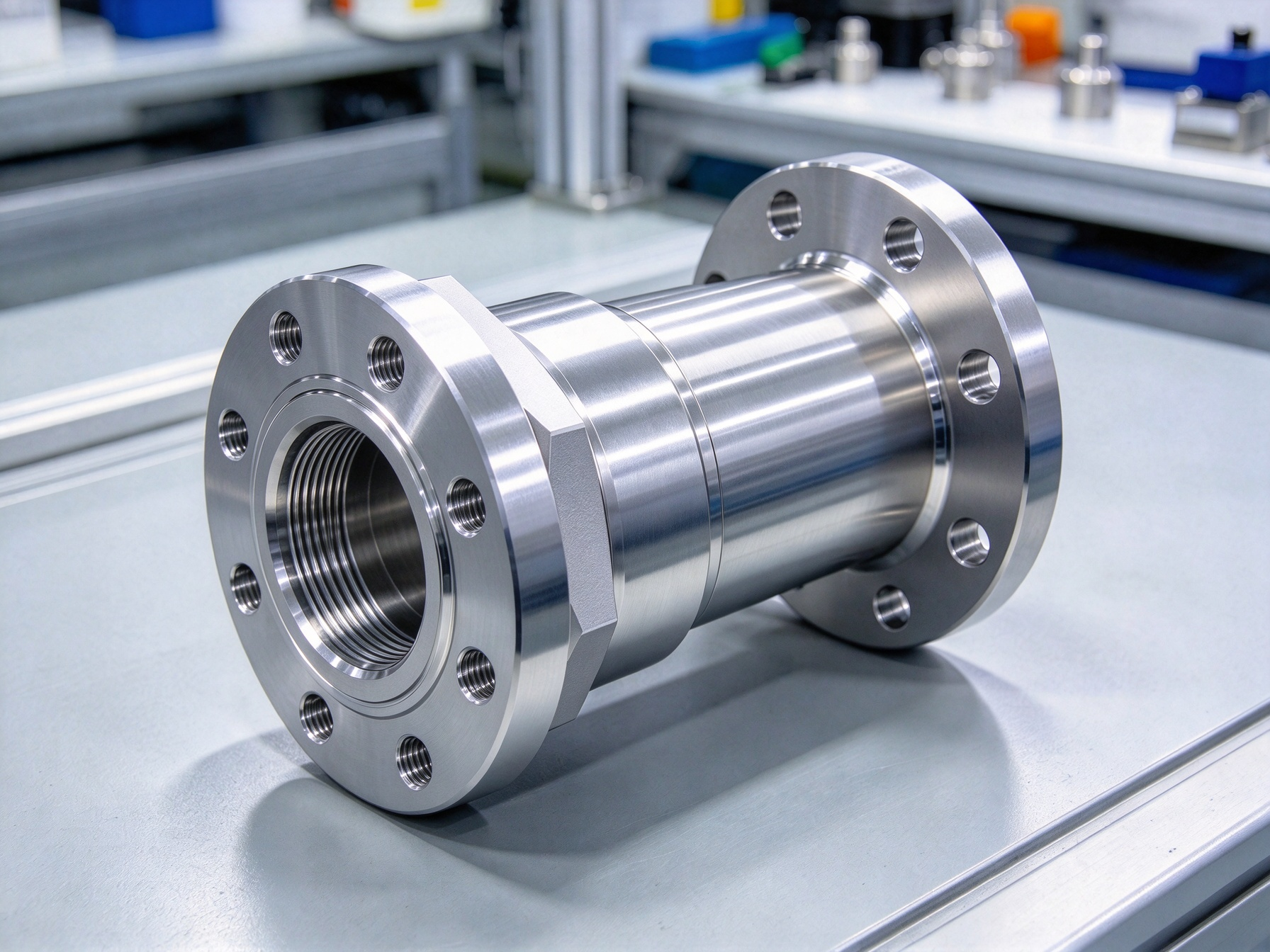
In the oil and gas engineering sector, natural gas pipeline systems rely heavily on custom non-standard components such as adapter joints, connection flanges, mounting supports and multi-port manifolds. These orders typically arrive in small, frequent batches across a wide range of specifications. For these parts, quality goes far beyond individual dimensional tolerance — even minor shifts in hole position, interface angle or overall length can directly cause field assembly misalignment, sealing failure or even project schedule delays.
To address these industry-specific challenges, PartsMastery has developed a dedicated CNC precision machining system for natural gas pipeline components. Built around unified datums, process control and digital traceability, it systematically solves core pain points such as dimensional chain control, multi-port spatial positioning and batch-to-batch quality consistency, supporting full-cycle needs from prototype development to volume supply.
Three Core Machining Challenges for Natural Gas Pipeline Components
1. Cumulative Error From Misaligned Dimensional Chain Datums
First, complex dimensional chains create high risk of cumulative error when datums are not standardized. Pipeline components often need to mate with flanges, pipes, valves and equipment interfaces at the same time. A single dimension within tolerance does not guarantee a perfect fit after full assembly.
If different machining operations use separate positioning datums, error builds step by step through the process. This eventually shows up as misaligned hole positions, length deviation or sealing surface misalignment. For this reason, machining quality depends not on the peak accuracy of individual machines, but on unified control of positioning datums, centerlines and critical mounting surfaces.
2. Position Accuracy Loss From Repeated Re-Fixturing
Second, multi-port spatial geometries suffer from position accuracy degradation after multiple clamping operations. Many natural gas pipeline components are not simple straight structures. A single part often includes interfaces, flange faces and mounting hole patterns in multiple different orientations.
With traditional face-by-face machining, every re-clamping introduces small positioning error. After multiple operations, the angular and positional relationships between interfaces can easily fall outside tolerance bands. For angled adapter joints and multi-port manifolds in particular, more clamping operations directly translate to lower final assembly fit accuracy.
3. Wide Specification Ranges Require Differentiated Processes
Third, a one-size-fits-all process cannot effectively serve the full range of pipeline component specifications. Natural gas pipeline systems cover everything from small-diameter precision joints to large-scale support components, with huge variations in size, structure, material and order volume.
A uniform equipment setup, tool set and process flow cannot balance the precision of small precision parts and the efficiency of large structural parts. We use differentiated machining strategies to match each application scenario and part type.
| Component Type | Typical Structural Features | Key Machining Control Points |
|---|---|---|
| Pipeline Adapter Joints | Multi-directional interfaces, internal & external threads | Hole concentricity, thread accuracy, center alignment |
| Precision Connection Flanges | Multiple mounting hole patterns, sealing end faces | Datum unification, position accuracy, sealing surface flatness |
| Custom Mounting Components | Irregular structures, multi-face mating features | Single-setup machining, optimized workholding |
| Pipeline Support Components | Large dimensions, distributed hole patterns | Hole spacing accuracy, overall flatness, dimensional stability |
Full-Process Quality Control to Reduce Rework Risk at the Source
In production practice, most rework stems not from insufficient machine accuracy, but from incomplete drawing information, unreasonable process routing or missing in-process inspection. PartsMastery uses a closed-loop management system of upfront control plus in-process verification to drastically reduce part rejection rates and rework costs.
1. Upfront Drawing Review & DFM Manufacturability Analysis
First and foremost, we conduct a full-dimensional data validation before production starts, instead of moving straight to machining. After receiving engineering drawings, we review far more than overall shape and dimensions: material grade, dimensional tolerances, thread specifications, hole datums and surface finish requirements are all confirmed, with a focus on dimensional chain relationships and geometric tolerances between multiple interfaces.
For structurally complex parts, we also provide DFM optimization recommendations where possible. Without impacting function or assembly fit, we can adjust process datums, add clamping lugs or optimize deep cavity structures to reduce machining risk at the design stage. We align all information across programming, machine operation and inspection teams to eliminate communication discrepancies.
2. Staged Machining With Stock Allowance for Dimensional Compensation
Next, we apply a three-stage machining strategy for pipeline components with high material removal rates: roughing for shape → semi-finishing for stress relief → finishing for final accuracy.
- Roughing stage: High-feed removal of excess material to form the overall contour, with generous finishing stock left on critical mating features.
- Semi-finishing stage: Refines structural form, releases internal material stress and stabilizes overall part dimensions.
- Finishing stage: Completes final machining of critical features such as sealing surfaces, mounting holes and threads to guarantee dimensional accuracy and surface quality.
We also place dimensional checkpoints between each operation to catch deviations early and make adjustments, avoiding full part scrap when issues are only discovered after final machining.
3. Full Tool Life Cycle Management
Furthermore, tool wear is one of the leading causes of dimensional drift in batch production, as it gradually affects hole diameter, contour and surface quality. We establish tool usage logs for critical operations, with set wear compensation values and mandatory tool change points based on machining time and part count. This is paired with first-article validation and periodic spot checks to ensure highly consistent dimensions across the entire batch.
4. In-Process Inspection at Key Production Nodes
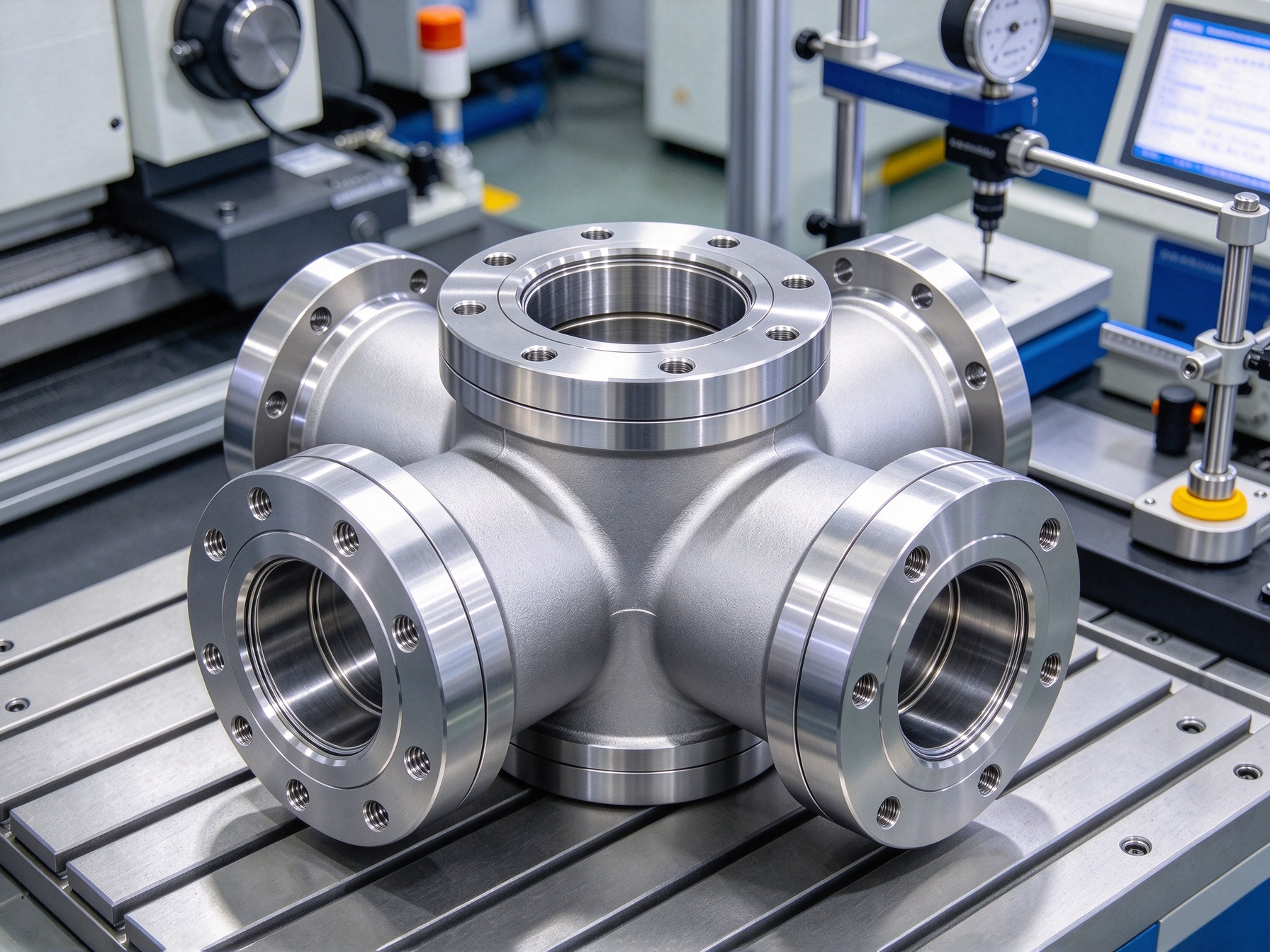
In addition, we implement mandatory inspection checkpoints at key nodes such as first-article production, tool changes and batch changes. These checkpoints confirm datums, dimensions and positional accuracy before full batch production begins. Compared to final-only full inspection, targeted in-process checks both control quality risk early and match the production rhythm of small-batch custom orders.
Digital Management for Consistent Multi-Batch Production
Natural gas pipeline component procurement often includes repeat orders for maintenance spares and project expansions. True supply capability means delivering parts of identical specification and accuracy consistently, even for orders placed months apart. PartsMastery achieves batch-to-batch quality replication through a structured digital management system.
1. Clear Version & Part Number Management
First, we establish a dedicated part number and drawing version management system for custom components. When design changes occur, we update version identifiers synchronously to clearly distinguish between old and new specifications. We store all technical documentation and special processing requirements linked to their version number, preventing production errors from drawing confusion and enabling fast process retrieval for future repeat orders.
2. Validated CNC Program Retention for Repeat Orders
Second, once first-article production passes validation, we save the complete corresponding machining program, tool parameters, workholding setup and inspection standards as a dedicated, locked process package. Subsequent repeat orders use the validated package directly, with no need to redevelop programming from scratch. This cuts lead times dramatically while ensuring highly consistent dimensional accuracy across different production batches.
3. Standardized Production for Small-Batch Orders
Importantly, even small-batch orders of just a few dozen parts receive full process standards and quality controls. We optimize changeover preparation time, reuse proven process parameters and apply the same inspection specifications. Small batch size does not mean lower requirements — standardized processes ensure stable, compliant quality for every production run.
4. Full Production Record Archiving
Finally, we maintain complete archived records for every batch: drawing version, machining parameters, inspection reports and material batches. This creates a fully traceable production history. For future repeat orders, we can quickly match the corresponding process, and we can rapidly locate and optimize for historical issues, improving long-term procurement reliability and efficiency.
Procurement Guide for Natural Gas Pipeline CNC Components
When selecting a CNC machining supplier, price is only one factor. Drawing interpretation capability, small-batch adaptability, quality traceability and long-term supply capability all directly impact project progress and total cost of ownership.
1. Evaluate Drawing Interpretation & DFM Support
First and foremost, custom pipeline components involve complex dimensional tolerances, geometric relationships and assembly requirements. A supplier must accurately identify critical datums and mating requirements in drawings, not just machine the outer shape. A capable supplier will identify machining risks early in the design phase and offer optimization suggestions, preventing problems later in mass production.
2. Confirm Prototype & Small-Batch Production Support
Second, newly developed pipeline components should never go straight into high-volume production. Prioritize suppliers that support single prototypes and small-batch trial production. Validate assembly fit and functional performance first, then scale up production volume gradually. This approach significantly reduces trial-and-error costs and project risk.
3. Assess the Practical Value of Inspection Reports
Third, an effective inspection report does more than just list raw data. It should map directly to drawing requirements and clearly state core metrics such as critical dimensions, hole positional relationships, thread accuracy and surface quality, directly reflecting the part’s assemblability. Consistent inspection standards also ensure quality consistency for future orders.
| Inspection Category | Core Test Items | Core Procurement Value |
|---|---|---|
| Basic Dimensions | Overall length, bore diameter, wall thickness, flange thickness | Confirms basic part specification match |
| Positional Accuracy | Hole spacing, concentricity, center position, angular deviation | Guarantees field assembly alignment accuracy |
| Thread & Sealing | Thread specification, tooth profile accuracy, sealing surface flatness | Ensures connection tightness and reliability |
| Appearance & Surface | Burrs, machining defects, surface finish quality | Verifies delivery quality and service life |
4. Evaluate Long-Term Supply & Batch Consistency
Finally, natural gas pipeline components often require follow-on maintenance spare parts over time. A supplier needs robust production record management and process replication capability. Evaluating prototype lead time, batch production flexibility, quality management systems and record keeping delivers lower long-term procurement costs than simply chasing the lowest price.
Conclusion
All things considered, the core competitive advantage of CNC machining for natural gas pipeline components is never raw machining speed. It lies in precise control of dimensional chains, flexible adaptation to custom structures, and long-term stable batch consistency.
PartsMastery specializes in precision custom component machining for the oil and gas sector, with extensive experience in pipeline component manufacturing. We offer full-process services from drawing review and prototype development through to small-batch and volume production, delivering stable accuracy and reliable delivery to support all types of natural gas engineering construction and operation needs.