







Mold Making Factories
Keyword: Mold Making Factories

Understanding the Backbone of Modern Production: Mold Making Factories
In the world of mass production, few elements are as fundamental yet invisible as the mold. Every plastic part, metal component, or composite structure that surrounds us—from automotive dashboards to medical device housings—owes its shape and precision to a carefully engineered mold. Behind these essential tools stand mold making factories, specialized facilities where skilled engineers and advanced machinery transform digital designs into physical tooling capable of producing millions of identical parts.
The global mold manufacturing industry has grown substantially, driven by rising demand from automotive, electronics, packaging, and healthcare sectors. As supply chains become more complex and quality expectations increase, understanding what distinguishes excellent mold making factories from mediocre ones is critical for any business that relies on injection molding, die casting, or compression molding.
What Makes a Mold Making Factory Exceptional?
Not all mold making factories operate at the same level. The most capable facilities share several defining characteristics that directly impact project success.
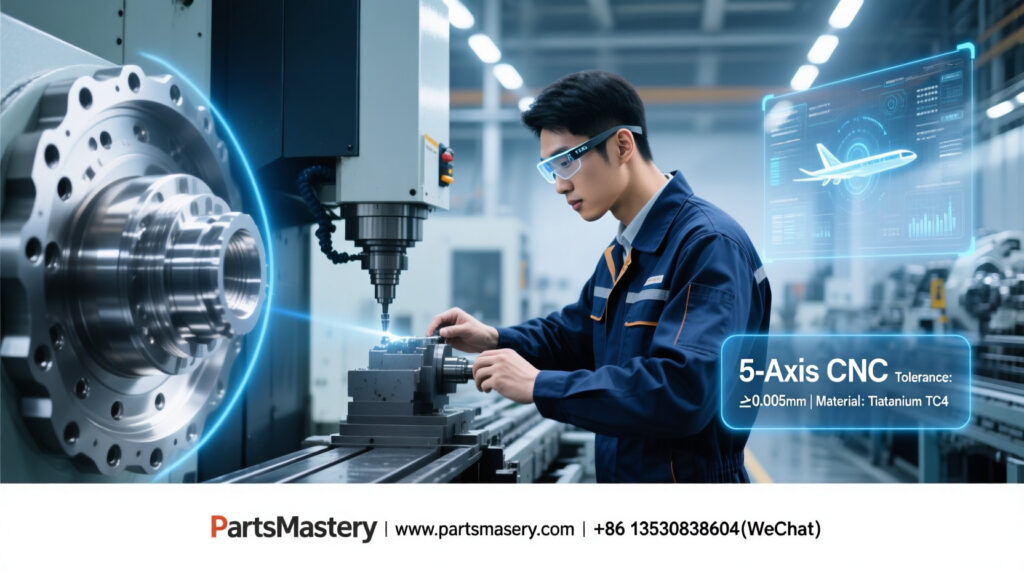
Advanced Machining Capabilities – Professional mold making factories invest heavily in computer numerical control (CNC) equipment, including high-speed milling machines, electrical discharge machining (EDM) units, and wire cutting systems. These machines achieve tolerances within ±0.01mm, ensuring that every cavity and core aligns perfectly. Without such precision, molded parts may exhibit flash, short shots, or dimensional inconsistencies.
Comprehensive Design and Simulation Tools – Before any metal is cut, leading factories use computer-aided design (CAD) and computer-aided manufacturing (CAM) software to model the mold in three dimensions. Mold flow analysis software simulates how molten plastic will fill the cavity, identifying potential issues such as air traps, weld lines, or uneven cooling. This digital validation significantly reduces trial runs and accelerates time-to-market.
Strict Quality Management Systems – Reputable mold making factories maintain ISO 9001 certification as a baseline. For customers in the automotive industry, IATF 16949 certification is essential, while medical device manufacturers require compliance with ISO 13485. These standards mandate documented processes, material traceability, and regular calibration of inspection equipment. Many factories also employ coordinate measuring machines (CMM) and optical comparators to verify every critical dimension before shipping.
Experienced Tooling Engineers – Machinery alone does not guarantee success. The best mold making factories employ tooling engineers who understand material behavior, part design principles, and production floor realities. These experts provide valuable design for manufacturability (DFM) feedback, suggesting modifications to draft angles, wall thicknesses, or gate locations that improve moldability without altering the part’s function.
Types of Molds Produced by Modern Factories
Mold making factories produce a wide variety of tooling configurations, each suited to different applications and production volumes.
Two-Plate Molds – The simplest and most common design, two-plate molds consist of an A-half (stationary) and B-half (ejector) side. They are ideal for parts with straightforward geometries and are typically the most cost-effective option for medium to high volumes.
Three-Plate Molds – These incorporate an additional runner plate, allowing the sprue to be automatically separated from the part. Three-plate molds are useful for parts requiring pin-point gating or when the sprue must be located away from the part edge. They are more complex and expensive but offer greater gating flexibility.
Hot Runner Molds – Instead of a traditional runner system that solidifies and is discarded, hot runner molds keep the plastic molten within heated manifolds. This eliminates runner waste, reduces cycle times, and improves part consistency. While initial investment is higher, hot runner systems pay for themselves in material savings for high-volume production.
Stack Molds – For extremely high output, stack molds feature two or more parting surfaces stacked vertically, effectively doubling or tripling the number of cavities without increasing clamp tonnage. These are common in packaging and closure manufacturing where millions of parts are produced daily.
Insert Molds – Used when metal components, threaded inserts, or other pre-placed elements must be encapsulated by plastic. Insert molding requires precise cavity design and often involves automated part loading systems in advanced mold making factories.
Materials Used in Mold Construction
The choice of mold material directly affects tooling life, cycle time, and part quality. Professional mold making factories offer guidance on selecting the optimal material based on production volume, plastic type, and cosmetic requirements.
P20 Steel – A pre-hardened tool steel popular for medium-volume molds (100,000 to 500,000 cycles). It offers good machinability and sufficient hardness without requiring post-machining heat treatment.
H13 Steel – An air-hardening hot work steel with excellent toughness and high-temperature resistance. H13 molds are capable of over one million cycles and are commonly used for engineering plastics with abrasive fillers like glass fiber.
S136 Stainless Steel – Highly corrosion-resistant and capable of being polished to a mirror finish. S136 is the preferred choice for medical, optical, and food-contact applications where cleanliness and surface quality are paramount.
アルミニウム – For prototype molds or low-volume production (under 10,000 parts), aluminum offers faster machining and lower material costs. However, its lower hardness limits wear resistance, making it unsuitable for high-volume runs with abrasive resins.
ベリリウム銅 – Used for mold components requiring rapid heat transfer, such as core pins or slide inserts. Beryllium copper effectively reduces cycle times by drawing heat away from thick sections, but it requires careful handling due to toxicity concerns.
The Step-by-Step Process Inside Mold Making Factories
Understanding the typical workflow helps buyers set realistic expectations and communicate effectively with their chosen supplier.
Step 1: Design Review and DFM Analysis – The factory’s engineering team examines the customer’s part drawing or 3D model, identifying potential molding issues and suggesting improvements. A detailed DFM report is generated, covering gate location, ejection method, cooling layout, and steel selection.
Step 2: Mold Base Machining – Standard mold bases are often purchased from specialized suppliers, then machined to accommodate the specific cavity and core. Pocket milling, drilling for cooling channels, and tapping for ejector pins occur during this phase.
Step 3: Cavity and Core Manufacturing – Using CNC milling and EDM, the factory creates the actual impression that will shape the plastic. Complex geometries may require multiple electrodes and sinker EDM operations.
Step 4: Heat Treatment – For molds made from unhardened steel, heat treatment (quenching and tempering) is performed to achieve the target hardness. This step may cause dimensional changes, requiring final finishing operations afterward.
Step 5: Finishing and Polishing – Cavities are polished to the specified surface finish, ranging from a coarse stone finish to a diamond-like SPI A1 mirror polish. Texture applications, such as chemical etching or laser engraving, are also completed at this stage.
Step 6: Assembly and Fitting – All components—cavities, cores, slides, lifters, ejector pins, and cooling fittings—are assembled into the mold base. Movement is verified, and clearances are checked.
Step 7: Mold Trial – The completed mold is mounted on an injection molding machine and tested using the customer’s specified resin. Sample parts are measured, inspected, and often submitted for customer approval before the mold is shipped.
Quality Control in Modern Mold Making Factories
Quality assurance is not a single event but an ongoing process throughout mold construction. Reputable factories employ multiple inspection points:
-
Incoming material verification (certified mill test reports)
-
In-process inspections during rough and finish machining
-
Final dimensional inspection using CMM or optical measurement
-
Surface finish verification with profilometers or visual comparators
-
Mold trial with documented processing parameters and part measurements
Many factories now provide digital quality documentation packages, including CMM reports, material certificates, and sample measurement logs.
Industry Trends Shaping Mold Making Factories
The mold manufacturing industry is evolving rapidly. Several trends are reshaping how factories operate and what buyers should expect.
Automation and Lights-Out Manufacturing – To reduce labor costs and increase consistency, many mold making factories are integrating robotic work cells, automated pallet systems, and remote monitoring. This allows machining to continue overnight and on weekends, shortening lead times.
Additive Manufacturing for Conformal Cooling – Metal 3D printing enables the creation of cooling channels that follow the contour of the part, rather than being limited to straight drilled holes. Conformal cooling reduces cycle times by 20 to 40 percent and eliminates hot spots that cause warpage.
Sustainability Initiatives – Environmental concerns are driving factories to adopt low-carbon machining strategies, recycle cutting fluids, and optimize runner designs to minimize plastic waste. Some mold making factories now offer lifecycle assessments to help customers understand the environmental impact of their tooling decisions.
Digital Integration and Remote Collaboration – With global supply chains, many factories now offer virtual mold trials, remote DFM reviews, and real-time project tracking portals. These tools reduce travel costs and accelerate decision-making.
Common Mistakes When Choosing Mold Making Factories
Even experienced buyers sometimes make avoidable errors when selecting a mold making partner.
Prioritizing Price Over Total Value – A low-cost mold may use inferior steel, skip proper heat treatment, or lack adequate cooling. Over a production run of 500,000 cycles, the cost of downtime, scrap parts, and frequent repairs will likely exceed the initial savings.
Skipping the Mold Trial – Approving a mold based solely on CAD models is risky. Physical sampling using the actual production resin and machine conditions often reveals issues that simulations cannot predict, such as venting problems or uneven cooling.
Ignoring Communication and After-Sales Support – Mold making is an iterative process. If a factory is slow to respond to questions or does not provide clear documentation, resolving issues becomes difficult. Many quality problems only emerge after hundreds of thousands of cycles, making responsive support essential.
Why PartsMastery Stands Among Reliable Mold Making Factories
For businesses seeking a dependable partner in precision tooling, PartsMastery combines technical expertise, modern equipment, and customer-focused service. Every project begins with a thorough DFM review to ensure your part geometry is optimized for molding success. Advanced CNC and EDM equipment allow PartsMastery to achieve cavity accuracy of ±0.01mm, while in-house CMM inspection verifies every critical dimension.
Materials are sourced from certified mills with full traceability. Whether you need a high-cavitation hot runner mold or a simple prototype tool, PartsMastery provides engineering support to balance flow paths, minimize scrap, and maximize production efficiency.
After delivery, PartsMastery supplies complete documentation, including dimensional reports, material certificates, and maintenance recommendations. For overseas clients, remote sampling support and video troubleshooting ensure smooth implementation.
結論
The mold you commission today will directly affect your production efficiency, part quality, and profitability for years to come. By focusing on technical capability, material integrity, quality certifications, and responsive communication, you can identify mold making factories that deliver long-term value.
For companies ready to move forward with a trusted manufacturing partner, PartsMastery is prepared to support your next project.
Contact PartsMastery to discuss your mold making requirements:
📞 Phone / WeChat: +86 13530838604
🌐 Visit: https://partsmastery.com
Precision tooling for reliable production.