






El termoformado al vacío, también denominado termoformado, es uno de los procesos de moldeo de termoplásticos más utilizados. Consiste en utilizar la succión al vacío para ajustar perfectamente una lámina de plástico calentada y ablandada contra la cavidad de un molde. Una vez enfriada y solidificada, la lámina adquiere la forma deseada. Es la solución de producción líder para piezas de plástico de paredes delgadas en volúmenes pequeños y medianos.
En comparación con el moldeo por inyección y el moldeo por compresión, el termoformado al vacío destaca por su bajo coste de utillaje, su ciclo de desarrollo corto y su buena compatibilidad con piezas de gran tamaño. Se utiliza en sectores que van desde el embalaje y la automoción hasta los electrodomésticos, los dispositivos médicos y los expositores publicitarios. Esta guía analiza la tecnología del termoformado al vacío, desglosando su principio de funcionamiento, las etapas de producción, las opciones de materiales, sus ventajas e inconvenientes, y casos de uso reales.
1. Principio básico de funcionamiento del moldeado al vacío
El moldeado al vacío se basa en las propiedades de los materiales termoplásticos, que dependen de la temperatura. A temperatura ambiente, las láminas termoplásticas se mantienen rígidas. Cuando se calientan hasta una temperatura específica, entran en un estado muy elástico y se vuelven fáciles de moldear. Al crear un vacío en la parte inferior del molde, los fabricantes generan una diferencia de presión entre las dos caras de la lámina. Esta presión obliga a la lámina ablandada a adherirse a la superficie del molde y a reproducir su forma y textura.
Una vez que la lámina se enfría por debajo de su temperatura de deflexión térmica, recupera su rigidez y conserva la forma moldeada. Tras el desmoldeado, el recorte y otros pasos de posprocesado, los fabricantes obtienen las piezas acabadas.
El moldeado al vacío se divide en dos tipos principales en función del diseño del molde. El moldeado con molde hembra ofrece una mayor precisión en la superficie exterior, lo que lo hace ideal para piezas estéticas. El moldeado con molde macho proporciona unas dimensiones internas más uniformes, por lo que resulta más adecuado para piezas estructurales que requieren un montaje interno.
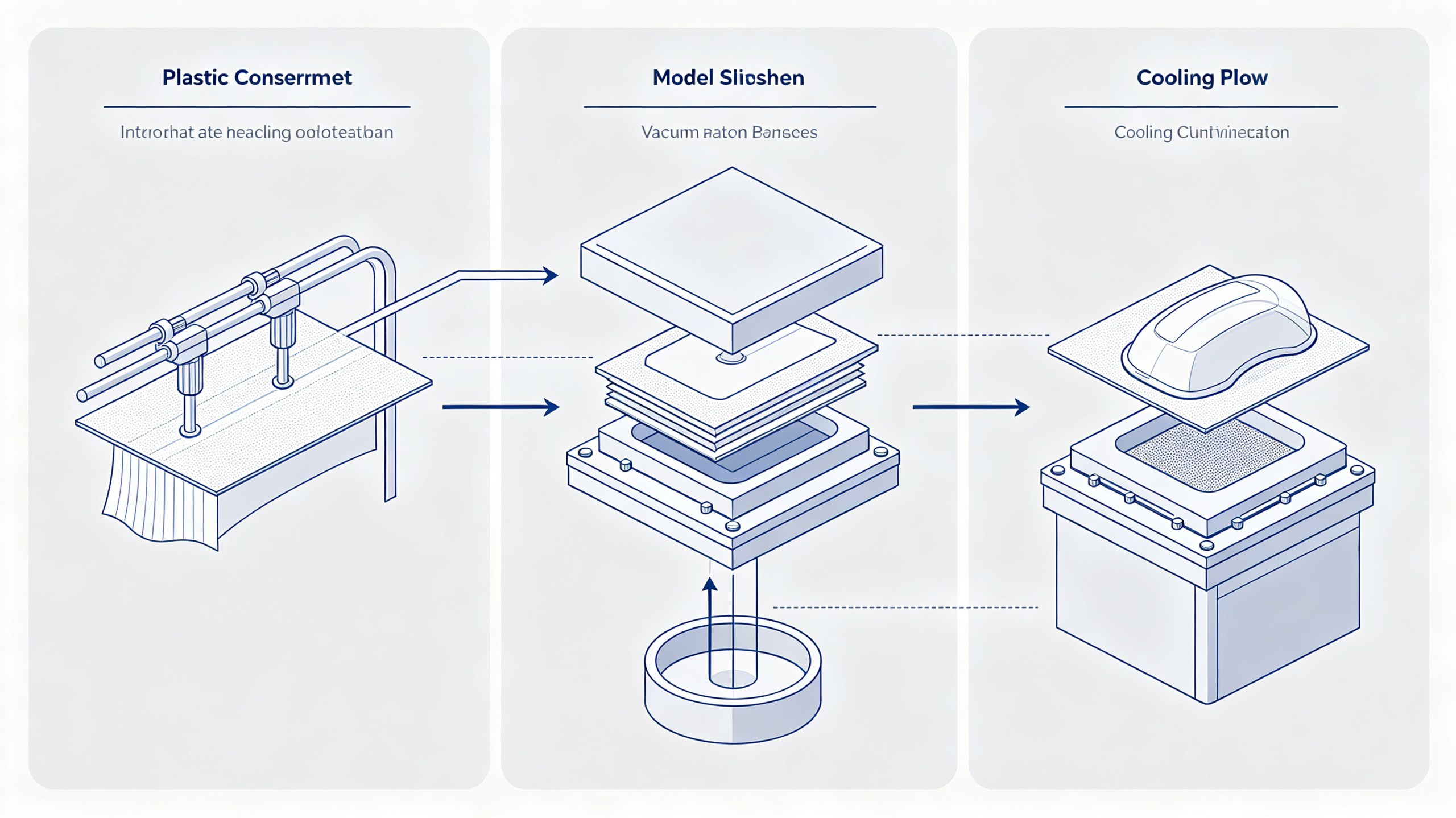
2. Flujo de trabajo completo de la producción mediante termoformado al vacío
El proceso estándar de termoformado al vacío consta de seis fases principales. El control preciso de los parámetros en cada una de ellas determina directamente la precisión dimensional y la calidad superficial de las piezas acabadas.
2.1 Corte y pretratamiento de láminas
En primer lugar, los trabajadores cortan rollos enteros o láminas de material plástico en piezas en bruto del tamaño necesario, según las dimensiones desplegadas de la pieza final. En el caso de los productos con elevados requisitos estéticos, aplican previamente una película protectora a la superficie para evitar arañazos durante el procesamiento.
2.2 Calentamiento y ablandamiento de la lámina
A continuación, los operarios sujetan la chapa cortada al bastidor de la máquina de conformado y la calientan de manera uniforme con calentadores de infrarrojos o sistemas de aire caliente hasta que alcanza la temperatura de conformado. La temperatura y la duración del calentamiento deben ajustarse exactamente al tipo de material y al espesor de la chapa. Un calentamiento insuficiente da lugar a un conformado incompleto, mientras que un sobrecalentamiento puede provocar combaduras y un espesor de pared desigual.
2.3 Succión al vacío y conformado
En cuanto la lámina alcanza el grado adecuado de ablandamiento, el molde se cierra y el vacío extrae el aire de la cavidad. La presión negativa presiona rápidamente la lámina contra la superficie del molde. El nivel de vacío y la velocidad de succión son parámetros fundamentales, ya que influyen directamente en la calidad de la reproducción de los detalles más finos.
2.4 Enfriamiento y fraguado
Una vez que la lámina se ha adaptado completamente al molde, se enfría rápidamente mediante aire o agua. Esto restaura la rigidez del material y fija la forma definitiva. Un enfriamiento adecuado evita la contracción y la deformación tras el desmoldeado, y garantiza la estabilidad dimensional a largo plazo.
2.5 Desmoldeo y recorte
Una vez finalizado el enfriamiento, la pieza se retira del molde. Los trabajadores recortan el exceso de rebaba y los bordes sobrantes, y añaden elementos secundarios, como orificios y chaflanes, según sea necesario. En el caso de piezas grandes o complejas, se utilizan plantillas específicas para garantizar cortes limpios y uniformes.
2.6 Operaciones de posprocesamiento
En función de los requisitos del producto, los fabricantes pueden añadir fases de posprocesamiento, como la serigrafía, el pintado, el encolado y el pulido. Estas fases satisfacen necesidades específicas en cuanto a aspecto, montaje y funcionalidad.
3. Materiales habituales y casos de uso típicos
El moldeado al vacío solo funciona con materiales termoplásticos. Los distintos materiales presentan grandes diferencias en cuanto a resistencia al calor, resistencia mecánica, transparencia y seguridad alimentaria, por lo que la elección del material debe ajustarse al entorno de uso final del producto.
- Lámina de ABS: Ofrece un excelente rendimiento mecánico general, facilidad de conformado y un posprocesamiento sencillo. Es la opción más habitual para carcasas industriales y cubiertas de equipos. Las variantes modificadas pueden incorporar propiedades ignífugas y de alta resistencia al impacto.
- Lámina de PETG: Se caracteriza por su alta transparencia, gran resistencia y buena seguridad para el contacto con alimentos. Se utiliza ampliamente en envases alimentarios, cajas de exposición y fundas protectoras médicas.
- PMMA (acrílico): Ofrece una elevada transmisión de la luz y un aspecto de gran calidad. Es ideal para cajas luminosas publicitarias, elementos decorativos de exposición y paneles protectores transparentes, aunque presenta una fragilidad relativamente mayor.
- Hoja de PS: De bajo coste y fácil de moldear. Se utiliza principalmente para envases desechables, revestimientos interiores y artículos de exposición de gama baja, y presenta una menor resistencia al impacto.
- Ficha técnica: Ofrece una resistencia excepcional a los impactos y un amplio rango de tolerancia a la temperatura. Es adecuado para aplicaciones muy exigentes, como protectores faciales, ventanas de equipos y carcasas para exteriores, aunque su moldeado resulta ligeramente más complicado.
- Lámina de HDPE: Resiste la corrosión química y ofrece una buena tenacidad. Se utiliza habitualmente en bandejas logísticas, revestimientos de contenedores químicos y piezas del interior de los vehículos.
4. Ventajas y limitaciones del moldeado al vacío
4.1 Ventajas clave del proceso
El moldeado al vacío se utiliza ampliamente en la producción de lotes pequeños y medianos, principalmente debido a su gran rentabilidad y flexibilidad de producción.
En primer lugar, los costes de utillaje son muy bajos. La mayoría de los moldes para el termoformado al vacío están fabricados en aleación de aluminio, resina o yeso, y cuestan tan solo entre 1/10 y 1/20 de lo que cuesta un molde de inyección. Esto lo convierte en una opción ideal para el desarrollo de nuevos productos y la producción de volúmenes bajos a medios. En segundo lugar, presenta un ciclo de desarrollo corto. Los moldes sencillos pueden estar listos en un plazo de 1 a 3 días, por lo que la entrega de prototipos es rápida y la iteración del diseño resulta eficiente.
Además, este proceso se adapta muy bien a productos de gran tamaño. Permite fabricar carcasas de varios metros de ancho, algo que el moldeo por inyección tiene dificultades para lograr a un coste razonable. La misma máquina también puede cambiar rápidamente entre diferentes moldes, lo que la hace muy adecuada para la producción de gran variedad y bajo volumen.
4.2 Limitaciones del proceso
El moldeado al vacío también tiene unos límites de aplicación claros. No es la opción adecuada para todas las piezas de plástico.
Su limitación más notable es el espesor irregular de las paredes. Las zonas estiradas se vuelven más finas durante el moldeado, y las esquinas de las cavidades profundas son las que experimentan una mayor reducción de espesor. Por este motivo, no se recomienda su uso para piezas sometidas a carga que requieran un espesor de pared uniforme. Además, su capacidad para reproducir detalles es limitada. No permite moldear elementos finos como broches, roscas o nervaduras complejas. Los elementos de ensamblaje complejos requieren un mecanizado secundario adicional.
Además, este proceso ofrece una precisión dimensional relativamente menor. Las tolerancias habituales superan los ±0,5 mm, por lo que no resulta adecuado para componentes de montaje de alta precisión. En el caso de la producción a gran escala, su coste unitario es menos competitivo que el del moldeo por inyección.
5. Principales aplicaciones industriales
Gracias a su flexibilidad y bajo coste, el moldeado al vacío abarca una amplia gama de aplicaciones, desde el embalaje de productos de consumo hasta la fabricación industrial.
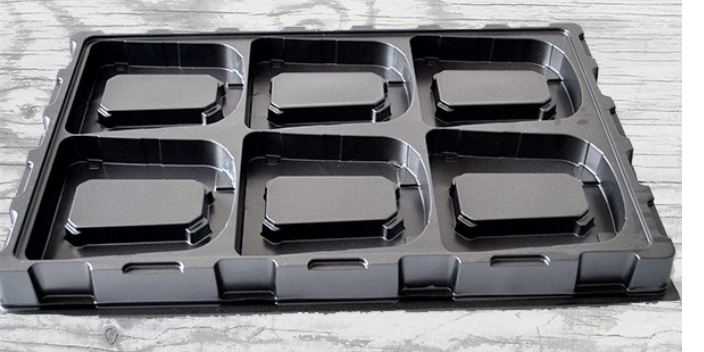
- Sector del embalaje: Bandejas para alimentos, fundas de blíster para componentes electrónicos, envases de juguetes y envases de blíster para cosméticos. Esta es la aplicación con mayor volumen de producción en el ámbito del moldeado al vacío.
- Industria del automóvil: Piezas grandes de paredes finas, como paneles interiores, revestimientos del techo, protectores de las puertas y revestimientos del maletero.
- Sector médico y de equipamiento: Carcasas de productos sanitarios, fundas protectoras, bandejas para instrumentos y protectores faciales.
- Electrodomésticos y electrónica de consumo: Revestimientos de frigoríficos, interiores de lavadoras, carcasas de televisores y cubiertas traseras de monitores.
- Publicidad y exposición: Letras luminosas, cajas de luz, expositores, maquetas decorativas y carteles publicitarios para puntos de venta.
- Logística y almacenamiento: Palés de plástico, fundas para cajas reutilizables y contenedores de material antiestático.
Conclusión
El moldeado al vacío es un proceso de moldeado de termoplásticos muy rentable. Destaca especialmente en el desarrollo de prototipos, la producción de lotes pequeños y medianos, y las piezas de plástico grandes de paredes delgadas. A la hora de seleccionar un proceso de fabricación, las empresas pueden evaluar los requisitos de precisión del producto, el tamaño del lote y la complejidad estructural para encontrar la solución de moldeado óptima.
PartsMastery ofrece servicios profesionales de termoformado al vacío para una amplia gama de materiales, entre los que se incluyen el ABS, el PETG, el PC y el acrílico. Cubrimos todas las fases del proceso, desde la creación de prototipos hasta la producción de lotes pequeños y medianos, y ofrecemos un servicio completo de posprocesado que incluye serigrafía, encolado y pintura. Proporcionamos soluciones de termoformado de plástico fiables y estables a clientes de todos los sectores.