Once you invest in a casting die, that cost becomes irreversible. Choosing the wrong process costs far more than a slightly higher unit price. It can lead to incomplete filling in thin-wall sections, surface blistering after T6 heat treatment due to trapped porosity, or unit costs that never drop even as production volume scales up. Aluminum gravity casting occupies a critical sweet spot in the process selection spectrum. This guide maps that boundary with hard data, explains where gravity casting outperforms high-pressure die casting, and provides a supplier checklist before you commit to tooling.
What Is Aluminum Gravity Casting?
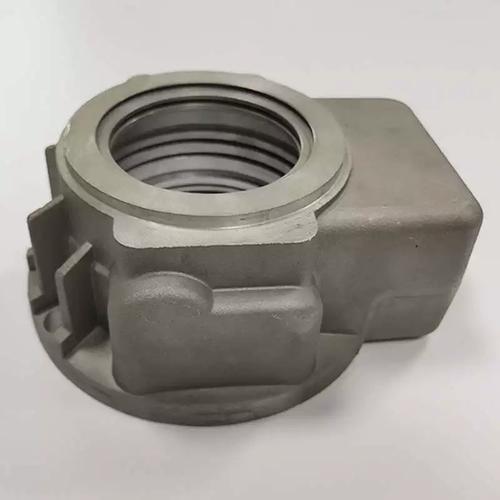
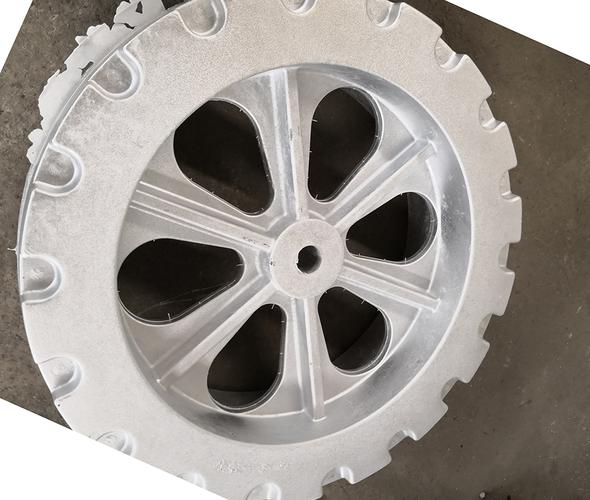
Aluminum gravity casting is a permanent mold process. Molten aluminum is poured into a reusable steel or iron die cavity and fills entirely under gravitational force — no external pressure is applied. The mold is preheated and coated with a release agent before each cycle. Metal enters through a top pouring basin, and the casting is removed once it solidifies and cools.
Industry literature sometimes calls this process “aluminum gravity die casting” or “permanent mold casting.” All three terms refer to the same method. For context: low-pressure casting uses a pressurized riser to push metal upward through the gate, while high-pressure die casting injects metal at hundreds of bar. Gravity casting uses no pressurization at all — it relies solely on the static head of metal in the pouring basin.
Compared with sand casting, gravity casting’s metal die delivers consistent cavity dimensions cycle after cycle — no retooling is needed between runs. This repeatability places gravity casting between sand casting and high-pressure die casting in both cost and consistency.
How Aluminum Gravity Casting Works
From molten aluminum to finished casting, the process breaks down into six steps:
Mold preheating and coating. Heat the permanent die to 200–300°C and spray a refractory release agent evenly. Mold temperature directly controls metal flow and skin formation speed.
Closing and clamping. Lock the two die halves together. Sand cores and metal inserts are pre-positioned to form internal cavities and undercuts.
Pouring and filling. An operator ladles molten aluminum into the top pouring basin. Fill speed depends on pour height and gating design, not a fixed machine cycle.
Solidification. Metal solidifies from the cavity wall inward. Risers feed solidification shrinkage to keep sections dense and shrinkage-free.
Die opening and ejection. The mold opens, and the casting drops by gravity or is pushed out by ejector pins.
Finishing and heat treatment. Remove runners and risers, then clean surfaces via shot blasting or tumbling. If the alloy supports it, apply T5 or T6 heat treatment to improve mechanical properties.
Tilt pouring is a more stable alternative. The die rotates from horizontal to vertical during filling, so metal flows smoothly into the cavity with minimal turbulence and air entrapment. This method delivers more controlled directional solidification and reduces dependence on operator skill.
Gating and riser layout determine whether solidification shrinkage pulls toward the gate or toward the mold wall. This is the core design challenge in gravity casting — and exactly why a design for manufacturability (DFM) review before tooling pays for itself.
Common Aluminum Alloys and Their Properties
A356 is the workhorse alloy for structural gravity castings. After T6 heat treatment, its strength-to-weight ratio and ductility reach levels that sand casting and conventional die casting cannot match. Per EN 1706, A356-T6 test bars deliver a minimum tensile strength of 290 MPa, yield strength of 210 MPa, and elongation of 4%.
Other alloys suit specific applications. A319 works well for engine and transmission housings where some hot cracking risk is acceptable. 6061 offers excellent weldability for frame structures that require post-cast joining. A380 is primarily a high-pressure die casting alloy, but it can also be used in permanent mold casting when part conditions allow.
Alloy
Castability & Shrinkage
Heat Treatable
Typical Applications
A356 / A356-T6
Excellent fluidity, ~1.3% shrinkage
Yes (T5/T6)
Structural brackets, housings, wheels
A319
Good, some hot cracking risk
Yes
Engine and transmission components
6061
Moderate, excellent weldability
Yes
Frames requiring post-weld strength
A380
Fair in permanent mold
Limited
General housings, primarily HPDC
Design Limits and Process Parameters
Gravity casting has a stable but well-defined process window. The following industry-standard parameters define the boundary between as-cast blanks and finish-machined parts:
Dimensional tolerance: ISO 8062-3 DCTG 8–10. Approximately ±0.3–0.6 mm for the first 25 mm.
Minimum wall thickness: 3–5 mm. Without pressure assist, metal skins over before filling thin sections.
Surface roughness: As-cast Ra 1.6–6.3 µm.
Machining allowance: 1.5–2.0 mm on faces requiring machining.
Draft angle: 0.5°–3° on steel dies.
Part weight: From a few grams up to approximately 50 kg.
When setting draft and machining allowances on A356 castings, reserve approximately 1.3% linear shrinkage. Otherwise, the casting envelope may exceed drawing tolerances before machining even begins. If as-cast dimensions cannot meet drawing requirements directly, secondary CNC machining can close the gap.
Gravity Casting vs. High-Pressure Die Casting
Thick-wall gravity casting (left) vs. thin-wall die casting (right)
Both processes use permanent molds, but they solve different engineering problems. Base your selection on economics and part requirements, not habit. When a part needs to carry load after T6 heat treatment, or when production volume cannot justify high-pressure tooling costs, aluminum gravity casting is the better choice. It also avoids the gas entrapment common in thin-wall high-pressure parts — a problem that often limits subsequent heat treatment.
Parameter
Gravity Casting
High-Pressure Die Casting
Filling pressure
Gravity head only
150–1200 bar
Dimensional tolerance
ISO 8062-3 DCTG 8–10
DCTG 5–7, typically ±0.1 mm
Minimum wall thickness
3–5 mm
1.5–2 mm
Surface finish
Ra 1.6–6.3 µm
Ra 0.8–3.2 µm
Economic volume
500–50,000 parts/batch
50,000+ parts/year
Machining cost
Lower
Higher
Die life
Long
Very long, millions of cycles
Heat treatable
Yes, low porosity
Limited, gas porosity risk
Internal density
Directional solidification, low porosity
Higher unless vacuum-assisted
Quick pros and cons:
Gravity Casting Advantages
HPDC Advantages
Better mechanical properties, low porosity
Tighter tolerances, thinner walls
Heat treatable, refined grain structure
Lower unit cost at high volume
Lower tooling investment
Faster cycles, higher throughput
Gravity Casting Limitations
HPDC Limitations
Thicker walls only
Gas porosity, limited heat treatment
Slower cycles, medium throughput
Higher die cost
For batches of only a few hundred parts, sand casting remains the most economical choice — even gravity tooling is hard to justify at that scale. Think of casting process selection as a three-step ladder: sand casting for prototypes and low volume, gravity casting for medium batches and heat-treated structural parts, and high-pressure die casting for mass-produced thin-wall components.
When to Choose Aluminum Gravity Casting
Gravity casting is the right choice when most of the following conditions apply:
The part requires T6 heat treatment for strength and toughness.
It is a structural or load-bearing component requiring internal soundness.
Production volume falls in the medium range — roughly 500 to 50,000 parts per batch.
Design wall thickness exceeds 3 mm.
Tooling budget is limited and cannot absorb high-pressure die casting costs.
Conversely, switch to high-pressure die casting when wall thickness is below 2 mm, annual volume reaches hundreds of thousands, tolerance requirements hit ±0.1 mm, or surfaces must be near-net-shape with no secondary machining allowed.
How to Select a Gravity Casting Supplier
Before paying for tooling, evaluate aluminum gravity casting foundries across these six dimensions:
In-house tooling capability. Foundries that design and machine their own dies have tighter control over lead times and revision cycles.
Alloy and heat treatment range. Confirm which grades they offer and whether T5/T6 is done in-house or outsourced.
Inspection methods. Look for X-ray inspection of internal integrity, CMM for dimensional verification, and cast test bars for mechanical property validation.
Integrated post-processing. Completing machining, blasting, and surface finishing under one roof significantly shortens overall lead time.
Quality certifications. ISO 9001 is the baseline; automotive requires ISO 16949, and medical requires ISO 13485.
DFM feedback capability. A supplier that provides annotated drawing reviews before tooling can prevent first-article rejects.
PartsMastery operates a certified casting network equipped with over 60 die casting machines, holding ISO 9001, ISO 16949, and ISO 13485 certifications. Our Shenzhen facility integrates tooling, casting, CNC machining, and surface finishing in one coordinated workflow — so gravity cast parts move from die to finished product without leaving the plant.
Available aluminum grades include ADC10, A380, ADC12, pure aluminum, DM6, HA6, HA4, and 6063. Secondary CNC machining holds dimensional precision within ±0.01 mm.