





1. SLM/LPBF: From Prototyping to Custom Volume Production
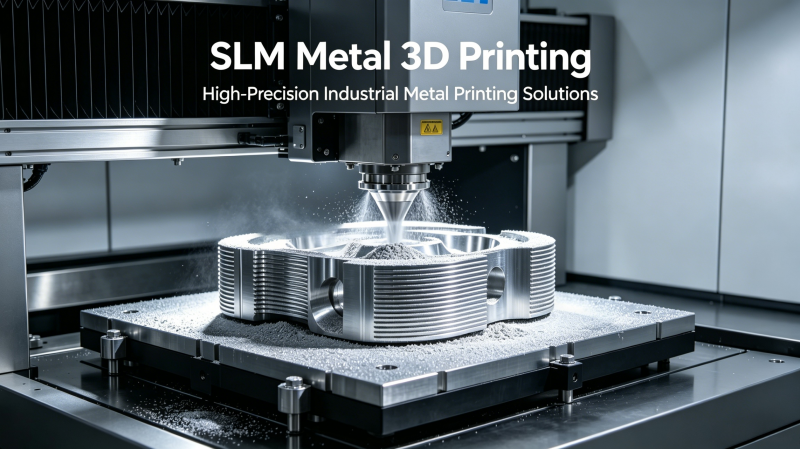
For engineering teams working on aerospace parts, medical implants, and high-performance automotive components, Selective Laser Melting (SLM) – also known as Laser Powder Bed Fusion (LPBF) – has grown far beyond basic prototyping.
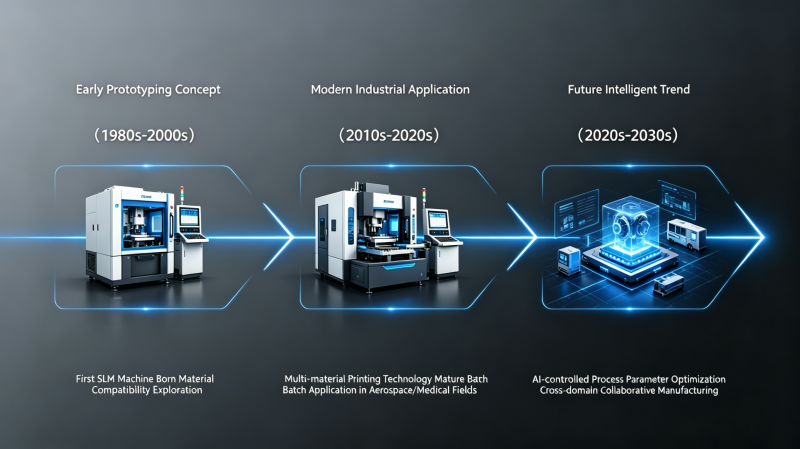
While early 3D printing could only produce visual models, modern SLM technology creates fully dense, functional metal parts that withstand heavy loads, low temperatures, and corrosive environments. Unlike traditional machining, SLM requires no custom molds or expensive tooling.
With SLM digital manufacturing, product development cycles shrink from months to days. Procurement teams can also replace physical inventory with digital CAD files and produce parts on demand.
2. How SLM Works: Layer-by-Layer Melting Process
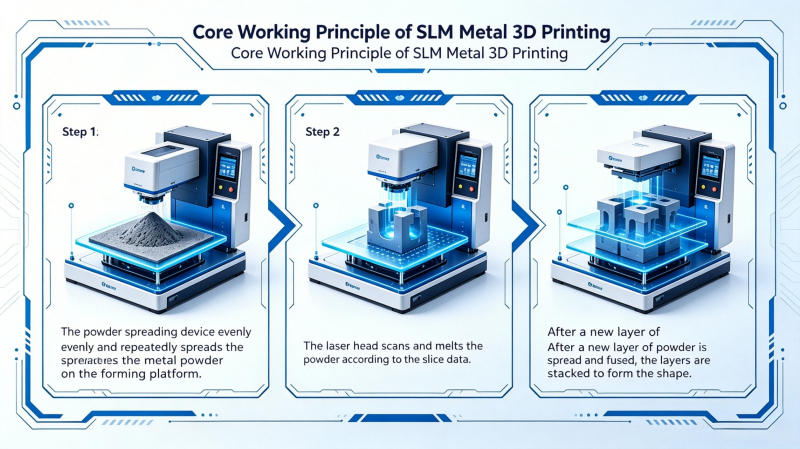
SLM builds parts inside a sealed, inert-gas chamber through a repeating three-step cycle:
- Powder Spreading: A fine layer of gas-atomized metal powder (20–50μm thick) is spread evenly over the build plate.
- Laser Melting: A high-power fiber laser selectively melts the powder according to the 3D model cross-section.
- Layer Stacking: The platform lowers slightly, and a new layer of powder is applied. The process repeats until the part is complete.
The inert atmosphere (argon or nitrogen) prevents oxidation, resulting in part density above 99.5% – matching or exceeding forged and cast metals. However, rapid heating and cooling create internal stress, making post-print heat treatment essential for load-bearing parts.
3. SLM 3D Printing vs. CNC Machining: How to Choose
3.1 Cost and Production Volume
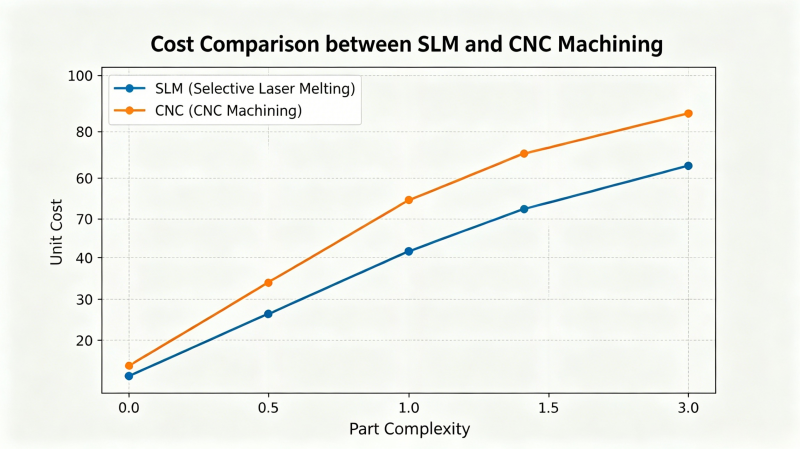
CNC machining is more cost-effective for simple, high-volume parts. But as part complexity increases, CNC costs rise quickly due to custom fixtures, multi-axis programming, and tool changes.
SLM costs remain stable even with highly complex designs. It offers clear advantages for small-to-medium batches of 1 to 500 parts. Many companies use SLM for early market delivery while mass-production molds are being prepared.
3.2 Part Integration and Lightweighting
Traditional parts like aerospace manifolds and automotive assemblies often require 10–30 separate components welded together. Each joint creates potential failure points and adds assembly and inspection costs.
SLM enables monolithic, one-piece production. Using topology optimization and lattice structures, engineers can reduce weight while maintaining strength – simplifying the entire supply chain.
4. Common Industrial Materials for SLM
Industrial SLM requires high-quality spherical gas-atomized powders for consistent printing. Below are the three most widely used materials:
| Material | Key Properties | Applications |
|---|---|---|
| Ti6Al4V Titanium | High strength-to-weight ratio, biocompatible, heat-resistant | Aerospace brackets, medical implants, racing components |
| 316L Stainless Steel | Strong, tough, corrosion-resistant | Fluid manifolds, surgical tools, marine parts |
| AlSi10Mg Aluminum | Lightweight, high thermal conductivity | Heat sinks, automotive cooling parts, robot components |
5. Post-Processing for SLM Parts
5.1 Stress-Relief Heat Treatment
All load-bearing SLM parts must undergo vacuum annealing while still attached to the build plate. This removes internal stress and prevents warping or cracking after cutting.
5.2 Surface Finishing
Raw as-printed SLM parts have a surface roughness of Ra 5–15μm. For precision surfaces such as bearings or seals, additional processes like sandblasting, polishing, or CNC machining are used to improve quality.
6. Parts Mastery: Factory-Direct SLM Solutions
Parts Mastery operates a 20,000 ㎡ production facility with multi-laser industrial SLM systems. By cutting out middlemen, we help clients reduce procurement costs by up to 30%.
Our cloud-based AI DFM system automatically analyzes CAD files for printability before production. We also provide in-house heat treatment, wire cutting, and full material traceability.
Customers can upload CAD files online for instant quotes and free DFM analysis, reducing risks in new product development.
Summary
SLM metal 3D printing turns complex, lightweight, integrated parts into cost-effective reality – ideal for aerospace, medical, and automotive applications. Proper material selection, standard post-processing, and factory-direct services maximize the technical and economic value of SLM.