





Molde de produção de baixo volume
Palavra-chave alvo: Molde para produção em pequenas quantidades
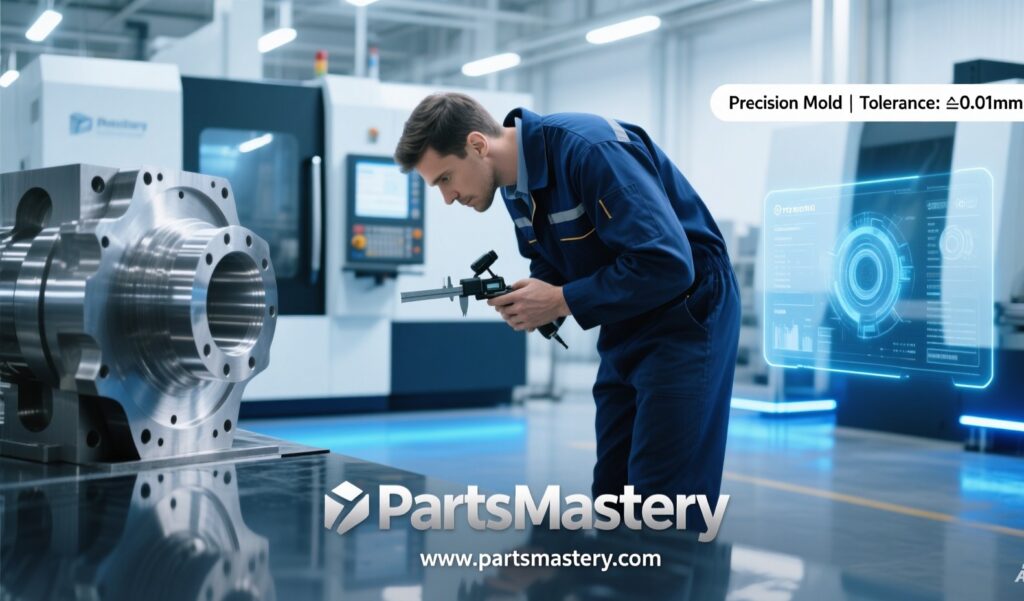
No mundo da produção, a regra antiga era simples: um volume elevado significava alta eficiência, e um volume baixo significava custos elevados. Durante décadas, se precisasse de 500 ou 5 000 peças de plástico, ficava preso numa «terra de ninguém» da produção. Os moldes de injeção tradicionais implicavam custos de ferramentas entre $30 000 e $100 000, tornando a produção de pequenos lotes financeiramente impossível. Felizmente, o surgimento do molde para produção de baixo volume rompeu completamente essa barreira.
Na PartsMastery, dedicámos as nossas capacidades de engenharia e de ferramentas a colmatar a lacuna entre a prototipagem e a produção em série. Um molde para produção de baixo volume não é simplesmente um “molde barato”. Trata-se de um ativo estratégico de fabrico concebido para produzir centenas ou milhares de peças funcionais com materiais de qualidade de produção, sem exigir o investimento de capital de uma ferramenta de produção em grande escala.
Este artigo analisa o que caracteriza um molde de produção de baixo volume, quando o utilizar e como a PartsMastery fornece componentes de qualidade para séries-piloto, testes de mercado e produção de nicho.
O que é, exatamente, um molde para produção de baixo volume?
Um molde para produção de baixo volume é uma ferramenta especificamente concebida para produzir uma quantidade limitada de peças — normalmente entre 100 e 50 000 unidades. Ao contrário de um molde de protótipo (que é frequentemente fabricado com materiais macios, como alumínio ou mesmo resina impressa em 3D, e se destina apenas a testes de ajuste), um verdadeiro molde de produção de baixo volume é concebido para peças funcionais que serão utilizadas, vendidas ou testadas em condições reais.
O principal fator diferenciador é o material da base do molde e da cavidade. Na PartsMastery, fabricamos moldes para produção de baixo volume utilizando:
-
Aço pré-têmido (por exemplo, P20 ou 4140): Adequado para 10 000 a 50 000 disparos.
-
Alumínio (por exemplo, QC-7 ou 7075): Adequado para 1 000 a 10 000 disparos.
-
Ferramentas de corte com pastilhas: Inserções de cavidade substituíveis que permitem modificar o desenho sem ter de descartar toda a base do molde.
Estes materiais permitem-nos maquinar cavidades mais rapidamente do que o aço para ferramentas temperado, reduzindo significativamente tanto o prazo de execução como os custos, sem deixar de garantir estabilidade dimensional e acabamento superficial.
A perspetiva económica: por que razão faz sentido utilizar moldes de baixo volume
A pergunta mais comum que ouvimos na PartsMastery é: “Porque é que não devo simplesmente construir um molde de aço para grandes volumes e amortizá-lo?” A resposta está no risco e no tempo.
Um molde de produção em grande volume para uma peça complexa pode demorar entre 12 a 16 semanas a ser maquinado, submetido a tratamento térmico e testado em bancada. Pode custar $50 000 ou mais. Se o seu produto não passar na validação de mercado, ou se descobrir uma falha de conceção após 500 unidades, essa ferramenta torna-se um peso de papel dispendioso.
Um molde para produção de baixo volume da PartsMastery requer normalmente 3 a 5 semanas prazo de entrega e uma fração do investimento inicial — muitas vezes 60% a 70% inferior ao de uma ferramenta de aço temperado. Isto significa que:
-
Menor risco financeiro: Deve avaliar o mercado antes de investir em ferramentas para grandes volumes.
-
Lançamento mais rápido no mercado: Lance o seu produto enquanto os concorrentes ainda estão à espera dos seus moldes.
-
Flexibilidade de conceção: As ferramentas flexíveis permitem realizar modificações mais facilmente com base no feedback recebido nas fases iniciais da produção.
Aplicações ideais para moldagem em pequenos volumes
Nem todos os projetos exigem um milhão de peças. Na verdade, muitos produtos de sucesso nunca atingem esse volume. Eis os cenários mais comuns em que um molde para produção de baixo volume é a solução ideal:
1. Produção-piloto de dispositivos médicos
Órgãos reguladores como a FDA exigem testes rigorosos antes do lançamento total no mercado. Um molde de produção de baixo volume permite que as empresas de dispositivos médicos produzam entre 500 e 2 000 unidades para ensaios clínicos, testes de biocompatibilidade e validação da esterilização. As peças são fabricadas a partir da mesma resina (por exemplo, PEEK, policarbonato ou ABS) que será utilizada na produção final, garantindo a validade dos resultados dos testes.
2. Componentes para o mercado pós-venda automóvel
Se fabricar um suporte, um clipe ou uma caixa especial para um modelo específico de veículo, só poderá vender 5 000 unidades por ano. Um molde de aço para grandes volumes nunca seria rentável. Um molde de produção de baixo volume da PartsMastery oferece a mesma precisão dimensional com uma estrutura de custos que se adapta à sua procura anual.
3. Caixas para aparelhos eletrónicos de consumo
As startups que lançam um novo dispositivo de IoT ou um wearable precisam frequentemente de 1 000 a 3 000 unidades para a sua campanha inicial de crowdfunding ou lançamento no mercado retalhista. Construir um molde de aço Classe 101 para essa quantidade é financeiramente irresponsável. Os nossos moldes de produção de baixo volume proporcionam às startups peças moldadas por injeção reais — e não protótipos dispendiosos usinados por CNC — a um preço que se adequa a orçamentos reduzidos.
4. Ferramentas de transição durante a fase de aumento da produção
Por vezes, uma empresa sabe que, a longo prazo, irá necessitar de grandes volumes de produção, mas não pode esperar 16 semanas por uma ferramenta de produção definitiva. A PartsMastery constrói um molde de produção de baixo volume que funciona como uma “ferramenta de transição”. A sua empresa produz 20 000 peças com essa ferramenta de transição para gerar receitas iniciais, enquanto, simultaneamente, construímos o seu molde de produção a longo prazo.
Seleção de materiais para moldes de baixo volume
Um dos equívocos mais comuns é a ideia de que os moldes para produção de baixo volume não podem utilizar resinas de qualidade técnica. Isso não é verdade. Na PartsMastery, os nossos moldes para produção de baixo volume são concebidos para processar uma vasta gama de termoplásticos, incluindo:
-
ABS e PC/ABS: Para caixas e carcaças estruturais.
-
Policarbonato (PC): Para lentes transparentes e peças resistentes ao impacto.
-
Nylon (PA6, PA66): Para engrenagens, buchas e componentes automóveis sob o capô.
-
POM (Acetal/Delrin): Para peças móveis de alta precisão que exigem baixo atrito.
-
TPE/TPU: Para a sobremoldagem de punhos e vedantes com toque suave.
-
PEEK e PEI (Ultem): Para aplicações médicas e aeroespaciais a altas temperaturas (com aço para ferramentas adequado).
A diferença reside no processo de fabrico. Um molde de produção de baixo volume que utilize nylon reforçado com fibra de vidro sofrerá um desgaste maior do que o mesmo molde que utilize ABS. Temos isto em conta ao especificar o material adequado para a cavidade e o revestimento de superfície (como TiN ou DLC), com base na resina utilizada e no número previsto de injeções.
O Processo de Moldagem de Baixo Volume da PartsMastery
Quando estabelece uma parceria com a PartsMastery para um molde de produção de baixo volume, não está simplesmente a adquirir uma ferramenta. Está a adquirir um processo de fabrico validado. Eis o nosso fluxo de trabalho padrão:
Passo 1: Análise do Design para a Fabricabilidade (DFM)
Analisamos o seu ficheiro CAD 3D tendo em conta, especificamente, as restrições relacionadas com a produção em pequenas séries. Procuramos recortes que exijam corrediças ou elevadores, transições na espessura das paredes que possam causar afundamento e localizações de canais de injeção que afetem a estética. Fornecemos um relatório DFM por escrito no prazo de 48 horas.
Passo 2: Análise do fluxo na moldagem
Antes de cortar uma única lasca de aço, simulamos o processo de injeção. Isto permite prever as linhas de soldadura, as bolsas de ar e a tonelagem de pressão necessária. No caso de moldes de baixo volume, recomendamos frequentemente configurações de uma ou duas cavidades, para simplificar o molde e reduzir os custos.
Etapa 3: Maquinação de precisão
Recorrendo à fresagem CNC de alta velocidade e à EDM (Maquinação por Descarga Elétrica), cortamos a cavidade e o núcleo. Como utilizamos materiais pré-têmperados, não é necessário um tratamento térmico secundário, o que permite poupar duas semanas no prazo de entrega.
Passo 4: Amostragem e inspeção do primeiro artigo
Cada molde de produção de baixo volume é testado nas nossas máquinas de moldagem por injeção. Produzimos as primeiras 20 peças e medimos todas as dimensões críticas utilizando uma CMM (Máquina de Medição por Coordenadas) e comparadores óticos. Receberá um relatório completo de inspeção do primeiro artigo (de acordo com as normas AS9102, se necessário).
Passo 5: Execução da produção
Assim que as peças de amostra forem aprovadas, produzimos todo o seu lote de baixo volume. Em seguida, embalamos e enviamos as peças — ou, se preferir, podemos enviar o próprio molde para a unidade de produção da sua escolha.
Expectativas de qualidade: o que se ganha e o que se sacrifica
A honestidade é fundamental na produção de ferramentas para pequenos volumes. Na PartsMastery, nunca fingimos que um molde de alumínio para produção de pequenos volumes irá durar um milhão de ciclos. Eis algumas expectativas realistas:
Receberá:
-
Peças com 90-95%, com o acabamento superficial e a estabilidade dimensional de um molde de aço de grande volume.
-
Tempos de ciclo dentro de um intervalo de 10-20% das velocidades de produção.
-
A capacidade de utilizar materiais de qualidade técnica.
Pode optar por:
-
Vida útil máxima da ferramenta (os moldes de alumínio desgastam-se após 10 000 ciclos).
-
Precisão extrema (as tolerâncias inferiores a 10 micrómetros podem exigir o uso de aço temperado).
-
Desaparafusamento totalmente automatizado ou ações laterais complexas (estas acarretam custos que contrariam o objetivo da produção em pequenos volumes).
Conclusão: A produção inteligente começa com volumes reduzidos
A indústria transformadora reconheceu finalmente que nem todos os produtos precisam de ser fabricados em milhões de unidades. O molde para produção de baixo volume é uma ferramenta estratégica — permite que empreendedores, engenheiros e gestores de produto lancem os seus produtos mais rapidamente, realizem testes de forma mais inteligente e aumentem a escala de produção apenas quando a procura o justificar.
Na PartsMastery, construímos a nossa reputação com base no fornecimento de moldes para produção em pequenas quantidades que funcionam de facto. Não comprometemos a qualidade apenas porque a quantidade é reduzida. Cada molde que fabricamos é concebido para funcionar de forma fiável durante toda a sua vida útil prevista, produzindo peças que cumprem as suas especificações.
Se tem um ficheiro CAD e está a pensar como produzir 500 ou 5 000 peças sem ter de hipotecar a sua empresa, a resposta é um molde para produção de baixo volume da PartsMastery.
Contacte-nos hoje mesmo para falarmos sobre o seu projeto. Ligue-nos ou envie-nos uma mensagem +86 13530838604 (WeChat) para falar com um engenheiro de aplicações. Envie-nos o seu modelo 3D e iremos fornecer-lhe uma análise DFM e um orçamento definitivo no prazo de 48 horas. Deixe que a PartsMastery o ajude a fabricar de forma mais inteligente — começando pela ferramenta certa para o seu volume de produção.