




• ホーム
  • -
  • ブログ
  • -
  • Customized China Tooling Maker: Precision Solutions Tailored to Your Exact Specifications

目次

Customized China Tooling Maker: Precision Solutions Tailored to Your Exact Specifications

Customized China Tooling Maker: Precision Solutions Tailored to Your Exact Specifications


Customized China Tooling Maker

In global manufacturing, one size rarely fits all. Off‑the‑shelf molds and standard tooling can only address the simplest production needs. For most engineered products—whether an automotive interior component, a medical device housing, a complex electronics enclosure, or a specialized industrial part—the mold must be designed and built to unique dimensions, materials, surface finishes, and cycle time requirements. That is where a Customized China Tooling Maker becomes an indispensable partner. China’s tooling industry has moved far beyond generic molds; it now offers world‑class customization capabilities, combining advanced engineering, flexible production, and cost efficiency.

Why Custom Tooling Matters

Custom tooling is not a luxury; it is a necessity for products with specific geometry, functional requirements, or brand identity. A customized mold ensures:

  • Perfect part geometry: Every draft angle, rib, boss, and undercut is placed exactly where the design requires, without compromise.

  • Optimized material flow: Mold flow simulation tailored to the chosen plastic (ABS, PC, Nylon, PEEK, etc.) or metal alloy (aluminum, zinc, magnesium) prevents defects like weld lines, air traps, or sink marks.

  • Controlled production efficiency: Cooling channel layout, ejection mechanism, and gate type are customized to achieve the target cycle time and production volume.

  • Long tool life: Steel grade, heat treatment, and surface coating (e.g., TiN, CrN, DLC) are selected based on the specific abrasive or corrosive nature of the material being molded.

  • Brand differentiation: Custom textures, logos, and part numbers can be directly machined into the mold, eliminating secondary operations.

Without customization, manufacturers face higher scrap rates, slower cycles, premature tool wear, and ultimately, increased total cost of ownership. A Customized China Tooling Maker addresses all these issues by designing the tool around the part—not the other way around.

Engineering Capabilities of China’s Custom Tooling Makers

China’s top custom tooling suppliers have invested heavily in design and simulation software, precision machinery, and skilled engineering teams. When you request a customized tool, the process typically includes:

  • Design for Manufacturing (DFM) Analysis: Before cutting steel, engineers review the part design for moldability. They identify potential issues such as insufficient draft, non‑uniform wall thickness, or difficult‑to‑eject features. Clients receive a detailed DFM report with suggested modifications. This collaborative step is the hallmark of a professional Customized China Tooling Maker.

  • 3D Modeling & Mold Flow Simulation: Using software like SolidWorks, UG/NX, or Cimatron, the mold is designed in full 3D. Mold flow analysis (e.g., Autodesk Moldflow) simulates plastic filling, packing, cooling, and warpage. The result is a mold design optimized for minimal residual stress and dimensional accuracy.

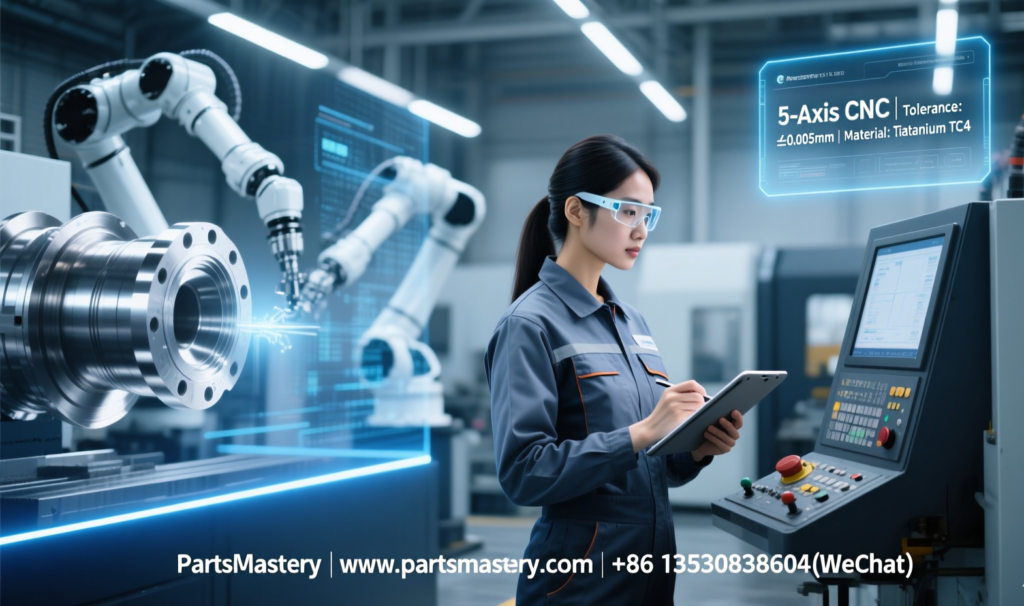
  • Multi‑axis CNC Machining: For complex geometries—such as curved parting lines, deep ribs, or intricate cores—5‑axis CNC centers produce the mold cavities in a single setup, improving accuracy and reducing lead time.

  • Electrical Discharge Machining (EDM) & Wire EDM: For features that cannot be milled (sharp internal corners, narrow slots), EDM with custom‑shaped electrodes is used. Wire EDM delivers precise die openings for stamping and progressive dies.

  • Surface Treatment & Polishing: Customized surface finishes range from SPI A‑1 (diamond polish) for optical lenses to SPI D‑3 (dry blast) for textured consumer goods. Chrome plating, nitriding, or PVD coatings can be applied to specific areas that require extra wear or corrosion resistance.

  • In‑Mold Instrumentation: For high‑precision applications, sensors for pressure, temperature, or flow can be embedded directly into the customized mold, enabling closed‑loop process control.

Industries Benefiting from Custom Tooling in China

Almost every sector that uses molded parts relies on custom tooling. Some prominent examples:

  • 自動車: Instrument panels, door handles, light housings, grilles, under‑hood connectors. Custom molds for these parts must meet IATF 16949 quality standards and often incorporate complex sliders, lifters, and unscrewing mechanisms.

  • Medical & Healthcare: Syringe barrels, IV connectors, surgical instrument handles, diagnostic device enclosures. These molds require ISO 13485 certification, cleanroom compatibility, and extremely tight tolerances (±0.005 mm or finer).

  • コンシューマー・エレクトロニクス: Smartphone cases, notebook bezels, smartwatch bodies, earbud charging cases. Here, cosmetic requirements are extreme: no weld lines, mirror finishes, and often multi‑material (overmolding) or two‑shot molding capabilities.

  • Household Appliances: Vacuum cleaner nozzles, coffee machine brew groups, blender jugs, washing machine detergent drawers. Custom molds for appliances require a balance of durability (1 million+ cycles) and aesthetic finish.

  • Industrial & Power Tools: Drill housings, gear casings, switch enclosures. These molds often use glass‑filled nylon or other engineering plastics, demanding hardened steel (H13, S136) and robust ejection systems.

The Process of Ordering a Custom Mold from a China Tooling Maker

Working with a Customized China Tooling Maker typically follows a structured, transparent process:

  1. Inquiry & Technical Review – You provide 2D drawings, 3D CAD files (STEP, IGES, or STP), material specifications, target annual volume, and any special requirements (surface texture, certification needs). The supplier reviews feasibility.

  2. Quotation & DFM – The tooling maker provides a fixed price, lead time (usually 4–8 weeks for a medium‑complexity injection mold), and a DFM report. Customization costs such as sliders, lifters, hot runners, and special coatings are itemized.

  3. Design Approval – You approve the final mold design (including cooling layout, ejection method, and gating). Any changes at this stage are minimal but manageable.

  4. Tool Fabrication – Steel is cut, electrodes are machined, cavities are EDM’d or milled. Quality control checkpoints occur after CNC roughing, heat treatment, and final finishing.

  5. Trial Molding – The mold is installed on an injection machine (or die casting press) at the supplier’s facility. First shots are inspected. Adjustments are made (venting, polish, ejector pin length) until parts meet the acceptance criteria.

  6. Sample Approval & Mold Shipment – Approved sample parts, inspection reports (FAI), and the mold itself are packed and shipped. Many suppliers also provide a mold passport detailing steel type, heat treatment certificate, and recommended process parameters.

Customization Options Beyond the Mold

A full‑service Customized China Tooling Maker often offers additional services that extend the value of customization:

  • Insert Molding & Overmolding Tooling: For combining metal inserts (threads, contacts) or soft‑touch overmolds (TPE on rigid plastic). These require complex cavity designs and often multiple injection units.

  • ホットランナーシステム: Custom machining of manifolds, nozzles, and valve gates to reduce sprue waste and improve cycle times. Chinese suppliers can design hot runners in‑house or integrate branded systems (Yudo, HRS, Mold‑Masters).

  • Texture & Engraving: Chemical etching or laser engraving to apply logos, part numbers, date wheels, or decorative patterns directly on the molded part.

  • Family Molds & Unscrewing Molds: Custom family molds produce multiple different parts in one cycle (e.g., left and right components). Unscrewing molds with threaded cores are made for caps and closures.

Why Choose a Chinese Supplier for Custom Tooling?

China remains the world’s manufacturing powerhouse for several reasons:

  • Cost Advantage: Even highly customized molds from China typically cost 30–50% less than equivalent tooling from Europe, Japan, or North America. This price difference allows companies to build more cavities, add advanced features (conformal cooling, hot runners), or create duplicate molds for volume production.

  • スピード: Standard custom injection molds from China are often delivered in 4–6 weeks, compared to 10–14 weeks in Western countries. Rapid‑response workshops and 24/7 operations make this possible.

  • Engineering Depth: Contrary to old stereotypes, leading Chinese tooling makers employ experienced mold designers and process engineers, many with 10–20 years of specialization in specific industries (e.g., medical, automotive).

  • スケーラビリティ: Once a custom mold is proven, the same supplier can produce identical duplicates (wholesale) for multi‑cavity expansion or backup tools.

Quality Assurance for Custom Molds

A responsible Customized China Tooling Maker will provide:

  • Material Certification: Mill certificates for steel grades (e.g., P20, 718H, S136, H13) verifying chemical composition.

  • Heat Treatment Records: Time‑temperature charts and hardness reports (HRC measurement at multiple points).

  • CMM Inspection Report: Full dimensional check of cavity, core, and critical mating surfaces.

  • Trial Run Video & Sample Parts: Clear documentation and physical samples before shipping.

  • Warranty: Typically 1 year or 500,000 shots (whichever comes first) covering material and workmanship defects.

Potential Challenges and How to Overcome Them

Custom tooling is a complex, cross‑border transaction. Common challenges include:

  • Communication of detailed requirements: Use clear technical drawings with GD&T (Geometric Dimensioning and Tolerancing) and specify all non‑negotiable features. Work with suppliers that have English‑speaking engineers.

  • Intellectual property protection: Sign NDAs, file design patents in China if critical, and choose suppliers with a reputation for respecting IP. Avoid sharing full 3D models until you have vetted the factory.

  • Post‑delivery support: Clarify who pays for mold modifications, spare parts (ejector pins, sleeves), or repairs. Some Chinese suppliers provide remote troubleshooting or maintain local service partners.

The Future of Custom Tooling from China

China’s tooling industry is moving toward higher precision, greater automation, and deeper customization. Additive manufacturing (3D printing) is increasingly used for conformal cooling channels—a customization that reduces cycle time by 20–40%. IoT‑enabled molds with embedded sensors allow real‑time process monitoring. As Chinese suppliers adopt Industry 4.0 technologies, the possibilities for custom tooling will only expand.

結論

For any company serious about producing high‑quality plastic, metal, or composite parts, a Customized China Tooling Maker is not just a vendor—it is a co‑engineer of your product’s success. By leveraging China’s advanced manufacturing ecosystem, you gain access to custom designs, tight tolerances, and rapid turnaround at a fraction of Western costs. Whether you need a single‑cavity prototype mold or a high‑cavity production tool with complex action, the right Chinese partner can deliver a solution tailored precisely to your specifications.

Start Your Custom Tooling Project Today

PartsMastery specializes in connecting global businesses with trusted Customized China Tooling Maker factories that match your technical and commercial needs.

ウェブサイト https://partsmastery.com
電話 / WeChat: +86 13530838604

PartsMastery – Your precision partner for custom tooling solutions from China.

お問い合わせ

    あなたの業界

    2D/3D図面のアップロード

    ファイルをアップロードして即座にお見積もり (STEP、IGES、DWG、PDF、STL、ZIPなど、あらゆる形式の2D CAD図面および3D CADモデルを添付してください)。.

    最大ファイルサイズ:20MB

    プロジェクトの詳細(部品名/数量/材質/色/表面仕上げを含めてください。)