






With the continuous upgrading of high-end manufacturing, industries including aerospace, precision medical devices, semiconductors and premium electronics have set extremely strict standards for the comprehensive performance of engineering plastics. Conventional general-purpose plastics fail to withstand harsh working conditions such as high temperature, high pressure, strong insulation and repeated thermal cycling. As a high-performance amorphous thermoplastic engineering plastic, PEI (Polyetherimide) stands out for its well-balanced superior properties and has become a preferred material for high-end precision components.
This guide fully introduces the basic definition, core performance, mainstream grades and processing methods of PEI. It also analyzes common processing challenges, compares PEI with similar engineering plastics, elaborates on practical industrial applications, and answers frequently asked questions about material selection and production. It serves as a practical reference for material procurement and component manufacturing.
1. What is PEI (Polyetherimide)?
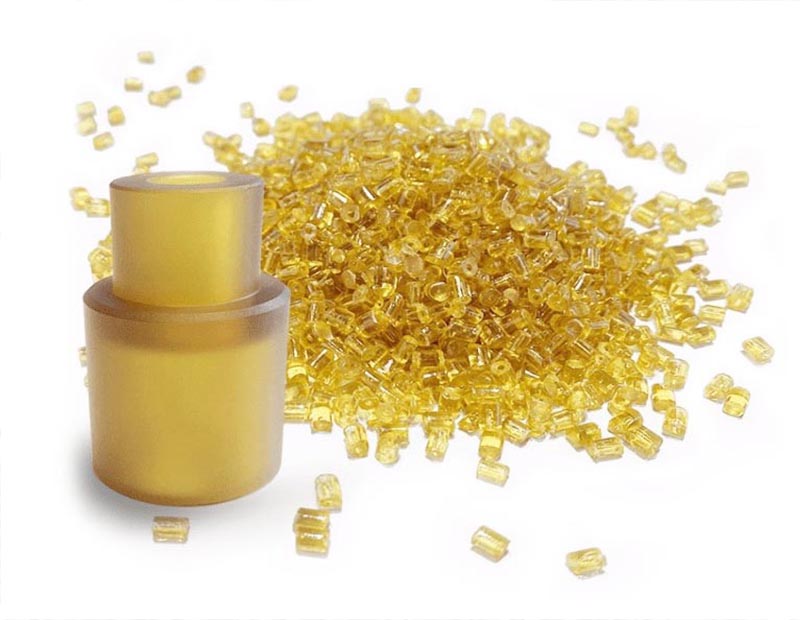
PEI is the abbreviation for Polyetherimide, a high-performance thermoplastic engineering plastic developed for high-temperature, high-precision and high-safety working environments. The most well-known commercial grade of PEI is Ultem®, and many professional chemical manufacturers worldwide now produce PEI products with various specifications.
Different from most ordinary plastics on the market, PEI features exceptional performance stability. Its physical form and mechanical properties will not degrade obviously even under long-term high-temperature exposure or frequent thermal cycling. This material comes with built-in insulation and inherent flame retardancy without adding extra flame retardant additives, making it highly competitive for equipment that requires strict fire safety standards.
When designers need to develop lightweight components with high heat resistance, structural strength and electrical safety, PEI is always one of the top choices. Today, PEI has been widely adopted in aerospace, semiconductor production, medical equipment, high-end automotive parts and precision industrial machinery.
2. Five Core Performance Advantages of PEI
PEI gains wide recognition in high-end engineering fields thanks to five irreplaceable core properties, which perfectly match the demanding requirements of industrial scenarios.
2.1 Excellent Heat Resistance
PEI delivers far better heat resistance than ordinary engineering plastics. It can maintain stable shape and mechanical strength under prolonged high-temperature conditions. Thanks to its high glass transition temperature, PEI parts will not soften or deform easily, which effectively reduces dimensional deviation and long-term component failure risks.
Due to this characteristic, PEI is widely used for high-temperature sterilizable medical accessories, semiconductor positioning tooling, electrical insulation parts and mechanical components enduring continuous thermal shock.
2.2 High Strength & Rigidity with Light Weight
Compared with traditional metal materials, PEI combines high hardness and rigidity with lighter weight. Replacing metal parts with PEI can guarantee structural stability while reducing the overall weight of equipment.
Its outstanding rigidity helps components maintain tight dimensional tolerance during machining, assembly and long-term operation, which is critical for electrical enclosures, aerospace interior parts and semiconductor fixtures with ultra-high precision requirements. It is worth noting that PEI is relatively brittle and less tough than Nylon or PC. Product designers need to optimize wall thickness and arc structure to avoid cracking caused by stress concentration.
2.3 Stable Electrical Insulation in Wide Temperature Range
PEI maintains reliable insulation performance across a broad temperature spectrum. Its insulating capability will not decline sharply even in high-temperature and high-humidity environments. Therefore, it is commonly used for circuit connectors, insulation components, semiconductor fixtures and electrical housings.
The combination of stable insulation and inherent flame retardancy enables PEI parts to meet fire prevention and electrical safety regulations. It is widely applied in airborne electronic systems, industrial control equipment and semiconductor production facilities.
2.4 Inherent Flame Retardancy & Low Smoke Emission
PEI is naturally flame-retardant, so no additional flame retardants are required, simplifying material formulation and selection. Meanwhile, it produces much less smoke when burning than most engineering plastics, a key advantage for enclosed spaces with dense crowds.
PEI is an ideal option for aircraft cabin interiors, transportation equipment trims and electrical enclosures with strict fire and smoke control standards. Its flame resistance also extends the service life and operational safety of electrical systems working under high temperatures.
2.5 Superior Dimensional Stability
Excellent dimensional stability is one of PEI’s most prominent strengths. PEI components can keep their original shape against temperature changes, mechanical force and long-term service wear.
For semiconductor fixtures, precision machined parts and aerospace components, even tiny dimensional changes will affect equipment accuracy and assembly effect, which PEI can effectively prevent. Nevertheless, manufacturers need to control internal stress, material moisture absorption and thermal expansion. Standardized material storage, optimized processing parameters and reasonable product design are essential to preserve dimensional accuracy.
3. Main Reasons for Choosing PEI in Engineering Projects
Common plastics are prone to failure under extreme conditions such as high temperature, heavy stress and strong electric fields, while PEI can withstand harsh working environments and lower equipment failure risks. Here are the three major reasons why high-end engineering projects prefer PEI:
3.1 Lightweight Alternative to Traditional Metal Parts
PEI is a mainstream lightweight substitute for metal components in aerospace, electronics and industrial equipment. After replacement, the overall weight of equipment is reduced without compromising structural rigidity and heat resistance.
Weight reduction brings remarkable benefits to aviation and transportation industries, improving energy efficiency and overall equipment performance. In addition, metal parts usually need extra coatings or accessories to achieve insulation, while PEI has native insulation performance and simplifies product structure design. However, PEI is not recommended for core components bearing heavy loads, severe wear or long-term continuous stress.
3.2 Stable Performance Under Long-term High Temperature
Most general plastics will soften, deform and lose strength after long-term exposure to high temperatures, but PEI retains stable shape and performance continuously.
For this reason, PEI is massively used in semiconductor processing equipment, electrical systems, aerospace interiors and medical devices requiring repeated high-temperature sterilization. Its stable thermal performance reduces maintenance frequency, improves overall equipment reliability, and ensures consistent dimensions during production and assembly.
3.3 Ensure Long-term Safe Operation of Electrical Equipment
The integration of insulation, flame retardancy and dimensional stability makes PEI a key material for the electrical and electronics industry. PEI components can work stably for a long time in electrical systems with high temperature, high voltage and strict safety requirements.
PEI can be found in circuit connectors, insulation parts, electrical enclosures, testing tooling and semiconductor equipment components. Its low smoke property helps products pass fire safety tests. Compared with conventional engineering plastics, PEI has better insulation durability at high temperatures, making it an excellent choice for avionics and industrial automation equipment.
4. Four Main PEI Grades & Their Application Scenarios
Based on reinforcing fillers, performance characteristics and processing difficulty, PEI on the market is divided into four major grades. Each grade differs greatly in applicable working conditions, cost and processing requirements for targeted selection.
4.1 Unfilled Virgin PEI
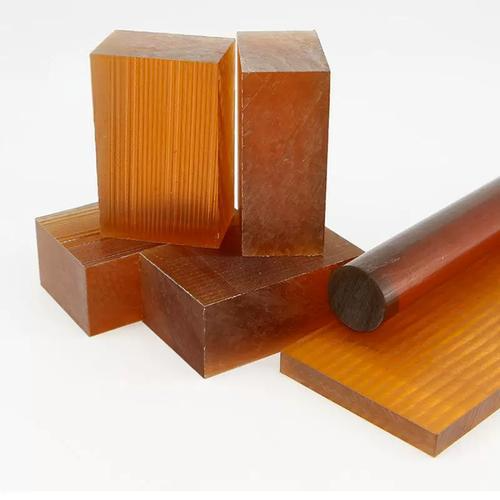
Virgin PEI without any reinforcing fillers delivers balanced overall performance in heat resistance, insulation, mechanical strength and machinability. It is widely used for precision machined parts, semiconductor fixtures, electrical housings and medical device components.
Compared with reinforced PEI, virgin PEI is easier to process and delivers a smooth surface after CNC machining. It also has a translucent appearance suitable for scenarios requiring perspective design. Its main disadvantage is insufficient rigidity, so it cannot bear heavy mechanical loads or be made into large structural parts.
4.2 Glass Fiber Reinforced PEI
By adding glass fiber into PEI base material, this grade achieves greatly improved rigidity, structural strength and dimensional stability, along with a lower coefficient of thermal expansion. It is commonly used for industrial tooling fixtures, aerospace brackets and components enduring long-term thermal and mechanical stress.
Glass fiber reinforced PEI is the optimal choice for equipment with strict requirements on dimensional accuracy and positioning stability under variable temperatures. The downside is that glass fiber accelerates tool wear and increases processing difficulty. Improper cutting parameters or tool selection will damage the surface finish of finished products.
4.3 Carbon Fiber Reinforced PEI
Carbon fiber reinforced PEI is further upgraded in rigidity, wear resistance and dimensional stability with an even lower thermal expansion coefficient. It is mainly applied in semiconductor manufacturing, electronic component conveying equipment and special industrial devices.
Carbon fiber also optimizes the electrostatic dissipation performance of the material, which is vital for semiconductor fixtures and electronic conveying parts with strict anti-static requirements. This grade is relatively expensive and has the highest processing difficulty among all PEI types. Users need to balance performance, cost and processing conditions before selection.
4.4 Transparent Grade PEI
Transparent PEI retains the core advantages of heat resistance and flame retardancy of base PEI, with a translucent visual effect. It is widely used for medical equipment, laboratory instruments, equipment observation covers and special engineering components. Operators can view the internal operation status through the material while the component withstands high temperature and mechanical load.
One shortcoming is that scratches and machining marks are more visible on transparent PEI. If used for appearance parts, fine machining, material protection and surface treatment are necessary.
5. Three Mainstream PEI Processing Technologies & Applications
Currently, three processing methods are widely adopted for PEI components in the industry: CNC Machining, Injection Molding and 3D Printing. Each technology fits different production volumes, precision standards and product shapes.
5.1 CNC Machining
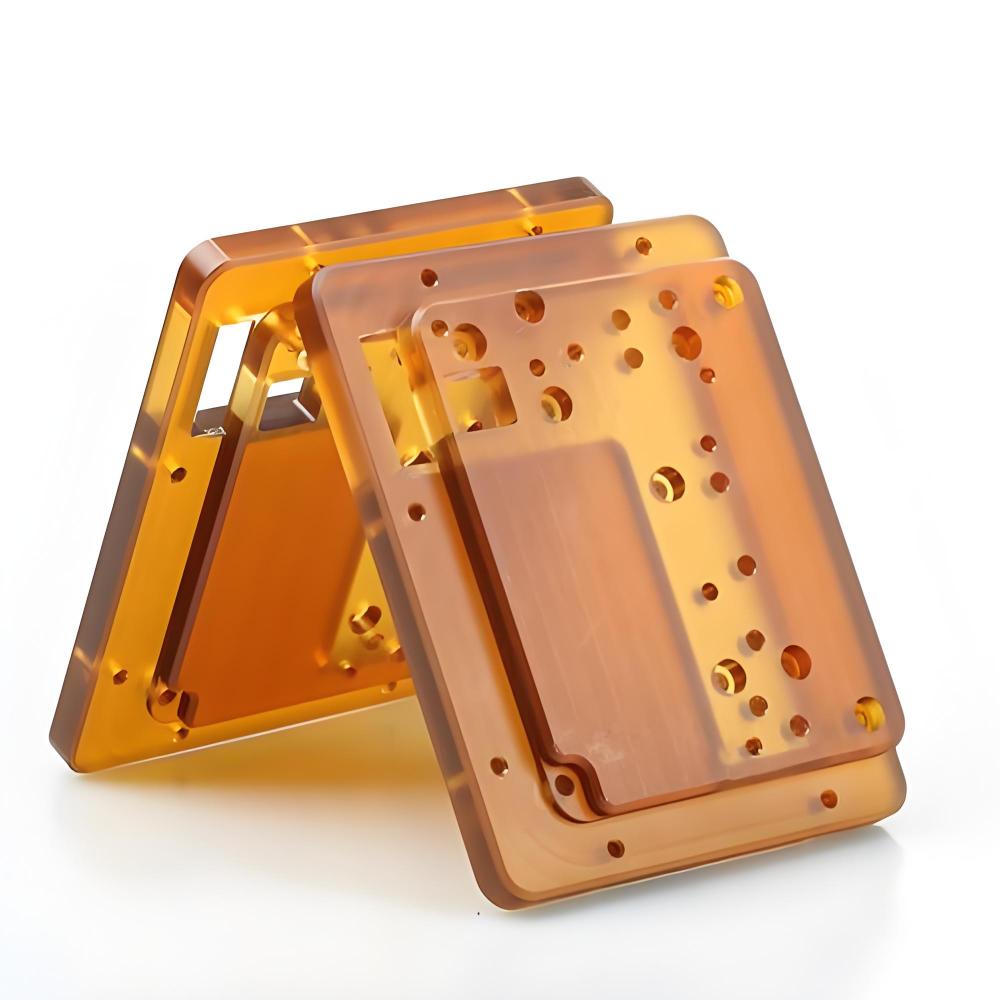
CNC machining is the mainstream process for PEI prototypes, small-batch customized parts and ultra-high precision components. It requires no mold opening and features high production flexibility, ideal for customized parts such as semiconductor fixtures, electrical insulation parts, aerospace brackets, medical components and industrial tooling.
During machining, operators need to precisely control cutting speed, feed rate and cutting zone temperature, and always use sharp cutting tools. Excessive heat accumulation will cause surface defects, internal stress, dimensional deviation and edge chipping. Using stable fixtures and reserving reasonable machining allowance can greatly improve the yield rate.
5.2 Injection Molding
Injection molding is designed for mass production of standardized PEI parts with high efficiency and consistent product quality. It is widely used for aerospace interior parts, electrical enclosures, medical accessories and general industrial components.
PEI requires much higher injection temperature than ordinary engineering plastics. Manufacturers must strictly control mold temperature, cooling speed and gate position, and fully dry raw materials in advance to avoid internal stress, warpage and surface defects. Combined with its flame retardancy and dimensional stability, PEI injection molded parts are widely used in core equipment with long-term safety requirements.
5.3 3D Printing
PEI is also a common material for high-temperature 3D printing. It is extensively used to produce functional prototypes and lightweight structural parts for aerospace, medical and industrial fields, as well as prototype verification during new product development.
PEI 3D printing demands high-performance printers with stable chamber temperature control and high-temperature nozzles. Unbalanced temperature will lead to warpage, poor interlayer bonding and dimensional errors. Although 3D printing offers high design freedom, CNC machining and injection molding are still preferred for high-precision mass production due to limitations in accuracy and surface finish.
6. Four Major PEI Processing Difficulties & Solutions
Despite excellent comprehensive performance, PEI is much harder to process than ordinary plastics. Heat accumulation, cracking and edge chipping, rapid tool wear and moisture-induced dimensional deviation are the four main challenges. Practical solutions based on industrial experience are listed below:
6.1 Excessive Cutting Heat Accumulation
PEI has high thermal resistance, so heat generated during cutting cannot dissipate quickly. Concentrated high temperature will deform parts, melt the surface, increase internal stress and damage tolerance and surface quality.
Solutions: Use sharp cutting tools, adopt moderate cutting speed and steady feed rate, and optimize tool paths. Improve chip removal structure to reduce heat accumulation in the cutting zone.
6.2 Cracks & Edge Chipping
PEI is relatively brittle. Sharp inner corners, thin-wall structures and aggressive cutting parameters will cause stress concentration. Fine structures such as small holes, threads and thin edges are easily damaged during finishing and assembly.
Solutions: Design parts with large arc corners and eliminate sharp angles. Reserve proper machining allowance and optimize feed parameters. Use firm clamping fixtures to reduce workpiece vibration during processing.
6.3 Rapid Tool Wear
When machining glass fiber or carbon fiber reinforced PEI, hard fillers will continuously wear cutting tools. Blunt tools increase cutting resistance and heat generation, resulting in burrs, rough surfaces and dimensional errors.
Solutions: Use cemented carbide cutting tools and optimize the overall cutting parameters according to material characteristics. Inspect tool status regularly and replace blunt tools in a timely manner.
6.4 Dimensional Deviation Caused by Moisture
Although PEI is less hygroscopic than Nylon, absorbed moisture still affects machining accuracy. Improper material storage leading to excessive moisture will cause dimensional shift and surface defects during machining or injection molding, especially for high-precision parts.
Solutions: Fully dry raw materials before processing. Standardize material storage in a dry environment and keep stable temperature and humidity in the workshop to guarantee component dimensional accuracy.
7. Comparison Between PEI and Mainstream Engineering Plastics
During material selection, engineers often compare PEI with popular engineering plastics such as PEEK, Nylon, PC and PPS. Each material has its own advantages in heat resistance, mechanical strength, machinability and cost. The table below provides clear selection references for different working conditions:
| Comparison | PEI Properties | Competitor Properties | Practical Selection Advice |
|---|---|---|---|
| PEI vs PEEK | Outstanding heat resistance, flame retardancy, insulation and dimensional stability; lower cost | Better chemical resistance, wear resistance and toughness; superior performance in extreme working conditions | Choose PEI for electrical insulation, fire prevention and cost control; choose PEEK for corrosive media and high-wear scenarios |
| PEI vs Nylon | Far better heat resistance, flame retardancy, insulation and dimensional stability at high temperatures | Good toughness and impact resistance, easy to process, low cost; high water absorption | Choose PEI for high-temperature and high-precision scenarios; choose Nylon for normal temperature, low load and cost-sensitive projects |
| PEI vs PC | Better heat resistance, thermal stability and flame retardancy | Strong impact resistance, easy processing, cost-effective; suitable for transparent civil parts | Choose PEI for industrial high-temperature parts, aerospace and electronic components; choose PC for low-temperature impact-resistant civil products |
| PEI vs PPS | Advantages in insulation, flame retardancy, mechanical performance and dimensional stability | Excellent chemical resistance, extremely low water absorption and stable dimensions | Choose PEI for electrical and fire-proof parts; choose PPS for severe chemical corrosion environments |
8. Industrial Application Scenarios of PEI
Benefiting from its well-rounded performance, PEI has been widely used in multiple high-end manufacturing industries. Different industries make full use of PEI’s core properties according to their own working conditions.
8.1 Aerospace Industry
In the aerospace sector, PEI is mainly used for cabin interior panels, equipment brackets, electrical enclosures, insulation components and lightweight structural parts. Its flame retardancy and low smoke emission fully comply with strict aviation safety regulations.
Replacing traditional metal parts with PEI effectively reduces aircraft weight and improves fuel efficiency. Meanwhile, PEI components maintain stable performance under repeated thermal cycling, vibration and high temperature, extending the service life of aerospace equipment.
8.2 Medical Device Industry
The medical industry mainly utilizes PEI’s heat resistance, dimensional stability and resistance to repeated high-temperature sterilization. It is widely applied to surgical instrument handles, medical trays, equipment housings and diagnostic instrument parts.
The shape and performance of PEI components will not change obviously after multiple cleaning and sterilization cycles, ensuring stable operation of medical equipment. PEI also features good strength and insulation, suitable for various medical electronic devices and laboratory instruments. Note: Confirm that the selected PEI grade meets relevant medical regulations and biocompatibility standards before use.
8.3 Electronics & Semiconductor Industry
Electronics and semiconductors are core application fields of PEI. Relying on excellent insulation and thermal stability, PEI is made into wafer handling fixtures, testing sockets, insulation parts and various high-temperature precision tooling.
Stable dimensional performance guarantees the machining accuracy of semiconductor production equipment, and its flame retardancy and low smoke characteristics meet fire safety requirements for electrical devices. PEI is an indispensable basic material for precision electronic systems.
8.4 Automotive Manufacturing Industry
In the automotive industry, PEI is mostly used for insulation parts, lighting components and sensor housings in high-temperature areas such as engine compartments. Its superior heat resistance adapts to the harsh high-temperature environment around engines, and its lightweight feature conforms to the lightweight and energy-saving design trend of modern automobiles.
PEI is mainly adopted for high-end customized automotive parts rather than low-cost mass-produced ordinary accessories. It is only selected when thermal stability, precision and fire resistance have higher priority than cost.
8.5 General Industrial Equipment
Industrial equipment manufacturers use PEI to produce tooling fixtures, insulation systems, precision machined parts and components working under continuous high temperature and electric load. Stable performance and dimensions ensure consistent operating status during long-term continuous production.
PEI works reliably in automated production lines, electrical control systems and testing equipment where ordinary plastics are prone to failure, making it a top choice for customized high-end industrial components.
9. FAQ about PEI Material Selection & Processing
Combined with practical industrial experience, we answer four frequently asked questions about PEI selection and processing:
Q1: Is PEI suitable for small-batch customized components?
A1: Absolutely. PEI is an ideal choice for customized parts requiring heat resistance, insulation and high dimensional stability. For prototypes, replacement parts and tooling fixtures with small production volume, CNC machining is preferred, which has lower cost and shorter lead time compared with injection molding that requires mold opening.
Q2: What factors should be considered when choosing PEI instead of low-cost ordinary plastics?
A2: First, evaluate the actual working conditions of components. If parts work under normal temperature and low load without strict fire and insulation requirements, low-cost ordinary plastics are enough to control expenditure. PEI is cost-effective only when components need high heat resistance, inherent flame retardancy, strong insulation or ultra-high dimensional stability.
Q3: Does PEI need special treatment before forming?
A3: Yes. Moisture control is required during storage and processing to avoid dimensional deviation and surface defects. Raw materials must be fully dried before injection molding. For CNC machining, keep cutting tools sharp and control cutting temperature strictly to ensure processing accuracy.
Q4: What core information should be included in a PEI processing inquiry?
A4: A complete inquiry document needs 2D drawings, 3D models, specific PEI grade, tolerance standards, surface finish requirements, order quantity and operating temperature of parts. Mark key structural features such as thin walls, tiny holes, insulation areas and assembly surfaces as well.
結論
PEI (Polyetherimide) is a high-performance thermoplastic engineering plastic with comprehensive advantages including outstanding heat resistance, superior dimensional stability, inherent flame retardancy and reliable electrical insulation. It perfectly fits the stringent requirements of aerospace, medical devices, semiconductors, automobiles and high-end industrial equipment.
However, PEI is not a universal material. Its relatively high material cost, complex processing technology and brittleness require users to comprehensively judge according to working conditions, production processes and budget during selection. For manufacturers engaged in PEI precision component processing, strictly controlling processing parameters and moisture management of raw materials are the keys to producing high-quality finished products.