





目次

China Tooling Maker Factories: The Engine Room of Global Production

China Tooling Maker Factories: The Engine Room of Global Production


China Tooling Maker Factories

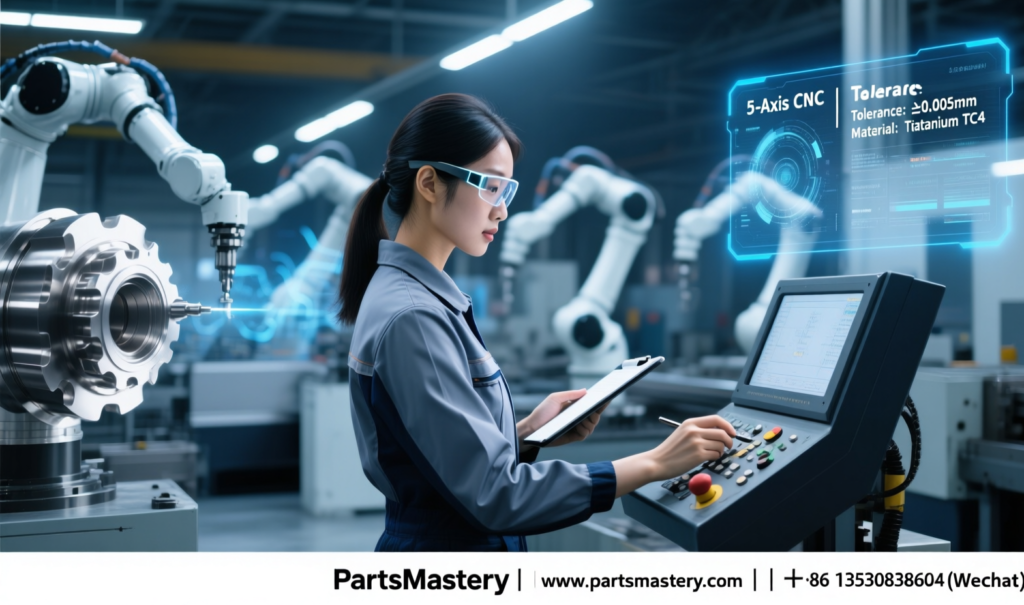
Behind nearly every mass‑produced plastic part, metal component, or precision assembly lies a carefully crafted tool—a mold, a die, or a fixture. When industries around the world need reliable, high‑volume tooling at a competitive cost, they turn to China Tooling Maker Factories. These facilities are not merely low‑cost producers; they are increasingly sophisticated manufacturing hubs equipped with advanced CNC machining, electrical discharge machining (EDM), wire cutting, and injection molding cells. They serve automotive, electronics, medical, consumer goods, and industrial equipment sectors with a combination of speed, precision, and scalability that is hard to find elsewhere.

Why China Tooling Maker Factories Dominate the Landscape

China’s tooling industry has grown from a cottage industry into a global powerhouse. According to industry reports, China is home to over 30,000 mold and tooling enterprises, employing more than one million people. The country’s annual tooling output value exceeds 360 billion RMB, directly enabling downstream manufacturing worth trillions of RMB. More importantly, China Tooling Maker Factories have moved up the value chain: they now routinely achieve tolerances of ±0.01 mm or better, produce surface finishes down to Ra 0.2 µm, and support mold lifespans exceeding one million shots for high‑volume injection molding.

This transformation has been driven by massive investment in machinery, workforce training, and quality management systems. Major industrial clusters have emerged, each with its own specialization, allowing global buyers to match project requirements with precisely the right type of supplier.

Critical Manufacturing Capabilities

A modern China tooling maker factory typically offers a comprehensive suite of services, moving beyond simple tool fabrication to full product realization support.

1. Injection Molding Tooling
Plastic injection molding accounts for the majority of tooling demand globally. Chinese factories excel in producing multi‑cavity molds, family molds, hot runner molds, and unscrewing molds for threaded parts. Using high‑speed CNC machining centers (often 5‑axis) and advanced EDM equipment, they produce complex geometries with consistency. Simulation software like Moldflow is widely adopted to predict filling, cooling, and warpage before cutting steel, drastically reducing trial‑and‑error cycles.

2. Die Casting Tooling
For aluminum, zinc, and magnesium alloy parts, die casting molds must withstand extreme temperatures and pressures. Top China Tooling Maker Factories use H13, SKD61, or DAC55 tool steel, and apply vacuum die casting or high‑pressure die casting techniques. These molds produce automotive brackets, LED housings, power tool bodies, and electronic enclosures with excellent dimensional stability.

3. Stamping and Progressive Dies
Sheet metal stamping dies—both single‑operation and progressive dies—are produced with wire EDM and precision grinding. Chinese factories can build dies that run at speeds of 400–1,200 strokes per minute, creating parts for connectors, automotive panels, and appliance components.

4. Rapid Tooling and Bridge Tooling
For low‑volume production or market testing, China Tooling Maker Factories offer rapid tooling using aluminum or soft steel, with lead times as short as 7–15 days. This allows product developers to validate designs before committing to high‑volume production tooling.

Regional Specialization: Where to Find the Right Factory

China’s tooling industry is clustered geographically, and understanding these clusters helps buyers source more efficiently.

  • Guangdong Province (Pearl River Delta): The most concentrated region for precision injection molds, especially in Dongguan, Shenzhen, and Foshan. These factories serve electronics, home appliances, and medical devices. They are known for fast turnaround, advanced 5‑axis machining, and strong design for manufacturability (DFM) capabilities. The Dongguan region alone is estimated to have over 15,000 mold‑related companies.

  • Zhejiang Province (Yangtze River Delta): Ningbo and Taizhou are major hubs for large‑scale molds used in automotive bumpers, dashboards, home appliance housings (refrigerators, washing machines), and logistics containers. Many factories in this region have ISO 9001 and IATF 16949 certifications. Huangyan District—often called “China’s Mold Town”—produces a significant share of the country’s precision molds.

  • Jiangsu Province: Suzhou and Kunshan focus on high‑precision molds and dies for connectors, semiconductors, and precision machinery. These factories often work with Swiss or Japanese CNC equipment and prioritize tight tolerances in controlled environments.

  • Shandong and Hebei Provinces: Known for heavy‑duty die casting and stamping dies for industrial machinery and agricultural equipment. These regions also produce tooling for large‑scale automotive body panels.

Quality Assurance: Beyond “Cheap Labor”

A reliable China tooling maker factory operates with documented quality systems. Certifications such as ISO 9001:2015 are standard, while automotive suppliers often hold IATF 16949. Medical device tooling may require ISO 13485. These certifications ensure regular calibration of measuring instruments, well‑documented inspection protocols, and traceability of materials and heat treatment records.

Typical quality control steps include:

  • First Article Inspection (FAI): Complete dimensional report of the first part from a new mold, often using CMM (Coordinate Measuring Machine) and optical comparators.

  • In‑process checks during electrode machining, cavity milling, heat treatment (hardness verification HRC), and final assembly.

  • Trial shots on injection molding machines or die cast cells, often including short‑run production to validate cycle time, ejection, and cooling.

  • Run‑out and match checks for multi‑cavity molds and cores.

Leading factories provide full documentation including material certificates, heat treatment records, and inspection reports.

Cost Advantage and Lead Times

It is no secret that China Tooling Maker Factories offer competitive pricing—typically 30–50% lower than equivalent Western or Japanese tooling. This cost advantage comes from integrated supply chains, lower labor rates (although rising), and high utilization of expensive machinery. More importantly, lead times are often shorter. A typical injection mold requiring 8–12 weeks in North America or Europe can be completed in 3–6 weeks in China, including mold flow analysis, design revisions, and two or three trial samples.

For bridge tooling or simple prototype molds, lead times of 10–20 days are common. This speed enables product companies to launch faster, iterate quickly, and respond to market feedback without massive upfront tooling investment.

Innovation and Digitalization in Chinese Tooling Factories

The industry is rapidly adopting Industry 4.0 concepts. Many China Tooling Maker Factories now use ERP (Enterprise Resource Planning) and MES (Manufacturing Execution Systems) to monitor job progress in real time. Some have integrated sensors into molds for smart manufacturing—tracking temperature, pressure, and cycle counts—which helps predict maintenance and reduces downtime.

Additionally, additive manufacturing (3D printing) is increasingly used for conformal cooling channels in injection molds. These channels follow the part contour, dramatically reducing cooling time and improving part quality. Chinese factories are investing in metal 3D printing machines from both domestic and European suppliers, offering this advanced feature to clients who need shorter cycle times.

Common Challenges and How to Mitigate Them

Sourcing from China Tooling Maker Factories comes with certain risks—language barriers, time zones, intellectual property concerns, and variable quality among suppliers. Mitigation strategies include:

  • Conducting supplier audits (in person or via third‑party) to verify equipment, QC procedures, and past customer references.

  • Using clear, detailed technical documentation including 2D drawings with GD&T (Geometric Dimensioning and Tolerancing), 3D CAD files (STEP or IGES), material specifications, surface finish requirements, and expected mold life.

  • Signing non‑disclosure agreements (NDAs) and, for critical designs, considering patent filings in China.

  • Requesting payment terms that tie a significant portion (typically 30–40%) to mold approval after successful trial shots.

  • Working with sourcing partners like PartsMastery, which bridge the gap between international clients and vetted Chinese factories, providing engineering support, quality inspections, and project management.

The Future of China’s Tooling Industry

China’s tooling sector is consolidating: smaller, low‑quality shops are being pushed out by rising environmental standards, labor costs, and buyer expectations. The remaining factories are larger, better capitalized, and more technologically advanced. They are increasingly focused on high‑precision, high‑complexity tooling for EV components, medical disposables, and consumer electronics. Automation (robotic tool changers, automated workpiece handling) is spreading.

Furthermore, Chinese tooling makers are expanding their service offerings upstream and downstream—providing DFM, part design optimization, material selection guidance, and even mass production services. This shift turns a tooling transaction into a true manufacturing partnership.

結論

For any company that manufactures plastic or metal parts at scale, partnering with China Tooling Maker Factories is not just a cost decision—it is a strategic competitive advantage. The combination of precision engineering, fast lead times, scalable production, and continuous innovation makes China the global center of gravity for tooling.

However, success requires careful supplier selection, clear communication, and robust quality oversight. Whether you need a single‑cavity prototype mold or a high‑volume multi‑cavity production tool, the right Chinese factory—properly vetted and managed—can deliver exceptional value.

Ready to Start Your Tooling Project?

Let PartsMastery connect you with reliable, high‑quality China Tooling Maker Factories tailored to your specifications.

ウェブサイト https://partsmastery.com
電話 / WeChat: +86 13530838604

PartsMastery – Your trusted partner for precision tooling and manufacturing solutions in China.

お問い合わせ

    あなたの業界

    2D/3D図面のアップロード

    ファイルをアップロードして即座にお見積もり (STEP、IGES、DWG、PDF、STL、ZIPなど、あらゆる形式の2D CAD図面および3D CADモデルを添付してください)。.

    最大ファイルサイズ:20MB

    プロジェクトの詳細(部品名/数量/材質/色/表面仕上げを含めてください。)