






China Mold Manufacturers

China has firmly established itself as the undisputed global powerhouse in mold manufacturing, accounting for the largest share of worldwide mold production. The China industrial mold market is experiencing significant growth driven by the country’s robust manufacturing sector, characterized by a wide range of mold types including plastic molds, die-casting molds, metal molds, and injection molds. For international buyers seeking reliable China mold manufacturers, understanding the landscape, capabilities, and strategic advantages of Chinese tooling is essential for successful procurement.
China’s mold industry now supports roughly RMB 36 trillion (USD 5.0 trillion) in finished goods production, cementing its position as the backbone of global manufacturing supply chains. The Chinese plastic mold industry is poised for transformative growth between 2025 and 2030, driven by technological advancements and expanding downstream applications, with a projected market expansion to ¥1 trillion by 2030 and a robust 6–8% CAGR. Global mold market size is expected to reach approximately $80 billion by 2026, with China’s mold exports accounting for about 40% of the global market share.
Major Mold Manufacturing Hubs in China
China’s mold manufacturing industry is highly concentrated in several specialized industrial clusters, each offering unique strengths, infrastructure advantages, and supply chain ecosystems. Understanding these regional dynamics helps buyers make informed decisions based on their specific project requirements.
The Pearl River Delta: Precision and Innovation Hub
Guangdong province—particularly Shenzhen and Dongguan—forms the heart of China’s advanced mold and plastic tooling sector. This region benefits from proximity to major ports, a dense network of component suppliers, and a highly skilled technical workforce. Guangdong accounts for nearly 40% of China’s total mold output, specializing in high-precision injection molds used in electronics, automotive components, and medical devices.
Shenzhen, as a global technology hub, hosts numerous ISO-certified mold manufacturers serving diverse industries. Many facilities in this region are equipped with state-of-the-art CNC machining centers, EDM systems, and precision measurement instruments, enabling them to produce molds with extremely tight tolerances. The region’s mature export infrastructure enables seamless international shipping, making it ideal for companies requiring just-in-time delivery models.
The Yangtze River Delta: Precision and Specialization
Zhejiang province—home to Ningbo, Taizhou, and Huangyan—is renowned for its expertise in automotive molds, industrial tooling, and high-cavity injection systems. Huangyan is widely recognized as the “Hometown of Molds” and “Capital of Plastic Products” in China, hosting 614 large-scale industrial enterprises and six publicly listed companies.
The mold industry cluster in Huangyan has been designated as a provincial-level New Intelligent Manufacturing Pilot, with the Mold and Plastic Innovation Service Complex being one of the first provincial-level industrial innovation service complexes. Manufacturers in this region often focus on niche markets that demand long-term durability and tight tolerances, combining traditional craftsmanship with modern CNC machining and EDM technologies.
Jiangsu Province: Engineering Excellence
Zhangjiagang and surrounding areas stand out for industrial-grade molds used in metallurgy, heavy machinery, and durable goods. The technical expertise in this zone supports robust mold longevity and wear resistance. Manufacturers here demonstrate strong adherence to strict dimensional tolerances, making them suitable for applications requiring long production runs and minimal downtime.
Advanced Manufacturing Capabilities
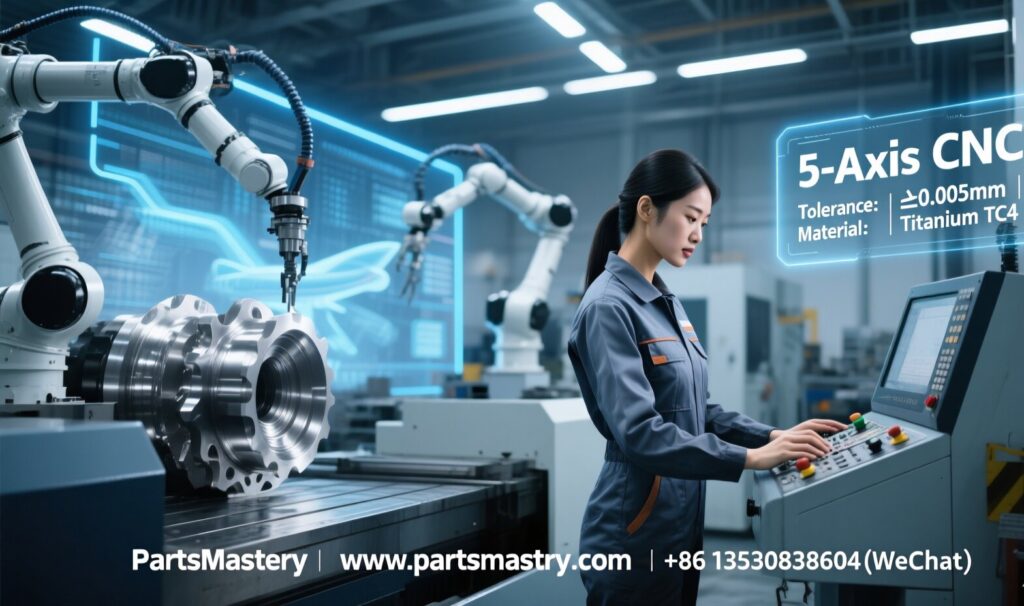
Leading China mold manufacturers have invested heavily in advanced equipment and technologies to meet global quality standards. Many facilities are equipped with five-axis high-speed machining centers, high-speed milling machines, high-precision double-head EDMs, CNC processing equipment, and injection molding machines. The adoption of advanced technologies such as 3D printing, CNC machining, and AI-driven automation is fueling market growth, with government initiatives promoting local manufacturing and investments in R&D further propelling the market forward.
China has recently unveiled next-generation injection molding technology that integrates artificial intelligence and advanced materials to streamline production processes. This innovation is expected to cut production costs by up to 20%, giving Chinese manufacturers a competitive edge in both domestic and international markets. The technology includes features such as real-time monitoring and predictive maintenance, allowing companies to minimize downtime and optimize production schedules.
Precision plastic injection molding has become an essential process for producing high-quality, durable, and intricate components across industries. Chinese manufacturers employ state-of-the-art injection molding machines with digital control systems and multi-axis robotic automation, producing components with minimal variation and meeting the exacting standards required for medical, automotive, and electronics industries.
Quality Certifications and Standards
Reputable China mold manufacturers maintain international quality certifications that demonstrate their commitment to excellence. The most common certifications include:
ISO 9001:2015 – The international standard for quality management systems, ensuring consistent product quality and continuous improvement.
ISO 14001:2015 – Environmental management certification, demonstrating commitment to sustainable manufacturing practices.
IATF 16949 – The global standard for automotive quality management systems, required for suppliers to major automotive OEMs.
ISO 13485 – Quality management for medical devices, essential for manufacturers serving the healthcare industry.
Many leading China mold manufacturers hold multiple certifications simultaneously. For instance, SunOn is certified with ISO9001, ISO14001, and IATF 16949, ensuring adherence to international quality and environmental standards with strict quality control throughout every project phase, including raw material checks, in-process inspections, and final testing. Similarly, companies in Shenzhen and Dongguan often maintain ISO 9001:2015 and ISO 14001:2015 certifications, with decades of experience working with clients from Europe and North America who have high standard expectations for injection molds.
These manufacturers are familiar with international mold standards including HASCO, DME, MESBURGER, and LKM standards for mold export to overseas markets.
Technological Trends Shaping the Industry
Precision Breakthroughs
By 2026, precision mold base machining is forming a trinity technical system of “Material – Equipment – Inspection.” The application ratio of special steels like HPM38 stainless steel is increasing, with tensile strength reaching ≥980MPa. The penetration rate of five-axis machining centers exceeds 50%, working with laser distance meters to achieve precision levels within ±0.005mm for high-end applications.
Digitalization and Automation
The China industrial mold market is experiencing a shift toward digitalization and automation, with the adoption of technologies like AI and IoT to enhance efficiency and productivity in mold manufacturing processes. Smart sensors and real-time data analytics enable manufacturers to monitor and optimize processes dynamically, leading to enhanced quality assurance and reduced waste.
Sustainable Manufacturing
There is a growing emphasis on sustainability in the industry, with a focus on developing eco-friendly materials and processes for mold production. Energy-efficient processes and recyclability are becoming standard considerations in mold design and manufacturing.
Key Application Industries
China mold manufacturers serve a diverse range of industries, each with specific requirements and quality standards. The primary downstream applications include:
Automotive (35% market share) – Injection molds for interior and exterior parts, battery housings for electric vehicles, charging connectors, lighting systems, and structural components. The rapid growth of new energy vehicle sales drives injection mold bases towards lightweight and high-precision development.
Consumer Electronics (28%) – Precision molds for smartphone components, wearable devices, smart home products, and telecommunications equipment. Tolerance requirements for precision mold base machining have tightened from traditional ±0.05mm to within ±0.02mm.
Medical Devices (7%) – Molds for medical consumables, diagnostic equipment components, surgical instruments, and pharmaceutical packaging. This segment requires ISO 13485 certification and strict cleanroom manufacturing protocols.
Packaging (18%) – High-cavitation molds for food packaging, beverage containers, caps and closures, and industrial packaging solutions.
Emerging segments include new energy vehicle components and smart home ecosystems, collectively projected to grow at 12–15% CAGR through 2030.
Strategic Advantages of Sourcing from China
China’s dominance in global mold manufacturing is built on several foundational advantages:
Comprehensive Supply Chain – China’s manufacturing ecosystem includes raw material suppliers, mold makers, and logistics services in close proximity. Facilities equipped with CAD/CAM design suites, multi-axis CNC milling, and advanced processing capabilities can deliver molds with micron-level precision, with component lead times reduced by up to 35% due to tightly networked ecosystems.
Cost-Effective Production – Lower labor costs combined with scalable manufacturing operations allow Chinese injection molding suppliers to offer competitive pricing without compromising quality.
Skilled Workforce – China’s experienced engineers and technicians possess extensive expertise in mold design, process optimization, and quality assurance, ensuring that even the most challenging designs are produced efficiently and accurately.
迅速なターンアラウンド – From concept to functional prototype in as little as 7–14 days, enabling faster time-to-market and greater agility when scaling production.
結論
China mold manufacturers have evolved from low-cost producers to world-class suppliers of precision tooling across industries ranging from automotive and medical devices to consumer electronics and packaging. With advanced manufacturing capabilities, international quality certifications, and strategic industrial clusters offering specialized expertise, China remains the premier destination for global buyers seeking high-quality molds at competitive prices.
The industry’s continued investment in precision technology, automation, and sustainable manufacturing practices ensures that China will maintain its leadership position in the global mold manufacturing landscape for years to come. Whether you require high-cavitation injection molds for mass production, precision medical device tooling, or automotive-grade molds with IATF 16949 certification, China’s diverse ecosystem of mold manufacturers offers solutions tailored to every application and quality standard.