







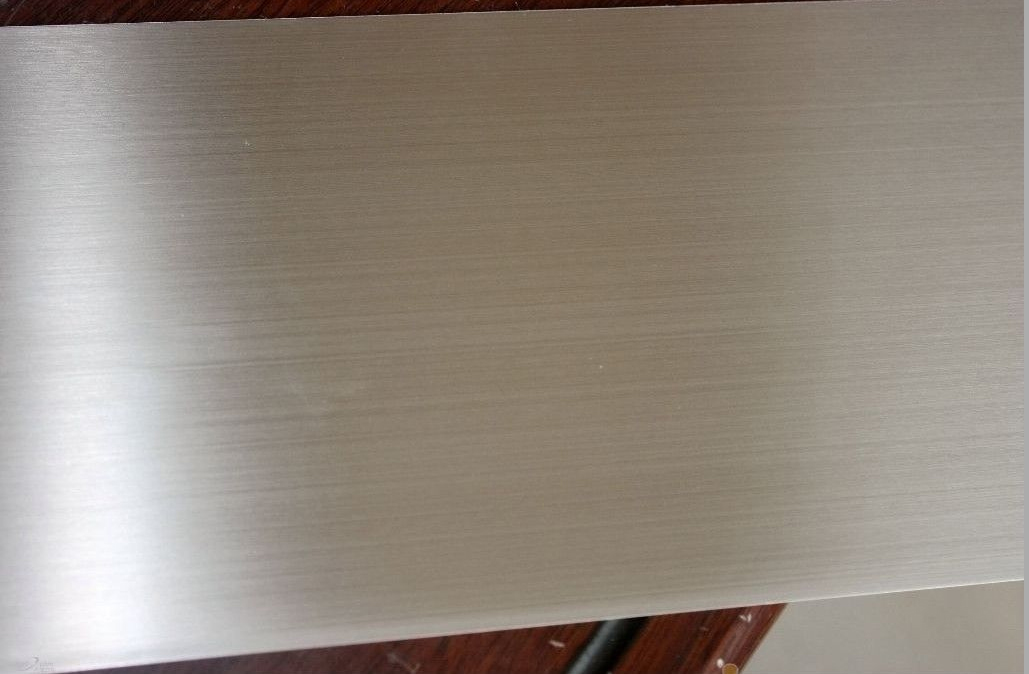
When it comes to refining metal parts for both functional performance and visual appeal, brushing finish stands out as one of the most versatile and cost-effective surface treatment methods available. Unlike aggressive grinding or polishing processes that alter part dimensions significantly, brushing uses specialized filamentary abrasive tools to create uniform, directional surface patterns while delivering secondary benefits like deburring and edge conditioning. This makes it a staple in everything from custom prototyping to high-volume manufacturing across dozens of industries.
In this comprehensive guide, we break down the core mechanics of brushing finish, compare common brush types, explore its key industrial use cases, and share actionable best practices to help you achieve consistent, high-quality results on custom machined parts.
What Is a Brushing Finish?
Brushing finish is a mechanical surface modification process that uses rotating or reciprocating brush tools to refine the topography of a workpiece. Unlike bonded or coated abrasives that cut aggressively into the base material, filament-based brushing tools exert low cutting pressure as they move across part surfaces, making them gentle enough to preserve tight dimensional tolerances while still improving surface quality.
When the brush filaments make contact with a workpiece edge during deburring, the small contact area creates concentrated cutting force that efficiently shears away burrs. As the burr is removed and contact area widens, cutting force decreases automatically, preventing over-machining of the base material. This self-limiting behavior is what makes brushing ideal for precision edge work — it removes defects without altering the core geometry of the part.
Beyond deburring, brushing tools also create consistent, controlled radii at part corners, relieve residual stresses from prior machining operations, and produce the characteristic fine linear grain pattern associated with brushed metal finishes. It works effectively even on parts with complex contours and irregular geometries, where rigid abrasive tools struggle to maintain uniformity.
Common Brush Types for Brushing Finish Operations
Selecting the right brush tool is the foundation of a successful brushing process. Two primary categories of brushes dominate industrial metal finishing applications, each with distinct strengths and ideal use cases.
Steel Wire Brushes
Steel wire brushes are the workhorse of most metal brushing applications, valued for their ability to clean and texture surfaces without removing significant base material.
Instead of propelling abrasive particles against the workpiece like sandblasting, these brushes use hardened steel wire tips to lift and separate surface contaminants from the substrate. The combination of high surface speed and rigid wire tips delivers consistent cleaning and texturing with minimal material loss.
Steel wire brushes come in a range of configurations to match different job requirements:
- Long-filament brushes offer high conformability, making them ideal for contoured or curved surfaces where uniform contact is critical.
- Short-trim brushes have stiffer filaments that cut faster, making them better suited for heavy-duty material removal tasks.
- Fill density also impacts performance: high-density brushes work faster and have longer service life, while low-density brushes are more flexible for finishing irregular shapes.
One key advantage of steel wire brushes is their non-loading property — they do not clog with paint residue, oxidation, or other debris, even when used on coated surfaces. This reduces downtime for cleaning and maintains consistent performance over extended runs.
Power Brushes
Power brushes are a broader category of rotary tools designed for use with drills, angle grinders, and dedicated brushing machines. They are manufactured from a wide range of filament materials, including carbon steel, stainless steel, non-ferrous wires, and natural or synthetic fibers, to match different workpiece materials and finish goals.
The performance of a power brush depends heavily on the horsepower of the driving tool and the pressure applied during operation. These tools handle tasks ranging from light polishing and edge blending to heavy rust and scale removal.
Key design factors that influence power brush behavior:
- Filament length: Longer filaments deliver milder, more uniform abrasive action for general finishing. Shorter filaments are stiffer and more aggressive for intensive material removal.
- Brush diameter: Larger-diameter brushes (within the tool’s capacity) produce better surface finishes and more efficient material removal, thanks to higher surface speeds at the filament tips.
Beyond aesthetic finishing, power brushing improves a component’s wear resistance and corrosion resistance by eliminating surface defects that can trap moisture or initiate cracks. It also removes molding flaws and helps prevent post-processing oxidation.
Key Industrial Applications of Brushing Finish
Brushing delivers both functional and cosmetic benefits, making it useful across a wide range of manufacturing and post-processing workflows. The most common industrial applications include:
Deburring
One of the most widespread uses of brushing finish is post-machining deburring. Conventional grinding tools often remove excess material indiscriminately, risking dimensional errors or secondary sharp edges. Brushing tools, by contrast, target raised burrs selectively: the cutting force concentrates on the small burr surface, then drops off once the burr is gone. This leaves the base material intact and produces no secondary burrs, making it ideal for precision-machined parts with tight tolerances.
Edge Blending & Corner Rounding
Sharp internal and external corners are common sources of stress concentration in metal parts, leading to premature fatigue and failure. Power brushes create smooth, uniform radii at the intersection of two surfaces without affecting the surrounding material or compromising part tolerances. This edge conditioning reduces stress risers, improves fatigue life, and makes parts safer to handle during assembly.
Surface Cleaning & Descaling
Brushing is an effective mechanical method for removing a wide range of surface contaminants, including rust, weld slag, heat treat scale, old paint, and thin oxide layers. Stainless steel wire brushes are especially popular for wet cleaning processes, as they do not leave behind carbon particles that can cause post-processing rust on non-ferrous workpieces.
Surface Roughening for Adhesion
For parts that will receive paint, powder coating, rubber bonding, or plastic overmolding, a controlled brushed texture improves mechanical adhesion by creating micro-roughness on the surface. Brushing produces a uniform, repeatable tooth pattern on non-ferrous metals, rubber, and leather-like plastics, resulting in stronger, longer-lasting bonds than untreated smooth surfaces.
Advantages and Limitations of Brushing Finish
Like any surface treatment process, brushing finish has distinct strengths and tradeoffs that make it more suitable for some applications than others.
Key Advantages
- Enhances part durability by removing stress concentrations and surface defects that cause premature failure
- Improves mechanical properties including wear and corrosion resistance
- Creates a uniform, aesthetically pleasing directional grain finish
- Preserves tight dimensional tolerances and original part geometry
- Improves adhesion of paints, coatings, and bonded materials
- Effectively removes welding slag, rust, scale, and other post-processing defects
- Works on complex geometries and contoured surfaces that are hard to finish with rigid tools
Notable Limitations
- The textured brushed surface can be more prone to scratching and cosmetic damage than polished or plated surfaces
- Fine grain patterns can trap dirt and grime, making some brushed surfaces harder to clean in high-contamination environments
- The linear texture reduces the beading ability of liquids on the surface, which may affect water-repellent performance
- Improper process parameters, such as excessive pressure or overly viscous lubricant, can leave visible brush marks that require rework
Best Practices for High-Quality Brushing Finish
To achieve consistent, professional-grade results while maximizing brush life, follow these expert-recommended best practices:
1. Match the Brush Type to Your Application
Not all brushes are designed for the same tasks, and using the wrong tool will produce poor results and shorten brush life.
Crimped wire brushes have flexible, wavy filaments that deliver light to medium cutting action. They are the best choice for general-purpose finishing, uneven surfaces, and parts that would be damaged by more aggressive tools.
Knot wire brushes are made from twisted bundles of heat-treated filament, creating a stiffer, more aggressive cutting action. They are ideal for heavy-duty work such as thick rust removal, heavy scale cleaning, and large burr removal.
Taking the time to select the right brush style for your specific material and finish goal will deliver faster, more consistent results with less tool wear.
2. Run at the Highest Safe Speed with Light Pressure
Power brushes perform best when operated at the manufacturer’s recommended maximum safe speed, paired with the lightest effective pressure.
Higher rotational speed increases the stiffness of the brush face, so a fine-wire brush running at high speed can deliver material removal rates comparable to a coarse-wire brush running slowly. This allows you to use finer, lower-cost wire for the same job, reducing production costs.
Avoid the common mistake of increasing pressure to compensate for insufficient speed. Excessive pressure causes extreme filament bending, heat buildup, rapid wire dulling, and premature filament breakage — all of which reduce brush life and produce uneven finishes. If faster material removal is needed, upgrade to a more aggressive brush (larger wire diameter, shorter trim, or knot style) rather than applying more force.
Always follow the manufacturer’s maximum safe RPM rating for the brush to prevent catastrophic failure and ensure operator safety.
3. Avoid Unidirectional Brushing
Brushing in only one direction will wear the filaments unevenly and reduce cutting efficiency over time. Periodically reversing the rotation direction of the brush produces a self-sharpening effect that maintains cutting performance and extends brush life.
Reversing direction is simple: remove the brush from the spindle, flip it 180 degrees, and remount it securely. This simple step can significantly improve consistency and reduce tooling costs over long production runs.
4. Choose High-Quality Heat-Treated Filaments
While stainless steel brushes are necessary for non-ferrous workpieces to prevent after-rust, carbon steel brushes offer superior fatigue resistance and cutting performance for ferrous parts. For the best results with carbon steel brushes, choose options with heat-treated, oil-tempered wire with a tensile strength rated for high-speed operation. Wire diameters of 0.008 inches and above are well-suited for most industrial brushing applications.
5. Keep Stainless Steel Brushes Clean and Separate
Stainless steel wire brushes are essential for working on stainless steel, aluminum, and other non-ferrous metals, as they prevent carbon contamination that causes rust spotting. To maintain this benefit, keep stainless steel brushes clean and store them separately from carbon steel tools and workpieces. Never use a brush that has been used on carbon steel on stainless steel parts.
For critical finishing operations, degrease the brush thoroughly before use to remove any manufacturing residues or contaminants that could transfer to the workpiece.
Frequently Asked Questions About Brushing Finish
Q: What machining processes pair well with brushing finish?
A: Brushing is compatible with parts from nearly all common machining processes, including milling, turning, laser cutting, and stamping. It excels at removing minor surface imperfections and post-processing burrs. However, it is not recommended as a standalone finish for parts requiring very high corrosion resistance, where plating or passivation would be more appropriate.
Q: What factors should I consider when selecting brushing equipment?
A: The two most important factors are the base material of your part (stainless steel, aluminum, carbon steel, etc.) and the desired finish quality — whether you need aggressive material removal, medium deburring, or a fine cosmetic finish. Other considerations include part geometry, production volume, and available equipment.
Q: Which brush gives the smoothest finish?
A: For fine, uniform finishing on flat or contoured surfaces, crimped wire brushes with fine wire diameter and long trim produce the smoothest results. For heavy removal and descaling, twisted knot brushes are the most effective choice. There is no single “best” brush — the optimal tool depends entirely on your specific application.
Q: Is brushing finish better than electroplating?
A: Brushing and electroplating serve different purposes, so neither is universally better. Brushing is a mechanical process that improves surface texture, removes defects, and creates a matte directional finish. Electroplating deposits a protective metal layer to dramatically boost corrosion resistance and alter appearance. For parts needing maximum corrosion protection, electroplating is superior; for cost-effective deburring and aesthetic texturing, brushing is often the better choice. Many parts use both processes in sequence.
まとめ
Selecting the right surface finish is just as critical to a part’s performance and longevity as the machining process itself. Brushing finish offers a unique balance of functional benefits — from deburring and edge conditioning to improved adhesion — and a distinctive, professional aesthetic, all while preserving tight dimensional tolerances. By understanding the process, selecting the right tools, and following proven best practices, you can achieve consistent, high-quality brushed finishes on your custom parts.
For manufacturers and product teams looking for reliable metal finishing solutions, working with an experienced machining partner can help you select the optimal finish for your application and budget.