







Polyvinylidene fluoride, commonly abbreviated as PVDF, is a semi-crystalline thermoplastic fluoropolymer. Its carbon-fluorine bonds create exceptional chemical stability. This structure also delivers balanced mechanical strength, excellent weather resistance, low moisture absorption and reliable electrical insulation. For these reasons, it ranks among the most cost-effective high-performance engineering plastics for industrial applications.
In contrast to soft fluoropolymers such as PTFE, PVDF offers higher rigidity and structural strength. Manufacturers can shape it via injection molding, extrusion, CNC machining, welding and other processes. Industries widely use it in chemical fluid delivery, semiconductor high-purity manufacturing, architectural weather-resistant coatings, new energy lithium batteries and precision mechanical parts. This guide systematically breaks down PVDF’s structural properties, processing solutions, grade selection and application boundaries. It also provides a complete reference for industrial product design and material selection.
1. Fundamentals and Structural Basis of PVDF Material
1.1 Material Definition and Core Attributes
First, PVDF is a fluorine-based thermoplastic polymer made from vinylidene fluoride monomers, and it falls into the semi-crystalline polymer category. Like all common thermoplastics, manufacturers can reprocess it by melting it with heat and solidifying it with cooling. It supports molding, welding, secondary machining and other manufacturing methods. Notably, it stands as one of the few fluoropolymer materials that balance chemical corrosion resistance and structural load-bearing capacity.
In real-world industrial scenarios, engineers mostly apply PVDF in harsh conditions. In these environments, common plastics easily suffer degradation, swelling, stress cracking or performance loss. Therefore, it acts as a core material solution to replace ordinary plastics and some metals for anti-corrosion and lightweight design goals.
1.2 Chemical Composition and Crystal Structure
PVDF’s molecular backbone contains carbon, hydrogen and fluorine atoms. These atoms form repeating units that create long polymer chains. Specifically, high-bond-energy carbon-fluorine bonds act as the core source of its chemical corrosion resistance, weather resistance and thermal stability.
As a semi-crystalline material, PVDF holds both ordered crystalline regions and disordered amorphous regions. The crystalline regions give the material higher strength, hardness and chemical stability. Meanwhile, the amorphous regions add toughness and improve processing fluidity. Depending on crystallization conditions, PVDF can form multiple crystal phases. These phases directly affect piezoelectricity, dielectric constant, mechanical response and other properties. For this reason, manufacturers can tune its performance via process control to fit special applications such as sensors and films.
Manufacturers can formulate commercial PVDF materials with stabilizers, pigments, fillers or processing aids to match specific application demands. For high-spec scenarios such as semiconductors, medical devices and food contact, teams must strictly control additive types and contaminant leaching. They should also select raw materials with corresponding compliance grades.
2. Core Performance Characteristics of PVDF Material
The performance advantages of PVDF come from the synergy of its molecular structure and semi-crystalline features. It delivers well-balanced performance across multiple dimensions. In fact, it ranks as one of the most versatile fluorine-based engineering plastics available today.
2.1 Outstanding Chemical Resistance
First, chemical corrosion resistance stands as PVDF’s most signature performance trait. It resists most inorganic acids, alkalis, salt solutions, halogens, hydrocarbon solvents and oxidizing media. At room temperature, it shows no obvious swelling, dissolution or stress cracking.
Compared with common anti-corrosion plastics such as PVC, PP and PE, PVDF handles corrosive media at higher concentrations and temperatures. For this reason, it serves as the preferred plastic material for medium-to-high-end chemical fluid systems. However, PVDF does not offer universal chemical resistance. High temperature, prolonged exposure, strong polar solvents or mixed media may all alter its tolerance. Therefore, engineers must run full compatibility verification against specific working conditions before final material selection.
2.2 Wide Service Temperature Range
PVDF delivers significantly better long-term temperature resistance than most general-purpose plastics. It keeps stable physical and mechanical properties from -40°C to 150°C. It also tolerates higher transient temperatures for short periods. This property makes it ideal for equipment components near process heat sources, outdoor environments with large temperature swings, and medium-temperature chemical process systems.
Even so, PVDF does not qualify as an ultra-high-temperature engineering plastic. For long-term service above 200°C or high-load applications at elevated temperatures, engineers should select materials with higher temperature ratings such as PEEK and PPS.
2.3 Balanced Mechanical Properties
Within the fluoropolymer family, PVDF ranks above average in mechanical strength and rigidity. It also offers good tensile strength, impact toughness, wear resistance and fatigue resistance. In contrast to soft PTFE, designers can use PVDF directly for structural load-bearing parts. These include valve bodies, pump components, joints and support modules, and they require no extra structural reinforcement.
For load-bearing components, designers should still evaluate key factors at the design stage. These include material creep performance, strength retention at operating temperature, fastener load and long-term stress. They can then ensure service reliability through reasonable wall thickness and structural design.
2.4 Long-Term Weather and UV Resistance
PVDF shows excellent resistance to outdoor environmental factors. These include ultraviolet radiation, wind, rain and temperature cycling. After long-term outdoor exposure, it rarely fades, chalks, embrittles or loses performance. For this reason, it acts as the preferred coating resin for building exterior walls, metal roofs and outdoor equipment housings. Additionally, manufacturers can use it directly for structural parts in exposed weather environments.
2.5 Excellent Electrical and Dielectric Properties
PVDF delivers strong dielectric strength and stable dielectric characteristics. It also retains insulation performance in humid and corrosive environments. As a result, it serves as a reliable material for electrical wiring and electronic component insulation.
PVDF films with specific crystal phases also have piezoelectric and ferroelectric properties. These properties enable use in pressure sensors, actuators, energy harvesting devices and more. In turn, they expand the application scope of fluoropolymers in the functional device field.
2.6 Low Moisture Absorption and High Purity
PVDF has extremely low water absorption. This rate is far lower than humidity-sensitive engineering plastics such as nylon. It preserves excellent dimensional stability in high-humidity, underwater or fluid-contact environments. It also avoids swelling, stiffness loss or dimensional deviation caused by water absorption.
Specific high-purity PVDF grades control ion release and extractable content. This design meets the cleanliness requirements of semiconductor ultrapure water, pharmaceutical fluids, food contact and other scenarios. Today, it stands as one of the most widely used plastic materials in high-purity fluid systems.
3. Compatibility Boundaries and Unsuitable Scenarios for PVDF
3.1 Medium and Environmental Compatibility
First, teams must judge PVDF compatibility comprehensively. They should base decisions on specific working conditions rather than generalized conclusions:
- Chemical media: It resists most acids, alkalis, salts, hydrocarbons and alcohols well. However, some strong polar organic solvents, high-temperature concentrated alkalis, hydrogen fluoride and similar media may cause degradation.
- Natural environment: It shows high resistance to UV light, rain, salt spray and mold. For this reason, it works well for long-term service in outdoor and coastal environments.
- Cleaning scenarios: It tolerates most industrial cleaning agents and disinfectants. Thus, it fits regular cleaning routines in high-cleanliness scenarios.
All compatibility data work as a reference only. For high-temperature, high-pressure, long-term exposure or mixed-media conditions, engineers should verify material stability through actual immersion testing.
3.2 Scenarios Where PVDF Is Not Recommended
PVDF delivers balanced performance but is not a universal solution. In the following cases, other materials work better:
- Extremely cost-sensitive low-demand applications: Teams do not need to select PVDF when general plastics like PVC, PP and PE can meet all requirements.
- Ultra-high-load and high-temperature structural parts: PEEK, PPS or glass-fiber-reinforced plastics deliver far better mechanical performance.
- Sealing or sliding applications requiring ultra-low friction coefficient: PTFE offers superior self-lubricating and friction properties.
- Extreme corrosion scenarios requiring ultimate chemical inertness: Perfluorinated fluoropolymers (PFA, FEP) provide broader chemical tolerance.
Above all, the core principle of material selection is to match performance with demand. Designers should not blindly choose high-end materials for every project.
4. Main Processing and Forming Technologies for PVDF
As a thermoplastic, PVDF works with multiple forming processes. Specifically, engineers can select the optimal process based on part batch size, geometric complexity and tolerance requirements.
4.1 射出成形
Injection molding works well for mass production of complex-shaped PVDF parts. Common examples include pipe fittings, valve components, connectors and housings. This process achieves high repeatability and stable material performance. It also delivers high production efficiency.
For PVDF injection molding, operators must precisely control barrel and mold temperatures. They also need to pre-dry raw materials and adjust shrinkage compensation to match specific grades. Once the product design is finalized and production volume covers the mold cost, injection molding delivers the best overall cost efficiency.
4.2 Extrusion Molding
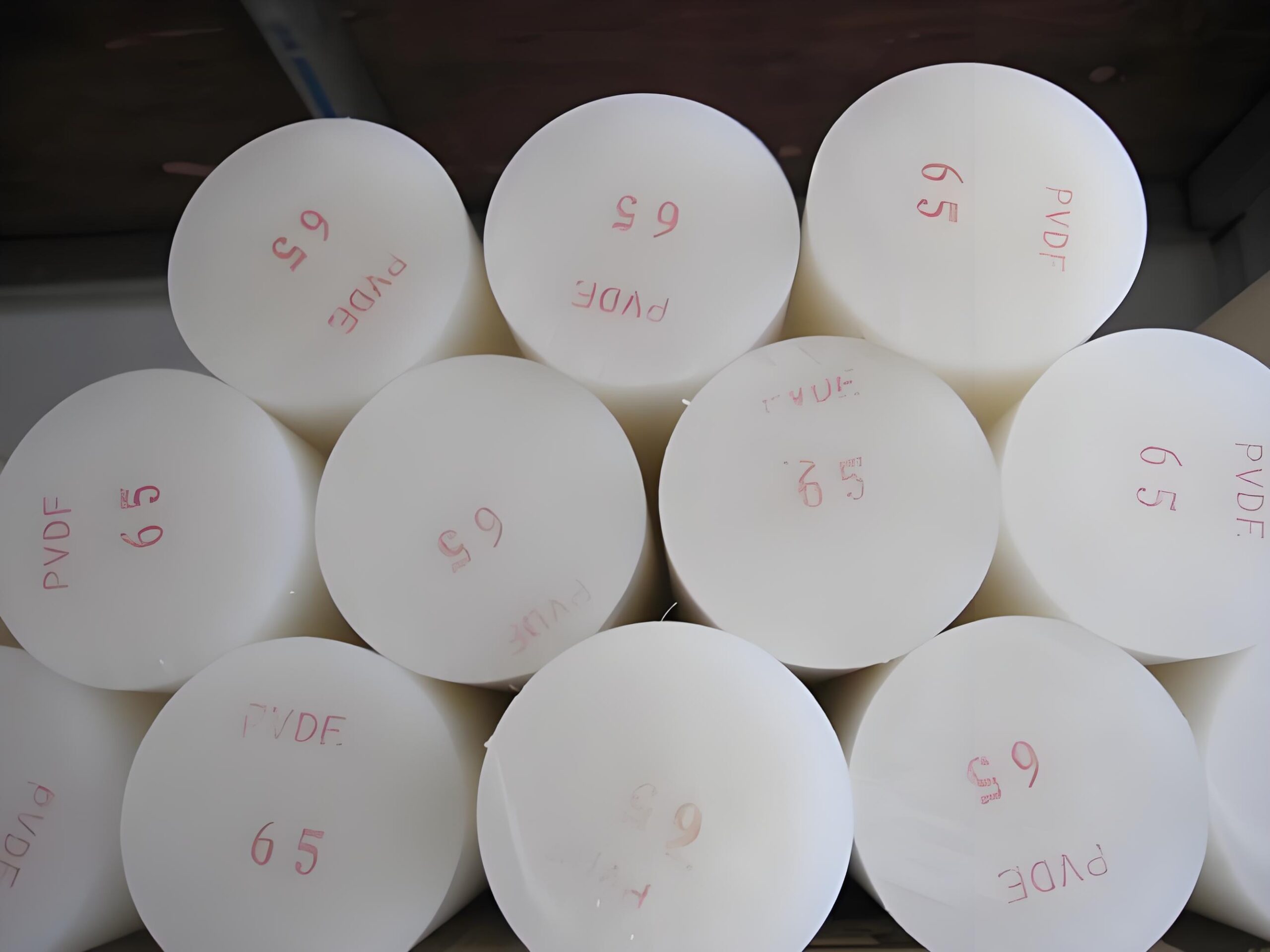
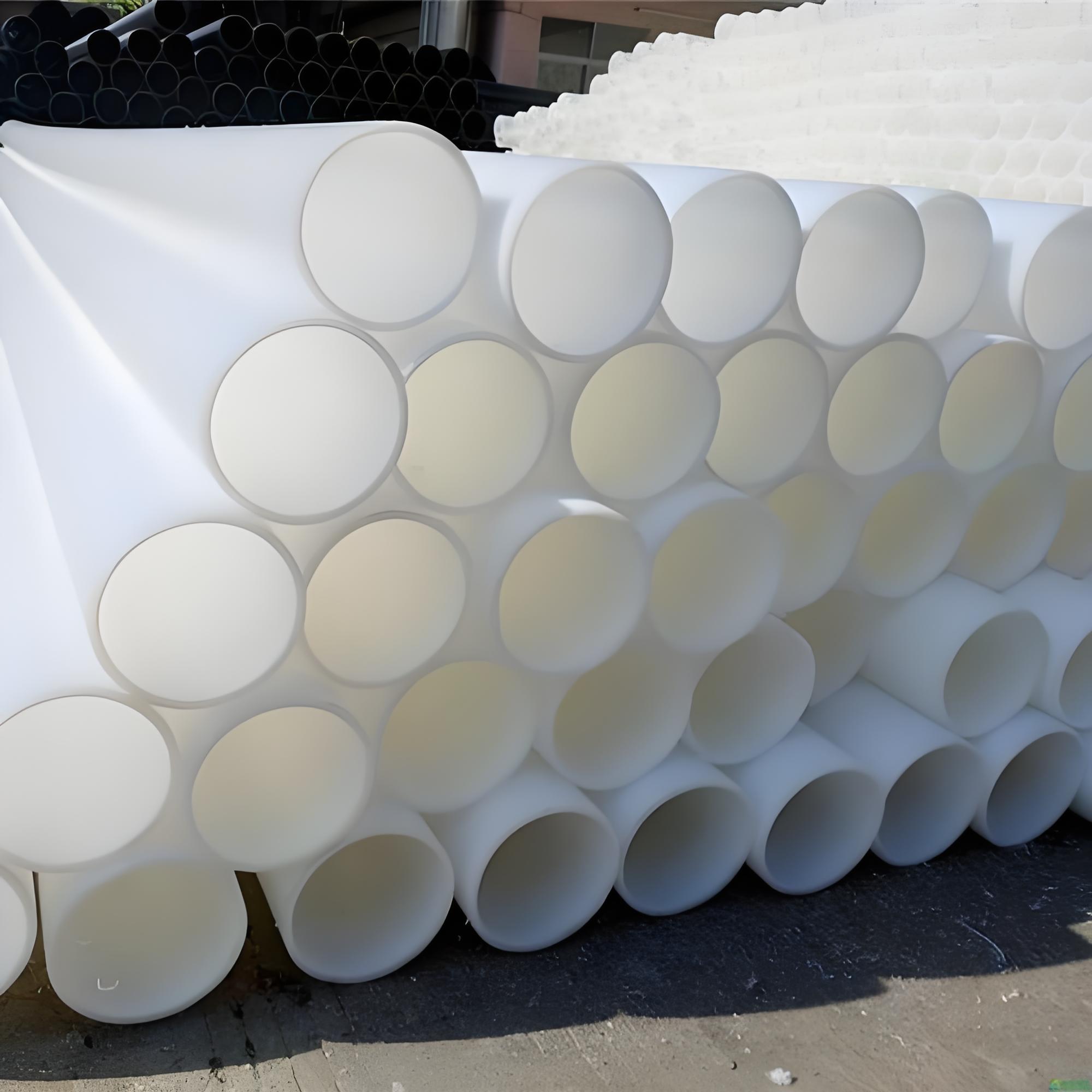
Manufacturers use extrusion to produce PVDF profiles with continuous cross-sections. These include pipes, rods, sheets, films and custom profiles. Today, it serves as the main production method for chemical piping systems, membrane materials, wire insulation and machining blanks.
Extruded PVDF profiles offer uniform performance and flexible length. Workers can assemble pipe products into complete fluid delivery systems via welding. For rods and sheets used in precision machining, teams must strictly control internal stress, porosity and dimensional consistency. This step ensures tolerance stability in subsequent processing.
4.3 CNC Precision Machining
CNC machining acts as the core manufacturing method for custom PVDF parts. It fits prototyping, small-batch production and precision component manufacturing. It also supports milling, turning, drilling, tapping, boring and other processes.
Compared with soft fluoropolymers, PVDF has higher rigidity. It also suffers less deformation during machining. This trait makes it easier to maintain dimensional tolerance and surface finish. For optimal results, machinists should use sharp cutting tools and set reasonable cutting parameters. They should also control clamping force to avoid workpiece deformation. In addition, proper heat dissipation reduces dimensional deviation from thermal expansion.
4.4 Welding and Assembly
PVDF offers strong weldability. Technicians can assemble it into large components such as storage tanks, piping systems, anti-corrosion linings and air ducts. They can use hot gas welding, extrusion welding, butt welding, socket welding, infrared welding and other methods.
Welding quality directly determines the system’s sealing performance and structural strength. Successful welding requires compatible welding material grades and clean welding surfaces. Operators must also strictly control temperature, pressure and welding speed. For best results, only trained personnel should perform this work.
4.5 Coating and Film Processing
Manufacturers can formulate PVDF into coatings and apply them to metal and building material surfaces. These coatings form a weather-resistant, corrosion-resistant and color-retentive protective layer. Industries widely use them on building exterior panels, metal roofs and outdoor steel structures. Furthermore, producers can make PVDF films via biaxial stretching and other processes. These films serve electronics, piezoelectric sensors, lithium battery separators and other fields.
5. PVDF Grade Classification and Selection Methods
Different PVDF grades vary significantly in performance, compliance and processability. Therefore, designers must select them precisely based on the target application scenario.
5.1 General Industrial Grade PVDF
General-grade PVDF balances chemical resistance, mechanical properties and processability. Manufacturers mainly use it for conventional chemical piping, sheets and rods, industrial structural parts, general coatings and other scenarios. It is also the most widely used basic grade on the market.
These grades work with extrusion, injection molding, machining, welding and other processes. They also fit ordinary industrial conditions that have no special purity or functional requirements.
5.2 Modified and Reinforced Grade PVDF
By adding glass fiber, carbon powder, mineral fillers and other modifiers, manufacturers can enhance specific PVDF properties. These include rigidity, wear resistance, dimensional stability and electrical conductivity to meet special working conditions. For instance, filled modified PVDF works well for sliding parts, high-rigidity structural parts and antistatic scenarios.
Keep in mind that fillers alter PVDF’s chemical resistance, purity and surface finish to some extent. Before selecting a modified grade, engineers should confirm that the adjusted performance meets all working condition requirements.
5.3 High-Purity and Compliant Grade PVDF
High-purity, medical-grade and food-contact PVDF strictly controls raw material purity, extractables and leachables. It also carries corresponding industry compliance certifications. These grades fit highly regulated fields such as semiconductor manufacturing, pharmaceutical fluid handling, food processing and medical components.
These grades usually include a full traceability system and material certification documents. In addition, production must take place in a controlled clean environment to avoid cross-contamination.
5.4 Key Factors for PVDF Selection
First, teams should verify selection decisions against actual working conditions one by one. They should not base choices solely on the material name:
- Chemical media: confirm type, concentration, temperature and contact duration
- Mechanical requirements: define load, stress type, impact and creep performance needs
- Environmental conditions: check temperature range, UV exposure and humidity levels
- Compliance requirements: verify purity, food/medical/semiconductor certification needs
- Manufacturing method: match forming process, welding requirements and dimensional tolerance
- Cost and life cycle: balance material cost, processing cost and long-term maintenance cost
6. Performance Comparison Between PVDF and Similar Materials
6.1 PVDF vs PVC
The core difference between the two materials lies in performance positioning and cost:
- PVC comes at a low cost and processes easily. It works well for water supply and drainage, general protection, low-pressure and low-corrosion scenarios.
- PVDF outperforms PVC comprehensively in chemical resistance, temperature resistance and weather resistance. It handles harsh conditions such as strong corrosion, high temperature and long-term outdoor service. Naturally, it costs significantly more than PVC.
In short, choose PVC for ordinary low-demand scenarios to control costs. By contrast, choose PVDF for high-demand scenarios such as corrosion, high temperature and outdoor use to ensure reliability.
6.2 PVDF vs PTFE
Both materials are fluoropolymers, but they have completely different performance focuses:
- PTFE has stronger chemical inertness and an extremely low friction coefficient. It is the first choice for ultimate anti-corrosion and self-lubricating scenarios. However, it is soft, has low mechanical strength, cannot be welded and is difficult to machine.
- PVDF has higher rigidity and strength. It is weldable and easy to machine, so it works well for structural parts and piping systems with better overall manufacturability. That said, its chemical tolerance range and friction performance do not match PTFE.
The selection logic is straightforward. Choose PTFE for ultra-low friction and ultimate corrosion resistance. Choose PVDF for structural strength and machinability.
6.3 PVDF vs Other Fluoropolymers
The fluoropolymer family also includes FEP, PFA, ETFE, ECTFE and more. Each material has its own unique strengths:
- PFA and FEP are perfluoropolymers with better chemical resistance and temperature resistance than PVDF. However, they come at a higher cost and offer lower mechanical strength.
- ETFE and ECTFE feature outstanding mechanical properties and impact resistance. They also have excellent weather resistance, so manufacturers mostly use them for anti-corrosion linings and outdoor applications.
- PVDF stands out for its balanced performance, good processability and moderate cost. For these reasons, it ranks as one of the most practical and cost-effective fluoropolymers available.
7. Core Industrial Applications of PVDF Material
7.1 Chemical and Fluid Handling Industry
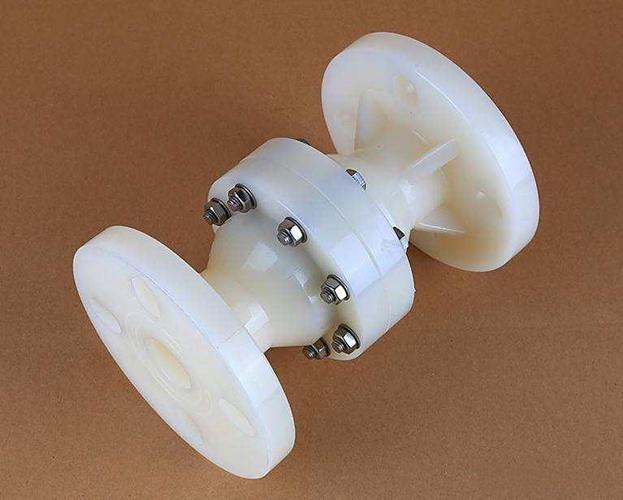
The chemical industry represents one of the largest application fields for PVDF. Manufacturers mainly use it to make fluid-contact components such as pipelines, valves, pump bodies, tank linings and pipe fittings. It resists most corrosive process media, reduces equipment corrosion and leakage risks, lowers maintenance costs and extends system service life.
7.2 Semiconductor and High-Purity Manufacturing
In semiconductor manufacturing, teams widely use high-purity PVDF in chemical delivery lines, ultrapure water systems, filter modules and wafer process equipment components. Its low-extraction, high-cleanliness properties prevent contamination of wafers and process chemicals. At the same time, it withstands highly corrosive chemicals in photolithography, etching and other processes.
7.3 Electrical and Electronics Industry
Manufacturers use PVDF in wire and cable insulation, electronic component housings, connectors, sensor films and more. Its stable insulation, weather resistance and corrosion resistance make it ideal for electrical wiring in harsh environments. Additionally, piezoelectric PVDF films enable new electronic applications such as precision sensing and energy harvesting.
7.4 Architecture and Coating Industry
PVDF coating is the mainstream protective solution for high-end building exteriors. When applied to aluminum veneers, metal roofs and steel surfaces, it delivers decades of weather resistance and color retention. It also resists UV, acid rain and salt spray erosion, and preserves building appearance and structural lifespan.
7.5 Precision Machinery and Custom Machined Parts
CNC machining produces custom PVDF parts that work across many scenarios. These include chemical equipment, testing instruments, high-purity process tooling, anti-corrosion fixtures and more. For small-batch, complex-structure components, machined PVDF achieves high-precision forming quickly. It also combines excellent corrosion resistance and strong structural performance.
Beyond these sectors, PVDF also sees heavy use in new energy lithium batteries, aerospace, automotive, water treatment membranes and other fields. Today, it is an indispensable core material in high-end manufacturing.
8. Cost Analysis and Life Cycle Value of PVDF
As a specialty fluoropolymer, PVDF has a significantly higher raw material price than general-purpose plastics such as PVC and PP. However, its true value lies in long-term service reliability.
From a life cycle perspective, PVDF components offer a longer service life and lower corrosion failure risk. This reduces hidden costs from downtime maintenance, material leakage and frequent replacement. In highly corrosive and demanding working conditions, PVDF delivers a much higher return on investment than ordinary plastics. It also effectively cuts long-term operation and maintenance costs as well as safety risks.
Processing costs also vary widely across different manufacturing methods. Injection molding requires high upfront mold investment but delivers low unit cost in mass production. Extrusion works well for standardized profiles with controllable per-unit cost. CNC machining requires no mold and fits small-batch customization and prototyping. However, its unit processing cost rises with complexity and tolerance requirements. Optimizing part structure, simplifying geometric features and setting reasonable tolerances can effectively control the processing cost of PVDF parts.
9. Sustainability and Safety Specifications of PVDF
9.1 Recycling and Environmental Impact
PVDF is a thermoplastic material. Facilities can regranulate clean production scraps and reuse them through industrial recycling processes. However, its recycling system is more specialized than that of general-purpose plastics. In-service parts exposed to corrosive chemicals must follow hazardous waste regulations for disposal. They cannot enter ordinary recycling chains directly.
From a sustainability perspective, PVDF’s ultra-long service life itself is an environmental advantage. Longer replacement cycles mean less material consumption and less waste generation. Furthermore, optimizing material utilization and reducing processing waste at the design stage are core ways to improve the sustainability of PVDF applications.
9.2 Safety Operation Precautions
PVDF resin is chemically stable and non-toxic under normal room temperature service conditions. However, during high-temperature processing such as melting, welding or thermal cutting, it may decompose and release fluorine-containing fumes. All operations must take place in a ventilated environment and follow the requirements in the Safety Data Sheet (SDS).
Teams must collect PVDF dust generated during machining and use proper respiratory protection to avoid inhalation. For high-cleanliness scenarios such as food, medical and semiconductor applications, workers must strictly control processing environment contaminants. This step prevents secondary pollution.
10. PVDF Selection Checklist and Common Pitfalls
10.1 Selection Verification Checklist
Before project kickoff, you can complete PVDF selection verification against the following checklist. This process helps avoid common selection errors:
- Chemical media: confirm medium type, concentration, temperature, pressure and contact duration
- Service environment: define operating temperature range, UV exposure and humidity conditions
- Mechanical requirements: outline load magnitude, stress type, impact and creep requirements
- Compliance grade: verify if high-purity, food-contact or medical-grade certification is required
- Manufacturing process: confirm forming method, welding requirements, dimensional tolerance and surface requirements
- Cost dimension: balance material cost, processing cost and life cycle cost
10.2 Common Selection Misconceptions
The most frequent mistake in PVDF selection is making decisions based only on the material name. Many teams ignore working condition and grade differences. Typical misconceptions include:
- Blindly choosing PVDF to replace ordinary plastics, and ignoring cost efficiency in low-demand scenarios
- Assuming all PVDF grades perform the same, without distinguishing between general, high-purity and modified grades
- Focusing only on chemical resistance, and ignoring strength attenuation and creep at high temperatures
- Equating PVDF with PTFE, and expecting ultimate chemical inertness and low friction performance from it
- Ignoring welding process and grade compatibility in piping system design, which leads to sealing failure
- Using general industrial grade PVDF in high-purity scenarios, which creates contamination risks
結論
Polyvinylidene fluoride (PVDF) is a representative fluoropolymer that balances performance and processing practicality. It achieves an excellent combination of chemical corrosion resistance, weather resistance, mechanical strength, electrical insulation and cleanliness. For this reason, it serves as a core engineering plastic for high-end manufacturing fields including chemical industry, semiconductors, architecture and electronics.
The key to material selection is not to pursue the highest performance. Instead, it is to achieve an accurate match between material properties and working condition requirements. As a precision machining service provider, PartsMastery delivers customized CNC machining solutions for PVDF materials to customers across industries. We support the full process from material selection and process optimization to precision manufacturing. This approach helps customers achieve reliable production of high-performance components. If you need custom PVDF machined parts, please submit your drawings and material requirements. We will provide you with targeted manufacturing solutions.