







6082 is a heat-treatable wrought aluminum alloy from the Al-Mg-Si-Mn family. It ranks among the higher-strength structural grades in the 6000 series. It delivers balanced mechanical strength, good corrosion resistance, excellent weldability and great formability. For these reasons, engineers use it widely in medium-to-high load industrial scenarios.
Compared with appearance-focused 6000-series grades, 6082 prioritizes function and structural load capacity. It serves as a mainstream structural aluminum alloy in European and global engineering projects. This guide systematically covers 6082 grade specifications, performance parameters, processing methods, material comparisons and selection logic. It provides professional reference for industrial design, procurement and manufacturing teams.
1. Material Basics and Grade System
1.1 Basic Definition and Alloy Positioning
First, 6082 falls into the wrought aluminum category. It is a typical precipitation-hardening aluminum alloy. It gains strength through heat treatment, with magnesium and silicon forming strengthening phases. Manganese further refines grain structure and improves overall performance.
This alloy targets structural applications by design. Its core goal is to maximize strength while retaining corrosion resistance and processability. As a result, it stands out as a high-load-capacity grade in the 6000 series. Engineers use it for both static and dynamic load engineering structures and mechanical parts.
1.2 Equivalent Grades and Standard Codes
Different regions and standards use different names for this alloy. You should match these codes for cross-border procurement and drawing review:
- International standard: ISO AlSi1MgMn
- US standard: AA6082, A96082
- European standard: EN AW-6082
- German standard: DIN 3.2315
- Industry trade name: HE30
Mastering these grade equivalents helps avoid material mismatches in international projects and global sourcing.
1.3 Heat Treatment Tempers and Performance Differences
The performance of 6082 depends heavily on its heat treatment temper. The four most common tempers are O, T4, T6 and T651. Each temper delivers a different balance of strength and formability. You should match the temper to your fabrication process and final performance requirements:
| Temper Code | Heat Treatment Process | Core Feature | Typical Application |
|---|---|---|---|
| O | Annealed, soft condition | Lowest strength, highest ductility | Complex cold forming, bending, stretching |
| T4 | Solution heat treated + naturally aged | Medium strength, good formability | Structural parts needing both forming and load capacity |
| T6 | Solution heat treated + artificially aged | Peak strength, best overall performance | General structural parts, standard machined components |
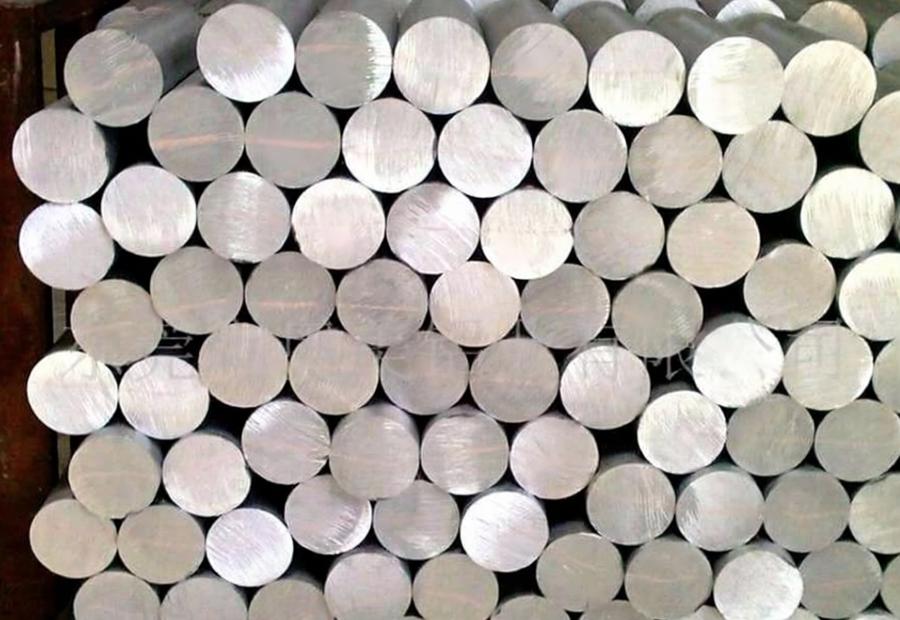
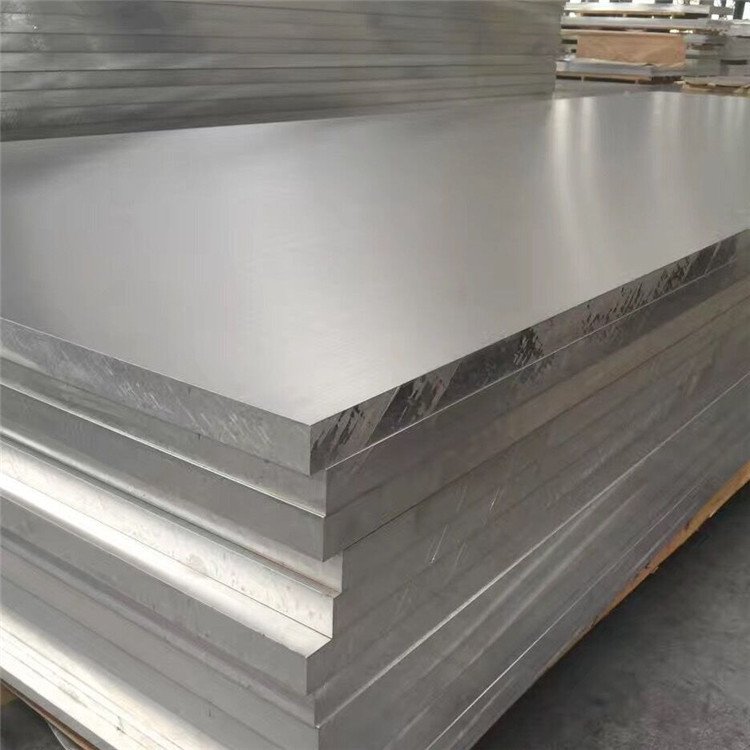
| T651 | T6 + stress relieved by stretching | Low residual stress, high dimensional stability | Precision machining, thick plate parts, high-accuracy tooling |
2. Chemical Composition and Core Performance
2.1 Chemical Composition
6082 uses an alloying formula focused on strength improvement and microstructure optimization. Silicon and magnesium act as the main strengthening elements. Manganese serves as a secondary strengthening element. The remaining elements are controlled impurities. Typical composition (weight percentage) is as follows:
- Silicon (Si): 0.70% – 1.30%
- Magnesium (Mg): 0.60% – 1.20%
- Manganese (Mn): 0.40% – 1.00%
- Iron (Fe): ≤ 0.50%
- Chromium (Cr): ≤ 0.25%
- Zinc (Zn): ≤ 0.20%
- Copper (Cu): ≤ 0.10%
- Titanium (Ti): ≤ 0.10%
- Remainder: Aluminum (Al)
Silicon and magnesium form Mg₂Si strengthening phases, which drive the heat-treatment hardening effect. Manganese refines grains and further improves the alloy’s strength-toughness balance.
2.2 機械的特性
For the most widely used T6 temper, typical mechanical values vary slightly by product form and section thickness. Standard reference data are listed below:
- Tensile strength: 275 – 310 MPa
- Yield strength: 240 – 260 MPa
- Elongation: 8% – 12%
- Brinell hardness: approx. 95 – 105 HB
T651 temper delivers nearly the same strength level as T6. However, it has much lower residual stress. It causes less distortion after machining, so it works better for high-precision part production.
2.3 Physical Properties
6082’s physical properties define its lightweight and thermal conductivity advantages. Typical parameters are as follows:
| Property | Typical Value |
|---|---|
| 密度 | 2.70 g/cm³ (approx. 2700 kg/m³) |
| Modulus of elasticity | Approx. 70 GPa |
| Thermal conductivity | Approx. 180 W/(m·K) |
| Coefficient of thermal expansion | Approx. 24 × 10⁻⁶ /K |
| Melting range | Approx. 555°C – 610°C |
Its low density cuts weight by about 65% compared with steel, while still maintaining respectable stiffness and strength. This makes it a core material for lightweight structures. Its good thermal conductivity also suits heat-dissipation components.
3. Processing and Fabrication Capabilities
6082 aluminum alloy supports a wide range of fabrication methods. It works well with cutting, forming, joining and surface finishing. This makes it a highly flexible structural aluminum alloy for manufacturing.
3.1 CNC Machining
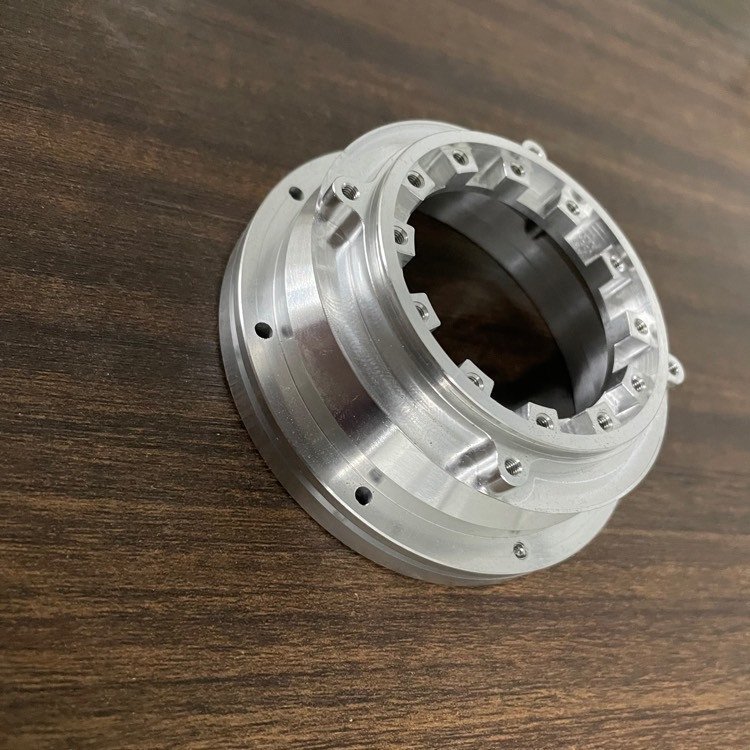
6082 in T6 and T651 tempers offers excellent machinability. It is one of the most commonly used aluminum grades for CNC machining. It supports milling, turning, drilling, tapping, boring and reaming. Manufacturers can use it to produce complex features with high precision.
Key machining tips: Use sharp carbide tools to reduce built-up edge and material sticking. Control cutting heat and clamping stress to avoid thin-wall distortion. For high-precision parts, choose T651 thick plate first. This effectively reduces dimensional distortion after machining.
3.2 Forming Processes
Depending on the temper, 6082 fits various forming methods:
- 押出: Produces continuous cross-sections such as rods, tubes and profiles. It is the mainstream method for structural profiles.
- Bending / stamping: O and T4 tempers work for cold bending and stamping to make sheet metal structural parts.
- Forging / stretch forming: Produces high-density load-bearing parts for heavy-duty conditions.
In most cases, manufacturers combine forming with post-heat treatment. This way they achieve both formability and target strength.
3.3 Joining Methods
6082 has good weldability. It is one of the few high-strength aluminum alloys suitable for welding. Common joining methods fall into two categories:
- Welding processes: TIG, MIG and laser welding all work well and produce clean weld beads. Note that the heat-affected zone loses some strength. For heavy-load structures, add post-weld heat treatment or structural reinforcement.
- Mechanical joining: Riveting and bolting are mature methods for detachable structures. They avoid strength loss and distortion from welding.
3.4 Special Machining
For complex contours, thin walls, narrow slots and other special features, you can use special machining methods as supplements:
- Wire EDM / sinker EDM: Ideal for precision narrow slots and shaped holes with no cutting stress.
- Laser cutting: Fast blanking for thin sheets with high contour accuracy.
- Waterjet cutting: No heat-affected zone, suitable for thick plate blanking and heat-sensitive parts.
3.5 Surface Finishing
6082 accepts various surface treatments to improve corrosion resistance, wear resistance and appearance. Common processes include:
- Anodizing: The most popular surface treatment. It greatly improves corrosion resistance and surface hardness. Both standard and hard anodizing are available.
- Sandblasting / brushing / polishing: Adjust surface texture and visual appearance.
- Powder coating / electroplating: Add stronger protection and decorative effects.
- Chemical conversion coating: Used as a paint base or for short-term rust prevention.
Keep in mind that 6082 delivers slightly lower as-extruded surface finish than appearance grades such as 6063. For high-appearance requirements, plan surface leveling processes in advance.
4. Material Comparison and Selection Reference
Engineers often compare 6082 with other aluminum grades during material selection. The table below summarizes their core differences for quick judgment:
| Comparison | 6082 | 6061 | 7075 | 6063 |
|---|---|---|---|---|
| Strength level | 中高 | ミディアム | Ultra-high | Low-medium |
| Corrosion resistance | 素晴らしい | 素晴らしい | フェア | 素晴らしい |
| Weldability | グッド | グッド | 貧しい | グッド |
| Surface quality | フェア | グッド | フェア | 素晴らしい |
| Core positioning | Structural load | General engineering | Ultra-high strength structure | Appearance profiles |
4.1 6082 vs 6061
Both belong to the 6000-series Al-Mg-Si family and perform similarly, but they target different markets. 6082 offers slightly higher strength and better load capacity, and dominates the European structural aluminum market. 6061 is more available in North American supply chains and delivers better as-extruded surface finish. They can replace each other in most structural scenarios. The final choice depends on supply chain access and specific performance needs.
4.2 6082 vs 7075
These two come from different alloy families and show large performance gaps. 7075 is an ultra-high-strength aluminum alloy. It is much stronger than 6082 and appears mostly in aerospace and extreme lightweight applications. By contrast, 6082 offers stronger corrosion resistance, better weldability and lower processing cost. It provides better overall engineering practicality and more controlled total cost.
4.3 6082 vs 6063
Both are 6000-series grades but serve different purposes. 6063 focuses on appearance and extrusion formability. It delivers excellent surface finish and works mostly for architectural profiles and decorative parts. 6082 focuses on structural strength and load capacity for stressed parts and engineering structures. In short, choose 6063 for appearance priority and 6082 for strength priority.
5. Advantages, Limitations and Typical Uses
5.1 主な利点
- Well-balanced strength: Ranks high in the 6000 series and meets most medium-to-high load structural needs.
- 優れた耐食性: Performs stably in atmosphere, fresh water and most weak-acid environments. Delivers long service life in outdoor applications.
- Wide process compatibility: Supports cutting, welding, forming and surface finishing. Offers high manufacturing flexibility.
- Mature supply chain: Plates, rods, profiles and other forms are readily available. Suitable for large-scale engineering procurement.
5.2 Application Limitations
- As-extruded surface quality lags behind high-appearance grades such as 6063. High-gloss appearance projects require extra finishing steps.
- Weld heat-affected zone suffers strength reduction. Heavy-load welded structures need dedicated verification and reinforcement.
- Not ideal for ultra-thin wall or complex fine extrusion profiles.
5.3 Typical Application Fields
- Engineering structures: Bridge components, crane trusses, building support structures and towers. Replaces steel for lightweight corrosion-resistant design.
- Transportation: Automotive chassis parts, marine structural components, railway vehicle parts and container frames.
- Machined parts: Equipment frames, tooling fixtures, valve bodies, brackets and precision mechanical components.
- Special industrial uses: Food processing equipment, photovoltaic supports and offshore engineering parts that require corrosion resistance.
6. Selection Recommendations and Conclusion
The core value of 6082 aluminum alloy lies in its balanced engineering practicality. It does not pursue extreme performance in a single area. Instead, it achieves an optimal balance among strength, corrosion resistance, weldability, processability and cost. It remains a cost-effective choice for medium-to-high strength structural applications.
Follow these core selection principles: First, confirm load and strength requirements. Choose T6 or T651 temper for medium-to-high load structures. Select O or T4 temper for parts that need cold forming, and add post-forming heat treatment if required. For high-precision machined parts, prefer T651 stress-relieved plate or rod to reduce machining distortion. For projects with strict appearance requirements, evaluate surface finishing plans in advance or switch to 6063 / 6061.
As a precision manufacturing service provider, PartsMastery offers full-chain custom machining services for 6082 aluminum alloy. We cover material selection, CNC precision machining, surface finishing and final inspection. We can customize all types of structural parts and precision components according to your project requirements. If you have 6082 aluminum machining needs or technical drawings, contact us for a targeted process solution and quotation.