








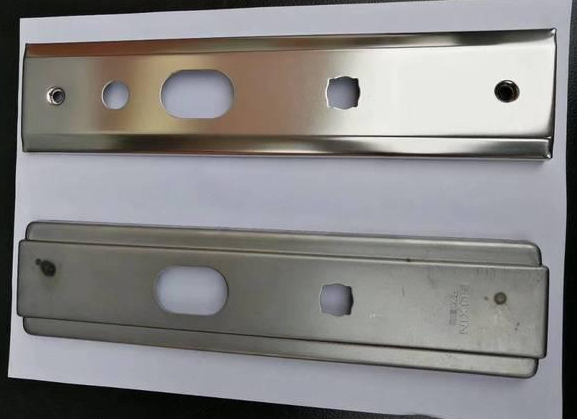
When evaluating CNC machined components, dimensional accuracy often takes center stage — but surface finish is what separates a workshop prototype from a production-ready product. The texture, consistency, and visual quality of a part directly influence perceived value, coating performance, and even functional properties like friction and corrosion resistance.
Among the many surface finishing options available for CNC parts, bead blasting stands out as one of the most versatile, cost-effective, and widely requested solutions. It delivers a clean, professional matte-satin appearance while preparing surfaces for secondary treatments. This guide breaks down everything you need to know about the bead blasting process, from how it works to when it makes sense for your project.
What Is Bead Blasting, Exactly?
Bead blasting is a mechanical surface finishing process that propels tiny spherical media — most commonly glass beads — at a workpiece using compressed air. Rather than cutting or grinding away material, the process creates a gentle peening effect: each bead impact compresses the surface at a microscopic level, smoothing out tool marks, blending inconsistencies, and producing a uniform non-directional texture.
The resulting finish is typically a soft, matte-satin surface with a roughness range between Ra 0.8 μm and Ra 3.2 μm, depending on bead size and pressure settings. Unlike sanding or grinding, which leave visible directional scratch patterns, bead blasting creates an even, consistent appearance across flat surfaces, curves, and internal features alike.
In CNC manufacturing, bead blasting is most commonly applied to:
- Aluminum electronic enclosures and cosmetic faceplates
- Stainless steel medical and food-grade components
- Parts requiring surface preparation before anodizing, powder coating, or painting
- Components where a non-reflective, low-glare finish is preferred
The Step-by-Step Bead Blasting Process
While the concept is straightforward, consistent high-quality results require careful control over every parameter. A professional bead blasting workflow follows these stages:
1. Pre-Blast Cleaning & Preparation
Machined parts first go through a degreasing and cleaning cycle to remove cutting fluids, metal chips, and surface contaminants. Any oil or residue left on the surface will cause uneven blasting and create visible splotches in the final finish. Critical features like precision threads or sealed surfaces are masked with rubber or tape before blasting begins.
2. Media Selection & Calibration
The operator selects bead material, size, and hardness based on the part’s base material and desired finish. Standard glass beads range from #60 mesh (coarser, faster cutting) to #220 mesh (finer, smoother satin). Pressure settings are calibrated — typically between 40 and 80 PSI — with softer materials like aluminum running at lower pressures than steel or stainless steel.
3. Controlled Blasting Operation
Inside an enclosed blast cabinet, the technician moves the nozzle methodically across the part surface, maintaining consistent distance and angle. The part is rotated or repositioned to ensure full coverage of all faces, internal recesses, and edge features. This stage removes machining tool paths, light burrs, and surface imperfections while building the uniform matte texture.
4. Post-Blast Cleaning & Inspection
After blasting, parts are air-blow cleaned and often ultrasonic washed to remove all embedded bead dust and residual media. Each part is then inspected under proper lighting to verify uniform coverage, confirm no critical dimensions have shifted, and ensure the surface is ready for use or additional coating processes.
Bead Blasting vs. Sandblasting: What’s the Real Difference?
The two terms are often used interchangeably, but they produce fundamentally different results and serve distinct purposes.
| 比較 | ビーズブラスト | サンドブラスト |
|---|---|---|
| Blasting Media | Spherical glass, ceramic, or plastic beads | Angular silica sand, aluminum oxide, or grit |
| Surface Texture | Smooth, uniform satin-matte finish | Rough, deeply etched, coarse texture |
| Material Removal | Minimal — peening effect, microns only | Aggressive — significant material removal |
| Dimensional Impact | Negligible on properly set parameters | Can alter tolerances and edge geometry |
| Primary Use Case | Cosmetic finishing, coating prep for CNC parts | Heavy rust removal, paint stripping, deep cleaning |
| Final Appearance | Professional, production-ready look | Industrial, unfinished appearance |
In short, sandblasting is built for heavy-duty cleaning and material removal, while bead blasting is engineered for refinement and cosmetic surface quality. For precision CNC machined parts where appearance and dimensional accuracy matter, bead blasting is almost always the correct choice.
Blasting Media Options: Glass, Ceramic, Plastic & More
Not all bead media are the same. Different materials produce different textures, cutting speeds, and durability profiles:
Glass Beads
The industry standard for most CNC finishing applications. Soda-lime glass beads are affordable, recyclable, and produce a classic bright satin finish. They work exceptionally well on aluminum, stainless steel, and brass parts, and are the default choice for general cosmetic finishing and coating preparation.
Ceramic Beads
Harder, denser, and longer-lasting than glass. Ceramic beads deliver a more refined, uniform surface and maintain their spherical shape through many more cycles. They are the preferred choice for aerospace, medical, and high-performance alloy components where consistency and process repeatability are critical.
Plastic Media
The softest blasting option, made from nylon, urea, or acrylic polymers. Plastic beads strip flash, clean surfaces, and remove burrs without altering base material dimensions. They are ideal for delicate parts, soft brass alloys, and plastic or composite components that would be damaged by harder media.
Steel Shot
Used primarily for shot peening applications rather than cosmetic finishing. Steel beads work-harden the part surface, significantly improving fatigue resistance and stress tolerance. They are common in automotive and aerospace structural components but produce a rougher finish than glass or ceramic beads.
Core Benefits of Bead Blasting for CNC Components
Bead blasting’s popularity in CNC manufacturing stems from its unique combination of aesthetic and functional advantages:
- Uniform cosmetic finish: Eliminates visible tool marks, milling lines, and machining inconsistencies, giving every part a consistent, professional appearance regardless of complexity.
- Improved coating adhesion: Creates a micro-textured “anchor profile” that helps anodizing, powder coating, paint, and plating bond more strongly and evenly to the surface.
- Cost-efficient finishing: Delivers a high-quality surface at a fraction of the cost of hand polishing or vibratory finishing, especially for parts with complex geometries.
- Gentle on delicate features: Properly calibrated bead blasting smooths surfaces without eroding thin walls, sharp corners, or fine details — something aggressive grinding cannot match.
- Light deburring & edge breaking: Naturally softens sharp machined edges and removes micro-burrs, reducing the need for secondary hand deburring operations.
- Conceals surface imperfections: The uniform matte texture hides minor scratches, handling marks, and material variations that would be visible on machined or polished surfaces.
Key Limitations & Design Considerations
Bead blasting is not a universal solution. There are important scenarios where it may not be ideal:
- Ultra-tight tolerances: While material removal is minimal, bead blasting does remove a microscopic surface layer. For parts with single-micron tolerance requirements, critical features should be masked or post-machined after blasting.
- Threaded features: Blasting media can alter thread fit and surface finish. All threaded holes and fastener features should be masked before blasting to maintain proper engagement.
- High-gloss requirements: Bead blasting produces a matte to satin finish. If you need a reflective or mirror-polished surface, a different finishing process will be required.
- Internal cavities: Very deep, narrow holes or slots may be difficult to reach with blast nozzles, potentially leading to uneven coverage.
- Media entrapment: Blind holes and crevices can trap bead media. Designs should include drain holes or account for post-blast cleaning of internal features.
How Bead Blasting Compares to Other CNC Surface Finishes
| Finish Method | Visual Result | Protection Level | ベスト・アプリケーション |
|---|---|---|---|
| ビーズブラスト | Smooth satin-matte, non-reflective | None on its own; excellent base for coatings | Cosmetic enclosures, pre-anodizing prep, general industrial parts |
| 陽極酸化処理 | Wide color range, matte to glossy options | Excellent corrosion and wear resistance | Aluminum parts for outdoor, aerospace, and consumer products |
| Mechanical Polishing | Bright reflective to mirror finish | Minimal; purely cosmetic | Decorative components, medical instruments, high-visibility parts |
| パウダーコーティング | Thick durable finish, unlimited colors | Superior corrosion and impact resistance | Outdoor equipment, automotive parts, industrial housings |
| 不動態化 | No visible change to base metal | Chemical corrosion protection for stainless steel | Food-grade and medical stainless steel components |
Bead blasting is frequently used as a precursor step before anodizing or powder coating. The combination delivers both the clean visual uniformity of a blasted surface and the durable protection of a coating — making it the most popular finishing stack for aluminum CNC enclosures.
よくある質問
Is bead blasting safe for precision CNC parts?
Yes, when performed with calibrated equipment and proper parameters. The process operates inside fully enclosed cabinets with dust collection, and the glass bead media itself is non-toxic and non-reactive. Most importantly, the low material removal rate means dimensional integrity is preserved when settings are matched to the part material.
Will bead blasting change my part dimensions?
Only at the microscopic level. A standard glass bead blast typically removes less than 5 microns of surface material — generally well within the tolerance range for most CNC parts. For extremely tight tolerance features, masking or post-blast machining is recommended.
Can bead blasting remove rust and old paint?
It can handle light oxidation, surface discoloration, and thin paint layers effectively. For heavy rust, thick coatings, or severe surface contamination, a more aggressive blasting media or chemical stripping will produce faster, more complete results.
How long does the bead blasting process take?
For typical CNC components, blasting takes only minutes per part. The majority of turnaround time comes from setup, masking, cleaning, and inspection. When integrated into a full production workflow, bead blasting adds minimal lead time to the overall manufacturing cycle.
Does bead blasting improve corrosion resistance?
On its own, no — bead blasting is purely a mechanical surface treatment. However, it dramatically improves the performance of subsequent corrosion-resistant coatings by creating better adhesion and a more uniform base for the coating to bond with.
まとめ
Bead blasting occupies a unique sweet spot in the CNC finishing landscape: it’s affordable, versatile, gentle on precision features, and delivers an immediately noticeable upgrade in part appearance. For most industrial and consumer product applications, it provides the best balance of cost, speed, and visual quality available.
While the process may appear simple on the surface, consistent high-quality results depend on experienced operators who understand how to match media, pressure, and technique to each material and part geometry. Partnering with a CNC shop that performs bead blasting in-house ensures tighter process control, faster turnaround, and better integration between machining and finishing stages.