



Electronic products continue to evolve toward miniaturization, higher integration, and greater reliability. The manufacturing quality of internal structural parts, heat sinks, connection brackets, and shielding enclosures directly determines assembly yield, operational stability, and overall service life. In the face of micron-level tolerance requirements, complex micro-structures, and rapid iteration deadlines, traditional machining processes struggle to balance accuracy, efficiency, and cost simultaneously.
With digital precision control, flexible production models, and comprehensive material compatibility, CNC precision machining delivers a stable and reliable manufacturing path for high-precision electronic components. PartsMastery specializes in custom precision component manufacturing for the electronics sector, covering the full lifecycle from prototype validation and low-volume trials to full-scale mass production, helping electronics companies bring products to market efficiently.
1. Core Manufacturing Challenges for High-Precision Electronic Parts
1.1 Micron-Level Dimensional Accuracy and Consistency
Electronic devices feature high assembly density and tight fit clearances, with critical dimensional tolerances often measured in microns. Even minor dimensional deviations or geometric tolerance errors can directly cause assembly binding, poor contact, thermal failure, or signal interference. Traditional machining relies heavily on manual operation, leading to high dimensional variation across batches and difficulty meeting consistent mass production requirements.
1.2 Forming Difficulties of Complex Micro-Structures
To balance lightweight design, thermal performance, shielding, and structural strength, electronic parts often incorporate complex features such as thin walls, deep grooves, micro holes, irregular cavities, and stepped surfaces. During machining, these structures are prone to deformation, burrs, and dimensional drift. This places extremely high demands on tool path planning, cutting parameter optimization, and fixturing design.
1.3 Multi-Material Performance Adaptation Demands
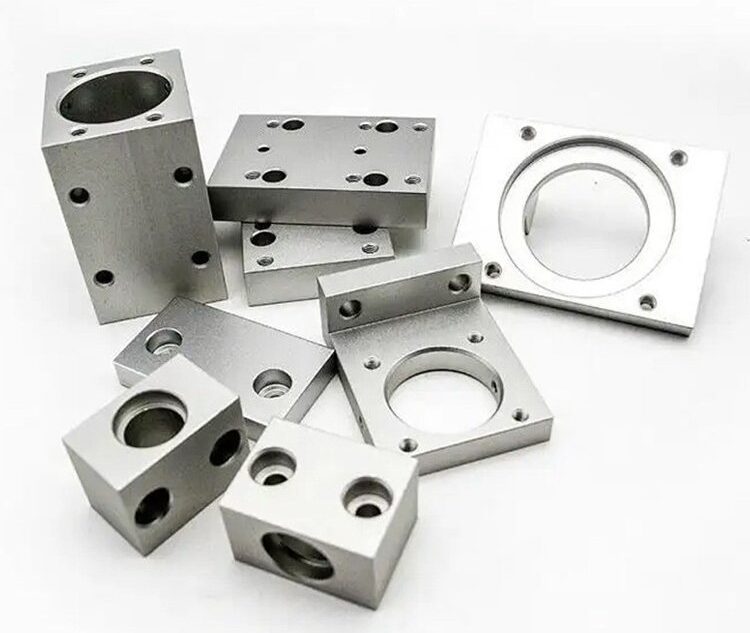
Different electronic applications have vastly different material requirements. Structural and thermal components use aluminum alloys for light weight and thermal conductivity. Connection and shielding parts require stainless steel for strength and corrosion resistance. Insulating and support components use engineering plastics for electrical isolation. Each material behaves differently during machining, requiring targeted process strategies to ensure finished part performance.
2. Core Technical Advantages of CNC Precision Machining
2.1 Stable Micron-Level Accuracy Control
By combining digital CNC systems, high-precision machine tools, and precision cutting tools, we consistently achieve micron-level dimensional tolerances. Critical dimensions are controlled through a layered cutting strategy and in-process inspection. This approach ensures both individual part accuracy and batch-to-batch dimensional consistency, improving assembly yield and operational reliability at the source.
2.2 Integrated Forming for Complex Geometries
3-axis, 4-axis, and 5-axis simultaneous machining enables single-setup forming of complex features such as thin walls, deep grooves, angled holes, and irregular curved surfaces. This reduces cumulative positioning errors caused by splitting operations across multiple setups. It also allows more complex designs to be implemented quickly, giving product designers greater freedom without compromising for manufacturing limitations.
2.3 Full Material Process Compatibility
We develop tailored cutting parameters, tooling strategies, and machining processes for all common electronic materials, including aluminum alloys, stainless steel, copper alloys, engineering plastics, and ceramics. This balances structural strength, thermal performance, insulating properties, and surface quality to meet the functional requirements of different application scenarios.
2.4 Flexible and Rapid Delivery Capability
No dedicated tooling is required. Parts can be produced quickly directly from 3D CAD models. When designs are updated, machining programs can be adjusted and parts reproduced rapidly to match the fast R&D pace of the electronics industry. We support seamless scaling from single-piece prototype validation through low-volume trial production to full-scale mass production.
3. Typical Application Scenarios for Electronic Component Machining
| Application Field | Typical Machined Parts | Core Machining Requirements |
|---|---|---|
| Consumer Electronics | Mid-frame brackets, heat sinks, keypad structures, internal connectors | High dimensional accuracy, premium surface finish, thin-wall lightweight design |
| Communications Equipment | Cavity structures, filter bases, connectors, thermal modules | Structural stability, high dimensional consistency, excellent thermal performance |
| Industrial & Test Equipment | Test fixtures, positioning jigs, shielding enclosures, mounting bases | High positioning accuracy, wear resistance, long-term operational stability |
| Medical Electronics | Instrument housings, connectors, sensor structures, probe bases | Consistent accuracy, burr-free surfaces, biocompatible finishing |
4. Full-Cycle Manufacturing Services and Quality Assurance
4.1 Upfront DFM Manufacturability Review
Before production begins, we conduct a full DFM (Design for Manufacturing) analysis based on customer 3D models and drawings. We identify potential risks such as thin-wall deformation zones, overly tight tolerances, and machining blind spots, and provide early design optimization recommendations. This reduces manufacturing costs and rework risks at the design stage itself.
4.2 Standardized Process Control
We have established standardized manufacturing workflows with quality control at every stage, from incoming material verification and datum establishment through rough/finish machining separation and in-process inspection. Critical dimensions follow a three-tier quality system: first article inspection, in-process patrol checks, and final full inspection. This ensures stable and consistent dimensions across all production batches.
4.3 Integrated Surface Treatment Services
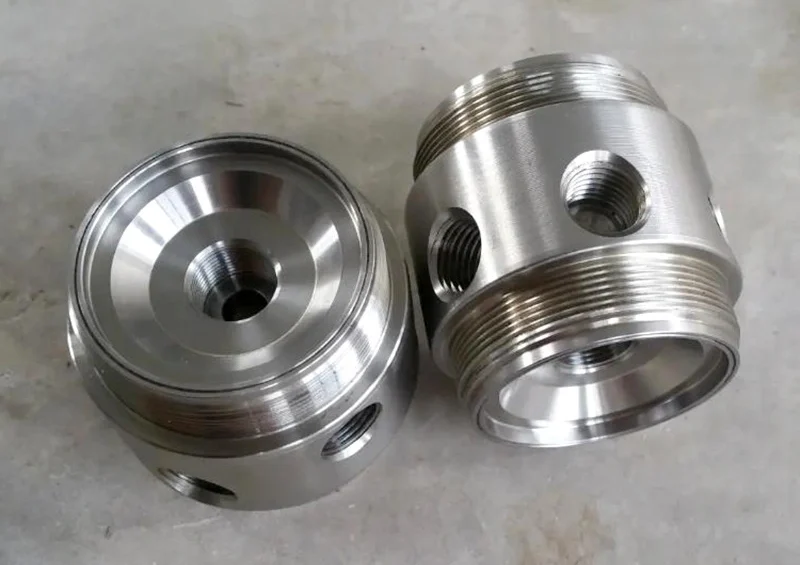
We offer a complete range of secondary surface treatments including anodizing, sandblasting, hairline finishing, laser marking, conductive oxidation, and plating. These meet diverse electronic part requirements for appearance, corrosion resistance, conductivity, and electromagnetic shielding, enabling true one-stop delivery from raw stock to finished part.
4.4 Full-Cycle Delivery Support
During the prototype phase, we offer rapid turnaround — as fast as 48 hours — to support design verification and functional testing. During full production, we standardize process parameters and inspection criteria to ensure stable, repeatable batch delivery. We also provide flexible capacity adjustment and supply chain support aligned with customer product iteration schedules.
Conclusion
Manufacturing quality of high-precision electronic components forms the foundation of electronic product performance and reliability. As the industry moves toward higher integration and faster development cycles, precision manufacturing capability has become one of the core competitive strengths for electronics companies.
With proven CNC precision machining capabilities, a full-process quality control system, and a flexible delivery model, PartsMastery delivers custom component manufacturing solutions for consumer electronics, communications, industrial, and medical customers. We support rapid product launch and stable volume production for every partner.