


Aerospace components operate continuously under high temperatures, extreme pressure, alternating loads, and corrosive environments, and these conditions impose the industry’s strictest standards on material strength, structural reliability, and machining accuracy. To meet these demands, high-performance materials such as titanium alloys, high-strength aluminum alloys, nickel-based superalloys, and specialty stainless steels serve as the primary material choices, thanks to their excellent strength-to-weight ratio, high-temperature resistance, and corrosion performance. Even so, these materials universally present major machining challenges: high cutting resistance, concentrated cutting heat, pronounced work hardening, rapid tool wear, and thin-wall deformation risk. For this reason, building a stable CNC machining process system tailored to high-strength materials remains the core prerequisite for consistent aerospace part quality and on-time delivery efficiency.
At PartsMastery, we specialize in precision manufacturing for the aerospace sector. Specifically, we operate a full fleet of 3-axis through 5-axis simultaneous machining centers staffed by a dedicated engineering team, and we deliver full-cycle custom solutions for difficult-to-cut materials such as titanium and superalloys. Beyond core machining operations, our services cover DFM manufacturability analysis, process planning, precision machining, and inspection-based delivery. In turn, this end-to-end approach lets us support the full project lifecycle — from prototype validation and low-volume trials all the way to full-scale mass production.
1. Core Machining Challenges for High-Strength Aerospace Materials
1.1 Diverse Cutting Characteristics and High Process Adaptation Thresholds
To start with, different high-performance materials exhibit vastly different machining behaviors, and generic cutting parameters rarely deliver reliable results across the board. For example, titanium alloys have low thermal conductivity, which traps cutting heat at the cutting edge, accelerates tool wear, and triggers thermal deformation in the workpiece. Nickel-based superalloys, by contrast, retain high hardness at elevated temperatures and produce strong work hardening effects; this generates extreme cutting forces and places strict demands on tool rigidity and cooling strategies. High-strength aluminum alloys, in comparison, are generally more machinable, but their thin-wall structures remain highly susceptible to warping and deformation under cutting forces and residual stress release. As a direct result, every material class demands custom tooling, parameters, and cooling strategies to ensure consistent machining stability.
1.2 Complex Geometries and Difficult Geometric Tolerance Control
Beyond material-specific hurdles, aerospace parts commonly feature thin walls, deep cavities, spatial surfaces, irregular hole patterns, and reinforcing ribs, all with extremely tight requirements for geometric tolerances and profile accuracy. When fixturing lacks sufficient rigidity or cutting parameters are poorly calibrated, cutting chatter and structural deformation almost always follow. Worse still, traditional 3-axis machining requires multiple clamping and repositioning steps, which introduce cumulative positioning errors. Because of this, manufacturing teams struggle to maintain reliable relative positional accuracy across multi-sided features.
1.3 Strict Quality Standards and High Batch Consistency Requirements
On top of dimensional accuracy, aerospace-grade components must satisfy rigorous requirements for surface integrity, hole position accuracy, and profile accuracy. Most notably, surface quality directly influences a part’s fatigue strength and long-term service life. Over extended production runs, furthermore, tool wear, material condition variation, and process drift can all drive gradual dimensional deviation. For all these reasons, only end-to-end quality control can guarantee high batch-to-batch consistency over the long term.
2. Custom Machining Solutions for Typical High-Strength Materials
2.1 Titanium Alloy Machining Solutions
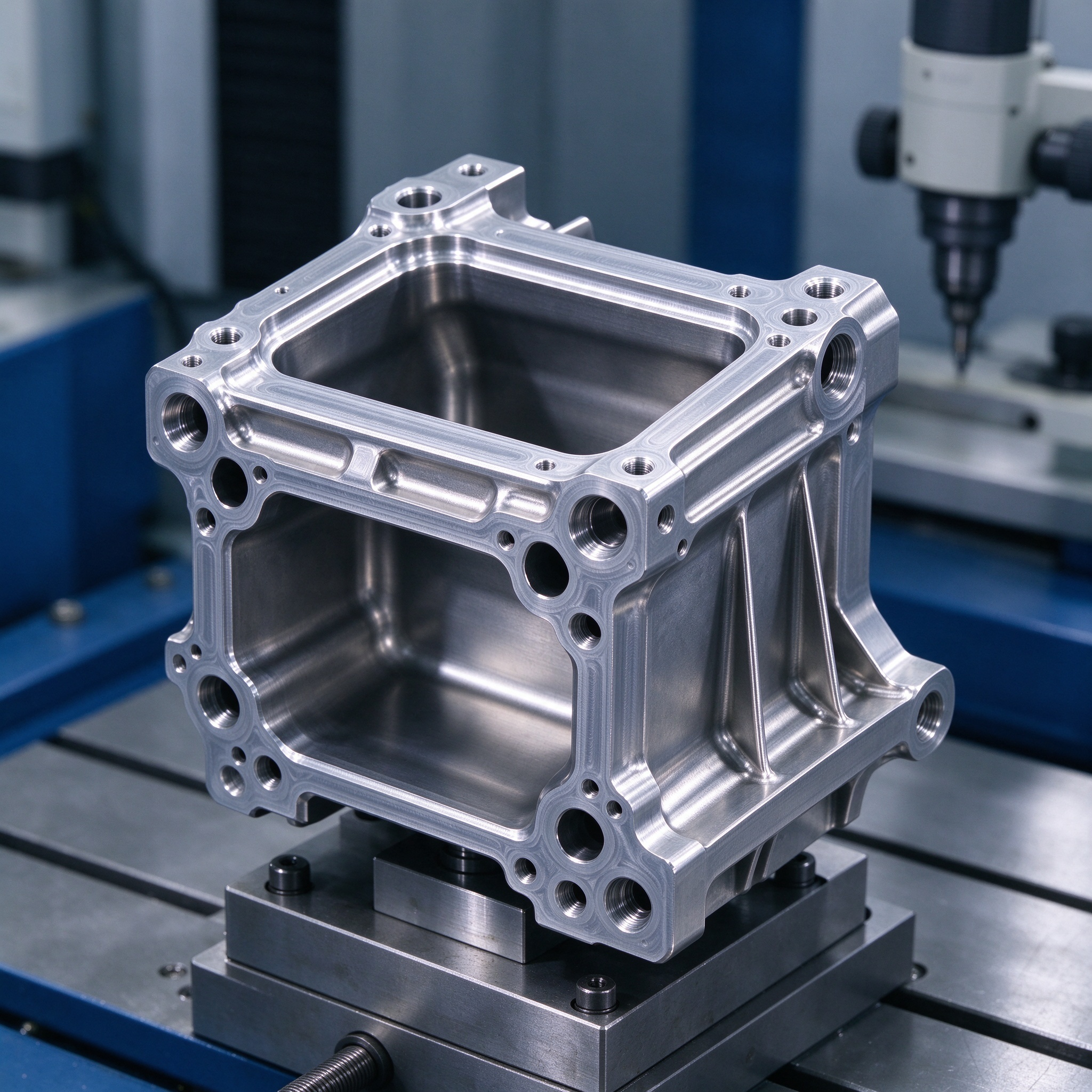
Titanium alloys such as Ti-6Al-4V (TC4) and TC11 see widespread use in airframe structures, engine connectors, and aerospace fittings. For these materials, controlling cutting heat and minimizing tool wear sit at the top of the machining priority list. To address these challenges effectively, we focus on four targeted strategies:
- We rely on coated carbide tools with large-rake-angle edge geometry to reduce cutting resistance and heat buildup
- We deliver high-pressure, high-volume coolant directly to the cutting zone to extend tool life and stabilize cutting temperatures
- We optimize layered cutting strategies to control depth of cut per pass and reduce deformation from residual stress release
- We machine complex surfaces and deep cavities using 5-axis simultaneous motion to reduce setups and improve access to hard-to-reach areas
2.2 High-Strength Aluminum Alloy Machining Solutions
In contrast, high-strength aluminum alloys such as 7075-T6 and 2024-T4 serve as the go-to choice for lightweight aerospace structures, and they appear widely in skins, frames, and housing parts. Here, the core machining priority shifts toward controlling thin-wall deformation and preserving high surface quality. To achieve this, our approach centers on three key controls:
- We design dedicated multi-point support fixtures for thin-wall structures to distribute clamping force evenly and avoid clamping-induced deformation
- We optimize tool paths with high-speed milling and symmetrical cutting strategies to reduce stress deformation caused by uneven local material removal
- We separate roughing and finishing operations, with intermediate stress-relief aging built into the process to ensure long-term dimensional stability for finished parts
2.3 Nickel-Based Superalloy and Specialty Stainless Steel Solutions
For the most demanding high-temperature applications, nickel-based superalloys such as the Inconel family and specialty stainless steels are the standard choice, used primarily for engine hot-section components and corrosion-resistant structures. With these extremely hard materials, managing work hardening and handling high cutting loads become the core machining priorities. We tackle these challenges through four targeted practices:
- We select cubic boron nitride (CBN) or ceramic cutting tools for high-hardness continuous cutting scenarios
- We apply low-speed, high-feed cutting strategies to avoid the work-hardened surface layer and slow down tool wear rates
- We maintain overall rigidity across the machine tool and fixturing system to suppress chatter and preserve high surface finish quality
- We produce high-precision holes, grooves, and complex profiles using combined milling and turning processes, with staged quality checks to lock in dimensional and geometric accuracy
3. Full-Process Standardized Manufacturing Control System
All things considered, aerospace part quality never depends on a single operation; it relies on systematic control across the entire production flow. For this reason, PartsMastery has built standardized processes covering the full production chain, organized into five sequential stages.
| Process Stage | Core Activities | Quality Value |
|---|---|---|
| DFM Manufacturability Review | Review wall thickness, hole positions, and curved surface machinability; identify deformation risks and machining blind spots; provide design optimization recommendations | Reduces production risks at the design stage and lowers downstream rework costs |
| Material & Process Planning | Matches tools, cutting parameters, and cooling strategies to material grade; designs custom fixturing and process routing | Ensures machining stability and precisely meets part accuracy requirements |
| Precision CNC Machining | Uses 3-axis through 5-axis equipment with rough – semi-finish – finish graded cutting and strict in-process dimensional control | Guarantees complex geometry forming accuracy and batch dimensional consistency |
| Integrated Surface Treatment | Provides qualified surface treatments including anodizing, passivation, painting, and specialty coatings | Improves corrosion resistance, wear resistance, and in-service surface performance |
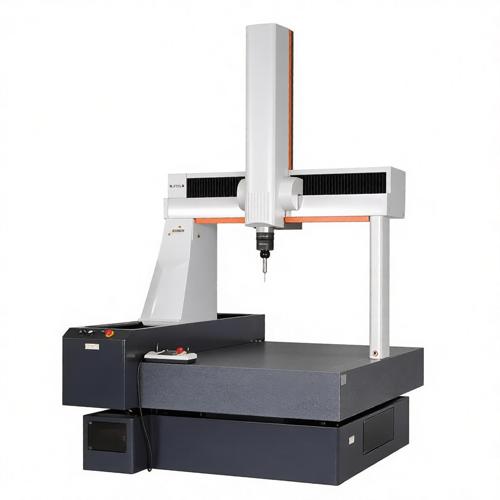
| Precision Final Inspection & Delivery | Performs full-dimensional inspection using CMM, profilometers, and other metrology equipment with complete inspection reports | Ensures finished parts fully comply with aerospace-grade accuracy specifications |
4. Key Measures to Improve Machining Efficiency and Accuracy
4.1 Targeted Tool and Cutting Parameter Optimization
First and foremost, we drive better results through targeted tool and cutting parameter refinement. We maintain a material-specific process database that matches optimal tool substrates, edge geometries, and cutting parameters to each material grade. In practice, this balances machining efficiency, surface quality, and tool life, and it eliminates the cost and lead-time waste caused by blind trial-and-error.
4.2 Custom Fixture and Workholding Design
Secondly, we improve process stability through custom fixture and workholding design. For large thin-wall and irregularly shaped parts, we engineer dedicated flexible fixturing and multi-point support solutions. We select datum references and clamping points with extreme care to minimize clamping deformation and cutting chatter. By doing so, we can guarantee consistent rigidity and stability throughout the entire machining cycle.
4.3 5-Axis Machining to Reduce Setup Errors
Third and most impactfully, we boost both accuracy and throughput with 5-axis simultaneous machining. For parts with multi-sided complex features, we complete all critical features in a single setup. This not only eliminates cumulative errors from repeated repositioning, but also improves machining continuity and surface quality on complex contours. As an added benefit, it significantly reduces lead time between operations and shortens overall production cycles.
5. Typical Application Scenarios
Taken together, these tailored high-strength material machining solutions apply across a wide range of aerospace components, including:
- Airframe structural parts: wing spars, bulkheads, brackets, and skin connectors
- Engine-related components: combustion chamber parts, turbine connectors, and casing structures
- Housings and cavities: avionics enclosures, shielding cavities, and hydraulic valve bodies
- Precision fittings: joints, flanges, mounting bases, and pin-type components
- Prototype and trial parts: low-volume validation parts for new model development
Beyond serial production parts, flexible low-volume CNC machining delivers major value for fast-iterating aerospace R&D programs. In practical terms, it dramatically shortens development cycles from design to prototype testing. In short, it helps teams accelerate overall program launch timelines.
Conclusion
All things considered, machining high-strength aerospace materials is a combined test of equipment capability, process expertise, and quality systems. From DFM design optimization and material-specific process planning to end-to-end quality control, every stage directly shapes the final performance and reliability of the finished part.
At PartsMastery, we draw on proven expertise in difficult-to-cut materials and 5-axis precision manufacturing to deliver one-stop machining services for aerospace customers, from early prototype development all the way through to full batch production. By working with a single partner for the full program lifecycle, customers can streamline supply chains, reduce rework, and meet the industry’s demanding requirements for lightweight design, high strength, tight accuracy, and reliable manufacturing performance.