





As industrial inspection, aerial mapping, logistics delivery, and agricultural spraying continue to expand their use cases, the drone industry is raising performance standards for component manufacturing. Unlike general mechanical parts, core drone components must simultaneously meet requirements for lightweight construction, high specific strength, precision assembly, and long-cycle fatigue resistance — all of which significantly increase the complexity of CNC machining processes.
This guide breaks down the key difficulties in drone part manufacturing across structural design, material properties, and mass production control, and provides actionable process optimization and quality control frameworks to support component selection and production planning.
1. Why Drone Parts Demand Higher Machining Precision
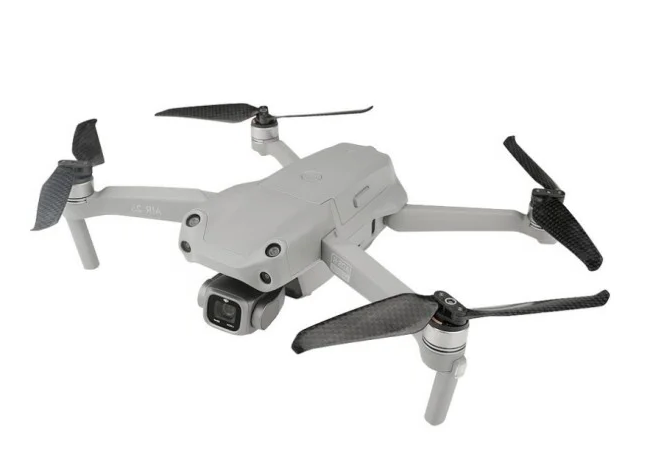
Although drones are often compact in size, their internal components perform critical functions including structural load bearing, power transmission, and payload mounting. For industrial and professional-grade drones in particular, machining precision directly determines three core performance metrics:
- Flight stability: Position deviation in motor mounts and propeller clamps amplifies dynamic imbalance, causes high-frequency vibration, and shortens overall service life.
- Endurance and payload capacity: Excess wall thickness adds unnecessary weight, while out-of-tolerance thin walls introduce structural failure risk. Precision control is the key to balancing strength and weight.
- Field reliability: Under complex outdoor operating conditions, excessive assembly clearance and residual machining stress accelerate component fatigue and raise failure probability.
For these reasons, drone component manufacturing requires not only dimensional accuracy, but also batch consistency, geometric tolerance stability, and surface integrity. This is where precision machining delivers clear value over standard milling operations.
2. Two Inherent Difficulties in Drone Part Machining
2.1 Low Rigidity from Complex Thin-Wall Structures
Drone components widely feature curved surfaces, lattice designs, and thin-wall geometries. These designs reduce weight but also create weak machining rigidity and complex fixturing challenges, reflected in three key areas:
- Freeform surfaces and spatial contours require multi-axis simultaneous machining, which adds complexity to toolpath planning and collision avoidance.
- Wall thickness typically ranges from only 0.8–2 mm. Cutting forces easily induce elastic and plastic deformation, resulting in uneven wall thickness and dimensional deviation.
- Dense mounting holes require tight position tolerances, and both fixturing distortion and residual stress release can cause hole position drift.
Such geometries cannot be produced stably with standard machining workflows. They require dedicated fixturing solutions and toolpath strategies tailored to each part’s unique characteristics.
2.2 Widely Varying Machinability of Lightweight Materials
To extend flight time and maximize payload, drones extensively use lightweight materials such as aluminum alloys, carbon fiber composites, engineering plastics, and titanium alloys. Each material behaves very differently during cutting, and improper process adaptation leads directly to part rejection.
| Material Type | Key Machining Challenges | Critical Control Points |
|---|---|---|
| Aluminum (6061 / 7075) | Soft material prone to burrs; cutting heat easily causes workpiece distortion | High spindle speed, low feed rate, sharp tooling, targeted coolant delivery |
| Carbon Fiber Composite (CFRP) | Risk of delamination, fiber fraying, edge chipping; rapid tool wear | Diamond tooling, optimized cutting direction, controlled feed per tooth |
| Engineering Plastics (PEEK / PC) | High thermal sensitivity; softening and dimensional drift at elevated temperatures | Low-heat cutting strategy, air cooling, limited depth of cut per pass |
| Titanium Alloy | High cutting forces, poor thermal conductivity, extremely rapid tool wear | High-rigidity machine, coated carbide tooling, generous cooling and lubrication |
3. Three Common Production Challenges in Volume Manufacturing
3.1 Difficult Control of Dimensional Accuracy and Batch Consistency
Across both low-volume custom work and mass production, dimensional out-of-tolerance is the most frequent quality issue. It stems from four main root causes:
- Insufficient machine positioning accuracy and rigidity, which prevents stable micron-level tolerance holding.
- Progressive tool wear causes cutting dimension drift and reduces consistency across production batches.
- Ambient temperature fluctuations induce thermal expansion and contraction in both machine and workpiece, introducing measurement and machining errors.
- Cutting vibration creates chatter marks on thin-wall surfaces and degrades both geometric tolerance and surface quality.
For critical features such as motor mounting interfaces and shaft fitting surfaces, deviation of only a few micrometers can cause assembly failure. This is why full-process coordination across equipment, process, and inspection is essential.
3.2 High Requirement for Material–Process Matching
Drone assemblies use a wide mix of materials, and multi-material combinations are common within a single product. No universal machining solution exists. For example, the high-speed strategy suited to aluminum will cause severe delamination on carbon fiber; the cooling approach designed for plastics will not provide sufficient heat dissipation for titanium.
If material compatibility is not validated during process planning, volume production will likely suffer from batch defects, driving up scrap costs and extending lead times.
3.3 Difficult Guarantee of Surface Quality and Functional Integrity
Beyond dimensional accuracy, surface quality directly influences component performance. Edge burrs interfere with precision assembly, tool marks elevate stress concentration risk, and residual machining stress leads to post-production part distortion.
This is especially critical for high-speed rotating power components, where surface defects accelerate fatigue crack initiation and create safety hazards under long-term vibration conditions.
4. Systematic Solutions to Improve Drone Part Machining Quality
4.1 Deploy High-Rigidity Multi-Axis Machining Equipment
Machine capability forms the foundation of accuracy. For complex drone components, the preferred equipment strategy includes:
- 5-axis CNC machining centers that complete all features — curved surfaces, angled faces, and multi-hole patterns — in a single setup, eliminating positioning error from multiple re-fixturing.
- High-rigidity machine frames and high-precision spindles that suppress cutting vibration and ensure stable machining of thin-wall parts.
- Automated fixturing and in-process measurement systems that boost production efficiency while reducing human-induced error.
4.2 Optimize End-to-End Process Design
Scientific process planning reduces distortion and out-of-tolerance risk at the source:
- Arrange machining operations logically and include a stress relief step after roughing to minimize distortion during subsequent finishing operations.
- Apply layer milling, climb milling, and smooth toolpath strategies for thin-wall regions to reduce cutting force impact.
- Customize cutting parameters and tooling solutions for each material to balance machining efficiency and surface quality.
- Develop dedicated processes for difficult features such as deep holes and narrow slots in advance to avoid tool collision and poor chip evacuation.
4.3 Implement Closed-Loop Quality Inspection Systems
High-precision components require comprehensive inspection workflows to ensure traceability and quality control:
- Use a Coordinate Measuring Machine (CMM) to verify critical dimensions and geometric tolerances against design specifications.
- Evaluate surface quality and material integrity with surface profilometers and metallographic inspection where required.
- Perform first-article inspection plus in-batch sampling during volume production to detect tool wear and dimensional drift early.
- Establish Statistical Process Control (SPC) to continuously improve process stability over time.
5. Typical Drone Components Suitable for Precision CNC Machining
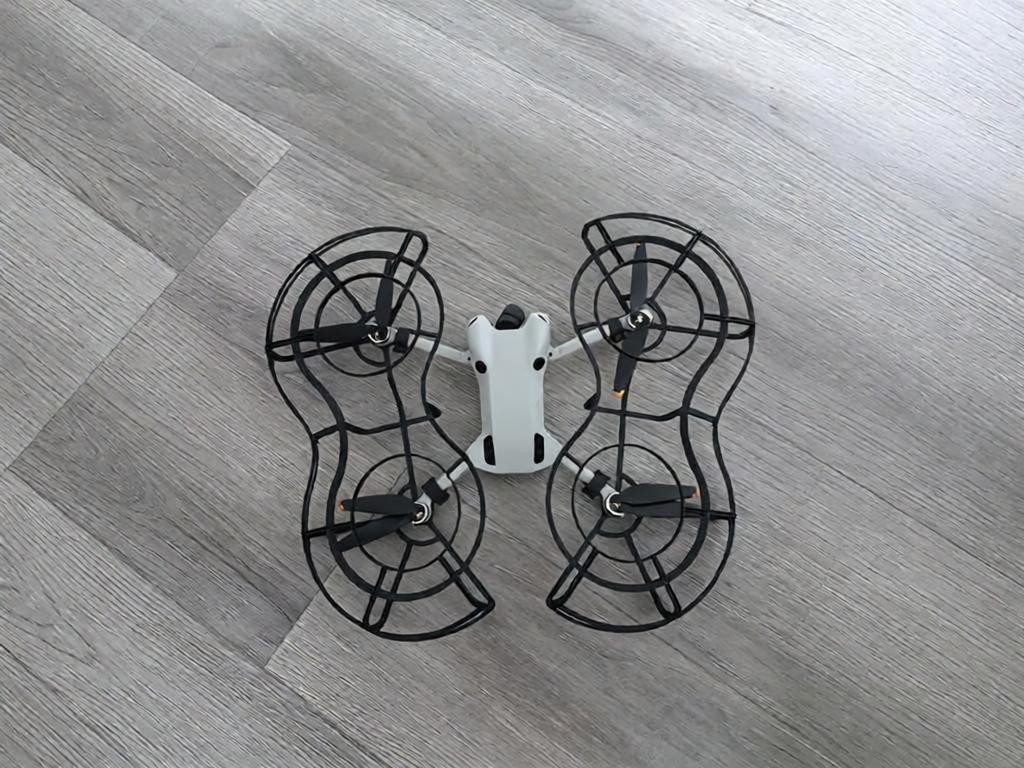
Precision CNC machining supports a broad range of custom drone component manufacturing. The three most widely produced categories are:
Structural Load-Bearing Parts
These include main airframe frames, arm connectors, and landing gear structures. The core requirement is structural strength and impact resistance with minimal weight, most commonly produced in aluminum or carbon fiber.
Power System Components
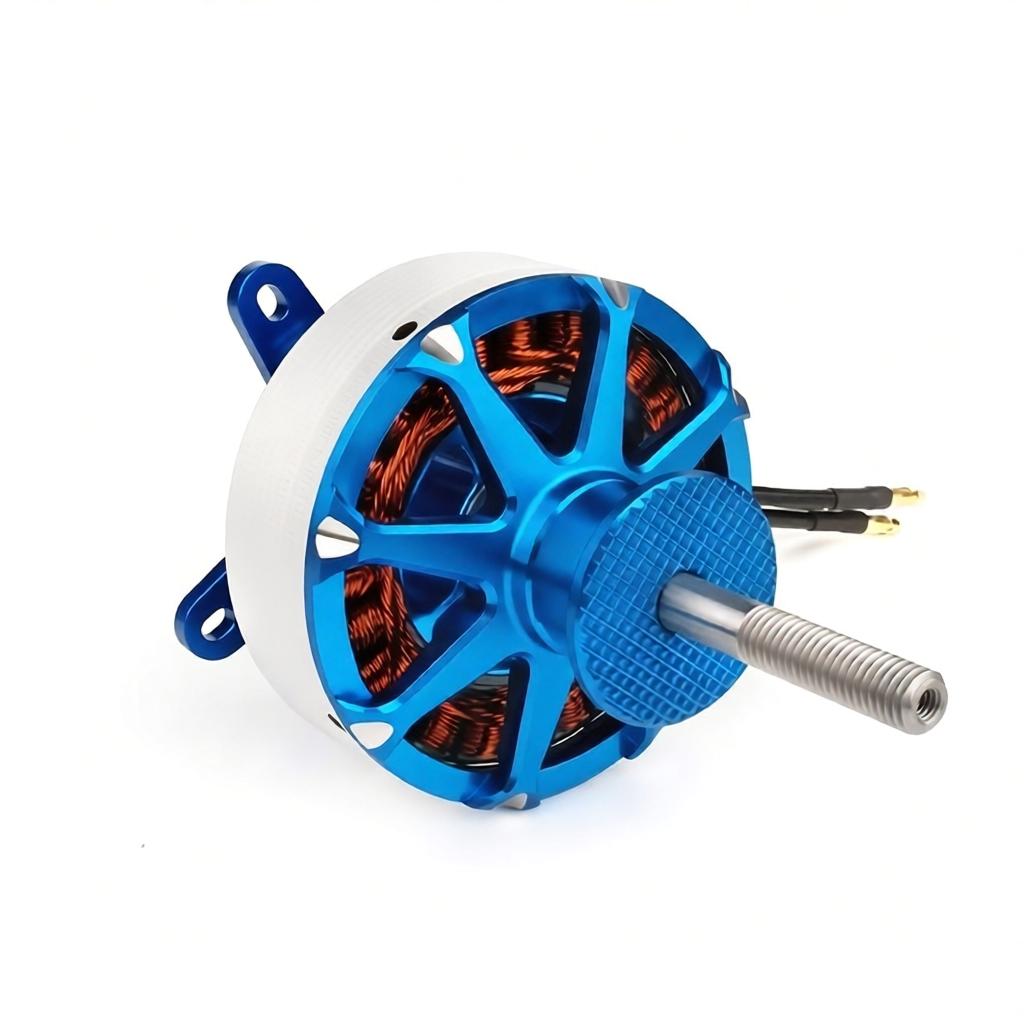
These include motor mounts, propeller clamps, shaft supports, and cooling structures. They demand extremely tight hole position accuracy, geometric tolerances, and dynamic balance performance, all of which directly affect power output efficiency and in-flight vibration levels.
Functional Connection Parts
These include gimbal connectors, sensor brackets, quick-release structures, and interface fittings. They are typically compact in size with multiple mating surfaces, requiring strict dimensional tolerance control to ensure interchangeability.
Conclusion
The manufacturing difficulty of drone parts essentially stems from overlapping requirements: lightweight design, high precision, and high performance. It involves material behavior, structural design, process planning, and quality control across multiple disciplines — making it far more complex than standard mechanical component production.
With high-rigidity multi-axis equipment, customized process strategies, and a closed-loop inspection system, manufacturers can effectively resolve the core issues of dimensional deviation, material distortion, and surface defects to achieve stable volume production of high-performance drone components.
PartsMastery specializes in high-precision CNC machining services and delivers tailored process solutions for the drone industry. We work with aluminum, carbon fiber, engineering plastics, titanium, and other advanced materials, with full-process control from process planning and manufacturing through final inspection. We help customers achieve high-accuracy, high-reliability custom drone component development and volume production.