



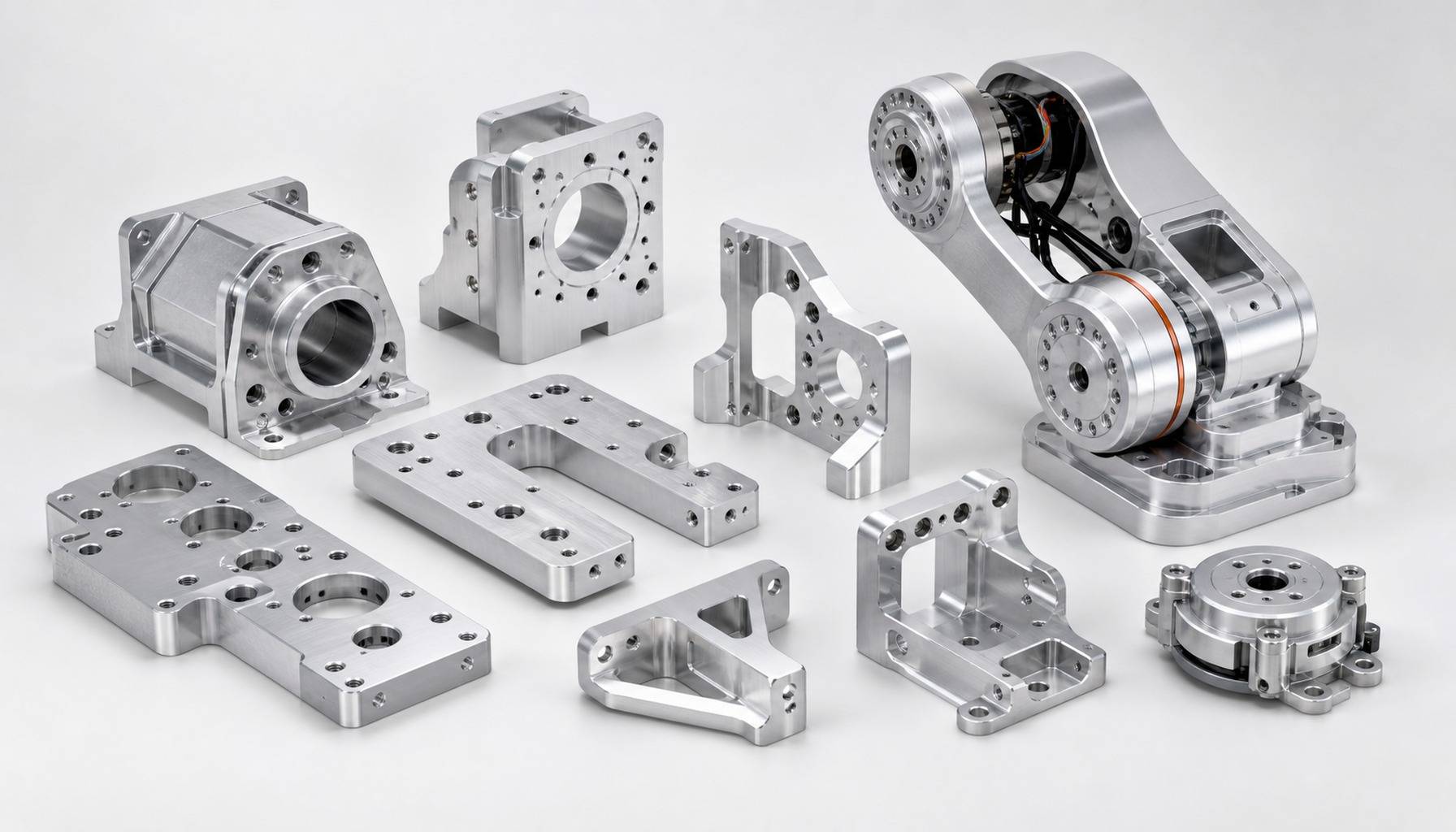
As industrial robots, collaborative robots, and automation equipment continue to evolve, precision requirements for core robot components — including dimensional accuracy, fit tolerances, geometric consistency, and surface quality — continue to tighten. Typical parts such as motor connection shafts, joint drive shafts, reducer interfaces, precision sleeves, and end-of-arm connectors almost always combine rotational features, planar mounting faces, multi-directional hole patterns, keyways, and complex contours.
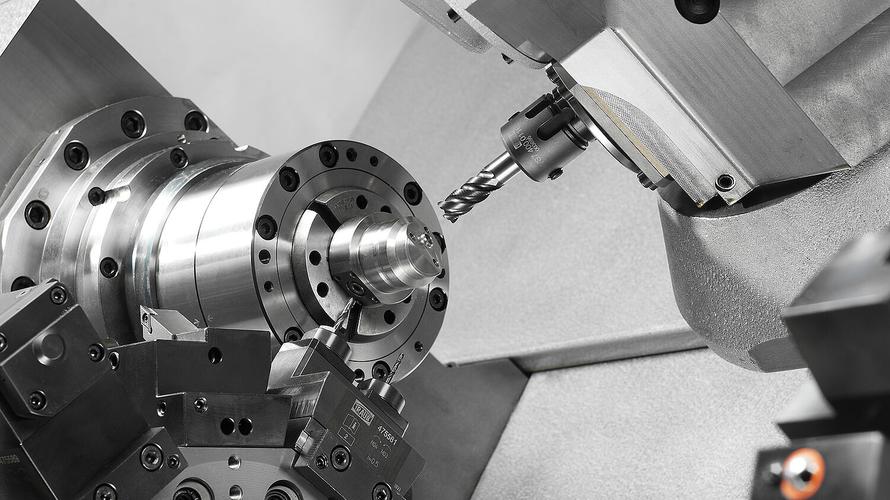
Traditional split-process machining requires multiple transfers between lathes and milling machines, along with repeated setups. This not only lengthens production cycles but also introduces cumulative datum shift errors, making it difficult to meet the geometric tolerance demands of high-precision transmission parts. Turn-mill machining integrates turning and milling operations on a single machine platform. It completes multiple features in a single clamping, which makes it the leading high-efficiency manufacturing solution for precision robot components.
At PartsMastery, we operate professional turn-mill machining centers and follow a standardized process system. We deliver full-cycle custom machining services for robot transmission and structural components, covering everything from prototype development to volume production.
1. Core Technical Advantages of Turn-Mill Machining
1.1 Single-Setup Forming for More Stable Geometric Accuracy
First and foremost, we follow the unified datum principle to machine all outer diameters, inner bores, end faces, keyways, cross holes, and mounting faces under the same positioning reference. This completely eliminates cumulative positioning errors from multi-operation splits, and it significantly improves consistency for concentricity, perpendicularity, and positional accuracy. This approach works especially well for robot joint and reducer parts that require strict transmission precision.
1.2 Highly Integrated Operations for Improved Production Efficiency
Beyond accuracy gains, turn-mill machining eliminates workpiece transfers between machines, repeated clamping, and secondary alignment steps. This drastically reduces operation lead time. It also lowers the total number of fixtures required, which cuts overall manufacturing costs. This level of flexibility fits perfectly with the low-volume, high-mix production demands common in the robotics component space.
1.3 Strong Flexible Compatibility for a Wide Range of Part Types
Furthermore, the process handles both purely rotational parts such as shafts and sleeves and complex secondary features such as face milling, radial drilling, keyway cutting, and irregular contour milling. A single machine platform can cover the vast majority of robot transmission, connection, and interface components.
2. Typical Robot Components and Matched Machining Strategies
Different robot components serve different functions, so they have different structural features and quality control priorities. Each requires a targeted turn-mill strategy.
| Component Category | Core Machining Operations | Key Quality Control Points |
|---|---|---|
| Joint Drive Shafts | OD turning, end facing, keyway milling, axial drilling, threading | Inner/outer diameter concentricity, runout, bearing fit accuracy, surface roughness |
| Motor Connection Shafts | Stepped OD turning, flat face milling, mounting hole drilling, tapping | End face perpendicularity, mounting hole position, fit dimensional tolerance |
| Reducer Interface Flanges | Rotary profile turning, end face finish milling, bolt hole machining, spigot turning | Spigot concentricity, mounting face flatness, hole pattern positional accuracy |
| Precision Bushings & Sleeves | ID/OD finish turning, inner bore boring, end facing, oil groove milling | Bore-to-OD concentricity, bore diameter accuracy, mating surface quality |
| End Effector Interfaces | Rotary datum turning, mounting face milling, locating hole machining, connection features | Positioning accuracy, interface dimensional consistency, repeat assembly reliability |
3. Full-Process Standardized Manufacturing Control System
Put simply, quality for high-precision robot parts depends on standardized process control across the entire production flow. At PartsMastery, we have built a complete control chain from drawing intake to finished part delivery.
3.1 Upfront DFM Manufacturability Review
Before production starts, we run a full manufacturability analysis based on 3D models and 2D drawings. We evaluate length-to-diameter ratio, wall rigidity, feature accessibility, and tolerance economics, and we provide early design optimization recommendations. This reduces downstream machining risk and manufacturing costs at the design stage itself.
3.2 Unified Datum Process Planning
Next, we define a unified positioning datum based on part geometry, then we sequence turning, milling, drilling, and tapping operations logically. We complete all critical mating features in the same clamping stage wherever possible to minimize error accumulation from datum changes.
3.3 Graded Turn-Mill Integrated Machining
We apply a three-stage cutting strategy: roughing for material removal, semi-finishing for contour control, and finishing for final accuracy. Roughing quickly removes bulk stock, semi-finishing leaves uniform finishing allowance, and finishing delivers final dimensions and surface quality. For slender shafts, we add steady rest support to suppress chatter and bending deformation.
3.4 Precision Deburring and Edge Preparation
After main feature machining, we selectively remove burrs and sharp edges around hole openings, groove edges, and intersecting features. We also apply fine edge treatment to mating and sealing surfaces to prevent assembly interference and in-service scratching.
3.5 In-Process Inspection and Closed-Loop Parameter Control
Finally, we perform in-process dimensional checks at key nodes: after datum machining, after critical feature forming, and before final finishing. We use measured data to dynamically adjust tool offsets and cutting parameters, creating a closed quality loop that keeps final dimensions consistently within tolerance bands.
4. Common Material Selection and Application Matching
Material selection depends on load rating, lightweighting targets, corrosion environment, and heat treatment requirements. Each material class requires dedicated turn-mill process parameters.
| Material Category | Typical Grades | Core Performance Characteristics | Typical Component Applications |
|---|---|---|---|
| Wrought Aluminum Alloys | 6061-T6, 7075-T6 | Lightweight, excellent machinability, good thermal conductivity | Lightweight connection shafts, end effector interfaces, housing components |
| Alloy Structural Steels | 40Cr, 42CrMo | High strength, good toughness, heat treatable for enhanced performance | Heavy-load joint drive shafts, reducer transmission components |
| Stainless Steels | 304, 316 | Excellent corrosion resistance, stable mechanical properties | Special-environment connectors, cleanroom components |
| Free-Cutting Steels | 12L14, 45 Carbon Steel | Good machinability, dimensional stability, moderate cost | General drive shafts, bushings, fastener-type components |
5. Comprehensive Quality Assurance Framework
Because robot components are precision transmission and positioning elements, quality control covers four major dimensions: dimensional accuracy, geometric tolerances, surface quality, and batch consistency.
5.1 Geometric Accuracy Control
We use micrometers, bore gauges, and concentricity gauges for routine dimensional checks. For critical geometric tolerances, we verify results on a Coordinate Measuring Machine (CMM) to confirm that concentricity, perpendicularity, and positional accuracy all meet drawing specifications.
5.2 Surface Quality Management
We maintain strict surface roughness standards for mating faces, sealing surfaces, and bearing mounting surfaces. By optimizing tool parameters and toolpath strategies, we eliminate visible tool marks, chatter lines, and surface defects, and we preserve long-term transmission fit stability and service life.
5.3 Batch Consistency Control
We maintain a standardized process parameter library for mature parts, and we lock in proven production routines. We also enforce a three-tier inspection system — first article, in-process patrol, and last piece verification — combined with tool life management and wear compensation to ensure dimensional interchangeability across production batches.
5.4 Traceable Quality Documentation
For critical components, we retain complete material information, process records, inspection data, and batch history. This traceability supports quality follow-up and process improvement, and it aligns with the traceability requirements common in the robotics industry.
6. Full-Cycle Flexible Delivery and Support Services
6.1 Production Capability Across All Project Stages
We support every phase of product development, from single-piece prototype validation and low-volume trial assembly through to stable batch production. During the prototype phase, we deliver fast turnaround to support R&D iteration and assembly testing. During volume production, we standardize processes and inspection criteria to guarantee delivery reliability and cost control.
6.2 Integrated Surface Treatment Options
Beyond core machining, we offer a full range of secondary surface treatments including anodizing, black oxide, passivation, bead blasting, and electroplating to meet corrosion resistance, wear resistance, and aesthetic requirements. We tightly control coating thickness effects on mating dimensions so finished parts still fall within assembly tolerances after treatment.
6.3 Dedicated Technical Engineering Support
Every project receives a dedicated engineering team that works directly with customers on material selection, structural optimization, and tolerance reasonableness evaluation. We help customers optimize manufacturing processes and reduce total cost without compromising functional performance.
Conclusion
All things considered, turn-mill machining solves both the accuracy and efficiency pain points of complex precision robot parts by integrating operations and maintaining consistent datums. For that reason, it stands as the preferred manufacturing solution for high-precision transmission and connection components.
With proven turn-mill process expertise and a standardized quality system, PartsMastery delivers custom precision component machining services for industrial robots, collaborative robots, and automation equipment customers. We support customers from prototype development through to volume production, helping them bring products to market efficiently and reliably.