


As industrial automation advances toward higher precision and greater flexibility, the machining quality of robot end effectors, connection interfaces, and locating guides directly determines the operational stability, repeatable positioning accuracy, and service life of entire production lines. Most automation applications feature high levels of custom non-standard design, strict interface matching requirements, and high-mix low-volume demand. Traditional tooled manufacturing comes with long lead times and low flexibility, so it struggles to keep pace with rapid production line upgrades and equipment modification cycles.
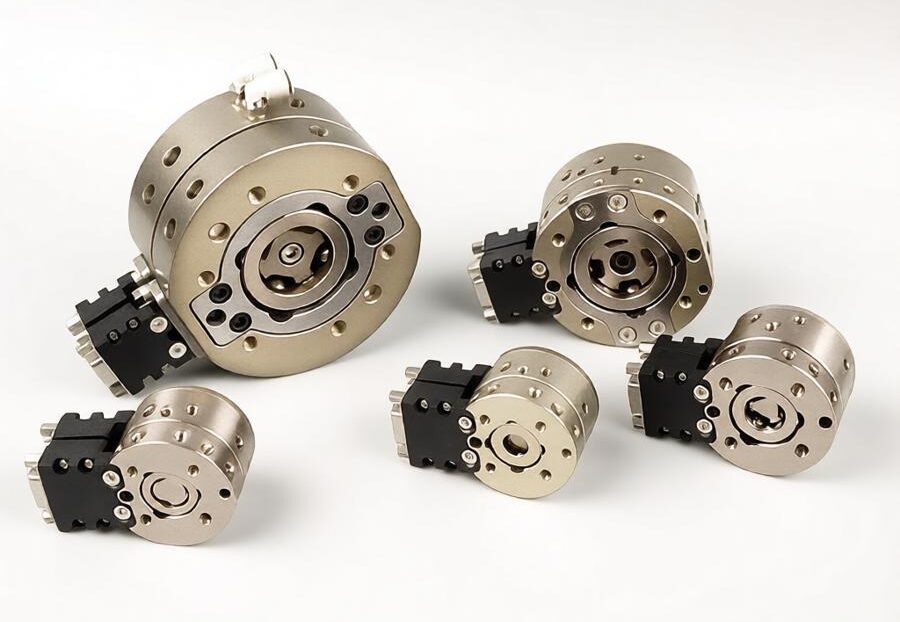
Precision CNC machining delivers high-accuracy robot accessories quickly through digital precision control, flexible production capability, and broad material compatibility, and it ensures consistent interface dimensions and assembly interchangeability. At PartsMastery, we specialize in custom precision component manufacturing for the automation sector. We cover the full range of robot accessories including connection flanges, adapter plates, gripper structures, and locating guides, and we support the full project lifecycle from prototype validation through to volume production.
1. Core Technical Advantages of CNC Machining
1.1 Precision Interfaces for Consistent Assembly Performance
First and foremost, robot accessories must connect directly to robot bodies, gearboxes, grippers, sensors, and other modules. Even minor positional deviation or flatness error can cause assembly binding and positioning inaccuracy. CNC machining delivers precise control over mounting holes, dowel pin holes, tapped holes, and mating spigots. We follow the unified datum principle to machine all critical features, which preserves relative positional accuracy across multiple features. This gives parts reliable interchangeability and supports fast tool changeovers and maintenance disassembly.
1.2 Broad Material Compatibility for All Application Scenarios
Beyond dimensional accuracy, different automation scenarios impose very different requirements for load capacity, weight, and corrosion resistance. CNC machining works with aluminum alloys, structural steels, stainless steels, copper alloys, and many other engineering materials. We match cutting parameters and process strategies to each material, so customers never have to compromise their design for material limitations.
1.3 Flexible Customization for Rapid Design Iteration
Furthermore, production line retrofits and custom equipment development often go through multiple design iterations. CNC machining requires no dedicated tooling — we can adjust production programs directly from updated 3D models. This enables flexible scaling from single-piece prototypes and low-volume custom builds through to stable volume production, and it drastically shortens R&D validation cycles to match the fast launch pace of the automation industry.
2. Common Accessory Categories and Accuracy Requirements
Different robot accessories serve different functions, so they have different structural features and quality control priorities. Each requires a targeted machining and inspection strategy.
| Accessory Category | Typical Parts | Common Materials | Core Accuracy Control Points |
|---|---|---|---|
| Connection Interfaces | Robot flanges, adapter plates, quick-change base plates | 6061 aluminum, 45 carbon steel | Mounting hole positional accuracy, mating face flatness, spigot concentricity |
| End Effector Parts | Gripper bodies, finger structures, suction cup mounts | 6061/7075 aluminum, alloy steel | Slideway fit accuracy, pin hole concentricity, mounting datum flatness |
| Locating & Guide Components | Locating blocks, guide seats, stop blocks, fixture elements | Aluminum, stainless steel, POM | Locating face dimensional accuracy, repeat positioning consistency, surface wear resistance |
| Transmission Structures | Couplings, drive shafts, reducer mounting brackets | 40Cr alloy steel, stainless steel | Inner/outer diameter concentricity, keyway positional accuracy, end face runout |
3. Standardized Full-Process Manufacturing Control System
Put simply, dimensional stability and batch consistency depend on standardized process control across the entire production flow. At PartsMastery, we have built a complete control chain from drawing intake through to finished part delivery.
3.1 Upfront DFM Manufacturability Review
Before production starts, we run a full manufacturability analysis based on 3D models and 2D drawings. We evaluate wall rigidity, hole machining accessibility, and tolerance reasonableness, and we provide early design optimization recommendations. This reduces assembly risk and manufacturing costs at the design stage itself.
3.2 Unified Datum Process Planning
Next, we establish a unified positioning datum and machine all critical assembly features in the same setup wherever possible. This reduces cumulative error from datum conversions. We also sequence roughing and finishing operations logically, using layered material removal to release internal stress and prevent dimensional springback after machining.
3.3 First Article Validation and Batch Control
After we machine the first parts, we perform a full-dimensional first article inspection. We only start batch production once we confirm hole positions, geometric tolerances, and fit dimensions all meet specifications. During production, we run scheduled in-process checks and combine tool life management with wear compensation to maintain consistent dimensions across batches.
3.4 Precision Post-Processing and Ready-to-Assemble Delivery
Finally, all parts go through deburring, edge breaking, and cleaning to remove sharp edges and eliminate burrs. We also offer matched surface treatments as required, and we tightly control coating thickness effects on mating dimensions. This ensures parts arrive on site ready for immediate assembly.
4. Common Material Selection and Application Matching
When it comes to material selection, teams must balance load rating, lightweighting targets, corrosion environment, and cost. Each material class requires dedicated machining process parameters.
| Material Category | Typical Grades | Core Performance Characteristics | Typical Accessory Applications |
|---|---|---|---|
| Wrought Aluminum Alloys | 6061-T6, 7075-T6 | Lightweight, excellent machinability, high strength-to-weight ratio | Flanges, adapter plates, gripper bodies, lightweight structural parts |
| Quality Structural Steels | 45 Carbon Steel, 40Cr | High strength, good toughness, heat treatable for enhanced performance | Heavy-load mounting brackets, drive shafts, guide components |
| Stainless Steels | 304, 316 | Excellent corrosion resistance, stable mechanical properties | Cleanroom accessories, humid-environment components, food-grade equipment parts |
| Copper Alloys | H59 Brass, Beryllium Copper | Good electrical conductivity, excellent wear resistance | Conductive connectors, wear-resistant guides, electrode components |
5. Comprehensive Quality Assurance Framework
Robot accessories are precision interface components, so quality control covers four major dimensions: dimensional accuracy, geometric tolerances, surface quality, and batch consistency.
- Dimensional accuracy control: We verify critical bore diameters, hole pitches, and mating face dimensions with micrometers, calipers, and thread gauges for every part to keep dimensions within tolerance bands.
- Geometric tolerance verification: We inspect core geometric tolerances such as positional accuracy, concentricity, and flatness using Coordinate Measuring Machines (CMM) and vision measuring systems.
- Surface quality management: We maintain strict surface roughness standards for mating and sliding surfaces, and we remove all sharp edges and burrs to prevent assembly interference and in-service scratching.
- Batch consistency management: We lock in process parameters for mature parts and apply SPC statistical process control to ensure reliable interchangeability across production batches.
6. Typical Application Scenarios
6.1 End Effector Systems
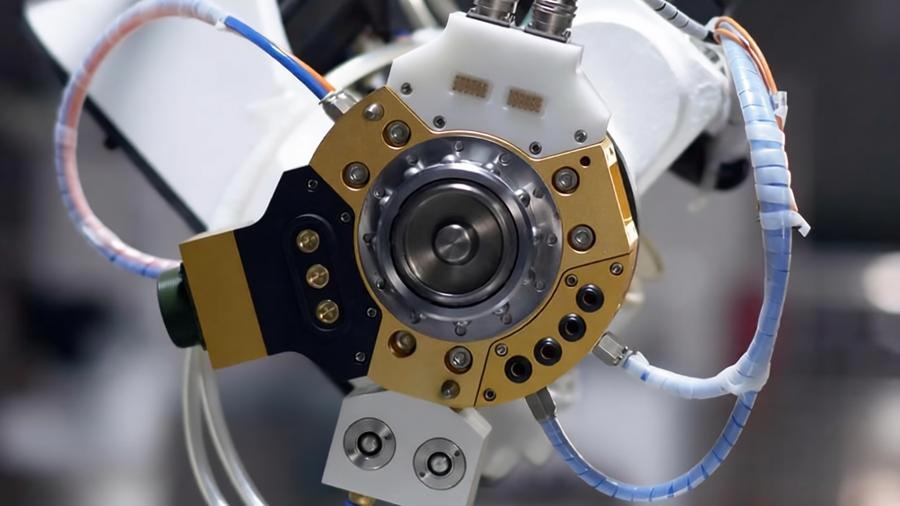
We produce mounting flanges, adapter plates, and gripper body components for mechanical grippers, vacuum suction tools, welding torch mounts, and grinding spindles. These parts ensure precise alignment between tools and the robot wrist, and they support the repeatable positioning accuracy of quick-change mechanisms.
6.2 Automated Production Line Assembly
We supply custom locating fixtures, guide stop blocks, and mounting bases for automotive and electronics assembly lines. These components support flexible workstation retrofits and ensure accurate workpiece positioning and smooth equipment interfacing.
6.3 Logistics, Warehousing and Sorting
For sorting robots, AGVs, and palletizing equipment, we manufacture connection brackets, gripper structures, and locating elements. These parts withstand high-frequency reciprocating motion and maintain long-term structural stability.
6.4 Special-Environment Equipment
For automation equipment operating in cleanrooms, corrosive environments, or extreme temperature conditions, we provide custom accessories in stainless steel and specialty materials that meet both material and accuracy requirements.
Conclusion
All things considered, precision robot accessories form the foundational building blocks of stable automation equipment. Interface accuracy, structural strength, and batch consistency directly affect line efficiency and maintenance costs. The flexible CNC machining model aligns perfectly with the custom design and rapid iteration demands of the automation industry.
With a standardized process system and full-process quality control, PartsMastery delivers custom precision accessory machining services for industrial automation, robot integration, and intelligent equipment customers. From prototype validation through to volume production, we maintain consistent quality at every stage and help customers launch and operate their equipment efficiently and reliably.