






Communication modules are the core carrier for data interaction between industrial robots, automated control systems and intelligent terminals. They integrate communication chips, PCB assemblies, interface connectors and heat dissipation units inside, and must withstand vibration shock, dust erosion, temperature cycles, electromagnetic interference and frequent plug-in wear during long-term operation. Their enclosures not only serve basic protection functions, but also need to balance installation structural stability, heat conduction efficiency, interface positioning accuracy and mechanical support reliability.
Precision CNC machining adopts processes such as milling, drilling, tapping and cavity finishing, and is compatible with a wide range of materials including aluminum alloys, stainless steel, copper alloys and engineering plastics. It achieves strict dimensional tolerances, precise hole positioning accuracy, controllable flatness and consistent assembly interfaces, providing customized enclosure solutions for various communication modules from prototype verification to mass production.
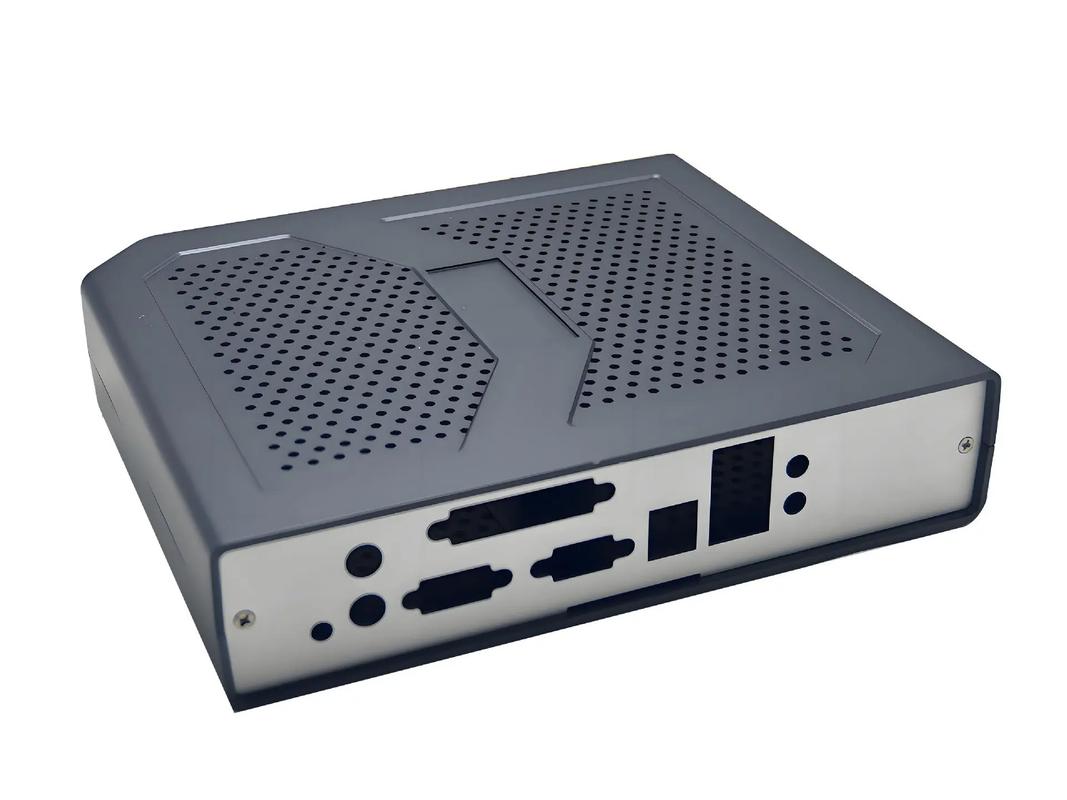
Core Technical Advantages of CNC Machining
Communication module enclosures generally feature thin-wall structures, internal cavities, dense mounting holes, connector openings, positioning slots and heat dissipation features. Machining must ensure dual precision of both external contours and internal structures. An optimized CNC machining process can reduce positioning errors by minimizing clamping times, ensure positional consistency between mounting surfaces and interface openings, and balance enclosure lightweight design and structural strength for different application scenarios.
1. Integrated Molding of Complex Structures
Driven by 3D CAD models, CNC machining can complete multiple features including external contours, internal cavities, step surfaces, positioning slots and support posts in one setup, avoiding accuracy loss caused by multi-process splicing. For complex designs such as multi-directional interfaces and curved surface structures, 4-axis/5-axis machining can further reduce clamping times and improve full-dimensional consistency.
2. Deformation Control for Thin-Wall Machining
For thin-wall enclosures such as aluminum alloys, optimizing tool overhang, cutting loads and tool paths can effectively control machining deformation, ensure the flatness of internal PCB mounting surfaces and the height consistency of support posts, and avoid circuit board loosening or interface misalignment caused by housing deformation.
3. Precision Machining of Fine Features
Fine features such as chamfers, countersunk holes, threaded holes and sealing grooves can be machined simultaneously to improve assembly adaptability and reduce component interference. For compact modules with dense hole patterns, high-speed spindles paired with small-diameter tools can achieve micron-level hole position accuracy and inner wall smoothness.
Standardized Full-Process Production Control
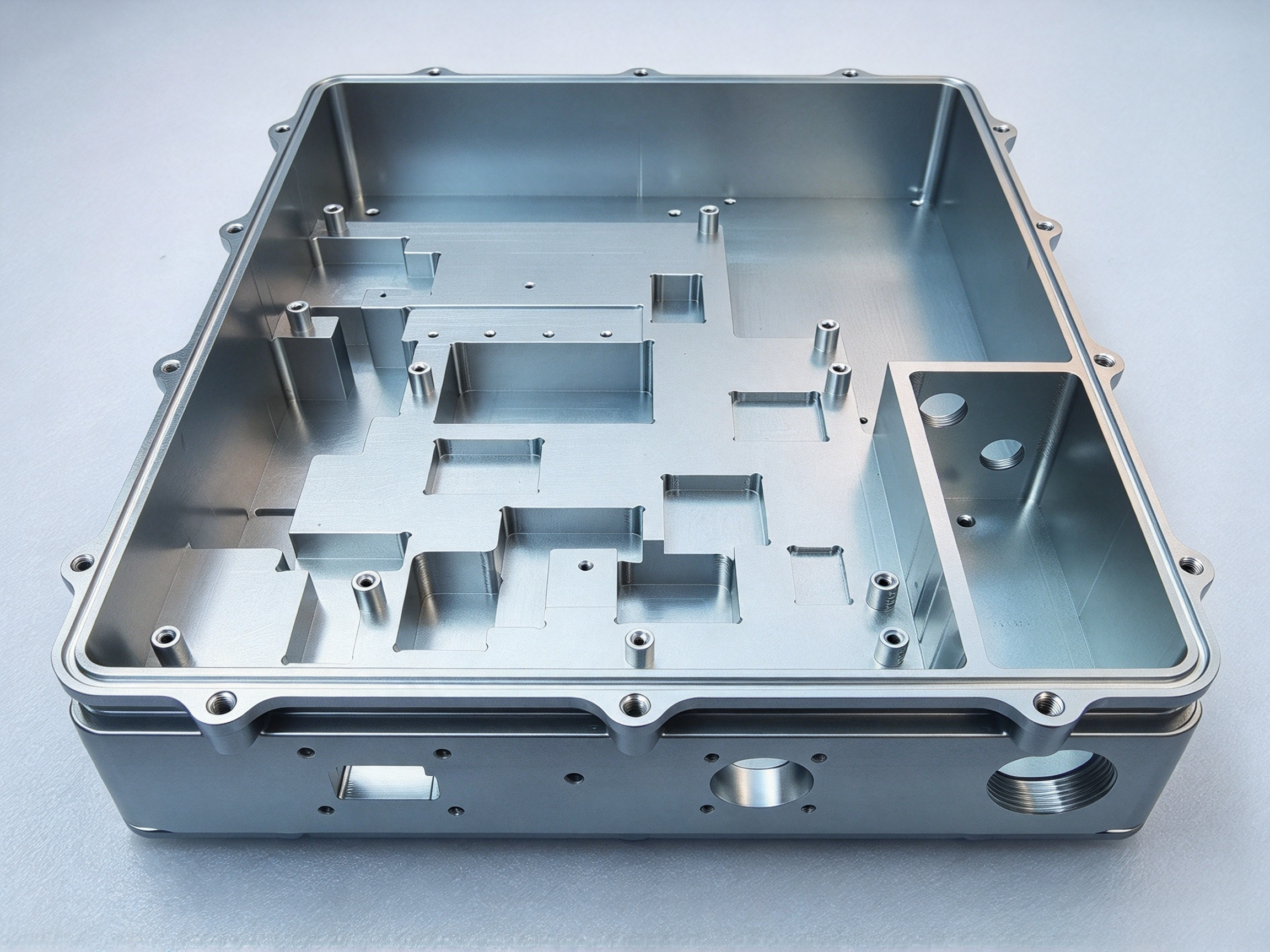
Communication module enclosures are precision structural components, so the production process must balance efficiency, dimensional stability and assembly adaptability. A standardized production process can effectively reduce batch-to-batch variations and ensure connection reliability under vibration conditions. A typical production flow includes the following steps:
- Drawing and Model Validation: Confirm enclosure dimensions, wall thickness, hole position specifications, thread parameters, assembly datums and surface treatment requirements, and identify machining risk points in advance.
- Blank Preparation: Select materials according to strength, weight, thermal conductivity and environmental requirements, and cut blanks of corresponding specifications.
- Datum Surface Machining: Process stable positioning datum surfaces to provide a unified reference for subsequent cavity, hole position and mounting surface machining.
- Contour and Cavity Machining: Complete external contours, internal cavities, steps, grooves and support structures via CNC milling.
- Hole System and Thread Machining: Process mounting holes, positioning holes, connector openings and threaded holes with strict control over aperture and position tolerances.
- Finishing and Deburring: Perform precision finishing on key mating surfaces and fully remove burrs to avoid assembly interference.
- Surface Treatment: Complete processes such as anodizing, sandblasting, coating, electroplating and passivation according to requirements.
- Final Inspection and Packaging: Conduct protective packaging after inspecting key dimensions, thread accuracy, flatness and hole position tolerances.
Mainstream Material Selection and Performance Adaptation
Different application scenarios have significantly different requirements for the weight, heat dissipation, corrosion resistance and mechanical strength of communication module enclosures. Material selection must match the working environment and structural design.
| Material Grade | Core Performance | Typical Application |
|---|---|---|
| 6061-T6 Aluminum Alloy | Lightweight, easy to machine, excellent thermal conductivity | Industrial robot communication modules, general industrial communication boxes |
| 7075-T6 Aluminum Alloy | High strength, high specific strength, good impact resistance | Heavy-duty mobile robots, high-vibration communication components |
| 304 Stainless Steel | Strong corrosion resistance, high structural strength, good electromagnetic shielding | Communication equipment in harsh environments such as outdoor and chemical industries |
| Copper Alloy | Excellent thermal and electrical conductivity, good electromagnetic shielding performance | High heat dissipation and strong electromagnetic shielding scenarios |
| PEEK Engineering Plastic | High temperature resistance, electrical insulation, chemical corrosion resistance | Industrial communication modules with special insulation requirements |
For conventional mobile robot and robotic arm scenarios, 6061-T6 aluminum alloy is preferred to balance performance and cost; for high-load and high-impact scenarios, 7075-T6 aluminum alloy can be used as an upgrade. For special working conditions such as corrosion, high temperature and strong electromagnetic fields, stainless steel, copper alloy or engineering plastic solutions can be selected accordingly.
Typical Application Scenarios and Functional Requirements
The value of communication module enclosures goes beyond protecting internal components. They also undertake PCB fixation, interface protection, heat conduction, equipment connection and operation support functions. Customized structures can adapt to the integration needs of different devices.
1. Core Application Fields
- Industrial Robots: Provide protection and mounting support for controllers, joint communication units and internal transmission systems, adapting to the internal space of robotic arms.
- Collaborative Robots: Compact aluminum enclosures achieve lightweight and miniaturized design while ensuring connector positioning accuracy.
- AGV/AMR Mobile Robots: High vibration-resistant structure design with reserved installation space for wireless communication modules and control boards.
- Machine Vision Equipment: Precision openings and mounting hole positions adapt to industrial cameras, vision controllers and supporting brackets.
- Industrial Automation Lines: Provide long-term structural stability and heat dissipation capacity for industrial gateways, PLC communication modules and data acquisition units.
2. Core Performance Requirements
| Performance Dimension | Requirement Description | Structural Implementation |
|---|---|---|
| Mechanical Protection | Resist dust, impact and mechanical damage | Controllable wall thickness design, closed cavity structure |
| Heat Dissipation | Conduct out internal chip operating heat | Machined heat dissipation surfaces, grooves and thermal contact areas |
| PCB Mounting | Prevent circuit board displacement and loosening | Support posts, positioning slots and mounting step design |
| Vibration Resistance | Withstand equipment motion vibration and shock | Optimized wall thickness, reinforcing ribs and reinforced mounting structures |
| EMC Compatibility | Reduce electromagnetic interference and leakage | Shielding contact areas and conductive connection structures |
Customized Machining and Full-Dimensional Quality Control
With diverse industrial equipment configurations, the dimensions, interface positions, mounting methods and internal layouts of communication modules vary significantly. Standard enclosures can hardly fully meet all requirements. Custom CNC machining can develop exclusive solutions based on customer 3D models, engineering drawings or physical samples, with flexible adjustment of materials, wall thickness, hole positions, surface treatment and production volume.
It supports small-batch prototype production for assembly verification, and then transitions to stable mass production after iterative optimization, perfectly matching the full-cycle needs of robot communication modules from R&D to commercialization.
Key Control Measures for Accuracy Improvement
- Unified machining datums: Key mounting surfaces, interface surfaces and positioning structures share the same datum to reduce datum conversion errors.
- Optimized clamping solutions: Uniform clamping method for thin-wall aluminum housings to reduce machining deformation and springback.
- Matched tool selection: Select dedicated milling cutters, drills and taps according to material hardness, cavity depth and feature geometry.
- Cutting parameter control: Match spindle speed, feed rate and cutting depth to suppress cutting vibration and excessive cutting force.
- Separate roughing and finishing processes: Roughing removes material quickly, while finishing achieves precision control of key features.
- In-process measurement monitoring: Verify key dimensions using calipers, micrometers, optical measuring instruments and coordinate measuring machines.
- Tool life management: Establish tool wear warning mechanism to avoid gradual degradation of aperture, surface quality and dimensional accuracy.
- Assembly verification testing: Prototypes are trial-assembled with PCBs, connectors and fasteners to identify assembly risks in advance.
Surface Treatment and Operation & Maintenance Optimization
After CNC machining, surface treatment can further improve the corrosion resistance, wear resistance, appearance texture and electrical performance of the enclosure. Common treatments for aluminum enclosures include anodizing, sandblasted anodizing and spraying processes, while stainless steel enclosures mostly adopt passivation, brushing and other treatment methods.
For designs with electromagnetic shielding requirements, conductive contact areas shall be reserved before surface treatment to prevent insulating coatings from damaging the electrical continuity of shielding surfaces.
In daily operation and maintenance, connectors should be protected from lateral impact, and the tightening status of mounting screws, brackets and cable outlets should be checked regularly. For enclosures with heat dissipation grooves, dust accumulation should be cleaned regularly to ensure heat dissipation efficiency. Proper installation and maintenance can effectively extend the service life of the enclosure and internal communication components.
The manufacturing quality of communication module enclosures directly affects the operational stability and equipment lifecycle of communication systems. From material selection, process planning to precision control, professional full-process management is the core of achieving high reliability.
PartsMastery specializes in precision CNC machining with extensive experience in manufacturing communication module enclosures. We provide full-process services from drawing review, process development, sample verification to mass production, support customized requirements of multiple materials, structures and accuracy grades, and deliver reliable structural component solutions for industrial robots, automation equipment and intelligent terminals.