






In the high-end medical device manufacturing sector, titanium alloys are the preferred material for orthopedic implants and surgical instrument components. They also form precision parts for advanced medical equipment, thanks to their high specific strength, corrosion resistance and excellent biocompatibility.
However, these material advantages also create significant machining barriers. These include heavy cutting loads, rapid tool wear and tight dimensional control challenges.
Furthermore, the medical industry imposes extreme demands for safety and long-term stability. For this reason, medical-grade titanium alloy machining cannot follow standard metal processing logic.
Instead, it must rely on systematic precision machining technologies and full-process control solutions. These methods consistently deliver finished products that meet strict medical-grade standards.
1. Root Causes of Machining Difficulties for Medical-Grade Titanium Alloys
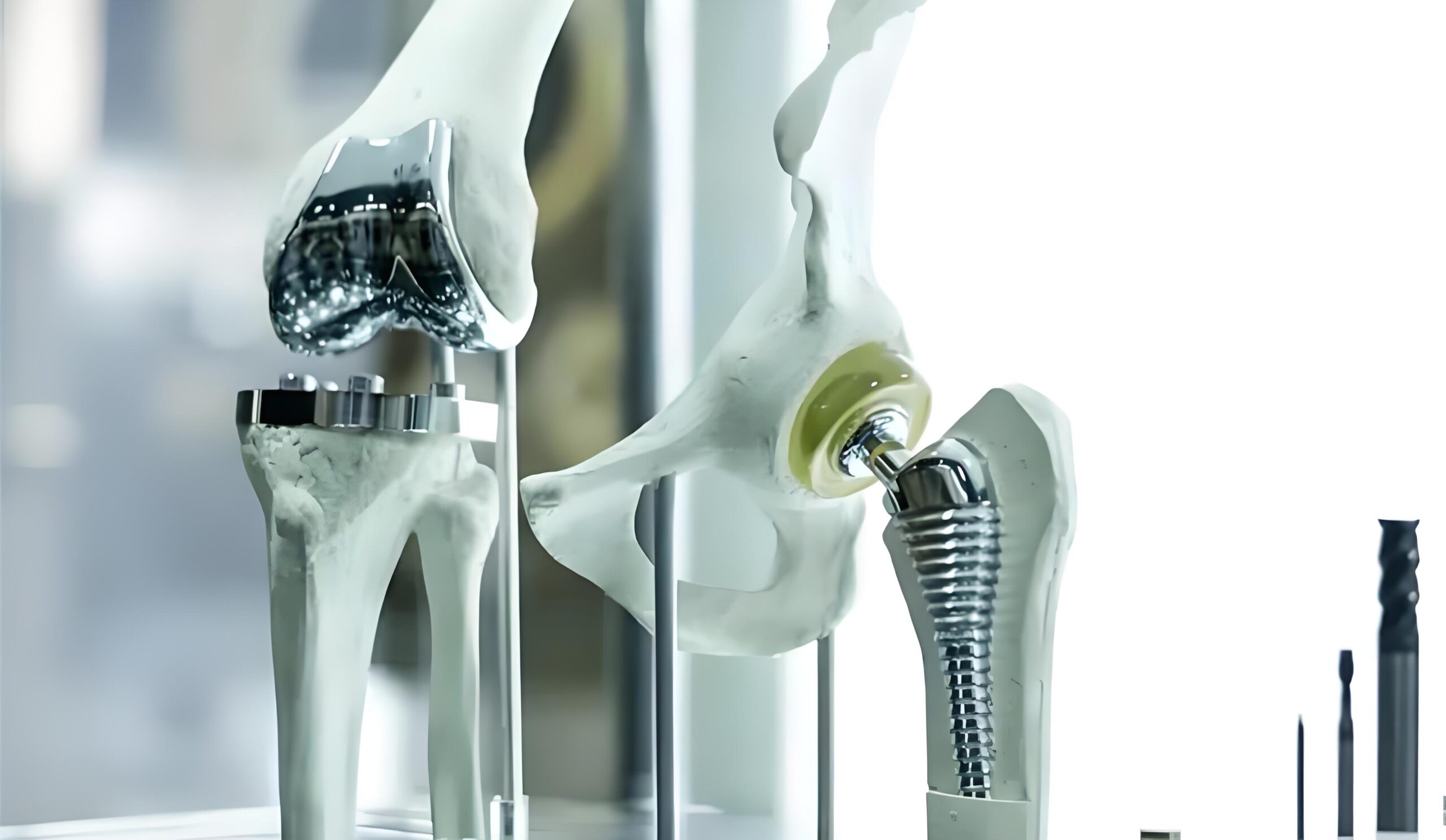
Compared with conventional materials like aluminum alloys and standard stainless steels, titanium alloys are far harder to machine. This difficulty stems from inherent material traits and strict medical requirements, rather than a single factor.
1.1 Cutting Challenges Driven by Intrinsic Material Properties
The mechanical and physical traits of titanium alloys directly create inherent machining obstacles:
- Poor thermal conductivity: Heat generated during cutting cannot dissipate quickly through the workpiece matrix. Most thermal energy concentrates at the tool edge contact zone. As a result, this heat buildup accelerates thermal wear and fatigue on the cutting edge. It also shortens tool life and raises the risk of surface thermal damage to the workpiece.
- Elevated cutting loads: The high strength and toughness of titanium alloys significantly increase cutting forces during machining. This raises stress loads on cutting tools. In turn, it can cause edge chipping and amplify system vibration, undermining overall process stability.
- Pronounced work hardening effect: Under combined mechanical force and cutting heat, the titanium alloy surface undergoes work hardening. The hardened layer is much harder than the base material. Consequently, it speeds up tool wear in subsequent passes and may trigger cutting chatter.
1.2 Stringent Medical Standards Raise the Machining Threshold
Ordinary industrial parts generally only need to meet basic dimensional and assembly specifications. By contrast, medical titanium alloy components directly impact equipment stability and patient safety.
They require far higher consistency and long-term reliability than standard industrial products. Even minor machining defects can pose clinical risks for end users.
Therefore, machining cannot prioritize production efficiency alone. It must balance dimensional precision, surface integrity and batch consistency, which further elevates the technical barrier.
2. Core Machining Performance Specifications for Medical Titanium Alloy Components
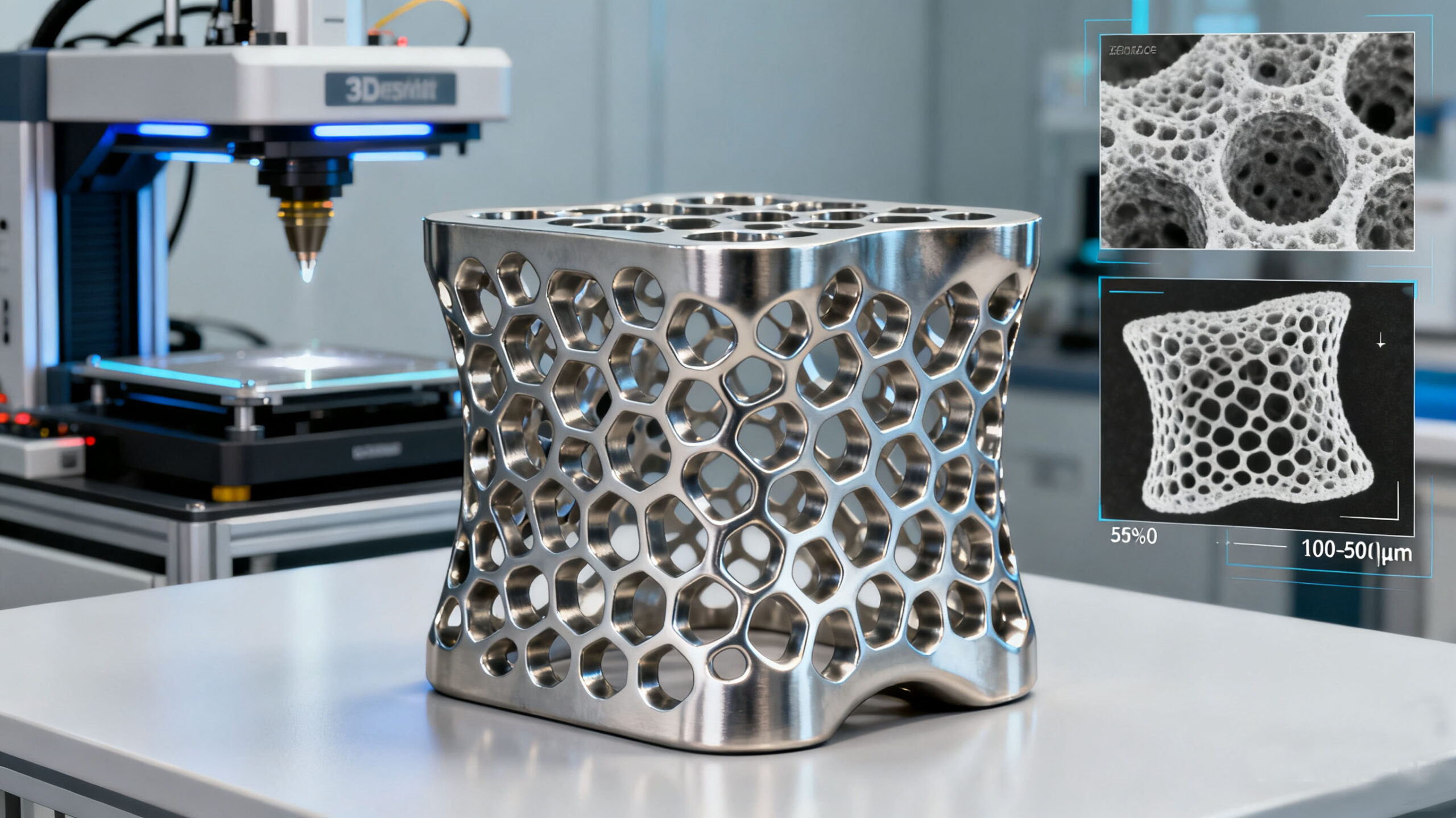
The primary goal of medical-grade titanium alloy machining is to overcome material processing challenges. At the same time, it must consistently meet two key performance criteria to ensure clinical product safety.
2.1 Micron-Level Dimensional Accuracy and Geometric Tolerance Control
Dimensional precision is the fundamental acceptance criterion for medical titanium alloy parts. It directly determines assembly accuracy and overall functional performance:
- Tight positional accuracy for complex geometries: Position tolerance, concentricity and flatness of hole arrays, curved surfaces and mating faces must stay within narrow tolerance bands. Even tiny deviations can cause assembly failure or functional degradation.
- Strict tolerance band enforcement: Critical dimensional deviations must be strictly limited to drawing-specified tolerance ranges. Out-of-specification conditions are not acceptable under any circumstances.
- High batch-to-batch consistency: In volume production, parts across different batches and stations must maintain uniform dimensional characteristics. This prevents individual variations from disrupting standardized assembly and clinical performance.
2.2 High-Reliability Surface Quality Management
Surface quality directly affects the corrosion resistance, fatigue strength and biocompatibility of titanium components. For this reason, it is a non-negotiable performance indicator for all medical products:
- Zero tolerance for surface defects: Scratches, tool marks, edge chipping and microcracks can degrade mechanical performance of finished parts. They also introduce safety hazards during implantation or clinical use, so they must be strictly eliminated.
- Precision surface roughness control: Medical components for different clinical scenarios have defined surface roughness requirements. Optimized roughness parameters support proper assembly and reduce foreign body reaction risks.
- Surface microstructure integrity: Machining-induced surface damage like thermal burns and excessive hardening must be avoided. This preserves the material’s inherent biocompatibility and mechanical properties.
3. Key Control Factors in the Precision Machining Process
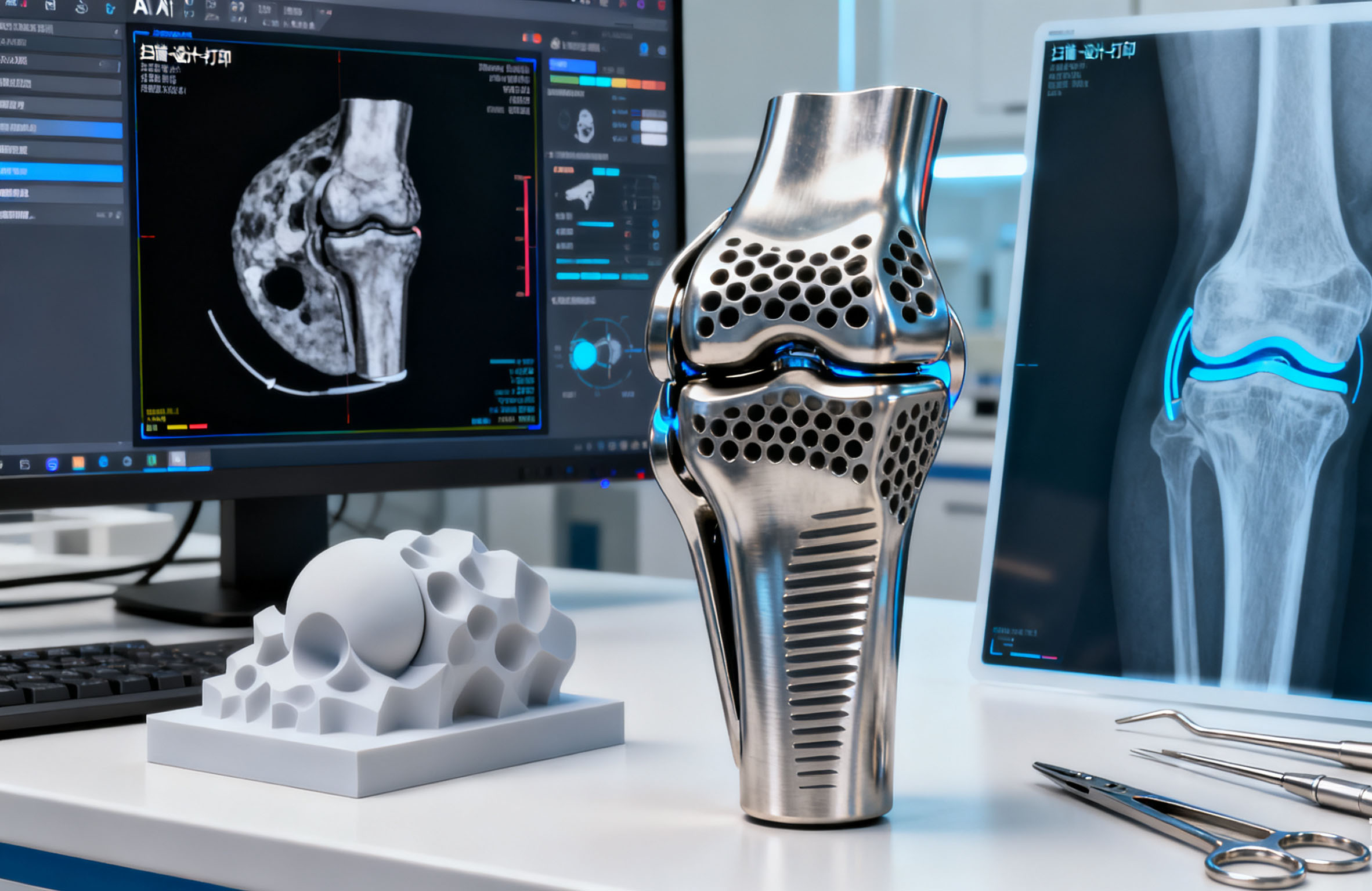
High-quality medical titanium alloy machining cannot rely on isolated equipment or parameter adjustments alone. Instead, it requires coordinated optimization across equipment, tooling and process planning.
This integrated approach builds a machining system tailored specifically to titanium alloy material characteristics.
3.1 High-Rigidity Multi-Axis Machining Equipment Selection
Base equipment performance forms the foundation of machining precision and stability. For medical titanium alloy components, equipment selection must satisfy three core criteria:
- High-rigidity machine structure: A rigid machine bed and drive system effectively resist the high cutting forces of titanium machining. It reduces vibration and preserves dimensional accuracy and surface finish quality.
- Multi-axis simultaneous machining capability: Complex free-form parts like orthopedic implants require multi-axis machining support. These machines complete multi-sided work in one setup, cutting positioning errors from repeated fixturing.
- Micron-level positioning and repeatability: Equipment must deliver micron-grade positioning accuracy and repeatability. This provides hardware-level assurance for dimensional control in volume production.
3.2 Tool Matching and Cutting Parameter System Optimization
Tool selection and cutting parameters are core variables that govern machining efficiency and quality. They also serve as the key to mitigating rapid tool wear in titanium alloy processing:
- Application-specific wear-resistant tooling: Choose high-wear tool substrates and coatings engineered for titanium alloy machining. These materials improve edge heat resistance and extend overall tool service life.
- Controlled cutting speeds: Strictly regulate cutting linear velocity to avoid excessive heat from high spindle speeds. This balances productivity with tool wear and minimizes heat buildup at the source.
- Adapted feed rates and depth of cut: Optimize feed rate and cutting depth based on part geometry and tool traits. This maintains cutting stability and reduces negative effects from work hardening.
- Targeted high-efficiency cooling: Deploy dedicated cooling strategies and media directed at the cutting zone. It rapidly removes process heat, lowers edge temperatures and reduces thermal deformation risk.
3.3 Low-Stress Process Planning and Deformation Mitigation
Medical titanium alloy parts often feature thin walls and complex internal cavities. These structures easily deform under cutting forces and residual material stress.
For this reason, proactive process planning is essential for effective deformation control:
- Custom fixture engineering: Design dedicated fixturing matched to the specific geometry of each part. Optimize clamping points and forces to secure workpieces without inducing deformation.
- Optimized machining sequence: Stage operations through roughing, semi-finishing and finishing to release internal stress gradually. Also optimize tool paths to reduce cutting force impact on thin-walled features.
- Iterative critical dimension verification: Apply a machine–inspect–correct workflow for all key dimensions. Conduct multiple in-process checks to compensate for deformation and guarantee final accuracy.
4. Full-Lifecycle Quality Assurance System for Medical-Grade Products
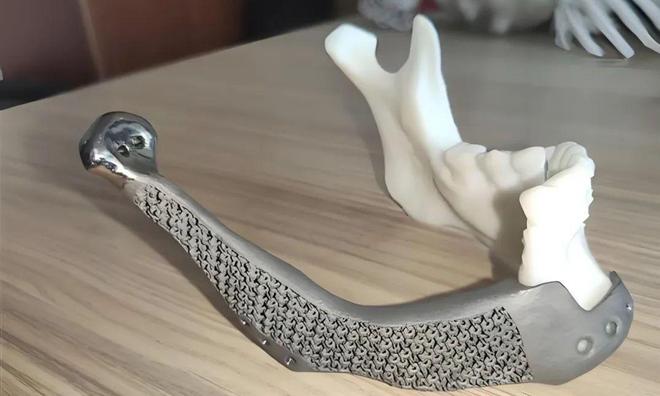
Medical industry quality requirements span the entire product lifecycle. Machining completion represents only one stage of the full production process.
Accordingly, a comprehensive quality management system is mandatory. It must cover pre-production, in-process and post-production stages to ensure every part meets medical standards.
4.1 Pre-Production Material Validation and Process Planning
Thorough pre-production preparation is critical to reducing machining risks and trial-and-error costs:
- Material qualification verification: Rigorously audit titanium alloy material certificates and physicochemical properties. Confirm grade, composition and mechanics comply with medical standards to eliminate upstream material risks.
- Machining difficulty foresight: Review part drawings to identify hard-to-machine features like thin walls, deep cavities and micro-holes early. Assess deformation and tool accessibility risks and develop countermeasures in advance.
- Tailored machining strategy: Develop a custom process roadmap aligned with material properties and part structure. Define parameter standards, inspection rules and quality control gates for each operation.
4.2 Real-Time In-Process Closed-Loop Quality Monitoring
Dynamic in-process control is essential for maintaining high yield rates. It also prevents bulk nonconformities from spreading across production runs:
- In-process critical dimension inspection: Use high-precision metrology equipment to inspect key dimensions between operations. Detect deviations early and adjust parameters to stop defective parts moving downstream.
- Machine and tool condition monitoring: Track machine operating status and tool wear in real time. Replace tools proactively before wear reaches thresholds to prevent batch quality failures.
- Rapid anomaly response: Establish a clear protocol for machining abnormalities. Pause production immediately to diagnose root causes when deviations appear, and resume only after process corrections are validated.
4.3 Multi-Dimensional Compliance Final Inspection
Final inspection before product release is the last quality gate in the production workflow. It requires comprehensive multi-parameter verification for every finished part:
- Full dimensional inspection: Conduct complete checks of all dimensions and geometric tolerances against drawing specifications. Confirm 100% compliance with all stated tolerance requirements.
- Surface quality audit: Verify surface integrity via visual inspection and specialized metrology equipment. Confirm no scratches, damage or corrosion exist, and that roughness values meet specifications.
- Functional performance validation: Perform application-aligned performance testing where required. Confirm finished part functionality and reliability satisfy real-world clinical application needs.
5. Core Value of Precision Machining for Medical Device Manufacturing
A mature precision machining system solves more than just titanium alloy processing challenges. It also delivers comprehensive support for medical device research, development and volume production.
First, it expands the manufacturing envelope for complex geometric designs. Medical devices are evolving toward minimally invasive and precision-focused designs. As a result, part geometries are growing more complex and outpacing traditional manufacturing methods.
Precision machining enables high-accuracy production of complex curved surfaces, contoured cavities and micro-hole features. It supports customized implant and high-end surgical instrument development, and drives manufacturing-side innovation.
Second, it ensures stable, consistent output across volume production runs. For mass-produced medical components, batch-to-batch consistency directly impacts product standardization and reliability.
Through stable equipment, standardized processes and rigorous controls, precision machining reduces dimensional variation between production batches. It also lowers rework rates and material waste, and supports reliable long-term supply.
Third, it aligns fully with the medical industry’s exacting performance standards. Precision machining features high-accuracy control and a full-process quality system.
It consistently meets the medical sector’s strict requirements for dimensional accuracy, surface quality and product reliability. In turn, it supports manufacturing compliance and improves overall medical device safety and service life.
In summary, medical-grade titanium alloy machining is a systematic engineering discipline. It demands deep material expertise, capable equipment, refined process design and rigorous quality control.
Only with extensive industry experience and proven precision machining solutions can manufacturers achieve high-precision, high-stability volume production. PartsMastery specializes in precision machining and delivers high-accuracy CNC titanium alloy solutions for medical applications.
We provide reliable custom manufacturing services to support the research, development and launch of diverse medical device products.