






Fábrica de moldes ODM: O seu parceiro estratégico desde o conceito até à produção
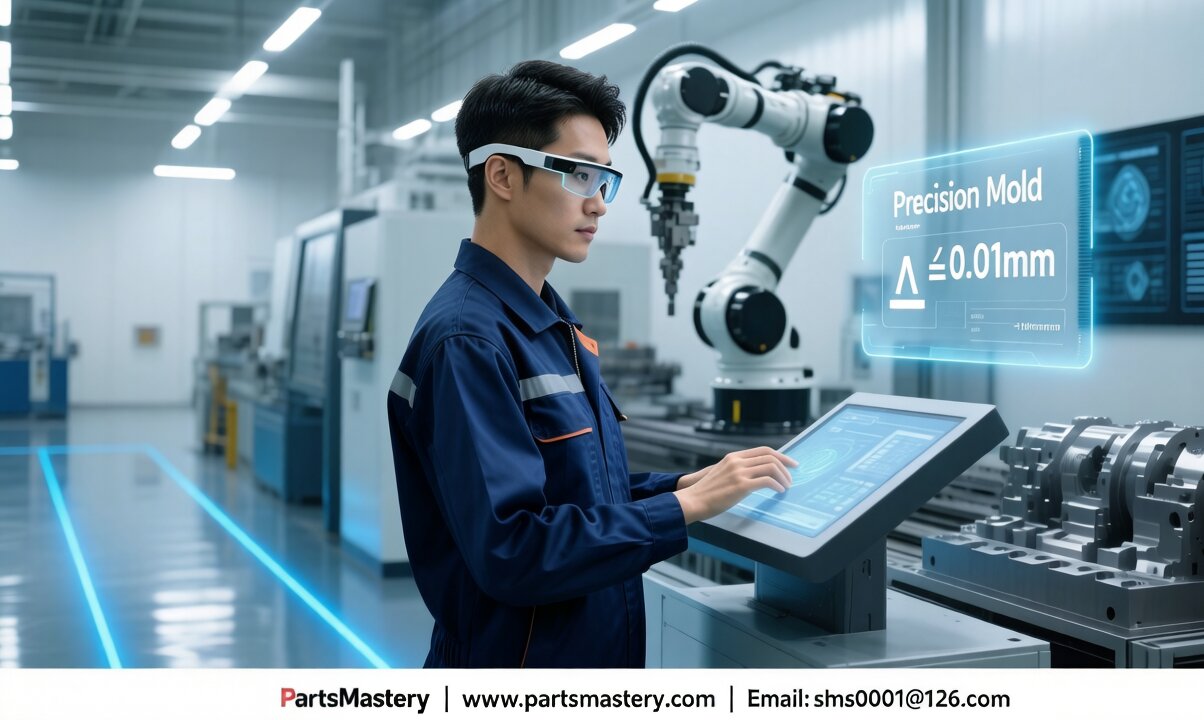
In the complex landscape of modern manufacturing, businesses face a fundamental decision when bringing new products to market: build internal capabilities, license existing designs, or partner with specialists who can handle both design and production. For companies seeking to launch innovative products without the overhead of maintaining extensive engineering and manufacturing infrastructure, working with an ODM mold factory offers a compelling pathway from concept to commercial reality.
At PartsMastery, we understand that Original Design Manufacturing (ODM) represents more than a sourcing arrangement—it is a strategic partnership. As an ODM mold factory, we combine design expertise, engineering discipline, and precision manufacturing capabilities to deliver complete solutions tailored to our clients’ needs. From initial concept development through production tooling and volume manufacturing, we serve as an integrated partner dedicated to bringing products to market efficiently and reliably.
Understanding ODM: Beyond Traditional Manufacturing
To appreciate the value of an ODM mold factory, it is essential to understand the distinction between different manufacturing models.
OEM (Original Equipment Manufacturing): In a traditional OEM relationship, the client provides complete product designs, specifications, and often detailed engineering. The manufacturer’s role is strictly execution—producing parts or assemblies exactly as specified. While this model provides clients with maximum control, it requires significant internal design and engineering resources.
ODM (Original Design Manufacturing): In an ODM partnership, the manufacturer takes on design responsibility alongside production. The client provides product requirements, performance specifications, and design intent. The ODM partner then develops detailed designs, engineers for manufacturability, produces tooling, and manufactures finished components. This model enables clients to leverage the manufacturer’s engineering expertise, reduce internal resource requirements, and accelerate development timelines.
For businesses developing products that require complex plastic or metal components—particularly those involving injection molding, precision tooling, and assembly—an ODM mold factory brings together capabilities that would otherwise require coordinating multiple specialized vendors.
The ODM Advantage: Strategic Benefits
Partnering with an ODM mold factory offers distinct advantages that extend beyond simple cost savings.
Accelerated Time to Market: By consolidating design, engineering, and manufacturing under a single partner, ODM relationships eliminate the coordination overhead inherent in managing multiple vendors. Design iterations move directly to engineering validation. Tooling development proceeds in parallel with design refinement. Production ramp-up leverages insights gained during development. The result is a compressed development timeline that brings products to market faster.
Design for Manufacturability Expertise: One of the most significant advantages of ODM partnerships is access to deep DFM expertise. Experienced mold engineers evaluate designs through the lens of manufacturability from the earliest stages. They identify opportunities to optimize geometry for efficient molding, select materials that balance performance and processability, and design tooling that achieves quality targets while minimizing cycle times. These insights prevent costly redesigns and tooling modifications that often arise when design and manufacturing are separated.
Integrated Quality Systems: When design and manufacturing are managed by a single partner, quality systems operate seamlessly across the development lifecycle. Design controls, documentation practices, and inspection protocols are aligned from concept through production. This integration is particularly valuable for regulated industries such as medical devices, automotive, and aerospace, where traceability and documentation are essential.
Cost Efficiency: An ODM mold factory optimizes for total project cost, not just individual component price. By considering design complexity, material selection, tooling strategy, and production efficiency holistically, ODM partners identify cost-saving opportunities that might be missed in fragmented supply chains. Material standardization across projects, efficient tooling designs, and optimized production processes all contribute to competitive pricing.
Capabilities of a Comprehensive ODM Mold Factory
A full-service ODM mold factory brings together diverse capabilities that span the entire product development spectrum.
Design and Engineering: The foundation of ODM capability is robust design and engineering expertise. This includes industrial design for aesthetic and ergonomic considerations, mechanical engineering for structural performance and functionality, material science expertise for selecting optimal polymers or metals, and CAD/CAM capabilities for translating concepts into manufacturable designs.
Rapid Prototyping: Before committing to production tooling, ODM partners offer rapid prototyping capabilities to validate designs. Additive manufacturing produces concept models for form and fit evaluation. CNC machined prototypes from production-grade materials enable functional testing. These prototyping capabilities reduce risk and provide confidence before tooling investment.
Precision Tooling: At the heart of ODM mold manufacturing is precision tooling capability. This includes design and fabrication of injection molds for thermoplastics and thermosets, compression molds, transfer molds, and die-cast dies. Advanced machining capabilities—CNC, EDM, wire EDM—enable complex geometries and tight tolerances. In-house tooling ensures quality control and responsive modifications.
Production Manufacturing: Volume production capabilities include injection molding with a range of press sizes, secondary operations such as trimming and assembly, finishing services including painting, printing, and surface treatments, and packaging and logistics coordination.
Quality Assurance: Comprehensive quality systems ensure consistency and compliance. This includes in-process inspection throughout manufacturing, coordinate measuring machine (CMM) verification, material certification and traceability, and documentation packages supporting regulatory requirements.
Applications Across Industries
ODM mold factories serve diverse industries with specialized requirements:
Medical Devices: For medical applications, ODM partners provide ISO 13485 quality systems, cleanroom manufacturing capabilities, biocompatible material selection, and comprehensive documentation supporting regulatory submissions. From diagnostic devices to surgical instruments and drug delivery systems, ODM partnerships accelerate medical product development.
Automotive: Automotive ODM services support interior and exterior components, under-hood systems, lighting assemblies, and structural components. IATF 16949 quality systems, production part approval process (PPAP) documentation, and materials engineered for automotive environments ensure compliance with industry requirements.
Consumer Electronics: Consumer products demand attention to aesthetics, ergonomics, and user experience alongside functional performance. ODM partners provide industrial design support, high-quality surface finishes, and assembly capabilities for complete consumer products.
Industrial Equipment: For industrial applications, ODM capabilities include durable materials for demanding environments, precision components for reliable operation, and design support for complex assemblies.
Selecting the Right ODM Partner
Choosing an ODM mold factory requires evaluating both technical capabilities and partnership approach.
Technical Expertise: Assess the manufacturer’s experience in your specific industry and application type. Review examples of similar projects. Understand their capabilities in design, tooling, and production.
Quality Systems: Verify certifications relevant to your industry—ISO 9001, ISO 13485, IATF 16949, or others. Understand their quality management approach and documentation practices.
Communication and Collaboration: ODM partnerships succeed through effective collaboration. Evaluate responsiveness, communication clarity, and willingness to engage in design discussions. A true partner brings insights and recommendations, not just execution.
Scalability: Consider whether the manufacturer can support your needs as volumes grow. Look for capacity to scale production, expand tooling, and maintain quality as requirements evolve.
The PartsMastery ODM Advantage
At PartsMastery, we serve as a true ODM partner—bringing together design expertise, precision tooling, and production capabilities under one roof. Our approach begins with understanding your product requirements, performance expectations, and market objectives. From there, we develop tailored solutions that optimize for quality, cost, and timeline.
We recognize that every project is unique. Whether you are launching a novel medical device, developing consumer products, or expanding industrial equipment lines, we provide the engineering support, manufacturing capabilities, and quality systems needed to succeed. Our commitment extends beyond delivering components—we partner to bring your products to market successfully.
Conclusion
In an era where speed, quality, and cost efficiency define competitive advantage, ODM mold factories offer a strategic alternative to fragmented development approaches. By consolidating design, engineering, tooling, and production under a single partner, businesses accelerate development timelines, reduce coordination complexity, and leverage specialized expertise that would be costly to develop internally.
Whether you have detailed designs ready for production or a concept seeking engineering refinement, the right ODM partner transforms product visions into commercial reality. With integrated capabilities, disciplined quality systems, and a commitment to partnership, ODM mold factories enable innovation without the overhead of building and maintaining extensive internal manufacturing infrastructure.