






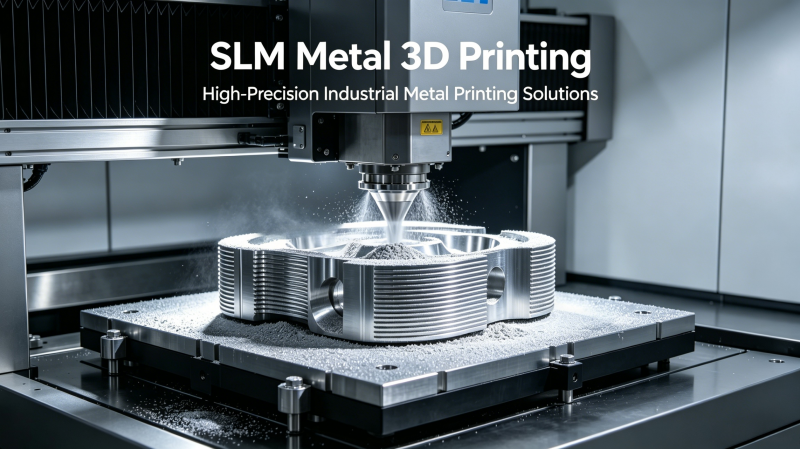
1. SLM/LPBF: Vom Prototypenbau bis zur kundenspezifischen Serienfertigung
Für Ingenieurteams, die an Bauteilen für die Luft- und Raumfahrt, medizinischen Implantaten und Hochleistungskomponenten für die Automobilindustrie arbeiten, hat sich das selektive Laserschmelzverfahren (SLM) – auch bekannt als Laser-Pulverbettfusion (LPBF) – längst über die reine Prototypenentwicklung hinaus entwickelt.
Während mit den frühen 3D-Druckverfahren lediglich visuelle Modelle hergestellt werden konnten, entstehen mit moderner SLM-Technologie vollverdichtete, funktionsfähige Metallteile, die hohen Belastungen, niedrigen Temperaturen und korrosiven Umgebungen standhalten. Im Gegensatz zur herkömmlichen maschinellen Bearbeitung erfordert SLM keine speziellen Formen oder teuren Werkzeuge.
Mit der digitalen Fertigung mittels SLM verkürzen sich die Produktentwicklungszyklen von Monaten auf Tage. Beschaffungsteams können zudem physische Lagerbestände durch digitale CAD-Dateien ersetzen und Teile nach Bedarf herstellen.
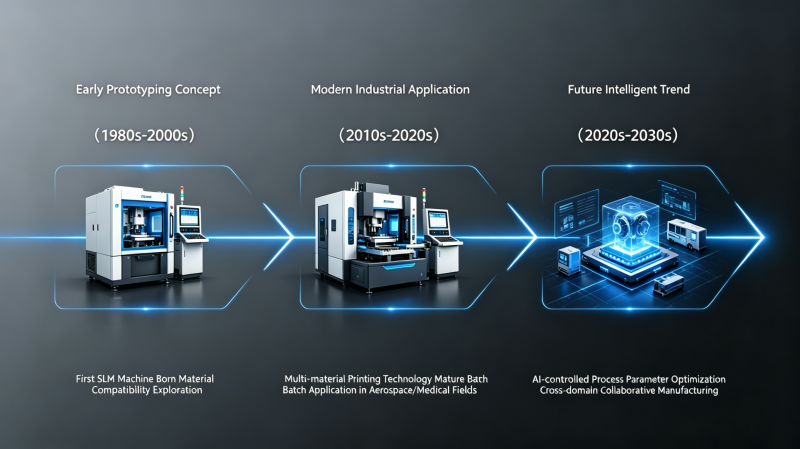
2. So funktioniert SLM: Schichtweiser Schmelzprozess
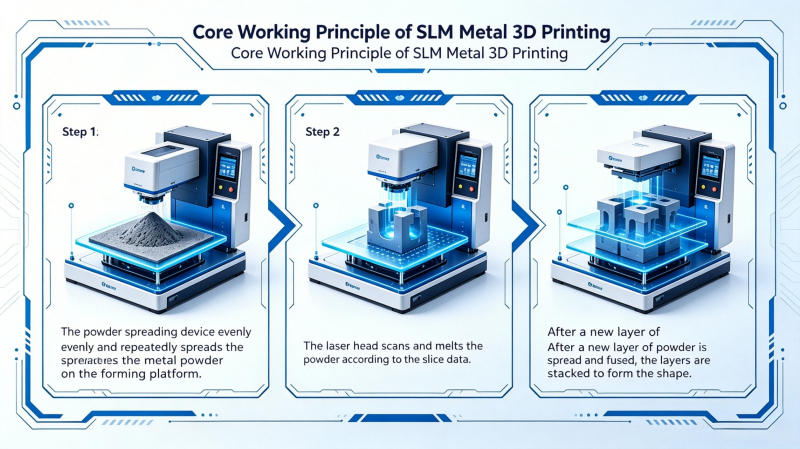
SLM fertigt Teile in einer geschlossenen Inertgas-Kammer in einem sich wiederholenden dreistufigen Zyklus:
- Streuen von Pulver: Eine feine Schicht aus gaszerstäubtem Metallpulver (20–50 μm dick) wird gleichmäßig auf der Bauplatte verteilt.
- Laserschmelzen: Ein Hochleistungs-Faserlaser schmilzt das Pulver selektiv entsprechend dem Querschnitt des 3D-Modells.
- Schichtstapelung: Die Plattform senkt sich leicht ab, und es wird eine neue Schicht Pulver aufgetragen. Dieser Vorgang wiederholt sich, bis das Teil fertig ist.
Die Schutzatmosphäre (Argon oder Stickstoff) verhindert Oxidation, wodurch eine Teiledichte von über 99,51 % erreicht wird – ein Wert, der dem von geschmiedeten und gegossenen Metallen entspricht oder diesen sogar übertrifft. Durch das schnelle Erhitzen und Abkühlen entstehen jedoch innere Spannungen, weshalb bei tragenden Bauteilen eine Wärmebehandlung nach dem Druckvorgang unerlässlich ist.
3. SLM-3D-Druck vs. CNC-Bearbeitung: Wie trifft man die richtige Wahl?
3.1 Kosten und Produktionsvolumen
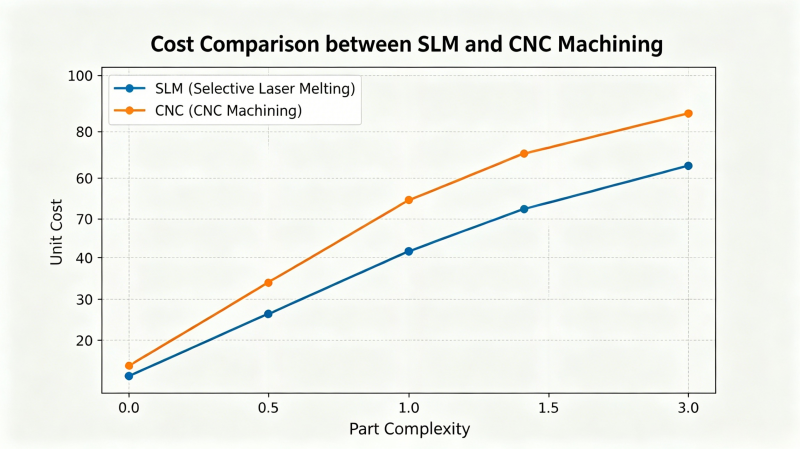
Die CNC-Bearbeitung ist bei einfachen Teilen, die in großen Stückzahlen gefertigt werden, kostengünstiger. Mit zunehmender Komplexität der Teile steigen die CNC-Kosten jedoch schnell an, was auf maßgeschneiderte Vorrichtungen, mehrachsige Programmierung und Werkzeugwechsel zurückzuführen ist.
Die Kosten für das SLM-Verfahren bleiben auch bei hochkomplexen Konstruktionen stabil. Es bietet klare Vorteile für kleine bis mittlere Losgrößen von 1 bis 500 Teilen. Viele Unternehmen nutzen das SLM-Verfahren, um Produkte frühzeitig auf den Markt zu bringen, während die Formen für die Serienfertigung vorbereitet werden.
3.2 Bauteilintegration und Gewichtsreduzierung
Herkömmliche Bauteile wie Verteiler für die Luft- und Raumfahrt und Baugruppen für die Automobilindustrie bestehen oft aus 10 bis 30 einzelnen Komponenten, die miteinander verschweißt werden. Jede Schweißverbindung stellt eine potenzielle Schwachstelle dar und verursacht zusätzliche Montage- und Prüfkosten.
SLM ermöglicht eine monolithische Fertigung aus einem Stück. Mithilfe von Topologieoptimierung und Gitterstrukturen können Ingenieure das Gewicht reduzieren und gleichzeitig die Festigkeit erhalten – was die gesamte Lieferkette vereinfacht.
4. Gängige industrielle Werkstoffe für das selektive Laserschmelzverfahren
Für den industriellen SLM-Druck sind hochwertige, sphärische, gaszerstäubte Pulver erforderlich, um gleichbleibende Druckergebnisse zu erzielen. Nachfolgend sind die drei am häufigsten verwendeten Materialien aufgeführt:
| Material | Wichtige Eigenschaften | Anwendungen |
|---|---|---|
| Ti6Al4V-Titan | Hohes Festigkeits-Gewichts-Verhältnis, biokompatibel, hitzebeständig | Halterungen für die Luft- und Raumfahrt, medizinische Implantate, Rennsportkomponenten |
| 316L-Edelstahl | Stabil, robust, korrosionsbeständig | Flüssigkeitsverteiler, chirurgische Instrumente, Schiffsbauteile |
| AlSi10Mg-Aluminium | Leicht, hohe Wärmeleitfähigkeit | Kühlkörper, Kühlkomponenten für die Automobilindustrie, Roboterkomponenten |
5. Nachbearbeitung von SLM-Bauteilen
5.1 Spannungsarmglühen
Alle tragenden SLM-Teile müssen einer Vakuumglühung unterzogen werden, während sie noch auf der Bauplatte befestigt sind. Dadurch werden innere Spannungen abgebaut und Verformungen oder Risse nach dem Schneiden verhindert.
5.2 Oberflächenbearbeitung
Unbearbeitete SLM-Teile weisen eine Oberflächenrauheit von Ra 5–15 μm auf. Bei Präzisionsoberflächen wie Lagern oder Dichtungen werden zusätzliche Verfahren wie Sandstrahlen, Polieren oder CNC-Bearbeitung eingesetzt, um die Qualität zu verbessern.
6. Teilefertigung: SLM-Lösungen direkt ab Werk
Parts Mastery betreibt eine 20.000 m² große Produktionsstätte mit industriellen SLM-Systemen mit mehreren Lasern. Durch den Wegfall von Zwischenhändlern helfen wir unseren Kunden, ihre Beschaffungskosten um bis zu 30 % zu senken.
Unser cloudbasiertes KI-DFM-System analysiert CAD-Dateien vor der Produktion automatisch auf ihre Druckbarkeit. Darüber hinaus bieten wir hauseigene Wärmebehandlung, Drahtschneiden und lückenlose Rückverfolgbarkeit der Materialien.
Kunden können CAD-Dateien online hochladen, um sofortige Angebote und eine kostenlose DFM-Analyse zu erhalten, wodurch sich die Risiken bei der Entwicklung neuer Produkte verringern.
Zusammenfassung
Der SLM-Metall-3D-Druck macht komplexe, leichte und integrierte Bauteile kostengünstig realisierbar – ideal für Anwendungen in der Luft- und Raumfahrt, der Medizin und der Automobilindustrie. Die richtige Materialauswahl, standardmäßige Nachbearbeitung und Dienstleistungen direkt ab Werk maximieren den technischen und wirtschaftlichen Nutzen von SLM.