





The powersports industry includes high-performance vehicles such as off-road motorcycles, all-terrain vehicles (ATVs), utility task vehicles (UTVs), and snowmobiles. These vehicles operate reliably under harsh conditions, placing extremely high demands on component strength, dimensional accuracy, lightweight design, and assembly performance.
For parts with multi-curved geometries, deep cavities, angled holes, and irregular structures, traditional machining often requires multiple setups, introduces tool interference risks, and causes positioning errors. By contrast, 5-axis simultaneous CNC machining delivers a more flexible, high-precision manufacturing solution for complex powersports components.
PartsMastery specializes in high-end precision component manufacturing for the powersports sector. Equipped with multi-axis machining centers and a dedicated engineering team, we provide full-cycle 5-axis machining services from design optimization and programming to inspection and delivery. Our support covers the entire project lifecycle, from prototype validation and low-volume trials to full-scale mass production.
1. Core Machining Challenges for Complex Powersports Components
1.1 Limited Accessibility for Multi-Sided Complex Structures
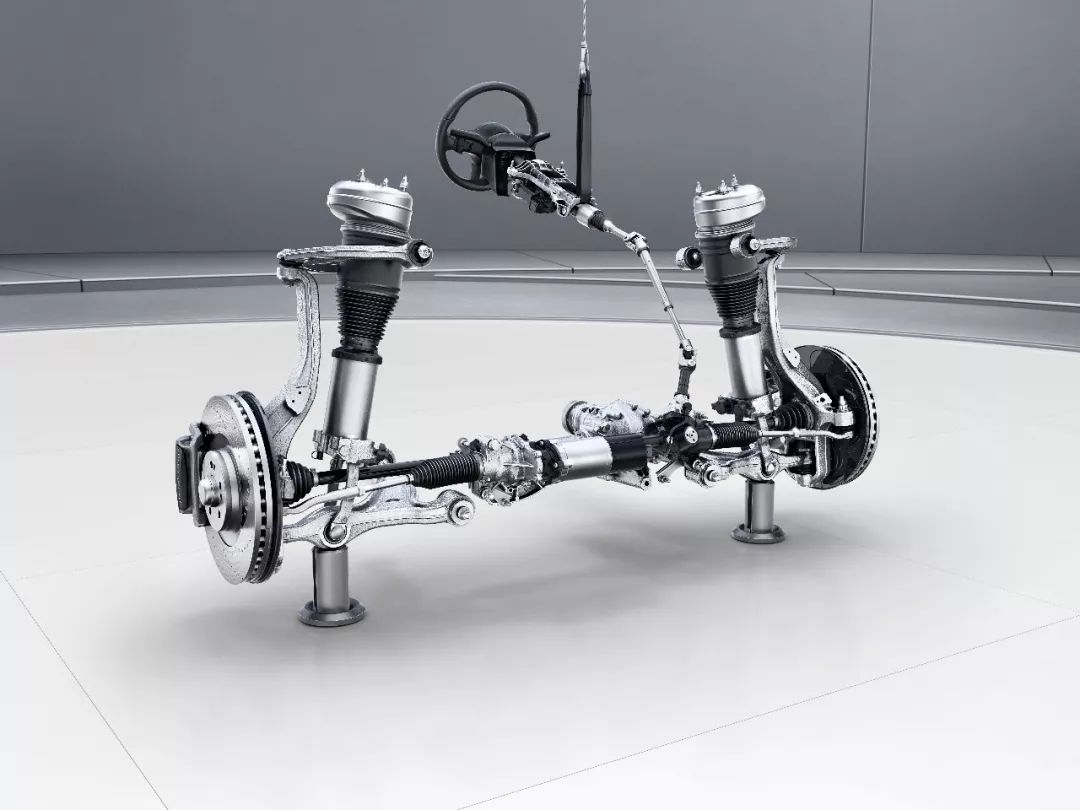
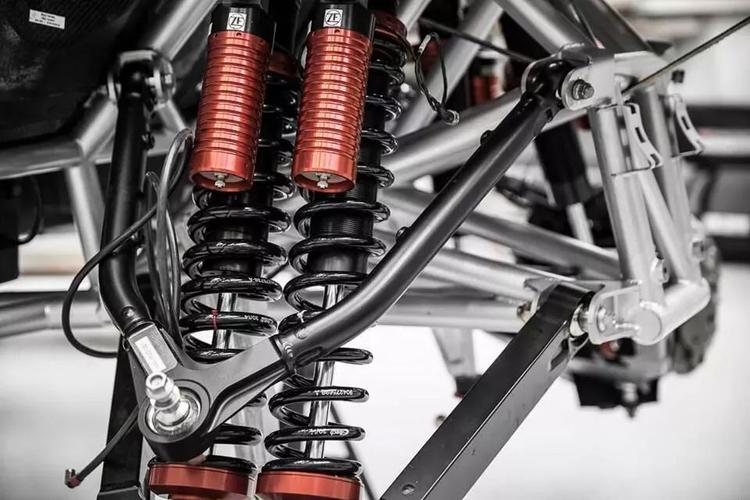
Core components such as steering brackets, suspension links, engine mounts, and frame connectors commonly feature curved profiles, angled mounting holes, spatial surfaces, and internal cavities. Traditional 3-axis machining operates with a fixed tool angle, so certain specialized features remain unreachable.
This usually requires splitting operations across multiple setups. Not only does this reduce production efficiency, but it also introduces positional deviations and geometric tolerance errors that accumulate across each re-clamping step.
1.2 Deformation Risk in Lightweight Thin-Wall Structures
To improve vehicle handling and power-to-weight ratio, powersports parts make extensive use of lightweight materials such as aluminum alloys, paired with design features including reinforcing ribs, thin walls, and hollow sections.
During cutting, these structures are susceptible to deformation from cutting forces and tool vibration. This places extremely high demands on tool path planning, cutting parameter selection, and fixture design.
1.3 Difficulty Maintaining Consistency Across Multiple Datums
Complex components typically include multiple datum surfaces, connection holes, and mating faces. Positioning errors from repeated setups directly impact the relative consistency of critical dimensions. Ultimately, this leads to uneven assembly clearances and reduced fit accuracy, which lowers overall assembly efficiency and operational reliability.
2. Core Technical Advantages of 5-Axis Simultaneous Machining
2.1 Multi-Sided Machining in a Single Setup
5-axis machining adjusts the spatial angle between tool and workpiece simultaneously, enabling multi-angle cutting of angled holes, curved surfaces, cavities, and undercut features. With optimized process planning, all operations on multiple machining faces can be completed in a single clamping.
This drastically reduces repeated positioning errors, improves geometric tolerance consistency, and shortens overall production lead times.
2.2 Efficient Forming of Complex Surfaces and Deep Cavities
Thanks to the tool’s spatial articulation capability, 5-axis machining allows cutting tools to access deep cavities, angled surfaces, and complex curved regions at the optimal cutting angle. This eliminates tool interference and machining blind spots.
It also significantly improves machining accuracy and surface quality for complex profiles, making it perfectly suited for the irregular structural demands of powersports components.
2.3 Stable Machining of Thin-Wall Lightweight Structures
By optimizing tool path strategy and cutting orientation, 5-axis machining applies cutting forces at more favorable angles. Combined with layered cutting techniques, this effectively reduces cutting vibration and deformation risks in thin walls, ribs, and other delicate features.
The result is support for extreme lightweight designs without compromising structural integrity.
2.4 Unified Dimensional Accuracy Across Features
Completing all critical features in one setup eliminates datum shift caused by multiple positioning steps. This preserves the relative positional accuracy of holes, planes, and profiles across different faces, and improves component assembly interchangeability and batch-to-batch consistency.
3. Full-Process Manufacturing Control System
3.1 Upfront DFM Manufacturability Analysis
Before machining begins, we conduct a full Design for Manufacturing (DFM) analysis based on the 3D CAD model. We evaluate feature accessibility, tool interference risks, and thin-wall deformation probability, and provide early structural optimization recommendations.
This proactive approach reduces downstream machining risks and costs at the design stage itself.
3.2 CAM Programming and Tool Path Optimization
Our expert engineers develop custom roughing, semi-finishing, and finishing tool paths tailored to each part’s geometry. We also match optimal tools and cutting parameters to material properties, balancing material removal rates, surface quality, and machining stability.
3.3 Material and Structural Adaptation Solutions
We select the optimal material — including aluminum alloys, stainless steel, alloy steel, and engineering plastics — based on each component’s load rating, weight targets, and operating conditions. For high-load connection parts, we prioritize strength and fatigue performance. For non-structural housings and auxiliary components, we optimize material selection and structural design to support lightweight manufacturing.
3.4 Precision Inspection and Surface Finishing
After machining, we verify critical dimensions, hole position accuracy, flatness, and profile tolerance against engineering drawings. For high-precision components, we perform full-dimensional verification using a Coordinate Measuring Machine (CMM).
For aluminum parts, we also offer surface treatments such as anodizing, hard anodizing, and sandblasting to meet corrosion resistance, wear resistance, and appearance requirements.
4. Machining Solution Matrix for Common Powersports Components
| Komponententyp | Core Machining Challenge | Recommended Machining Solution | Wichtige Punkte der Qualitätskontrolle |
|---|---|---|---|
| Suspension Connection Components | Angled holes, multiple mating faces, complex surfaces | 5-axis simultaneous one-setup machining, full inspection of critical holes | Hole positional accuracy, geometric tolerance, fit precision |
| Steering System Brackets | Multiple assembly datums, high structural strength requirements | Multi-face one-setup forming, unified datum machining | Datum surface flatness, mounting hole concentricity |
| Engine Mounting Brackets | Multi-directional mounting holes, high surface flatness requirements | 5-axis milling, in-process dimensional verification | Hole positional accuracy, mounting surface flatness |
| Frame Connectors | Irregular profiles, thin-wall lightweight structures | Custom tool paths, layered cutting with deformation control | Profile accuracy, uniform wall thickness |
| High-Performance Housings | Complex curved surfaces, high appearance and surface requirements | 5-axis simultaneous milling, matched surface finishing | Surface contour accuracy, surface finish quality |
5. PartsMastery Full-Cycle Machining Service Support
PartsMastery provides one-stop manufacturing services including 5-axis milling, precision machining, and surface finishing. We develop custom manufacturing solutions based on customer 3D models, material specifications, tolerance requirements, and order volumes.
From prototype development to low-volume production, upfront DFM analysis identifies structural and process risks early, optimizes tool path planning, and reduces unnecessary manufacturing costs. For high-precision, multi-feature, complex-profile powersports components, 5-axis machining supports both rapid product development and stable volume manufacturing.
By integrating structural analysis, process planning, precision machining, and quality control, we achieve the optimal balance between dimensional accuracy, component reliability, and production efficiency.
Schlussfolgerung
Manufacturing complex powersports components requires more than just advanced machine tools. The right material selection, tool path planning, and quality control system are equally important. 5-axis CNC machining effectively addresses core pain points including multi-sided machining, complex forming, and precision assembly.
With professional process expertise and a full-cycle service system, PartsMastery helps powersports customers improve component quality, shorten development cycles, and support the development and production of high-performance vehicles.