






Automotive lighting systems serve three core functions: illumination, signaling, and exterior vehicle styling. Beyond basic performance, their assembly accuracy, thermal management, and long-term reliability depend heavily on the manufacturing quality of various small precision components housed within the assembly.
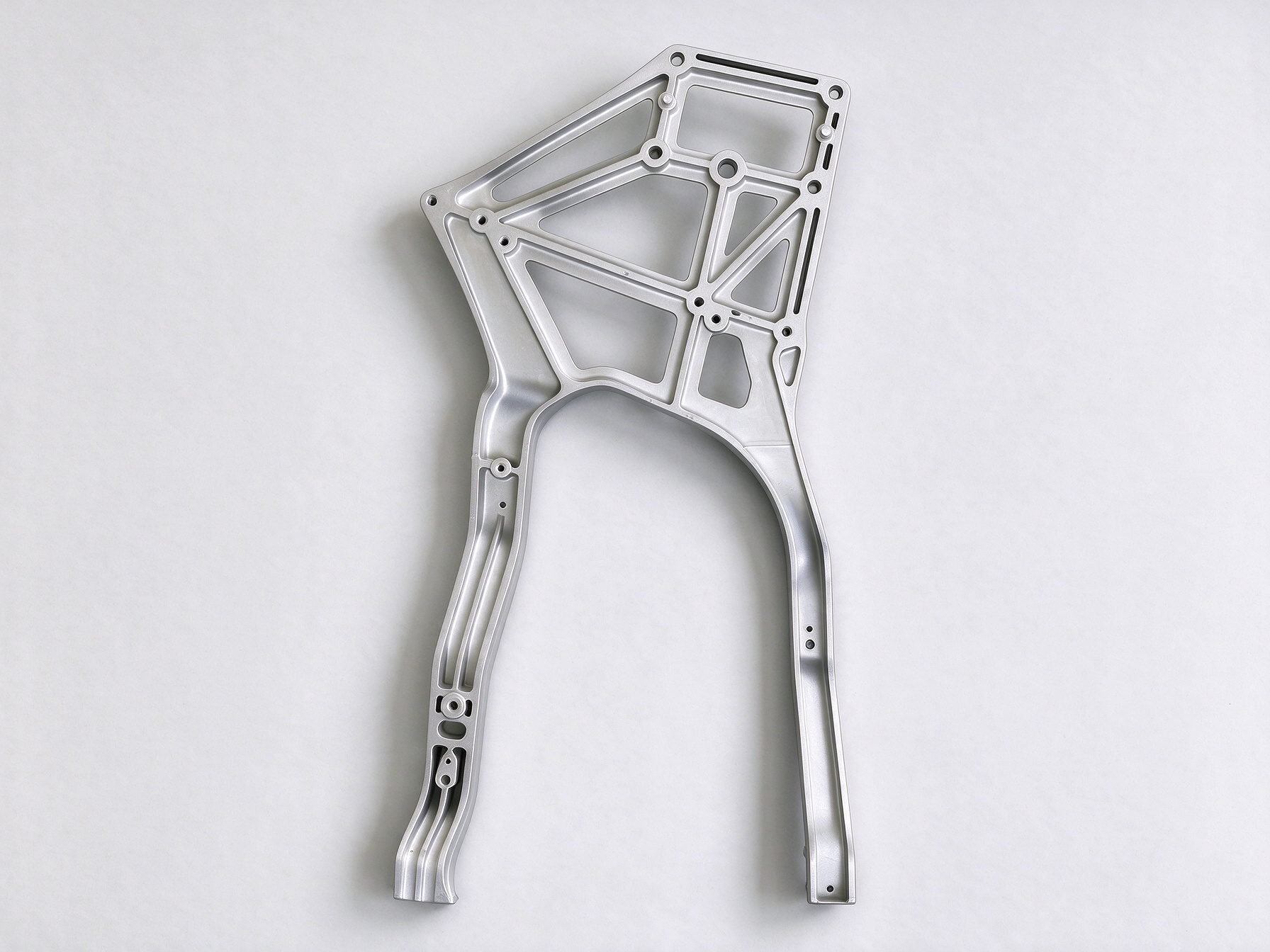
Inside every lighting unit, you will find a wide range of metal and plastic parts, including mounting brackets, fixing bases, connectors, heat sinks, adjustment mechanisms, and lens supports. These components are typically compact and intricately structured, and they must align precisely with the mounting envelope and optical design of each specific vehicle model. Unsurprisingly, standard off-the-shelf parts rarely meet all of these requirements perfectly.
As a result, CNC precision machining has emerged as the go-to manufacturing solution for prototype validation, low-volume trial production, and functional component manufacturing for automotive lighting. Thanks to its high accuracy, production flexibility, and customizability, it accommodates the unique demands of each lighting program. At PartsMastery, we specialize in custom precision component manufacturing for the automotive sector, delivering optimized machining processes and quality control solutions tailored to the structural features, accuracy requirements, and surface specifications of every lighting part type.
1. Core Machining Requirements for Automotive Lighting Components
1.1 Strict Assembly and Positioning Accuracy
Above all, automotive lighting parts must fit precisely with lamp housings, body mounting points, optical modules, and electronic components. Even minor deviations in mounting hole position, poor surface flatness, or inconsistent mating surface heights can trigger cascading issues, from uneven assembly gaps and misaligned lamp positioning to degraded optical path accuracy.
For this reason, the positional accuracy of critical holes, flatness of mounting datum surfaces, and tolerance grades of mating dimensions must be clearly defined before production begins. More importantly, they remain core quality priorities throughout every step of the manufacturing process.
1.2 Stable Machining of Small, Complex Geometries
Since lighting assemblies have very limited internal space, parts often incorporate thin walls, deep narrow grooves, micro holes, countersinks, and contoured surfaces. When working at such a small scale, clamping forces, cutting forces, and residual material stress can easily cause deformation, burrs, and dimensional drift.
To address these challenges, dedicated fixturing is engineered specifically around each part’s geometry. In addition, roughing and finishing stock allowances are carefully allocated, and cutting parameters are fine-tuned for each individual feature. Altogether, this approach delivers consistent machining quality even for the most complex and delicate structures.
1.3 Dual Surface Requirements: Aesthetics and Weather Resistance
Beyond functional performance, some exposed lighting components also play a key role in vehicle exterior styling. As a result, they carry strict requirements for surface roughness, scratch resistance, and burr-free edges. At the same time, real-world automotive operating conditions — including wide temperature swings, moisture, and UV exposure — demand strong long-term weather resistance.
Fortunately, a range of matching surface treatments are available to satisfy both needs. These include anodizing, sandblasting, electroplating, and powder coating, all of which deliver the required visual finish alongside long-term environmental durability.
2. Material and Process Matching for Common Lighting Components
Different lighting components carry different priorities when it comes to material selection, machining focus, and surface finishing requirements. To simplify this selection, the matching matrix is outlined below.
| Component Type | Common Materials | Key Machining Control Points | Compatible Surface Treatments |
|---|---|---|---|
| Lighting Mounting Bracket | 6061 Aluminum Alloy, 304 Stainless Steel | Hole positional accuracy, mounting surface flatness, fit dimensions | Anodizing, Sandblasting, Powder Coating |
| Lamp Body Connector | Aluminum Alloy, Low Carbon Steel | Mating surface flatness, hole position accuracy, effective thread depth | Anodizing, Zinc Plating & Passivation |
| Heat Sink Component | 6063 / 6061 Aluminum Alloy | Groove wall thickness, heat sink surface flatness, structural integrity | Hard Anodizing, Natural Anodizing |
| Adjustment Base Assembly | Aluminum Alloy, Wear-Resistant Engineering Plastic | Bore concentricity, fit clearance, adjustment travel | Customized per application |
| Internal Fixing Support | Aluminum Alloy, Engineering Plastic | Overall dimensions, assembly fit accuracy | Customized per application |
3. Full-Cycle Custom CNC Machining Solutions
At PartsMastery, we deliver a tiered custom manufacturing service system aligned with the full lifecycle needs of automotive lighting programs, from early R&D through to full mass production.
3.1 Upfront DFM Manufacturability Review
Before any production begins, our engineering team performs a full DFM (Design for Manufacturing) analysis based on customer-supplied 3D CAD models or 2D engineering drawings.
This systematic review identifies potential machining risks such as overly narrow grooves, excessively small internal corners, thin-wall deformation zones, and impractical hole placements. In turn, we provide actionable optimization recommendations early in the project to avoid costly downstream rework and shorten overall R&D and validation cycles.
3.2 Optimized Process Matching by Part Geometry
We select the optimal machining process based on each part’s geometric features and accuracy requirements. For straightforward parts like regular brackets, bases, and connection plates, standard 3-axis CNC milling delivers consistent hole positioning and surface accuracy.
When it comes to parts with multi-sided machining requirements or complex contoured surfaces, 4-axis or 5-axis simultaneous machining is the preferred approach. It reduces the number of setups needed and improves overall geometric tolerance consistency across features.
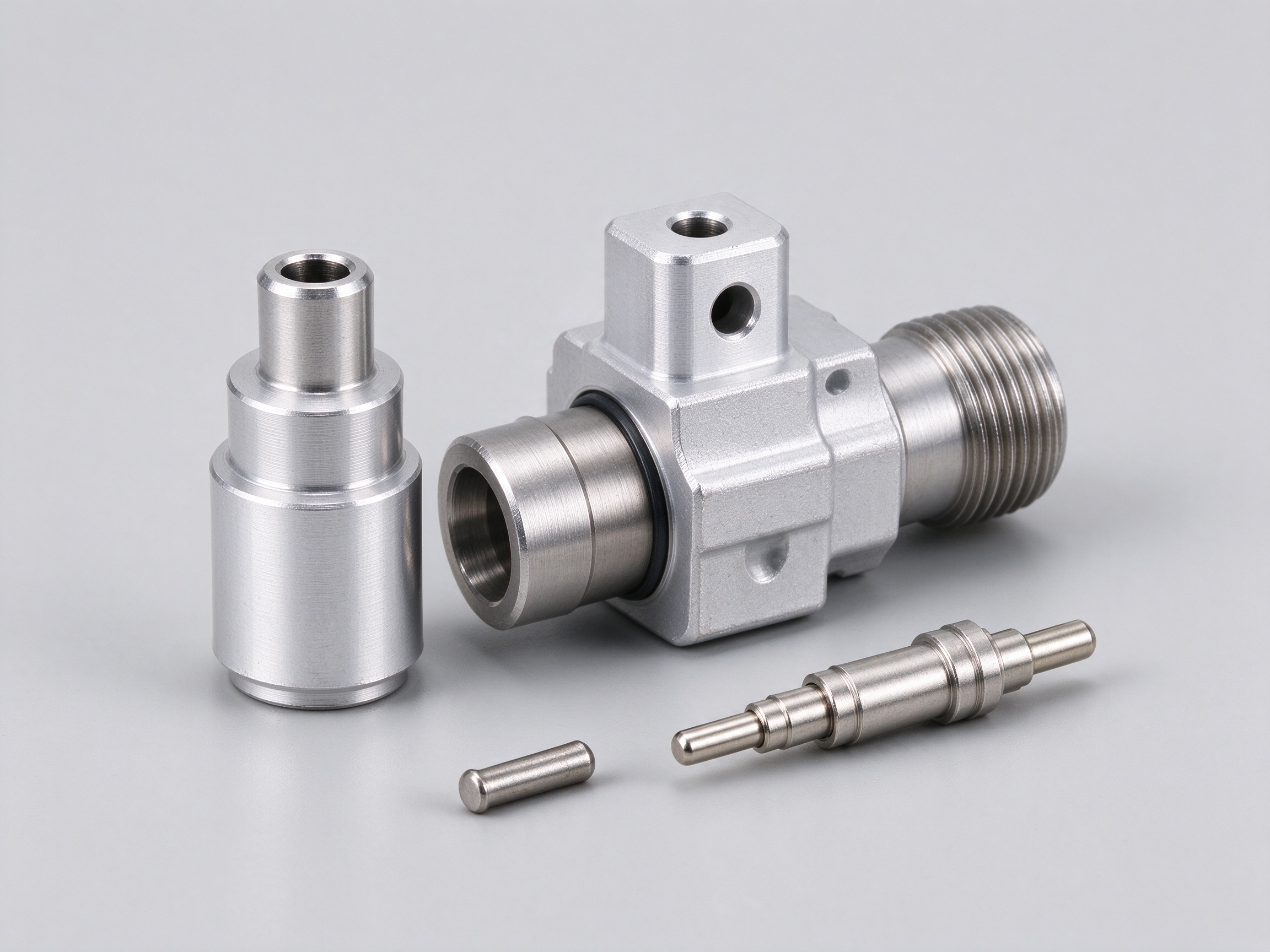
For rotary components such as shafts, sleeves, and threaded connectors, by contrast, we use a hybrid process combining primary CNC turning with secondary milling operations. This integrated approach ensures both high rotational accuracy and precise mating fit.
3.3 Flexible Production for Different Project Stages
Our production model is designed to adapt seamlessly to each phase of automotive lighting development. During the prototype validation phase, for instance, we prioritize dimensional and assembly accuracy, delivering small quantities quickly to support design verification and fit testing.
Moving into the low-volume trial phase, we optimize process routing and fixturing to balance precision and production cost, supporting full lamp assembly and on-road testing. Once programs advance to full mass production, we standardize process parameters and quality specifications to ensure consistent batch-to-batch quality and reliable long-term supply.
4. Full-Process Quality Control and Delivery Assurance
4.1 In-Process Inspection Between Operations
Effective quality control is not limited to end-of-line final inspection. Instead, we perform dimensional sampling checks at key process nodes — including datum surface finishing, critical hole machining, and feature forming. This proactive approach catches deviations early and prevents error accumulation through to final operations, significantly reducing rework costs and material waste.
4.2 Tiered Control of Critical Dimensions
We apply tiered dimensional control tailored to each feature’s assembly function. For mounting and positioning features, for example, we focus tightly on hole spacing, positional accuracy, and surface flatness.
When evaluating moving and mating features, we place priority on verifying concentricity, fit clearance, and surface roughness. For cosmetic appearance parts, by contrast, we conduct detailed checks for surface defects, remaining burrs, and clean edge finishing. This targeted approach ensures every critical characteristic meets specified assembly and performance requirements.
4.3 Finished Part Protection and Packaging
Because they are small and precision-engineered, automotive lighting components require careful handling even after machining is complete. For this reason, we use a layered protective packaging strategy for all production runs.
Specifically, appearance parts with decorative surface finishes receive individual foam or clamshell separation to prevent scratches and impact damage during transit. This attention to final-mile protection ensures consistent, defect-free part quality upon delivery to the customer’s facility.
5. Frequently Asked Questions
1. Do you offer fully custom machining for automotive lighting parts?
Absolutely. We provide fully custom component manufacturing tailored to specific vehicle model requirements, lamp architecture, and available mounting space. Customers can supply 3D models, 2D engineering drawings, or physical sample parts, and we will develop a fully matched material, process, and surface treatment solution.
2. What materials are commonly used for automotive lighting parts?
It depends on the part’s function. Structural and heat sink components typically use 6061 or 6063 aluminum alloy, chosen for its light weight and excellent thermal performance. For high-strength connection parts, stainless steel or carbon steel are preferred. For lightweight insulating structures, engineering plastics work well. Ultimately, final material selection is always based on function, operating environment, and cost targets.
3. Do you support low-volume prototype machining?
Yes, we do. CNC machining is inherently well suited to flexible low-volume production. We can quickly deliver single units or dozens of prototype parts for design validation and assembly testing. Once the design is fully finalized, production can transition smoothly to full volume manufacturing.
4. Can you review drawings for manufacturability before machining?
Certainly. Through our upfront DFM analysis service, we identify common machining challenges such as thin walls, deep grooves, and tight internal corners early in the project. We then provide practical design optimization suggestions to reduce downstream rework and eliminate unnecessary cost waste at the source.
Conclusion
All in all, the manufacturing precision of automotive lighting components directly impacts lamp assembly efficiency, optical performance, and overall vehicle quality. At PartsMastery, we leverage proven CNC precision machining capabilities and an automotive-grade quality control system to deliver full-cycle custom manufacturing services, from early prototype development through to full batch production.
Our capabilities cover the full range of lighting components, including mounting brackets, heat sinks, connectors, and adjustment mechanisms. With upfront DFM review, precise process matching, and end-to-end quality control, we consistently deliver strong assembly accuracy, structural stability, and surface quality. In short, we help automotive lighting programs launch efficiently, reliably, and right on schedule.