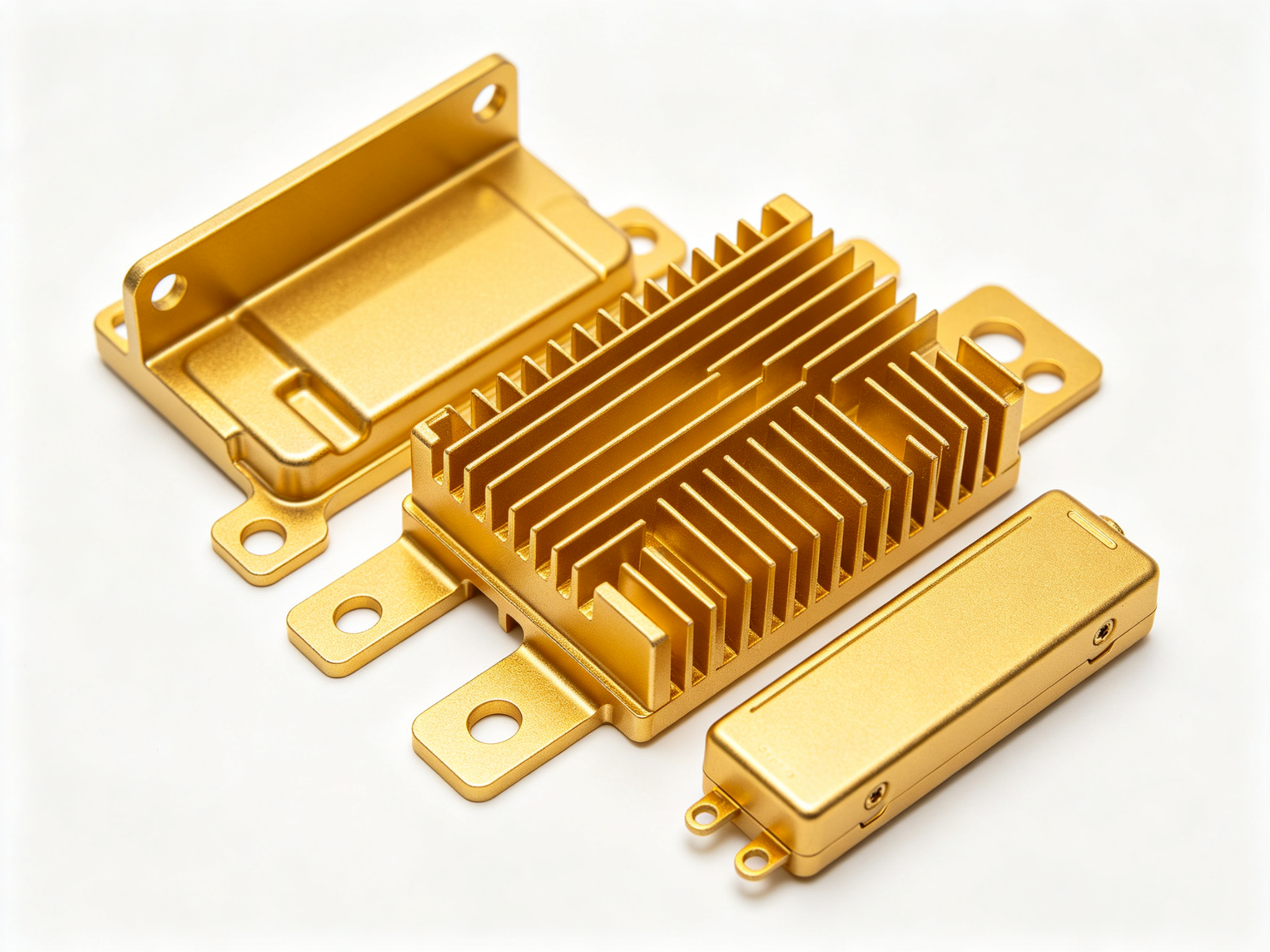
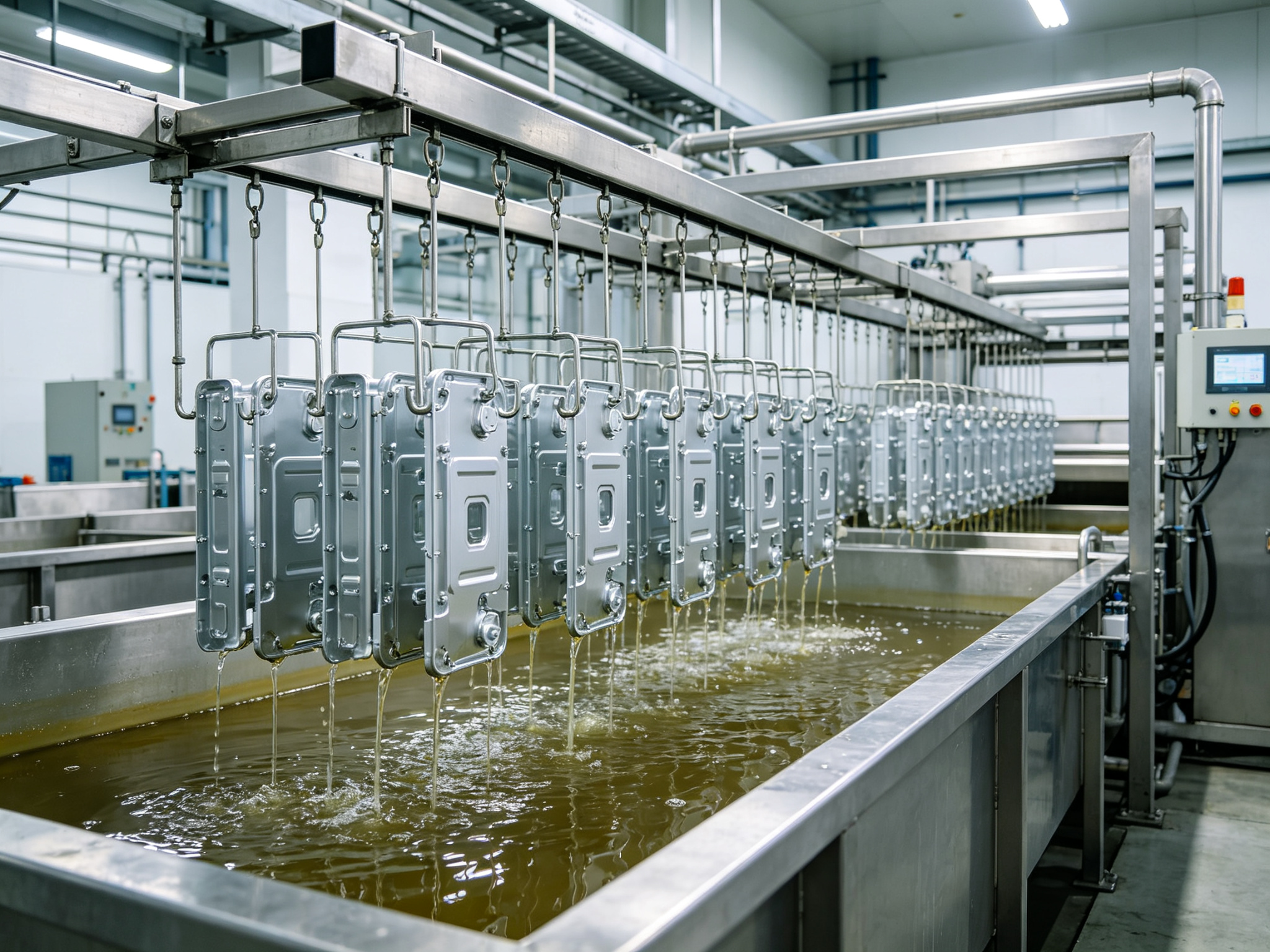
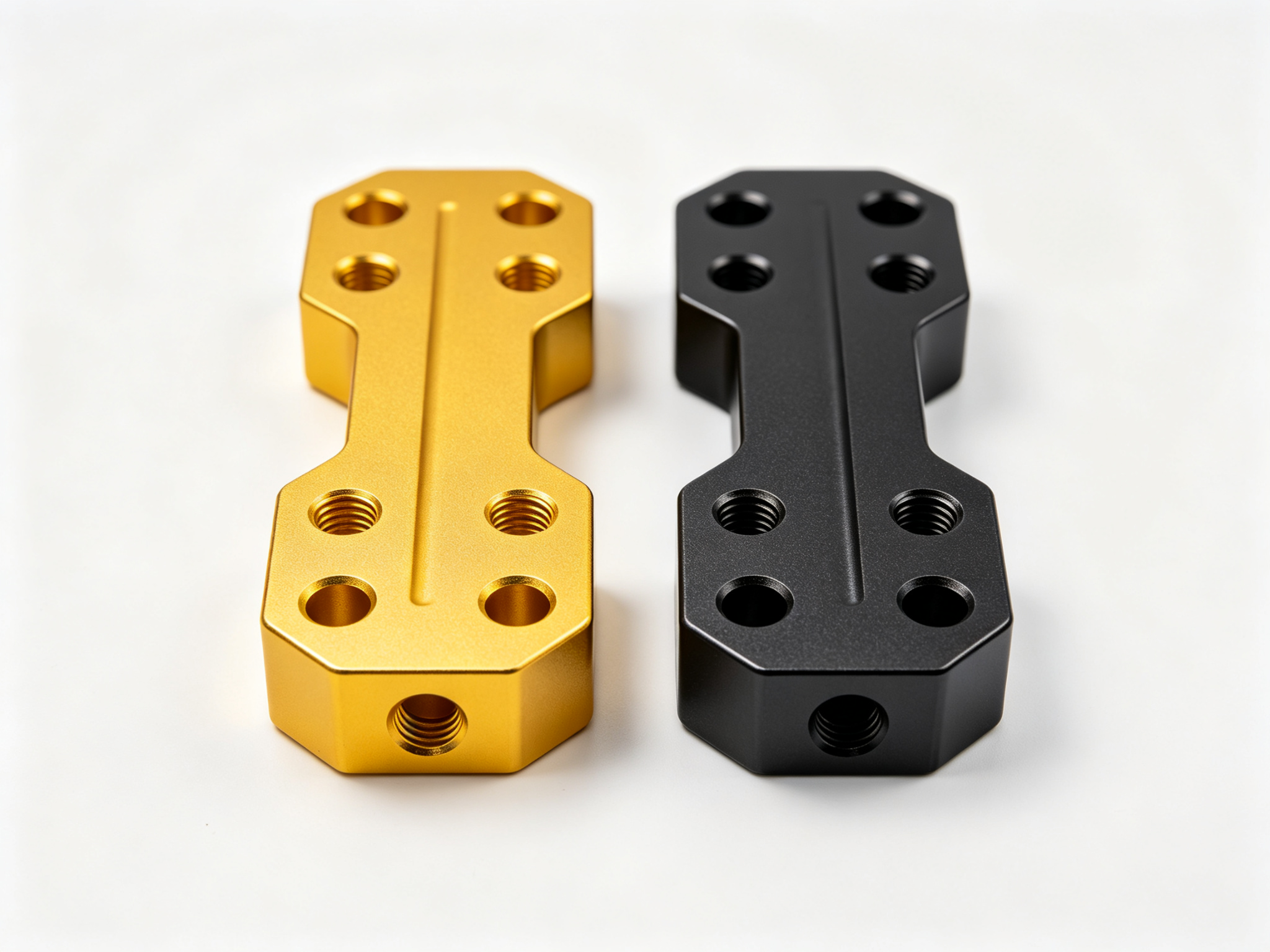
Chemical conversion coating, commonly known as Alodine or chromate conversion coating, represents a chemical treatment process primarily applied to aluminum alloys. It forms an ultra-thin conversion layer on the aluminum surface through a controlled chemical reaction. This layer simultaneously achieves three core functions: improved corrosion resistance, enhanced coating adhesion, and maintained electrical conductivity—all without significantly increasing part thickness. This unique combination of properties makes chem film one of the preferred surface treatment solutions for precision aluminum parts.
However, chem film is not a universal surface treatment solution. It has clear limitations in wear resistance, decorative appearance, and extreme-environment durability. Furthermore, traditional hexavalent chromium processes face strict environmental regulations. A proper understanding of chem film process principles, types and classes, performance boundaries, and application scenarios is essential for engineers making surface treatment selections in aerospace, electronics, automotive, and precision manufacturing. This guide starts from the basic definition of chem film. It systematically explains types and classes, process flow, color meaning, essential differences from anodizing, core applications, industry practices, pros and cons, and safety considerations. The goal is to provide engineers with an actionable selection decision framework.
1. What Is Chem Film (Alodine)?
Chemical conversion coating is a conversion-type layer formed on metal surfaces through chemical reactions. Unlike anodizing, which grows an oxide layer electrochemically, chem film forms through a spontaneous chemical reaction between the metal surface and the chemical solution. For aluminum alloys, chem film consists of a mixed oxide layer of aluminum oxide and chromium-based (or zirconium/titanium-based) compounds. Its thickness typically ranges from 0.25 to 2.5 micrometers (0.00001 to 0.0001 inches).
This ultra-thin conversion layer possesses three core characteristics. First, it forms a chemically bonded protective layer that effectively blocks oxygen and moisture from contacting the aluminum substrate, providing moderate corrosion resistance. Second, its porous structure significantly improves the adhesion of paints, powder coatings, and adhesives, making it an excellent primer. Third, because the layer is extremely thin, it does not form an insulating layer. It preserves the natural electrical conductivity of aluminum, making it suitable for grounding and electromagnetic shielding applications. The unique combination of these three properties makes chem film irreplaceable in precision aluminum parts.
2. Chem Film Types and Classes
According to the MIL-DTL-5541 U.S. military standard, chem film is classified into different types and classes based on chemical composition and performance priority. Understanding these classifications is critical for proper selection because different types and classes differ significantly in corrosion resistance, conductivity, environmental compliance, and cost.
2.1 Type I: Hexavalent Chromium Chem Film
Type I chem film uses hexavalent chromium (Cr⁶⁺) compounds to form a chromate conversion layer on aluminum surfaces. During processing, aluminum reacts with chromate ions through an oxidation-reduction reaction. This reaction produces a mixed oxide layer of aluminum oxide and chromium oxide. Hexavalent chromium ions reduce to trivalent chromium during the reaction and deposit in the film. This imparts excellent self-healing capability and corrosion resistance to the coating.
Type I chem film typically measures 0.25–2.5 micrometers thick. Its color ranges from pale yellow to deep gold, depending on bath concentration and processing time. Its core advantages lie in outstanding corrosion resistance and strong coating adhesion. Salt spray testing can exceed 336 hours. However, hexavalent chromium is toxic and carcinogenic. It faces strict environmental regulations such as RoHS and REACH, requiring dedicated wastewater treatment and operator protection. Nevertheless, Type I chem film remains widely used in traditional aerospace and military programs. These applications demand extremely high corrosion resistance and are not subject to civilian environmental regulations.
2.2 Type II: Chromium-Free / Trivalent Chromium Chem Film
Type II chem film replaces hexavalent chromium with safer alternatives, primarily trivalent chromium systems, zirconium-based systems, and titanium-based systems. Its process flow is similar to Type I, but the chemical reaction hazards are significantly lower. The Type II layer is typically thinner (≤0.25 micrometers), with colors ranging from transparent to light blue or slightly tinted.
The core advantage of Type II chem film lies in environmental compliance and operator safety. Being hexavalent-chromium-free makes it compliant with RoHS and REACH environmental regulations. However, compared to Type I, Type II corrosion resistance is slightly lower. Salt spray testing typically ranges from 168 to 336 hours. Despite this, Type II has now been widely adopted in commercial aerospace, electronics, and CNC-machined aluminum parts, becoming the mainstream choice in the civilian market.
2.3 Class 1A: Maximum Corrosion Protection
Class 1A chem film is thicker and more chemically active. It provides excellent moisture resistance, salt spray resistance, and corrosion resistance. Its primary purpose is corrosion protection and enhanced paint adhesion. Its typical appearance is yellow, gold, or brown. Common applications include aerospace structural parts, military hardware, and painted aluminum components. Class 1A is typically used in scenarios requiring the highest corrosion resistance, either as a standalone finish or as a primer before painting.
2.4 Class 3: Conductivity Priority
Class 3 chem film is thinner, designed to minimize electrical contact resistance while still providing basic corrosion protection. Its primary purpose is electrical conduction and grounding. Its typical appearance is transparent or extremely light tint. Common applications include electronic enclosures, electromagnetic interference shielding components, and grounding surfaces. Class 3 is typically used for aluminum parts in electrical systems requiring very low contact resistance, such as avionics enclosures, connectors, and heat sinks.
3. Chem Film Process Flow
The chem film process is a controlled chemical conversion treatment. Through a series of surface preparation, chemical reaction, and post-treatment steps, it forms a protective conversion layer on aluminum surfaces while preserving part dimensions. The consistency and strictness of the entire process directly determine the final coating performance.
3.1 Surface Preparation
Before conversion coating, all oil, grease, dust, and machining residues must be completely removed. Manufacturers typically use mild alkaline non-corrosive cleaners at strictly controlled temperatures. A clean surface is critical for uniform chemical reaction. Any residual oil contamination will cause uneven coating or poor adhesion.
Depending on the aluminum alloy type, weak alkaline or acidic etching may be used to remove surface alloying elements and expose fresh aluminum. This step improves coating adhesion, but the etching time and concentration must be strictly controlled to avoid excessive etching that causes dimensional changes. A deoxidation step then follows to remove the naturally formed oxide layer and surface smut. Thorough water rinsing after each treatment step prevents chemical contamination from affecting subsequent reactions.
3.2 Chemical Conversion Reaction
After proper surface preparation, the aluminum is exposed to the chem film solution. At this stage, chromate (or zirconium/titanium salt) compounds react with the aluminum surface. The reaction forms a thin conversion layer consisting of aluminum oxide and chromium-based (or zirconium/titanium-based) compounds. Reaction time typically ranges from 1 to 10 minutes, with temperature controlled between 20 and 40°C. Coating thickness and color increase with reaction time and bath concentration. The conversion layer provides corrosion protection while maintaining electrical conductivity.
3.3 Application Methods
Chem film can be applied by immersion or spraying. Immersion coating provides the most uniform coating on complex-shaped parts because the part is completely submerged and all surfaces fully contact the reaction solution. Spraying is typically used for large components or localized treatment, offering flexibility but with less uniformity than immersion. For precision small parts and complex cavities, immersion is the preferred method.
3.4 Rinsing, Drying, and Inspection
After coating, parts must be thoroughly rinsed with deionized water to remove residual chemicals. They are then dried under controlled conditions (typically 60–80°C hot air drying). Quality inspection typically includes visual color check, coating weight determination, and corrosion performance testing (such as salt spray testing) according to applicable standards. From practical production experience, consistent surface preparation and rinse quality are the most critical factors affecting final chem film performance.
4. What Chem Film Colors Mean
Chem film coatings display different colors based on their chemical composition, thickness, and performance class. These colors are not decorative. They visually indicate the coating type, thickness, and functional priority. For engineers, learning to judge coating performance by color is a practical skill for quickly assessing surface treatment quality.
4.1 Clear / Colorless Chem Film
Clear or nearly colorless chem film is most commonly used in Type II and thin Class 3 applications. It typically uses trivalent chromium or zirconium-based systems to form an ultra-thin layer (usually ≤0.25 micrometers). Because the coating is extremely thin, clear chem film preserves the natural appearance of aluminum while providing excellent electrical conductivity. In practice, this coating is often specified for avionics enclosures, electrical connectors, and grounding surfaces where low contact resistance is critical.
4.2 Yellow Chromate Conversion Coating
Yellow chem film is typically associated with hexavalent chromium-containing Type I and Class 1A systems. Its color ranges from pale yellow to deep gold, depending on bath concentration and immersion time. These coatings are thicker (0.25–2.5 micrometers) and offer excellent corrosion resistance. In actual manufacturing, yellow chem film is commonly used as a primer layer before paint or CARC coating in aerospace, defense, and marine environments.
4.3 Green or Iridescent Chromate Coating
Green or iridescent chem film coatings are relatively rare. They are typically produced by modified chemical processes, such as chromium phosphate systems. This coating forms a mixed oxide layer with moderate thickness and unique color. These surface treatments are typically used in specific industrial or military applications to meet requirements for visual identification, chemical resistance, or legacy specifications.
4.4 Color-to-Performance Correlation
From an engineering perspective, chem film color provides a visual indication of coating type, thickness, and functional priority. Darker colors (deep gold, brown) typically indicate a thicker coating with higher corrosion resistance, corresponding to Class 1A. Lighter or transparent coatings indicate a focus on conductivity and dimensional stability, corresponding to Class 3. Uneven color usually signals process control issues that require checking surface preparation and reaction conditions.
5. Chem Film vs. Anodizing
Both chem film and anodizing are aluminum surface treatments, but they differ fundamentally in coating thickness, corrosion resistance, electrical conductivity, and application purpose. Understanding these differences is critical for proper material and process selection. Many engineers confuse these two processes during initial selection, leading to performance mismatches or unnecessary cost.
5.1 Coating Thickness and Dimensional Impact
Chem film forms an extremely thin conversion layer, typically 0.25–2.5 micrometers, adding virtually no measurable thickness. This preserves tight dimensional tolerances, which is critical for precision-fitting parts, threaded holes, and close-fitting features. Anodizing, by contrast, produces a much thicker oxide layer, typically 2.5–25 micrometers (Type II) or 25–100 micrometers (Type III). This adds material buildup and changes part dimensions, requiring tolerance allowance during the design phase.
5.2 Corrosion Resistance Comparison
Chem film provides a moderate level of corrosion resistance, commonly used in mild environments or as a primer coating system. When used alone, its salt spray testing typically ranges from 168 to 336 hours. Anodizing offers significantly higher corrosion resistance, especially in harsh environments such as marine, industrial, or outdoor applications. Type II anodizing reaches 200–1000 hours of salt spray testing, while Type III hard anodizing reaches 500–2000 hours.
5.3 Electrical Conductivity Comparison
Chem film, especially Class 3 coatings, preserves the natural electrical conductivity of aluminum with very low contact resistance. This makes it ideal for grounding surfaces and electronic components. Anodizing coatings are electrically insulating (aluminum oxide is an excellent insulator), which limits their use in applications requiring electrical conductivity. This difference represents one of the most fundamental distinctions between the two processes and a key selection criterion.
5.4 Typical Application Selection
Based on practical engineering experience, chem film is typically specified for aerospace enclosures, avionics parts, and painted aluminum assemblies where electrical conductivity and dimensional accuracy are critical. For structural components, wear surfaces, and exposed parts requiring durability, hardness, and long-term corrosion protection, anodizing is the preferred process. A simple selection rule: choose chem film when conductivity is needed, and choose anodizing when wear resistance is required.
6. Core Applications of Chem Film
Chem film is widely used in modern manufacturing because it provides functional surface protection without changing part geometry. Its ultra-thin conversion layer makes it suitable for precision parts requiring a balance of corrosion resistance, electrical conductivity, and coating adhesion. The following are its four core application directions.
Corrosion protection: Forms a chemically bonded conversion layer that slows oxidation of aluminum and light metals, providing reliable corrosion resistance in mild to moderate environments. Commonly used in aerospace enclosures, brackets, and internal structural parts, either as a standalone finish or as a primer coating system.
Enhanced coating adhesion: Creates a chemically active surface that improves the adhesion of paints and primers without mechanical roughening. Widely used as a pretreatment before painting in aerospace and defense programs. It helps reduce coating delamination during thermal cycling and vibration.
Electrical conductivity: Preserves surface electrical conductivity because the coating is extremely thin. Class 3 chem film is optimized for low resistance. Commonly used for grounding surfaces, connectors, and heat sinks in avionics, electronics, and EMI-sensitive components.
Dimensional tolerance retention: Adds virtually no measurable buildup on part surfaces, preserving tight tolerances, thread fits, and precision mating features. Suitable for close-fitting assemblies and machined interfaces, reducing rework risk compared to thicker surface treatments.
7. Industry Applications
Chem film is widely used across multiple industries because it provides corrosion protection, electrical conductivity, and paint adhesion without changing dimensions. The following table presents typical part types, primary reasons for selecting chem film, and common standard requirements across major application industries.
In aerospace, chem film is used for aircraft structures, brackets, enclosures, and avionics housings. It provides corrosion protection under temperature variations and humidity while maintaining electrical grounding paths for avionics and signal systems, typically specified to MIL-DTL-5541 and AMS standards. In electronics, Class 3 chem film is preferred for conductivity-sensitive components because it balances corrosion protection with electrical performance while remaining compatible with high-precision, small-feature assemblies.
8. Advantages, Limitations, and Safety Considerations
8.1 Core Advantages
Chem film offers six core advantages: corrosion resistance through a stable conversion layer that protects aluminum and magnesium alloys from oxidation; excellent paint and coating adhesion through a chemically active surface that improves primer and paint bond strength; preserved electrical conductivity without forming an insulating layer; minimal thickness and tolerance retention at nanometer to micrometer scale; cost-effectiveness and fast processing with simpler equipment and shorter cycle times; and broad alloy compatibility including difficult-to-anodize alloys such as high-silicon cast aluminum.
8.2 Key Limitations
Chem film has four primary limitations: lower wear resistance because the layer is thinner and softer than anodizing, making it unsuitable for wear or high-friction applications; reduced durability in harsh environments because Type II (chromium-free or trivalent) systems generally have lower corrosion resistance than traditional Type I coatings; process sensitivity because coating quality largely depends on bath chemistry, temperature, immersion time, and surface preparation, requiring strict process control; and limited aesthetic options with fewer color and decorative surface choices compared to anodizing.
8.3 Safety and Environmental Considerations
Traditional Type I chem film contains hexavalent chromium, which is toxic and carcinogenic and subject to strict environmental regulations. Processing requires proper personal protective equipment, ventilation, and operating procedures to prevent inhalation or skin contact. Chem film processes generate hazardous waste that must be treated and disposed of according to regulatory standards, adding compliance costs. Due to health and environmental concerns, many manufacturers now specify lower-toxicity Type II chem film systems despite slightly lower performance. Safety compliance is typically the decisive factor when choosing between Type I and Type II chem film.
9. Stripping and Reapplying Chem Film
Chem film can be stripped or reprocessed as needed. During manufacturing, this allows repair of surface defects or recoating without scrapping the entire part. Minor defects can be repaired by cleaning the surface and reapplying chem film. Complete removal is achieved through controlled chemical stripping or etching, followed by thorough rinsing and deoxidation before recoating.
It is important to note that excessive stripping, if improperly controlled, can damage the aluminum substrate. Proper rinsing and process control are critical for coating performance. For simple or low-cost parts, replacement may be more economical than rework. In actual production, rework is typically reserved for high-value parts or small-batch prototyping because chem film itself is relatively low-cost, and direct replacement is more cost-effective for mass production.
10. Chem Film vs. Other Surface Treatments
When selecting an aluminum surface treatment process, chem film is typically compared against anodizing, powder coating, painting, and mechanical polishing. Each process has its own strengths, depending primarily on requirements for conductivity, corrosion resistance, appearance, cost, and dimensional control. The following table provides a systematic comparison across six key dimensions.
Surface Treatment
Process Type
Thickness Impact
Conductivity
Corrosion Resistance
Color Options
Typical Use
Chem film
Chemical conversion
Minimal (no buildup)
Excellent
Moderate
Limited
Grounding, paint primer, precision parts
Anodizing
Electrochemical
Moderate thickness
Insulating
High
Rich
Wear resistance, visible parts
Powder coating
Thermal cure
Thick
Insulating
High
Very wide
Decorative outdoor parts
Paint
Liquid coating
Moderate
Insulating
Low to moderate
Very wide
Low-cost decorative finish
Mechanical polishing
Physical process
None
Unchanged
Very low
None
Decorative preparation only
11. PartsMastery Chem Film Capabilities
PartsMastery provides professional aluminum chem film surface treatment services covering both MIL-DTL-5541 Type I (hexavalent chromium) and Type II (trivalent chromium/chromium-free) systems. It also supports both Class 1A (maximum corrosion protection) and Class 3 (conductivity priority) performance grades. The company operates a complete chem film production line including degreasing, etching, deoxidation, conversion coating, rinsing, drying, and inspection processes, meeting diverse needs from single-piece prototypes to batch production.
In process control, PartsMastery strictly monitors temperature, concentration, time, and rinse water quality at every process step, ensuring uniform coating, consistent color, and compliant performance. All production batches include complete coating weight reports, contact resistance test reports, and salt spray test reports, ensuring traceable product quality. The company also provides free DFM (Design for Manufacturing) reviews, helping customers optimize surface treatment plans during the design phase and reducing costs and quality risks at the source.
Furthermore, PartsMastery offers one-stop services combining CNC precision machining with surface treatment. From CNC precision machining of aluminum parts to chem film surface treatment, and through to subsequent anodizing, painting, assembly, and other processes, customers only need to coordinate with one supplier to complete the entire production flow. This significantly reduces management costs and delivery risks. Whether for aerospace parts, electronic enclosures, or industrial precision components, PartsMastery provides a complete solution from design optimization to batch delivery.
12. Summary
Chem film (Alodine) is an ultra-thin aluminum chemical conversion coating that simultaneously delivers three core functions without changing part dimensions: improved corrosion resistance, enhanced coating adhesion, and preserved electrical conductivity. Type I hexavalent chromium systems offer superior corrosion resistance but face environmental regulatory restrictions. Type II trivalent chromium/chromium-free systems are safer and more compliant, with slightly lower corrosion resistance. Class 1A targets maximum corrosion protection, while Class 3 prioritizes electrical conductivity.
Compared to anodizing, chem film’s core advantages lie in ultra-thin thickness and electrical conductivity, while its core disadvantages are lower wear resistance and limited decorative options. The correct selection principle is: choose chem film when conductivity, precision fit, or paint priming is needed; choose anodizing when wear resistance, decorative appearance, or extreme-environment corrosion protection is required. Through systematic evaluation of part operating environment, performance requirements, and cost constraints, engineers can make the optimal choice among various surface treatment options and develop products that are both high-performance and cost-competitive.
Frequently Asked Questions
What is the difference between anodized aluminum and chem film aluminum?
The main differences between anodizing and chem film lie in thickness and function. Anodizing forms a thick insulating oxide layer on the aluminum surface to enhance wear resistance and corrosion resistance. Chem film, by contrast, forms an ultra-thin conversion layer that preserves dimensions and electrical conductivity while improving paint adhesion. Choosing between chem film and anodizing depends primarily on whether the application requires conductivity, tight dimensional tolerances, or high wear resistance.
Does chem film add thickness to aluminum parts?
Chem film adds virtually no measurable thickness. The layer is extremely thin, typically in the 0.25–2.5 micrometer range, so it does not affect tolerances, thread fits, or precision assembly. This makes chem film-treated aluminum ideal for precision CNC parts and assemblies requiring extremely high dimensional stability.
How long does the chem film process take?
The chem film chemical reaction completes within minutes during processing (typically 1–10 minutes). After proper rinsing and drying, chem film-coated parts are ready for use or painting the same day, with no long curing time required. This fast processing characteristic makes it well-suited for mass production scenarios requiring short lead times.
Is chem film electrically conductive?
Yes. Chem film coatings preserve electrical conductivity, especially clear chem film and Class 3 coatings (per MIL-DTL-5541). This makes chem film suitable for grounding, electromagnetic interference shielding, and electronic aluminum enclosures requiring low contact resistance. Class 1A coatings have slightly lower conductivity due to their thicker layer.
What are the main chem film types defined in MIL-DTL-5541?
Chem film types are defined in the MIL-DTL-5541 specification. Type I chem film uses hexavalent chromium for optimal corrosion resistance, while Type II chem film uses safer chromium-free or trivalent chromium systems. Performance classes (Class 1A and Class 3) further define whether corrosion resistance or electrical conductivity takes priority: Class 1A prioritizes corrosion protection, and Class 3 prioritizes conductivity.