





• 首页
  • -
  • 博客
  • -
  • 定制中国模具:根据您的确切需求量身定制精密模具
目录

定制中国模具:根据您的确切需求量身定制精密模具

定制中国模具:根据您的确切需求量身定制精密模具


Customized China Die

In the world of manufacturing, one size rarely fits all. Every component—whether a car door panel, a medical device housing, or a smartphone frame—has unique geometry, material requirements, and production volume targets. That is why customized China die solutions have become the gold standard for businesses seeking tooling that matches their specifications perfectly. By working with experienced Chinese die makers, you can move beyond off‑the‑shelf limitations and obtain dies designed from the ground up for your part, your press, and your quality standards.

This article explores the world of customized die manufacturing in China, including the advantages, the engineering process, common applications, and how to partner with the right supplier.

Why Choose a Customized China Die?

Off‑the‑shelf dies might seem convenient, but they rarely deliver optimal performance. A customized China die offers several decisive benefits:

  • Perfect fit for your part geometry – Every detail, from draft angles to radii and undercuts, is engineered to reproduce your unique component accurately.

  • Optimized production efficiency – Custom dies can include multiple operations in one tool (progressive or transfer dies), reducing secondary operations and handling.

  • Material‑specific design – Different materials (steel, aluminum, brass, plastics) require different clearances, surface finishes, and wear protection. Custom tooling addresses these needs.

  • Longer tool life – When a die is designed specifically for your press speed, lubrication method, and expected volume, it lasts significantly longer.

  • Better cost per part – Although the upfront investment in a custom die is higher than modifying a standard tool, the lower scrap rate, faster cycle times, and reduced downtime quickly pay off.

China has become a global hub for customized dies because of its engineering talent, advanced machining infrastructure, and willingness to take on complex, low‑to‑medium volume projects that larger Western suppliers might decline.

The Customization Process: From Idea to Production Die

Creating a customized China die follows a well‑defined engineering workflow. A professional supplier like PartsMastery guides you through each stage.

1. Design Input and DFM Analysis

The process starts with your part drawing (2D) or CAD model (3D). The die maker performs a Design for Manufacturability (DFM) analysis to identify potential issues such as sharp corners, insufficient draft, or thin walls that could cause filling or ejection problems. A detailed DFM report is shared with you for approval before any metal is cut.

2. Die Design and Simulation

Using advanced CAD software (SolidWorks, UG/NX, or Cimatron), the tooling engineer designs the complete die structure, including:

  • Punch and die geometry with exact clearances

  • Stripper system and guidance components

  • Cooling channels (for injection or die‑casting dies)

  • Ejector system and sensors (if required)

CAE simulation (Moldflow, Deform-3D, or AutoForm) predicts material flow, stress distribution, and thermal behavior. This virtual testing reduces physical trial shots and speeds up development.

3. Steel Selection and Heat Treatment

Based on your production volume and material, the right steel grade is chosen:

  • Low volume / prototyping: P20, 718H

  • Medium volume: D2, A2, S7

  • High volume / abrasive materials: H13, M2, powder metallurgy steels

Heat treatment (vacuum hardening, nitriding) and surface coatings (TiN, CrN, DLC) are specified to maximize wear resistance.

4. Precision Manufacturing

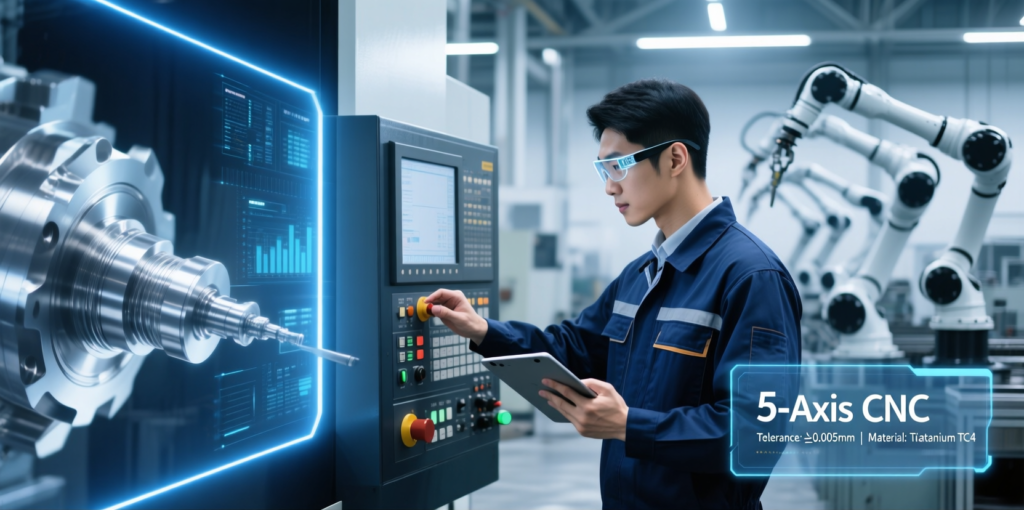
CNC machining (3‑axis to 5‑axis), wire EDM, sinker EDM, and precision grinding transform steel blocks into finished die components. Tolerances as tight as ±0.005 mm are routinely achieved by top Chinese die shops.

5. Assembly and Try‑Out

All components are assembled, and the die is mounted on a try‑out press. Sample parts are produced and inspected. First‑article inspection reports (FAI) document conformance to your print. Adjustments are made until the die consistently produces good parts.

6. Samplings and Approval

The final samples are sent to you for approval. Once you sign off, the die is prepared for shipment with rust protection, wooden crating, and detailed documentation (including spare parts list and maintenance manual).

Industries That Benefit from Customized China Dies

Almost any manufacturing sector can profit from custom tooling. Common applications include:

  • 汽车 – Body panels, structural brackets, engine components, interior trim.

  • 消费电子产品 – Mobile phone frames, laptop enclosures, connector housings.

  • Home appliances – Refrigerator liners, washing machine drums, air conditioner grilles.

  • Medical devices – Surgical instrument handles, syringe components, implantable device housings.

  • Industrial equipment – Gear blanks, pump housings, valve bodies.

  • 航空航天 – Bracket fittings, clip fasteners, interior panels.

Quality Assurance for Customized Dies

Quality is non‑negotiable when investing in a customized China die. Reputable suppliers follow rigorous inspection protocols:

  • Incoming material inspection – Certificates of analysis for steel and standard components.

  • In‑process inspection – CNC machined parts checked on CMM or with precision gauges.

  • Final inspection – Complete dimensional report, hardness test, and try‑out sample measurement.

  • Documentation – Material certificates, heat treatment logs, inspection reports, and try‑out videos.

Many custom die makers in China hold ISO 9001, IATF 16949, or ISO 13485 certifications, depending on the industries they serve.

Cost and Lead Time for Customized China Dies

The cost of a custom die varies widely based on complexity, size, steel grade, and required precision. A simple blanking die might cost 3,000‑5,000, while a large progressive die with 10 stations could exceed $50,000. However, even at the higher end, Chinese custom dies are typically 30‑50% less expensive than equivalent Western‑made tooling.

Lead times also depend on complexity:

  • Simple dies: 3‑4 weeks from design approval

  • Medium complexity: 5‑7 weeks

  • High‑complexity progressive or transfer dies: 8‑12 weeks

Rush services are sometimes available at extra cost.

Why Work with PartsMastery for Your Customized China Die?

With so many Chinese die makers advertising customization, finding a trustworthy partner can be challenging. PartsMastery stands out by combining deep engineering expertise, modern manufacturing equipment, and transparent communication. We treat every custom die as a unique project, working side by side with you from initial concept to final sampling.

Our team speaks fluent English and provides regular updates with photos, videos, and inspection data. You never have to wonder about the status of your tool. We also offer after‑sales support, including spare parts, repairs, and design modifications when your product evolves.

When you need a customized China die that fits your part perfectly, your budget, and your timeline, PartsMastery delivers.

Ready to start your custom die project?

📞 Phone / WhatsApp / WeChat: +86 13530838604
🌐 Websitehttps://partsmastery.com

联系方式 PartsMastery today. Let us engineer the perfect die for your manufacturing success—precision, reliability, and partnership from China to the world.

联系我们

    您所在的行业 *

    上传 2D/3D 图纸

    上传文件,立即获得报价(请附上任何格式的二维 CAD 图纸和三维 CAD 模型,包括 STEP、IGES、DWG、PDF、STL、ZIP 等)。.

    最大文件大小:20MB

    项目详情(请包括:部件名称/数量/材料/颜色/表面处理)