






General-purpose plastics such as ABS, nylon and POM often fail to meet strict requirements in high-end manufacturing sectors including aerospace, precision electronics, medical devices and industrial automation. As a premium thermoplastic material, Ultem stands out with well-balanced comprehensive properties and has become a top choice for precision component design. This article comprehensively introduces Ultem from its basic definition, core features, mainstream grades, CNC machining, pros and cons, application scenarios and material selection tips, helping industry practitioners fully understand this high-performance plastic.
1. Basic Introduction: Material Composition & Forms
Many people confuse Ultem with PEI. To clarify: Ultem is the commercial brand name for Polyetherimide (PEI), an amorphous high-performance engineering thermoplastic developed for harsh working conditions that ordinary plastics cannot handle.
Different from semi-crystalline plastics like PEEK, PEI (Ultem) has no regular crystal structure. This feature delivers highly predictable dimensional stability and stable performance during long-term service and processing. Its molecular structure consists of imide groups and ether groups. The imide structure brings outstanding thermal stability and flame retardancy, while the ether structure improves toughness and machinability. The combination of these two structures gives Ultem its all-round excellent performance.
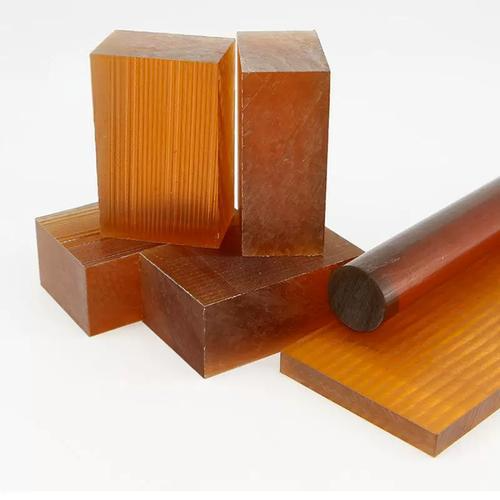
Ultem is available in various raw material forms to fit different production processes. For CNC machining, sheet, rod and solid block are the most widely used blanks. For injection molding, pellet resin is the standard form. Glass fiber reinforced grades are also available to enhance rigidity, structural strength and heat distortion resistance for heavy-load applications.
2. Four Core Performance Advantages of Ultem
Ultem gains wide recognition in high-end manufacturing mainly thanks to its four distinctive superior properties.
2.1 Outstanding High Temperature Resistance
High heat resistance is the most iconic advantage of Ultem. It features a high glass transition temperature and will not soften or deform under continuous high temperature or repeated thermal cycling. For electronic components close to heat sources, industrial equipment parts and automotive components, this property maintains stable shape and precision for a long service life, which ordinary engineering plastics cannot match.
2.2 High Mechanical Strength & Excellent Dimensional Stability
Ultem delivers good tensile strength and rigidity, capable of supporting most small and medium structural parts while realizing lightweight design. Meanwhile, it has extremely low moisture absorption, so no expansion or dimensional deviation will be caused by humidity changes. It is an ideal material for precision connectors, tooling fixtures and equipment frames with tight tolerance requirements.
2.3 Built-in Insulation & Flame Retardancy
Ultem works as a premium insulating substrate in the electrical and electronic industry. Its excellent dielectric properties effectively prevent electric leakage and electromagnetic interference to protect circuits and delicate components. In addition, it is inherently flame-retardant with extremely low smoke emission during combustion. No extra flame retardant additives are needed, so it fully complies with strict safety standards for aerospace, rail transit and medical equipment.
2.4 Reliable Chemical Resistance
Ultem resists erosion from grease, household detergents, alcohols and most common industrial fluids, avoiding premature aging in long-term contact. Combined with low water absorption, it performs stably in humid environments and sterile scenarios requiring frequent disinfection, making it suitable for food processing and medical equipment.
3. Four Mainstream Ultem Grades & Application Scenarios
Manufacturers have launched a series of specialized Ultem grades to meet diverse performance and compliance demands across industries. Below are the four most popular types with clear positioning:
3.1 Ultem 1000 (General Purpose Grade)
This is the most popular pure resin grade without extra fillers. It features balanced and stable overall performance, widely used for equipment housings, insulating parts, small brackets and circuit connectors. It is the first choice for prototype production and standard mass production parts, normally supplied in classic amber sheets and rods.
3.2 Glass Fiber Reinforced Ultem
Glass fiber additives greatly improve rigidity, load-bearing capacity and heat distortion resistance. This grade is designed for heavy-duty structural components, industrial heavy fixtures and aerospace accessories. Note that glass fiber increases material abrasiveness, which will accelerate tool wear during machining and require higher-standard cutting tools and equipment.
3.3 Ultem 9085 (Aerospace & 3D Printing Grade)
Tailored for the aerospace industry, it meets aviation safety standards with flame retardancy, low smoke and low toxicity features. It is also a mainstream material for 3D printing, ideal for manufacturing lightweight, high-strength complex parts with internal flow channels and hollow structures.
3.4 Ultem 1010 (Medical & Food Contact Grade)
This grade is dedicated to high-temperature operation, repeated medical sterilization and food contact applications. It can withstand frequent cleaning and high-temperature disinfection, commonly used for medical device accessories, sterilization trays and food processing equipment components.
4. Practical CNC Machining Guide for Ultem
Ultem is compatible with all mainstream CNC processes including milling, turning, drilling and tapping. Benefiting from superior dimensional stability, it can be processed into thin-wall parts, micro holes and precision threads with high difficulty. Proper operation is essential to guarantee finished quality.
Ultem is harder than common plastics. Improper operation will cause tool marks, internal stress and minor deformation due to localized heat accumulation. Always use sharp cutting tools and firm workpiece clamping to reduce burrs and improve surface finish.
Two key points must be emphasized during machining: thermal management and stress relief. Reasonable feed rate and sharp tools help disperse cutting heat and avoid local overheating. For complex parts, heavy material removal and thin-wall designs, stress relief treatment before and after machining is recommended to prevent warping. For high-precision projects, DFM (Design for Manufacturability) review before mass production can effectively eliminate potential machining risks.
5. Advantages & Limitations of Ultem
No engineering material is universal. Analyze its strengths and weaknesses objectively to achieve accurate material selection according to actual working conditions.
5.1 Key Advantages
- Excellent high temperature resistance with stable performance under continuous heat exposure
- Superior dimensional stability to satisfy ultra-tight tolerance requirements for precision parts
- Inherent electrical insulation and flame retardancy for enhanced operational safety
- Outstanding lightweight effect, capable of replacing partial metal parts and simplifying secondary processing
5.2 Inherent Limitations
- Higher material cost: Far more expensive than general plastics like ABS, POM and nylon
- Higher machining requirements: Strict rules for cutting tools, parameters and temperature control
- Moderate impact resistance: Not suitable for parts under severe impact or continuous high-frequency vibration
- Limited chemical resistance: Vulnerable to strong alkali and chlorinated solvents; compatibility test is required before use
- Single appearance: Standard products are amber transparent; customized colors and surface decoration are difficult
6. Application Fields & Target Industries
With comprehensive performance, Ultem has been widely applied in various high-end manufacturing industries.
6.1 Typical Component Applications
- Electrical & Electronic Parts: Connectors, sockets, circuit brackets, sensor housings and insulating partitions
- Aerospace & Transportation Parts: Aircraft interior parts, lightweight supports, pipelines and fasteners
- Medical Accessories: Surgical instrument parts, medical device housings, sterilization trays and operating handles
- Industrial Precision Fixtures: Positioning jigs, testing fixtures and high-temperature equipment shells
- Automotive & Robot Parts: Vehicle sensor housings, insulating assemblies and robot brackets
6.2 Main Covered Industries
Ultem components are widely used in semiconductor, industrial automation, telecommunication, robotics, aerospace, medical devices, new energy vehicles, oil & gas and high-end consumer goods. It mainly solves the failure problems of ordinary plastics under high temperature, high pressure and heavy electrical load.
7. Comparison with Mainstream Plastics & Material Selection Ideas
Engineers often compare Ultem with PEEK, PPSU, PC and nylon during material selection. Here is a clear reference:
Ultem VS PEEK: Both are top-tier high-performance plastics. PEEK has better wear resistance and strong chemical resistance, more suitable for heavy-load and friction parts. Ultem takes advantages in electrical insulation, flame retardancy and cost performance, ideal for precision insulating electronic parts.
Ultem VS PPSU: PPSU features higher toughness and better resistance to repeated steam sterilization, mainly used for impact-resistant parts in medical and food industries. Ultem delivers better high-temperature dimensional stability, flame retardancy and insulation, preferred for aerospace and electronic precision components.
Ultem VS PC / POM / Nylon: These are cost-effective general engineering plastics for normal temperature and conventional load scenarios. When parts face high temperature, flame retardant or ultra-high precision requirements, Ultem will be the better choice.
8. 5-Step Material Selection Process
Follow this standard process to select the proper Ultem grade by combining working conditions, production process and budget:
- Evaluate working environment: Confirm operating temperature, contact media, humidity and electrical load to verify if Ultem is applicable
- Match suitable grade: Choose Ultem 1000 for general parts, glass fiber reinforced grade for high-rigidity structures, 9085 for aerospace and 1010 for medical & food contact scenarios
- Combine processing technology: Plan CNC solutions in advance for thin walls, micro holes and tight tolerance parts to control cutting heat and internal stress
- Balance performance and cost: Select low-cost general plastics for low-demand working conditions; use Ultem only when ordinary plastics cannot meet core requirements
- Complete DFM review: Check drawings, tolerance and material compliance before formal production to avoid design and manufacturing risks
9. Frequently Asked Questions (FAQ)
Q1: Are Ultem and PEI the same material?
A1: Yes. PEI is the chemical name Polyetherimide, while Ultem is its well-known commercial brand. The two terms refer to the same material in the industry.
Q2: Is Ultem plastic or metal?
A2: Ultem is a high-performance thermoplastic. It is widely used as a lightweight alternative to metal and has unique insulating properties that metal does not have.
Q3: Can Ultem be used for CNC machining and 3D printing?
A3: Yes. All Ultem grades support precision CNC machining. Grades like Ultem 9085 and 1010 are also popular for 3D printing to produce complex shaped parts.
Q4: Does Ultem have UV resistance?
A4: It only has moderate UV resistance and cannot be used outdoors for a long time without protection. Add protective coating or select other materials for outdoor applications.
Q5: Is Ultem easy to break?
A5: It has sufficient strength under normal working conditions. However, its impact resistance is average. Avoid sharp corners and ultra-thin sections which cause stress concentration in part design.
Q6: Why is Ultem relatively expensive?
A6: It integrates multiple high-end properties including high heat resistance, flame retardancy, insulation and high dimensional stability. Complex production processes lead to higher raw material costs than ordinary plastics.
Conclusion
As a well-rounded high-performance engineering plastic, Ultem (PEI) occupies an important position in high-end precision manufacturing relying on heat resistance, insulation, flame retardancy and excellent dimensional stability. It can be processed into high-precision parts via CNC machining and complex structures via 3D printing, serving aerospace, medical, electronic and automation industries extensively.
Meanwhile, its higher cost and limited impact resistance mean Ultem is not a one-size-fits-all material. In practical projects, comprehensively consider working conditions, processing methods and budget to maximize the value of Ultem.