





Rapid Tooling and Rapid Prototyping: Accelerating Innovation from Concept to Production
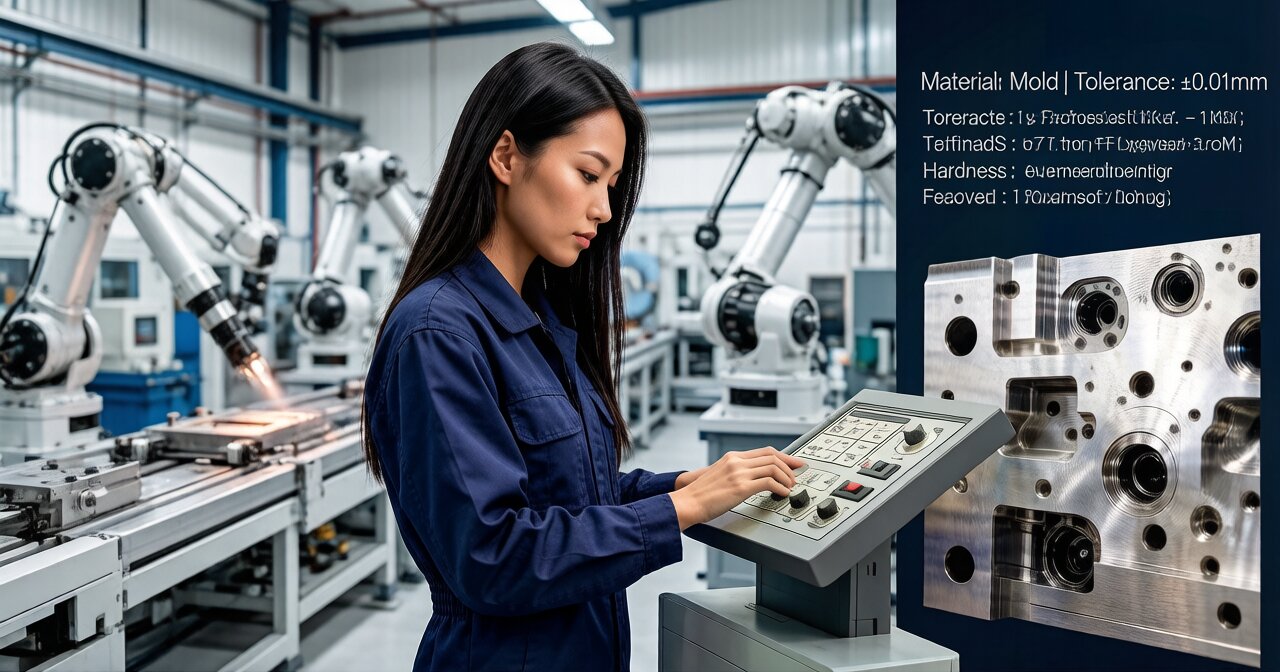
In today’s competitive manufacturing landscape, speed to market is often the difference between market leadership and missed opportunity. Companies face relentless pressure to shorten development cycles, validate designs quickly, and scale to production without compromising quality. This is where rapid tooling and rapid prototyping converge to create a powerful pathway from concept to commercial reality.
At PartsMastery, we understand that the journey from initial idea to production-ready component is rarely linear. It requires iteration, validation, and strategic decision-making at every stage. By leveraging advanced rapid prototyping techniques and strategic rapid tooling solutions, manufacturers can compress development timelines, reduce risk, and achieve production confidence earlier in the product lifecycle.
Understanding Rapid Prototyping: The Foundation of Iterative Development
Rapid prototyping encompasses a suite of technologies designed to produce physical parts directly from digital models with minimal lead time. The objective is not necessarily to create production-grade components, but rather to enable validation, testing, and refinement before committing to expensive production tooling.
Additive Manufacturing: 3D printing technologies have revolutionized rapid prototyping by enabling the production of complex geometries that would be difficult or impossible to machine. Stereolithography (SLA) produces high-resolution parts with smooth surface finishes, ideal for form and fit testing. Selective laser sintering (SLS) creates functional prototypes from engineering-grade materials, suitable for functional testing. Fused deposition modeling (FDM) offers cost-effective prototyping for larger components.
CNC Machined Prototypes: For applications requiring material properties that closely resemble production components, CNC machining from solid stock remains the preferred approach. Machined prototypes from materials such as aluminum, ABS, polycarbonate, or PEEK exhibit mechanical properties identical to production components, enabling meaningful functional testing. While slightly slower than additive processes, machined prototypes provide valuable data on performance under real-world conditions.
The Value of Rapid Prototyping: The true value of rapid prototyping lies not in the technology itself but in what it enables. Early-stage prototypes allow designers to evaluate ergonomics, fit, and aesthetics before tooling begins. Functional prototypes enable engineering validation, revealing performance characteristics that may not be apparent in digital simulations. Iterative prototyping supports design refinement, allowing multiple design variations to be tested and compared quickly. Perhaps most importantly, prototyping reduces risk by identifying potential issues when they are least expensive to address.
Rapid Tooling: Bridging Prototype and Production
Where rapid prototyping answers the question “Does the design work?”, rapid tooling addresses the next critical question: “How will we produce it at scale?” Rapid tooling encompasses manufacturing approaches that produce functional molds or tooling in significantly less time than conventional production tooling.
Aluminum Tooling: Aluminum molds represent one of the most common rapid tooling solutions. Machined from aluminum blocks rather than hardened steel, aluminum tools can be produced in weeks rather than months. While aluminum molds have lower wear resistance than steel tools, they are capable of producing thousands to tens of thousands of parts—sufficient for market validation, pilot production, and bridge manufacturing while steel production tools are completed.
The advantages of aluminum tooling extend beyond lead time. Aluminum’s superior thermal conductivity enables faster cooling cycles, often resulting in shorter cycle times than comparable steel tools. For low to medium production volumes, aluminum tools offer an optimal balance of speed, cost, and capability.
Soft Tooling: Beyond aluminum, rapid tooling encompasses a range of “soft” tool materials including pre-hardened steels and composite tooling. Pre-hardened steel tools offer longer life than aluminum while maintaining shorter lead times than fully hardened steel tools. Composite molds, produced through additive or cast processes, serve specialized applications such as prototype injection molding or thermoforming.
Bridge Tooling: A strategic approach to rapid tooling involves bridge tools—production-quality molds designed for intermediate volumes that serve as the bridge between prototype development and high-volume production. Bridge tools enable manufacturers to:
-
Validate production processes before committing to high-volume tooling
-
Produce market-test quantities for customer feedback and demand assessment
-
Generate revenue while long-lead production tools are being completed
-
Refine manufacturing processes based on actual production experience
Applications Across Industries
The combination of rapid prototyping and rapid tooling serves diverse industries with distinct requirements:
Medical Device Development: Medical device manufacturers face stringent regulatory requirements that demand rigorous validation. Rapid prototyping enables early usability testing with clinicians, iterative refinement based on feedback, and functional testing under simulated use conditions. Rapid tooling supports pilot production for clinical trials and regulatory submissions, accelerating the pathway to market while maintaining quality standards.
Automotive: The automotive industry’s compressed development cycles demand rapid validation of components ranging from interior trim to under-hood systems. Prototyping enables fit and function testing across vehicle assemblies, while rapid tooling supports production of service parts, low-volume specialty components, and pilot production for new vehicle programs.
Consumer Products: Consumer goods manufacturers face constant pressure to innovate while managing risk. Rapid prototyping enables aesthetic evaluation, user testing, and packaging validation. Rapid tooling supports market testing with production-representative parts, enabling demand assessment before committing to high-volume production tooling.
Aerospace and Defense: For applications where performance and reliability are paramount, rapid prototyping enables extensive testing and validation before production commitments. Rapid tooling supports low-volume production of specialized components and service parts where traditional tooling economics may not justify production tooling.
Material Considerations in Rapid Processes
The materials used in rapid prototyping and rapid tooling directly influence the value of the insights gained.
Prototyping Materials: Additive manufacturing materials range from standard polymers for aesthetic prototypes to engineering-grade materials with properties approaching production materials. Composite-filled resins offer enhanced mechanical properties. High-temperature materials enable testing of components intended for demanding environments.
Tooling Materials: Rapid tooling material selection balances speed against capability. Aluminum provides the fastest turnaround with excellent thermal performance. Pre-hardened steel offers longer tool life with moderate lead times. Hybrid approaches—such as steel cavities in aluminum bases—optimize performance in critical areas while maintaining rapid delivery.
The Strategic Value of Partnering with Experts
Successful implementation of rapid prototyping and rapid tooling requires more than access to equipment. It demands expertise in design for manufacturability, material selection, and process planning.
An experienced partner evaluates each project’s unique requirements—development timeline, validation needs, production volume expectations, and quality standards—to recommend the optimal approach. Early engagement enables identification of potential manufacturing challenges before they become costly problems. Strategic planning ensures that insights gained during prototyping effectively inform production tooling decisions.
The PartsMastery Approach
At PartsMastery, we view rapid prototyping and rapid tooling as integrated disciplines that together accelerate product development. Our approach begins with understanding your development objectives, timeline requirements, and production goals. We then recommend a tailored strategy—whether additive prototyping for early validation, machined prototypes for functional testing, aluminum tooling for pilot production, or bridge tooling for market entry.
Throughout the process, we maintain focus on the ultimate objective: successful production. Insights gained during prototyping inform tooling design. Experiences with rapid tooling guide decisions about production tooling. Quality systems ensure that every component—whether prototype, pilot production, or bridge tooling—meets the specifications required for meaningful validation.
Conclusion
In an era where speed to market defines competitive advantage, rapid prototyping and rapid tooling have become essential capabilities for product development. They enable manufacturers to validate designs quickly, refine iteratively, and scale to production with confidence. By bridging the gap between concept and commercial production, these disciplines transform development timelines from barriers into strategic advantages.
Whether you are developing a novel medical device, launching a consumer product, or optimizing automotive components, the right approach to rapid prototyping and rapid tooling accelerates your journey to market while reducing risk. With the right expertise and strategic planning, speed and quality are not competing priorities—they are complementary objectives achieved through disciplined development processes.