






The unit cost of metal 3D printed parts ranges from $50 to over $500, but this wide price gap has surprisingly little connection to the metal material itself. In metal additive manufacturing pricing, equipment runtime, support structures and post-processing work serve as the core cost drivers, while raw material expenses only take a secondary role.
This guide breaks down every factor that shapes the final quote of metal 3D printing. It will help you estimate costs before submitting design files, and share practical strategies to cut expenses through design optimization.
1. Cost Structure of Metal Additive Manufacturing
Contrary to the common “price per gram” misconception, metal additive manufacturing follows a layered cost model with four core components.
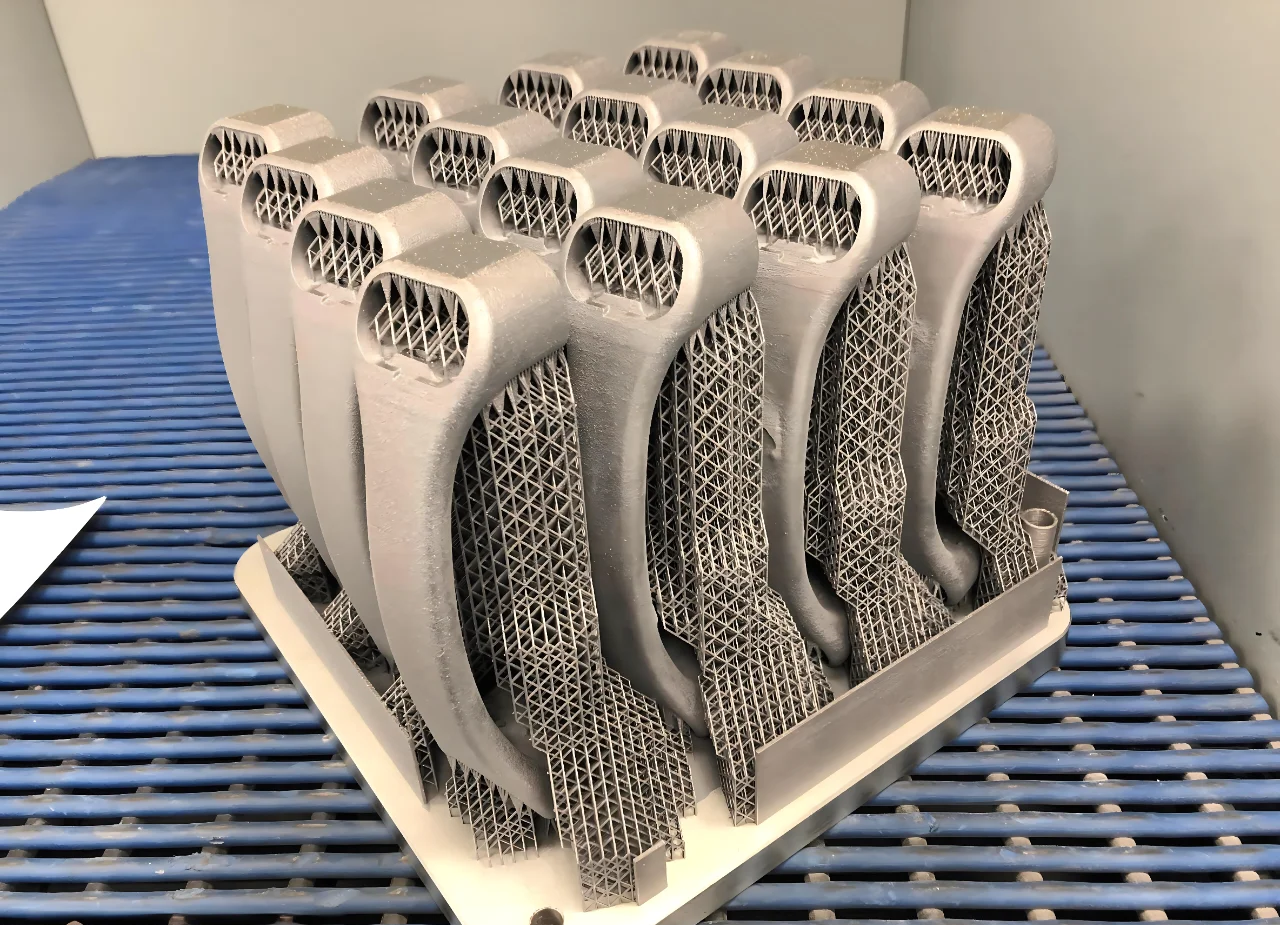
- Equipment runtime: Laser scanning time across each layer makes up the largest cost share for most parts.
- Engineering review: File verification, process parameter setup and build simulation all require manual work from professional engineers before printing starts.
- Powder material: Metal powder carries a high unit price, but it rarely becomes the largest expense item.
- Post-processing: Stress relief, support removal, heat treatment and surface finishing mostly rely on manual labor.
Many practitioners assume material decides the final price, but real production data tells a different story. Two parts with exactly the same weight can differ several times in total cost. The gap comes from design: one has a simple, easy-to-fabricate structure, while the other requires longer laser paths, dense supports and extensive manual finishing work.
2. Actual Pricing Range for Metal 3D Printed Parts
For outsourced metal additive manufacturing services, the per-part quote typically falls between $50 and over $500. The exact value depends on material, size and geometric complexity. This range reflects real industry service pricing, not a calculation from a single formula.
| Influencing Factor | Impact on Final Pricing |
| Part size and weight | Higher material use and longer scanning time directly push up manufacturing costs. |
| Geometric complexity | Overhangs, support needs and internal cavities raise labor costs for both printing and finishing. |
| Alloy type | Titanium and special superalloys cost significantly more than stainless steel or aluminum. |
| Production quantity | Low-volume runs have high per-unit costs; shared build platforms effectively spread fixed expenses. |
Even tiny parts do not come at an extremely low price, because the base cost of the build plate and machine operation spreads across the entire production batch. Traditional metal AM service providers usually set a minimum order threshold of over $500, meaning one small prototype still covers the base cost of the full build plate. Industrial metal 3D printing systems themselves cost hundreds of thousands to millions of dollars, which sets a baseline cost before the first layer is even scanned.
3. Material Costs: Price Tiers of Common Alloys
Metal powder is priced per kilogram, and the alloy choice sets the baseline of material costs.
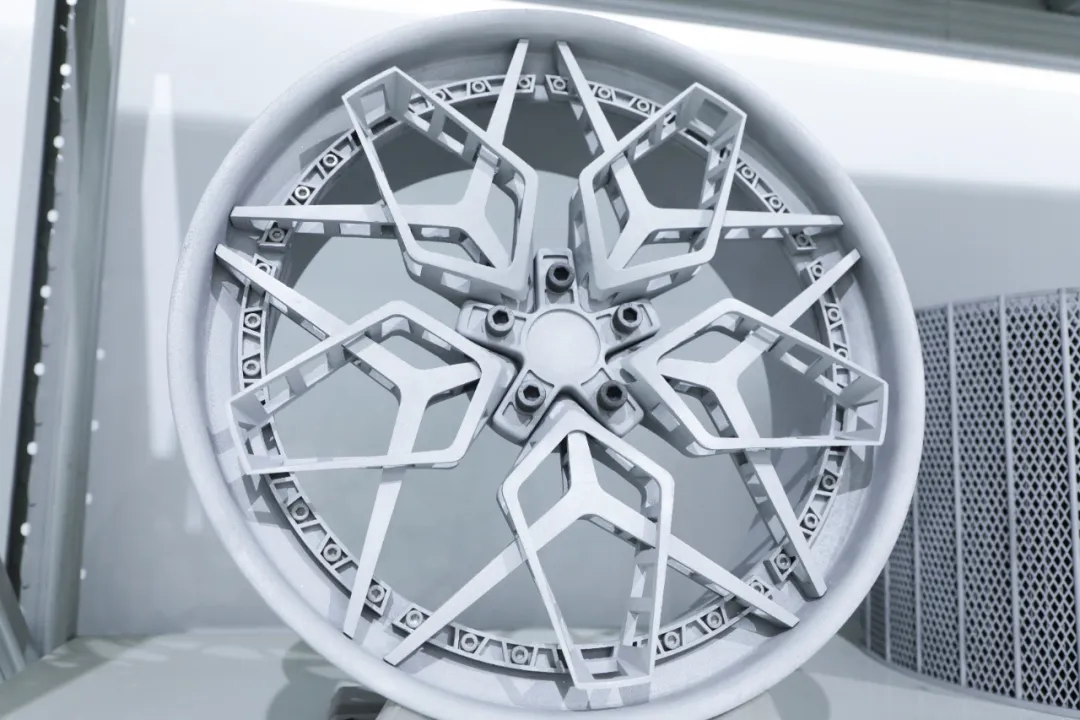
| Alloy Type | Price Tier | Key Notes |
| 316L Stainless Steel | Entry (lowest) | Stable and reliable process performance; the most cost-effective entry point for metal AM. |
| AlSi10Mg Aluminum | Mid-range | Lightweight performance; higher costs come from alloy composition control and deformation management. |
| Ti-6Al-4V Titanium | High | Expensive powder, plus inert gas handling and special process requirements. |
| Inconel & Specialty Alloys | Highest | Very high powder cost and strict process control standards. |
Metal powder generally costs $200 to over $500 per kilogram, with titanium-based and nickel-based specialty powders at the top end. Unmelted powder is usually recycled during production to lower actual material consumption. However, powder handling, sieving and inert gas consumption in SLM processes add extra costs that do not show up in the raw per-kilogram price.
4. Machine Time and Geometry: The Real Cost Driver
Print duration depends on laser travel distance and total layer count, not just part weight. Two structures with the same mass can have very different printing costs.
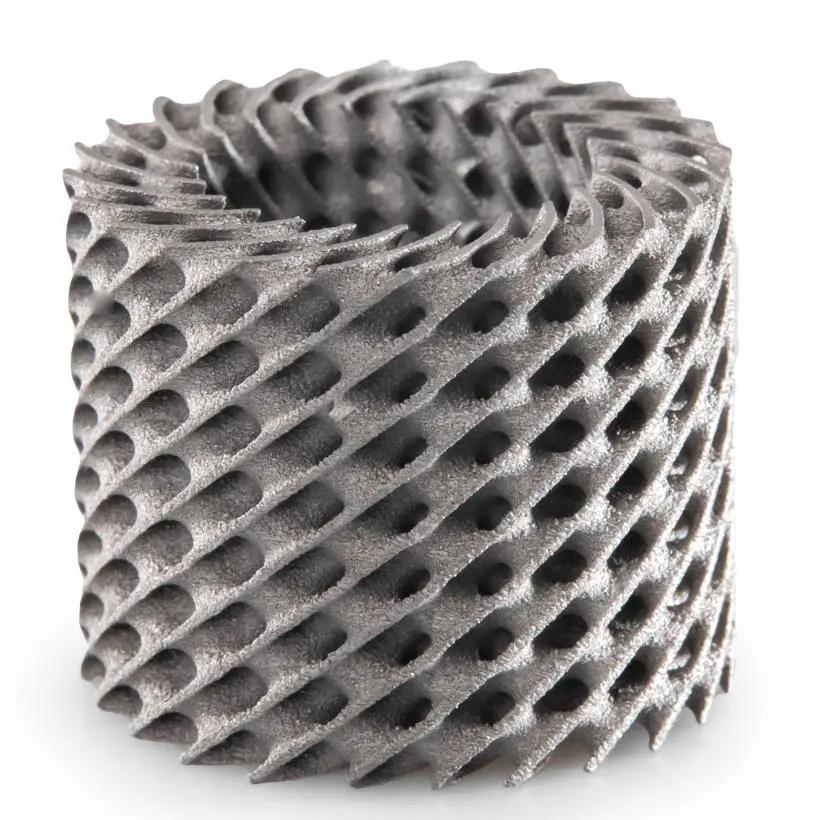
Take a solid cube and a complex lattice part of the same weight as an example. The solid cube requires longer laser scanning paths and generates higher internal stress, which may require multiple print attempts and extra post-processing to meet specifications. The lattice structure prints faster and needs far fewer supports.
Build resolution amplifies this effect. High-resolution mode adds more layers, extends build time and raises costs even when the geometry stays exactly the same.
Practical design rule: Minimize solid cross-sections and laser travel distance as long as functional requirements allow. Printing thin walls and shells costs much less than printing thick, solid versions of the same part.
5. Hidden Costs of Support Structures
In SLM / DMLS metal 3D printing processes, parts are welded directly to the build plate. Support structures hold overhanging features in place and conduct heat during scanning.
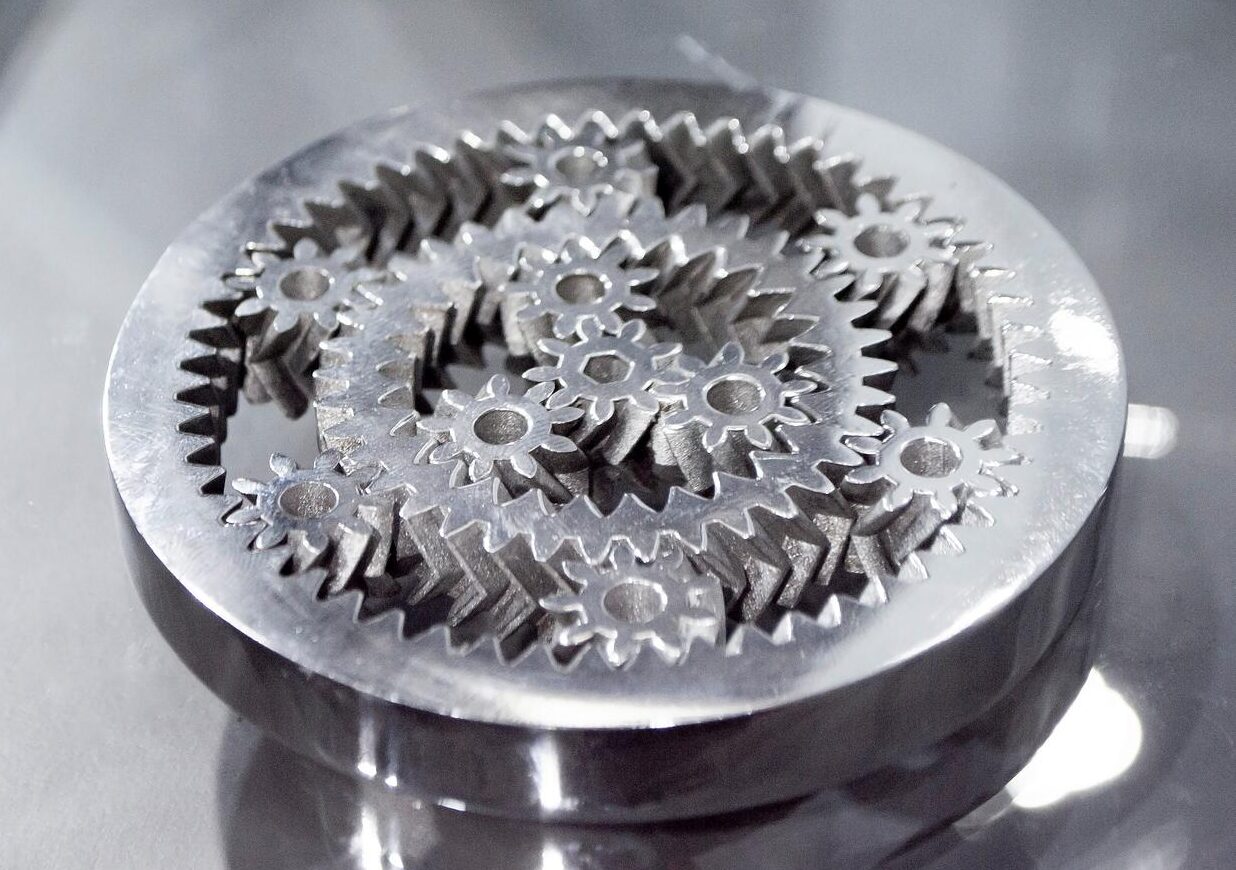
Support structures add costs in three ways at the same time:
- Extra powder consumed by the supports themselves
- Additional machine scan time to print the supports
- Manual labor required for removal after printing
The standard workflow runs stress relief heat treatment before support removal, since supports are welded rather than clamped. This step consumes significant labor and furnace resources. Reducing support volume by 10% to 15% through orientation changes or geometry tweaks can noticeably cut total costs, while also reducing marks left on part surfaces.
6. Build Density and Nesting Efficiency
Single-part cost changes with the number of parts sharing the build volume in one run. You can simplify the relationship as:
A sparsely packed build spreads fixed machine time and setup costs across fewer parts, which raises the price of each piece. Grouping parts, adjusting orientation for tight packing, and combining compatible builds all improve plate utilization and lower fixed costs per part. This is why a single part can cost much more than the same geometry printed in a neatly arranged batch.
7. Post-Processing: The Invisible Labor Cost
Roughly 99% of metal AM parts require post-processing, and most of this work is done by hand.
- Stress relief: Heat treatment before support removal to release internal stress from printing.
- Support removal: Cut, machine or manually take supports off; welded supports take much longer to remove.
- Heat treatment & machining: Extra operations are usually needed to meet hardness, tolerance or flatness requirements.
- Surface finishing: Sandblasting, polishing or coating to reach the required surface roughness.
Final costs often come down to labor, not material. A part with a $50 print price can reach $120 to $200 in total after stress relief, support removal and machining. Always confirm whether a quote covers a finished part or just an as-printed raw part.
8. Lead Time as a Hidden Cost
Quotation and scheduling carry their own costs. Traditional metal AM service providers usually take 24 to 72 hours to issue a quote with manual review, and ship parts 7 to 14 days later. This delay is not free: engineering work pauses, and validation plans and test schedules all wait for parts to arrive.
Automated quoting shrinks this window dramatically. Instant quoting with built-in DFM feedback returns real pricing and geometry suggestions in minutes, so production can start much sooner. The part cost may stay the same, but the project loses far less time.
9. How to Lower Metal 3D Printing Costs
Design choices reduce costs more effectively than supplier negotiations.
- Use shells, not solids: One applied engineering case cut the cost of a redesigned bottle opener by around 85% by hollowing the body, removing thick cross-sections and eliminating external supports.
- Cut down supports: Adjust overhang orientation and design self-supporting angles; every 10–15% reduction in support volume lowers both build and finishing costs.
- Improve nesting: Run compatible parts in one batch to spread machine runtime costs.
- Pick the right resolution: Stick to standard resolution unless the function explicitly requires higher detail.
- Run DFM checks: Catch issues like thin walls, cavities and unsupported spans before printing, not after a build failure.
A free DFM review spots these cost drivers in your CAD file before any powder is loaded into the machine.
10. Metal 3D Printing vs CNC Machining
The two processes overlap for metal parts, and which one costs less depends on part geometry.
| Condition | Prefer CNC Machining | Prefer SLM 3D Printing |
| Simple, thick solid parts | ✅ Faster and lower cost | Requires long builds and carries stress risks |
| Strict tolerances and flat surfaces | ✅ Achievable directly from stock | Requires extra machining operations |
| Internal channels and lattices | Impossible or prohibitively expensive | ✅ Native one-piece strength |
| Small, complex shapes | Excessive tool wear and setup | ✅ No tooling required |
| Consolidated assemblies | Requires multiple setups | ✅ Printed as a single piece |
Machining usually works better for solid, blocky parts. SLM shows its strengths for parts with internal cooling channels, topology-optimized lattices and other features that cannot be machined. The key deciding factor is geometry, not material price.
11. PartsMastery’s Approach to Metal 3D Printing Costs
PartsMastery delivers SLM-based metal 3D printing on the same platform used for CNC machining and other processes, with instant quoting from uploaded CAD files. The shown per-part price already covers materials, processing and standard surface finish — what you see is what you pay, with no extra charges for support removal or basic cleanup.
The free DFM (Design for Manufacturability) review identifies geometry issues that drive up costs: unsupported overhangs, walls too thin to print, and spans prone to warping. All manufacturing processes follow ISO 9001 / 13485 / IATF 16949 standards, and metal 3D printing lead times can be as fast as one day for suitable files.
With nearly zero setup cost, SLM works for one-off prototypes and scales smoothly to low-volume production. The same platform also lets you compare SLM and CNC options before you make a final decision.
Final Takeaways
Metal 3D printing cost depends far more on machine runtime, support structures and post-processing than on the metal itself. Per-part prices range from $50 to over $500 based on geometry, alloy and build density, and small prototypes often have a minimum order cost far above the raw material value.
The key to cost control sits in the design stage: use shells instead of solids, reduce supports, optimize plate packing, and run DFM checks before quoting. CNC usually costs less for simple, thick parts, while SLM wins for complex or unmachinable geometries.
For a real-world price on your metal parts, upload your CAD file for an instant metal 3D printing quote, or run a free DFM check to spot support and geometry cost drivers before placing an order.
FAQ
Why is metal 3D printing so much more expensive than plastic 3D printing?
Beyond longer print times, metal additive manufacturing requires inert gas chambers, high-power fiber lasers, powder recovery systems, stress relief furnaces and welded supports. These fixed systems and post-processing steps make metal AM far more costly than polymer printing, even for small parts.
What is the typical cost of a single metal 3D printed part?
Outsourced service pricing usually runs $50 to over $500 per part, depending on size, complexity, alloy and surface finish. Traditional custom shops often set a $500+ minimum order to cover the base cost of a single prototype build.
Is material the highest cost in metal 3D printing?
No. Machine time and post-processing labor usually exceed material costs. The price gap between two parts of the same mass comes mostly from geometry and support volume, not powder usage.
What is the cheapest metal alloy for 3D printing?
316L stainless steel is the lowest-cost entry material, with stable process performance and minimal overhead. AlSi10Mg aluminum sits in the mid-range, while titanium and Inconel cost notably more.
When should I choose CNC machining over metal 3D printing?
Go with CNC machining for simple, thick solid parts or parts with tight tolerance requirements — it is faster and lower cost. Choose SLM for internal channels, lattices and complex shapes that cannot be produced from solid billet.