





Moule sur mesure
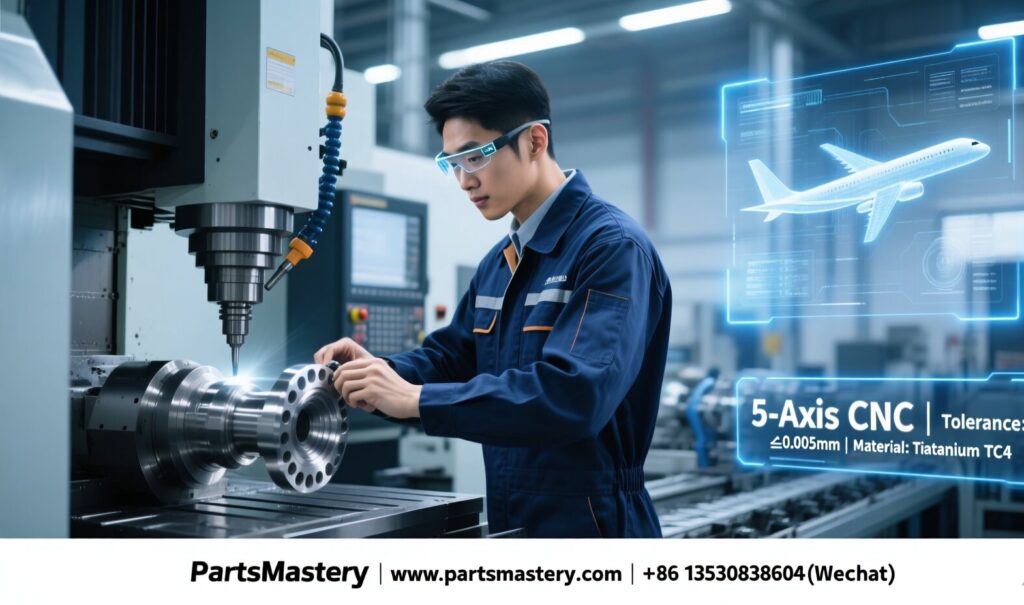
Dans le paysage manufacturier concurrentiel d'aujourd'hui, la qualité de votre outillage de production peut faire ou défaire le succès de votre produit. Un moule sur mesure n'est pas seulement un accessoire de fabrication, c'est le fondement même sur lequel reposent la précision, la cohérence et l'évolutivité. À l'adresse PartsMastery, Nous comprenons que chaque composant raconte une histoire unique et que cette histoire mérite un moule conçu spécifiquement pour répondre à ses exigences.
Qu'est-ce qu'un moule sur mesure ?
Un moule sur mesure est un outil d'ingénierie de précision conçu pour produire des pièces avec des spécifications exactes adaptées à un produit particulier. Contrairement aux moules standard, qui offrent une flexibilité limitée et sont produits en série pour des applications génériques, les moules sur mesure sont créés dès le départ pour répondre à vos besoins uniques en matière de conception, de matériaux et de production. Ces moules peuvent être fabriqués à partir d'acier à outils de haute qualité, d'aluminium ou d'autres matériaux spécialisés, en fonction du volume de production prévu et de la complexité de la pièce. Ils atteignent généralement des tolérances aussi étroites que ±0,01 mm, ce qui garantit que chaque pièce répond à vos exigences dimensionnelles avec une cohérence inébranlable.
Le processus de moulage par injection commence par un modèle 3D détaillé de la pièce souhaitée. Les ingénieurs conçoivent ensuite la cavité et le noyau du moule, les deux principaux composants qui définissent la forme externe et interne du produit fini. Le plastique fondu est injecté sous haute pression dans la cavité du moule, où il refroidit et se solidifie, prenant la forme exacte du moule. Une fois refroidie, des broches d'éjection poussent la pièce finie vers l'extérieur, et le moule est prêt pour le cycle suivant.
Pourquoi choisir des moules sur mesure plutôt qu'un outillage standard ?
Le choix entre les moules personnalisés et les moules standard implique une évaluation minutieuse de l'investissement initial par rapport à la valeur à long terme. Les moules standard permettent généralement de réaliser des économies de 30 à 50 % sur l'outillage initial, ce qui les rend intéressants pour les projets à court terme ou à budget limité. Toutefois, les moules sur mesure offrent une précision supérieure, une flexibilité de production et une rentabilité à long terme que l'outillage standard ne peut tout simplement pas égaler.
Les moules sur mesure sont conçus pour respecter des tolérances dimensionnelles strictes, ce qui permet de réduire considérablement les taux de défectuosité. Par exemple, un équipementier automobile qui utilisait un moule standard était confronté à des dimensions de pièces incohérentes et à des taux de rejet élevés. Après avoir investi dans un moule sur mesure, son taux de défectuosité a chuté de 35 % et ses coûts de production globaux ont diminué de manière significative. De même, un fabricant d'emballages a réduit le temps de cycle de 20 % après avoir adopté un moule sur mesure doté d'un système de refroidissement optimisé, ce qui lui a permis d'accroître sa production sans augmenter ses coûts de main-d'œuvre.
Au-delà de la précision, les moules sur mesure offrent une durée de vie plus longue. Alors que les moules standard durent généralement de 100 000 à 500 000 cycles, les moules en acier sur mesure de haute qualité peuvent supporter de 500 000 à plus de 10 millions de cycles avec un entretien adéquat. Cette longévité se traduit directement par une réduction des coûts d'outillage par pièce pendant toute la durée de votre programme de production.
Le processus de conception et de fabrication
La création d'un moule sur mesure commence bien avant que le métal ne soit découpé. Un examen complet de la conception pour la fabrication (DFM) est la première étape cruciale. Une analyse DFM bien exécutée garantit que la conception des pièces respecte les contraintes et les règles de conception standard du moulage par injection, et peut réduire les temps de cycle jusqu'à 50 % tout en améliorant l'aspect cosmétique et le rendement du processus. Le processus DFM évalue l'uniformité de l'épaisseur des parois, les angles de dépouille, l'emplacement des portes et la conception des canaux de refroidissement, autant d'éléments qui ont un impact direct sur la qualité de la pièce finale et l'efficacité de la production.
Une fois la conception approuvée, le processus de fabrication fait appel à des techniques avancées, notamment l'usinage CNC, l'usinage par décharge électrique (EDM) et le meulage de précision, afin d'obtenir les tolérances requises. Le choix du matériau du moule est tout aussi important. Pour le prototypage et les petites séries, les moules en aluminium offrent des délais d'exécution plus courts et des coûts initiaux moins élevés, allant généralement de $3 000 à $10 000 pour des séries de 500 à 1 000 unités. Pour les gros volumes dépassant 100 000 unités, les moules en acier trempé sont le meilleur choix, avec des coûts allant de $20 000 à $100 000 en fonction du nombre de cavités et de la complexité.
Les moules multi-empreintes représentent une autre considération stratégique. Alors qu'un moule à quatre empreintes coûte environ 1,8 fois plus cher qu'un moule équivalent à une seule empreinte, il permet de réduire les dépenses d'outillage par pièce de 60 % à des volumes élevés. Les moules multi-empreintes sont donc particulièrement rentables pour les volumes de production annuels supérieurs à 100 000 unités.
Sélection des matériaux : Adapter les propriétés aux applications
La réussite de tout projet de moule personnalisé dépend fortement de la sélection du matériau plastique adapté à votre application. Chaque matériau offre des propriétés distinctes qui influencent les performances, le coût et la fabricabilité des pièces.
Thermoplastiques tels que l'ABS, le polypropylène (PP) et le polycarbonate (PC) sont les matériaux les plus couramment utilisés dans le moulage par injection en raison de leur polyvalence, de leur recyclabilité et de leurs excellentes caractéristiques de traitement. Ils sont idéaux pour les produits de consommation, les emballages, les boîtiers et les composants à usage général.
Pour les applications nécessitant une stabilité thermique et une biocompatibilité exceptionnelles, caoutchouc silicone liquide (LSR) offre une résistance aux températures extrêmes de -50°C à plus de 200°C, ainsi qu'une conformité FDA pour les applications médicales et en contact avec les aliments. Le LSR est largement utilisé dans les dispositifs médicaux, les produits de soins pour bébés, les joints et les garnitures d'étanchéité.
Plastiques techniques comme le nylon (PA), le polyoxyméthylène (POM) et le PEEK offrent une résistance mécanique, une stabilité thermique et une précision dimensionnelle supérieures. Ces matériaux sont plus performants que les thermoplastiques standard dans des environnements exigeants tels que les composants automobiles sous le capot, les connecteurs électriques, les engrenages et les pièces aérospatiales. Le PEEK, en particulier, offre une résistance chimique exceptionnelle et des performances à haute température, avec une température de déflexion thermique de 160°C et une résistance à la traction d'environ 95 MPa.
Élastomères thermoplastiques (TPE) combinent l'élasticité du caoutchouc et la facilité de traitement des plastiques, ce qui les rend idéaux pour le surmoulage et la création de surfaces à prise souple sur les outils, les poignées et les dispositifs portables.
Contrôle de la qualité et normes industrielles
La validation de la qualité des pièces moulées par injection commence bien avant la production, au stade de la conception du moule. Un moule bien conçu est la pierre angulaire d'une qualité constante des pièces, car il détermine la manière dont le matériau fondu s'écoule, se refroidit et se solidifie. La validation moderne de la qualité englobe trois domaines critiques :
Validation des matériaux implique des essais rigoureux pour confirmer que les matières premières répondent aux propriétés mécaniques, chimiques et thermiques spécifiées. Cela inclut la certification des matériaux (comme ISO 10993 pour la biocompatibilité des dispositifs médicaux ou UL 94 pour la résistance à la flamme dans l'électronique), des tests d'indice de fluidité pour assurer la cohérence entre les lots, et des tests mécaniques de résistance à la traction, de résistance aux chocs et de module de flexion.
Validation des processus établit que les variables telles que la température, la pression, le temps de cycle et la force de serrage du moule sont contrôlées dans des plages définies afin de produire des pièces cohérentes et de haute qualité. Cette norme s'aligne sur les normes internationales, notamment ISO 20457 pour les pièces moulées par injection et ISO 10350-1 pour l'acquisition de données comparatives sur les matériaux de moulage.
Contrôle dimensionnel vérifie que les pièces finies respectent les tolérances spécifiées, souvent à l'aide de machines à mesurer tridimensionnelles (MMT) et de systèmes d'inspection optique. Les principaux fabricants atteignent des tolérances aussi étroites que ±0,01 mm, ce qui garantit que chaque pièce s'adapte parfaitement à l'assemblage auquel elle est destinée.
Les industries qui s'appuient sur les moules sur mesure
Les moules d'injection sur mesure constituent l'épine dorsale de la fabrication de précision dans pratiquement tous les secteurs industriels :
Automobile - Elle produit des tableaux de bord, des pare-chocs, des composants de moteur, des panneaux d'habillage intérieur et des pièces structurelles légères. À mesure que l'adoption des véhicules électriques s'accélère, la demande de composants légers et moulés avec précision continue de croître.
Médical - Fabrication de seringues, d'instruments chirurgicaux, de composants prothétiques, de boîtiers de cartouches de diagnostic et de produits jetables à usage unique. Le moulage médical exige un respect strict des normes de la FDA et de la norme ISO 13485, souvent dans des salles blanches certifiées.
Électronique grand public - Crée des boîtiers précis pour les smartphones, les ordinateurs portables, les appareils portables et les composants internes. Ces moules doivent s'adapter à des géométries complexes et réaliser des finitions de surface impeccables tout en maintenant des tolérances dimensionnelles serrées.
Emballage - Développe des bouteilles, des récipients alimentaires, des bouchons, des fermetures et des boîtiers de protection sur mesure, avec une qualité constante sur des millions d'unités.
Équipement industriel - Produit des composants en plastique durables pour les machines, les outils et les systèmes industriels où la fiabilité et la répétabilité sont primordiales.
Options de finition de surface pour les moules personnalisés
L'état de surface d'un moule sur mesure a un impact direct sur l'aspect, le toucher et la fonctionnalité des pièces finies. Les finitions standard SPI (Society of the Plastics Industry) vont des surfaces polies très brillantes (grade SPI A) aux finitions mates et texturées (grade SPI D). Les finitions SPI A et B sont les plus lisses, avec une très faible rugosité de surface, mais elles entraînent des coûts de production plus élevés.
Pour les applications exigeant des qualités esthétiques spécifiques, les textures Mold-Tech offrent une large gamme d'options, y compris un grainage semblable à celui du bois ou du cuir, des surfaces caillouteuses et des motifs personnalisés. Au-delà des finitions standard, les moules sur mesure peuvent obtenir des finitions métalliques, des revêtements doux au toucher et d'autres traitements de surface spécialisés grâce à des techniques de post-traitement.
Le choix de la finition doit également tenir compte de la fonctionnalité. Les surfaces texturées, par exemple, nécessitent généralement des angles de dépouille plus importants - environ 1 degré de dépouille supplémentaire par 0,001 pouce de profondeur de texture - afin de garantir une éjection fiable des pièces sans endommager la surface.
Outillage rapide et moules à pont
Pour les développeurs de produits qui cherchent à accélérer la mise sur le marché sans s'engager dans un outillage de production à grande échelle, l'outillage rapide - également appelé outillage pont ou outillage prototype - offre une solution attrayante. Cette approche consiste à produire des volumes faibles à moyens de pièces à l'aide de moules fabriqués dans des matériaux moins durables tels que l'aluminium ou l'acier doux, en produisant généralement quelques centaines à quelques milliers d'unités avant que l'usure n'affecte la qualité.
L'outillage pont permet aux fabricants de produire des composants de qualité proche de la production pour les essais fonctionnels, l'approbation réglementaire ou l'entrée précoce sur le marché pendant que l'outillage permanent en acier trempé est en cours de finalisation. Cette stratégie est particulièrement précieuse pour les entreprises en phase de démarrage qui souhaitent valider leurs conceptions et réaliser leurs premières ventes sans épuiser leurs ressources, ainsi que pour les entreprises établies qui doivent faire face à des pics inattendus de la demande du marché.
Conclusion
Les moules sur mesure représentent un investissement stratégique dans l'excellence de la fabrication. Si les coûts initiaux peuvent dépasser ceux de l'outillage standard, les bénéfices en termes de précision, d'efficacité, de qualité des pièces et d'économies à long terme sont considérables. Qu'il s'agisse de composants automobiles, d'appareils médicaux, d'électronique grand public ou d'équipements industriels, le moulage par injection sur mesure continue de stimuler l'innovation dans tous les secteurs de la fabrication moderne.
Au PartsMastery, En tant que fabricant de moules, nous combinons une profonde expertise en ingénierie avec des capacités de fabrication de pointe pour fournir des solutions de moules sur mesure adaptées à vos spécifications exactes. Que vous ayez besoin d'un moule prototype pour une production de faible volume ou d'un moule en acier à grande cavité pour des millions de cycles, notre équipe est prête à donner vie à votre vision.
Contactez PartsMastery dès aujourd'hui au +86 13530838604 (WeChat) pour discuter de votre projet de moule personnalisé et découvrir comment l'outillage de précision peut transformer votre efficacité de production.