






Fabricant de moules sur mesure
Mot clé cible : Fabricant de moules sur mesure
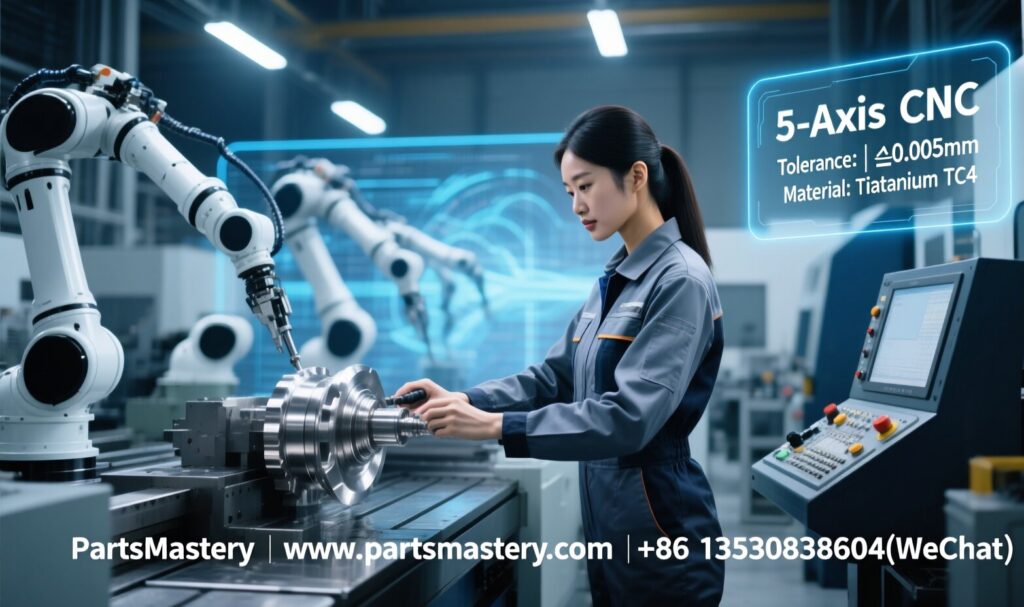
Fabricant de moules sur mesure : des outillages sur mesure pour relever des défis de production uniques
Les solutions standard permettent rarement de résoudre les problèmes de fabrication complexes. Chaque produit présente une géométrie, des exigences en matière de matériaux, des objectifs de volume et des normes de qualité qui lui sont propres. Un moule standard conçu pour un usage général ne peut pas s'adapter aux contre-dépouilles, aux épaisseurs de paroi variables, aux polymères spéciaux ou aux exigences liées à l'insertion d'éléments. C'est pourquoi les fabricants confrontés à des applications exigeantes font appel à un fabricant de moules sur mesure. Contrairement aux outillages de catalogue, les moules sur mesure sont conçus spécifiquement pour votre pièce, votre presse et votre environnement de production. Chez PartsMastery, nous sommes spécialisés dans la création de solutions de moulage sur mesure qui répondent à des défis que les outillages standard ne peuvent pas relever.
Qu'est-ce qu'un fabricant de moules sur mesure ?
Un fabricant de moules sur mesure est un spécialiste qui conçoit et fabrique des moules adaptés à la géométrie spécifique des pièces d'un client, au choix des matériaux, au volume de production et aux exigences de qualité. Contrairement aux fabricants de moules standard qui produisent des outils standardisés pour des pièces simples, un fabricant de moules sur mesure part de zéro : il analyse la conception de la pièce, simule l'écoulement du matériau, sélectionne les nuances d'acier appropriées et usine des cavités qui correspondent exactement aux spécifications.
Les moules sur mesure sont indispensables pour les pièces présentant des caractéristiques complexes telles que des contre-dépouilles internes, des filetages, des charnières actives, des inserts surmoulés ou des tolérances dimensionnelles très strictes. Ils sont également indispensables pour des procédés spécialisés tels que le moulage par injection assisté par gaz, le moulage à deux injections (multimatières) ou les résines techniques à haute température qui nécessitent des stratégies spécifiques de refroidissement et de ventilation. Un fabricant de moules sur mesure met à profit à la fois son expertise en ingénierie et ses capacités d'usinage pour résoudre des problèmes que l'outillage standard ne peut pas résoudre.
Pourquoi les moules standard ne sont pas à la hauteur
De nombreux fabricants partent du principe qu’un moule standard légèrement modifié suffira pour leur application. Cette hypothèse entraîne souvent des problèmes de qualité récurrents. Les moules standard sont conçus pour des géométries de pièces moyennes, des matériaux moyens et des temps de cycle moyens. Lorsque vous introduisez une pièce présentant une épaisseur de paroi non uniforme, le moule standard produira des marques d'affaissement et des déformations. Lorsque vous utilisez une résine à haute température comme le PEEK ou le PEI, un moule standard dépourvu d'un refroidissement adéquat se dégradera rapidement et produira des pièces non homogènes.
De plus, les moules standard permettent rarement d'intégrer des opérations secondaires telles que l'insertion d'éléments, l'étiquetage dans le moule ou l'assemblage après moulage. Un fabricant de moules sur mesure intègre ces exigences directement dans la conception de l'outil, ce qui élimine les étapes de manutention supplémentaires et réduit les coûts de main-d'œuvre. En résumé, les moules standard sont destinés aux pièces standard. Si votre produit exige l'excellence, vous avez besoin d'une solution sur mesure.
Le processus de fabrication de moules sur mesure : une approche collaborative
La fabrication de moules sur mesure s'inscrit dans un processus collaboratif qui commence bien avant la découpe de l'acier.
Étape 1 : Examen de la conception de la pièce et analyse de la moulabilité
Le processus commence par la géométrie de votre pièce, généralement fournie sous la forme d'un modèle CAO en 3D. Un fabricant de moules sur mesure examine la conception sous l'angle de la fabricabilité, en identifiant les problèmes potentiels tels que des angles de dépouille insuffisants, des angles vifs pouvant entraîner une concentration de contraintes, ou des variations d'épaisseur de paroi susceptibles de provoquer des marques d'affaissement. Cet examen permet souvent aux clients de gagner un temps considérable et de réaliser d'importantes économies en détectant les problèmes avant le début de la fabrication des outils.
Étape 2 : Conception d'un moule sur mesure
À l'aide de logiciels avancés de CAO et de simulation de flux de matière, le fabricant de moules sur mesure conçoit un moule spécialement adapté à votre pièce. Cela comprend la détermination de l'emplacement de l'entrée (là où la matière en fusion pénètre dans la cavité), la conception du système de canaux d'alimentation (comment la matière circule de la buse vers l'entrée), la disposition des canaux de refroidissement (comment la chaleur est évacuée du moule) et le système d'éjection (comment les pièces finies sont expulsées). Chaque élément de conception est optimisé en fonction de votre matériau, de votre objectif de temps de cycle et de vos spécifications de qualité.
Étape 3 : Choix des matériaux pour le moule
Un fabricant de moules sur mesure choisit l'acier ou l'aluminium en fonction de votre volume de production et du matériau utilisé. Pour les séries à grand volume dépassant 500 000 cycles, on opte pour des aciers à outils haut de gamme tels que le H13, le D2 ou des nuances d'acier inoxydable, en raison de leur résistance à l'usure et de leur stabilité thermique. Pour les prototypes ou les séries de faible volume inférieures à 10 000 pièces, les moules en aluminium offrent des délais de fabrication plus courts et des coûts réduits. Le fabricant de moules sur mesure peut également prescrire des revêtements tels que le TiN, le CrN ou le DLC afin de réduire la friction et de prolonger la durée de vie de l'outil.
Étape 4 : Usinage et fabrication de précision
Une fois la conception finalisée, le fabricant de moules sur mesure commence l'usinage. Les découpes grossières permettent d'enlever la majeure partie du matériau à l'aide de fraiseuses à commande numérique (CNC). Les détails fins — angles internes vifs, nervures étroites ou surfaces texturées — sont réalisés par électroérosion (EDM). Des fabricants de moules expérimentés polissent ensuite à la main les surfaces critiques pour obtenir la finition requise, souvent inférieure à Ra 0,2 µm pour les pièces esthétiques ou optiques.
Étape 5 : Traitement thermique et finition
Le moule est soumis à un traitement thermique sous vide afin d'atteindre la dureté souhaitée, généralement comprise entre 48 et 52 HRC pour les moules d'injection. Une fois le durcissement terminé, les revêtements nécessaires sont appliqués. Le fabricant de moules sur mesure assemble ensuite les composants du moule, notamment les broches d'éjection, les raccords de refroidissement et les mécanismes coulissants destinés aux contre-dépouilles.
Étape 6 : Tests et validation
Avant la livraison, le fabricant de moules sur mesure effectue des essais de moulage sur une machine de moulage par injection réelle. Les pièces échantillons sont mesurées par rapport au modèle CAO d'origine à l'aide de machines à mesurer tridimensionnelles (MMT) ou de comparateurs optiques. Ce n'est que lorsque toutes les dimensions se situent dans les tolérances — et que les pièces ne présentent aucun défaut tel que des bavures, des creux, des déformations ou des traces de brûlure — que le moule est certifié pour la production. Le fabricant de moules sur mesure fournit des rapports d'inspection du premier article et recommande des paramètres de processus.
Des caractéristiques complexes qui nécessitent le recours à un fabricant de moules sur mesure
Certaines caractéristiques des pièces ne peuvent tout simplement pas être moulées avec un outillage standard. Voici quelques exemples où le recours à un fabricant de moules sur mesure est indispensable :
Undercuts et coiffures sur les côtés : Les pièces comportant des trous, des fenêtres ou des évidements perpendiculaires au sens d'ouverture du moule nécessitent des cames à action latérale ou des poussoirs. Un fabricant de moules sur mesure conçoit ces mécanismes de manière à ce qu'ils se rétractent avant l'éjection de la pièce.
Sujets : Les filetages internes ou externes peuvent être moulés à l'aide de noyaux dévissables ou de noyaux repliables. Ces mécanismes complexes doivent être synchronisés avec précision avec la séquence d'ouverture du moule.
Surmoulage et moulage par insertion : Les pièces qui combinent deux matériaux (des revêtements souples sur des supports rigides) ou qui intègrent des inserts métalliques nécessitent des moules sur mesure dotés de plusieurs cavités et de systèmes de transfert.
Charnières souples : Les charnières fines et souples, moulées d'un seul tenant, exigent un placement précis des points d'injection et un contrôle rigoureux du flux de matière afin d'éviter toute fissure.
Composants optiques : Les lentilles, les guides de lumière et les boîtiers transparents nécessitent des cavités polies miroir et un remplissage parfaitement équilibré afin d'éviter les traces de coulée ou la biréfringence.
Tolérances et normes de qualité dans la fabrication de moules sur mesure
Les fabricants professionnels de moules sur mesure respectent des tolérances que les ateliers standard ne peuvent égaler. Les dimensions critiques sont généralement maintenues à ±0,01 mm, voire mieux. Les jeux des broches d'éjection se mesurent en microns. Les canaux de refroidissement sont positionnés à 1 ou 2 mm de la surface de la cavité, et leurs trajets sont conçus pour éliminer les points chauds responsables d'un retrait irrégulier.
La finition de surface est définie en fonction des exigences de la pièce. Les normes de finition de la SPI (Society of the Plastics Industry) vont du brillant intense (A-1) pour les pièces optiques au mat (D-3) pour les surfaces fonctionnelles. Un fabricant de moules sur mesure obtient ces finitions grâce à un polissage progressif au diamant ou à une texturation par électroérosion.
Les secteurs qui font appel à des fabricants de moules sur mesure
Les fabricants de moules sur mesure répondent aux besoins des secteurs où les outillages standard ne suffisent pas :
Dispositifs médicaux : Les manches d'instruments chirurgicaux, les boîtiers de composants implantables et les corps de cartouches de diagnostic nécessitent des matériaux biocompatibles, une compatibilité avec les salles blanches et des processus validés.
Aérospatiale : Les panneaux intérieurs, les composants de conduits et les boîtiers de connecteurs électriques nécessitent des plastiques techniques légers et des tolérances serrées pour l'assemblage.
Automobile : Les composants sous le capot, les boîtiers d'éclairage et les éléments de finition intérieure nécessitent souvent l'utilisation de nylons renforcés de verre ou de matériaux résistants aux températures élevées, que les moules standard ne permettent pas de traiter.
Électronique grand public : Les coques de téléphone, les boîtiers d'appareils portables et les coques de connecteurs exigent des tolérances micrométriques et des finitions esthétiques.
Le rapport coût-valeur des moules sur mesure
Les moules sur mesure impliquent des coûts initiaux plus élevés que les outils standard, mais ils offrent une valeur ajoutée supérieure à long terme. Un moule sur mesure bien conçu a une durée de vie plus longue entre les cycles de maintenance, génère moins de rebuts et permet des temps de cycle plus courts. Pour les séries de production dépassant 50 000 pièces, le coût unitaire d'un moule sur mesure est presque toujours inférieur à celui d'un moule standard mal adapté. De plus, les moules sur mesure peuvent être réparés, modifiés ou reproduits des années plus tard, ce qui n'est souvent pas le cas des moules standard.
Conclusion : pourquoi un fabricant de moules sur mesure est un partenaire stratégique
Choisir un fabricant de moules sur mesure n’est pas une dépense, mais un investissement dans la qualité, la régularité et l’efficacité de la production. Que votre pièce présente des contre-dépouilles complexes, nécessite un surmoulage ou doive respecter des tolérances de l’ordre du micron, le bon fabricant de moules sur mesure vous fournira un outillage qui fonctionnera à la perfection, du premier moulage au millionième. PartsMastery apporte à chaque projet des décennies d'expérience dans la fabrication de moules sur mesure, alliant simulation avancée, usinage de précision et savoir-faire artisanal.
Pour toute question technique, demande de devis pour des moules sur mesure ou consultation en matière de conception, contactez PartsMastery dès aujourd'hui.
PartsMastery
Téléphone / WeChat : +86 13530838604