






Fabricación de moldes
Palabra clave: Fabricación de moldes
Fabricación de moldes: el arte que hay detrás de una producción constante y a gran escala
En el proceso que va desde la idea del producto hasta el producto acabado, pocos pasos son tan cruciales —o tan mal entendidos— como la fabricación de moldes. Un molde bien diseñado transforma las materias primas en piezas idénticas y de alta calidad, día tras día, ciclo tras ciclo. Ya se trate de la carcasa de un dispositivo médico, de un clip para automoción o del bisel de un aparato electrónico de consumo, el molde determina la precisión, la resistencia y el aspecto superficial de la pieza. Sin una fabricación de moldes de precisión, la producción en serie se convierte en una lotería en lugar de un proceso fiable. En PartsMastery, nos hemos dedicado al arte y la ingeniería de la fabricación de moldes, ofreciendo herramientas que funcionan de forma constante bajo las presiones reales de la fabricación.
¿Qué es la fabricación de moldes?
La fabricación de moldes es la disciplina especializada en el diseño y la fabricación de herramientas que dan forma a materiales líquidos o maleables para convertirlos en piezas sólidas. A diferencia del mecanizado general, que produce piezas individuales, la fabricación de moldes crea un sistema de cavidades reutilizable capaz de producir miles o incluso millones de componentes idénticos. Entre los tipos más comunes se encuentran los moldes de inyección para plásticos, los moldes de compresión para caucho y termoestables, los moldes de transferencia para el encapsulado electrónico y los moldes de fundición a presión para metales como el aluminio y el zinc.
Cada tipo de molde exige un enfoque específico. Un molde de inyección debe soportar repetidas inyecciones a alta presión de polímero fundido a temperaturas superiores a los 200 °C, seguidas de un enfriamiento rápido. Un molde de fundición a presión se enfrenta a un choque térmico extremo, ya que el metal líquido se solidifica en cuestión de segundos. Un molde de soplado debe mantener un espesor de pared uniforme mientras la presión del aire expande el material. Un fabricante de moldes experto comprende estas diferencias y adapta cada decisión —el tipo de acero, el diseño del sistema de refrigeración, el método de expulsión y el acabado superficial— a la aplicación específica y al volumen de producción.
Por qué la fabricación profesional de moldes es importante para tu empresa
Muchas empresas de fabricación consideran los moldes como un gasto necesario en lugar de un activo estratégico. Esta perspectiva resulta costosa. Un molde mal fabricado no solo producirá piezas defectuosas desde la primera inyección, sino que además se deteriorará rápidamente, lo que provocará paradas imprevistas, lotes rechazados y reparaciones de emergencia. Cada hora que una línea de producción permanece a la espera del mantenimiento del molde se traduce directamente en pérdida de ingresos y incumplimiento de los plazos de entrega.
Por el contrario, la fabricación profesional de moldes ofrece beneficios económicos tangibles. En primer lugar, reduce las tasas de desechos de porcentajes de dos dígitos a casi cero. En segundo lugar, prolonga la vida útil de las herramientas, alcanzando a menudo un millón o más de ciclos antes de que sea necesaria una renovación importante. En tercer lugar, acorta los tiempos de ciclo gracias a una refrigeración y ventilación optimizadas, lo que permite producir más piezas por hora sin necesidad de una inversión de capital adicional. Por último, garantiza que las piezas del ciclo 100 000 sean idénticas a las del ciclo uno, un requisito fundamental para sectores regulados como el de los dispositivos médicos y los componentes aeroespaciales.
El proceso de fabricación de moldes: del concepto a la producción
La fabricación de moldes de alta calidad sigue un riguroso proceso de trabajo de varias etapas que combina software avanzado, mecanizado de precisión y trabajo artesanal.
Paso 1: Análisis de piezas y diseño de moldes
Todo comienza con la geometría de la pieza acabada, que suele proporcionarse como un modelo CAD en 3D. El fabricante del molde analiza la pieza para determinar los ángulos de desmoldeo, la uniformidad del espesor de las paredes, los socavados y las tasas de contracción previstas. Mediante un software de simulación de flujo en el molde, el ingeniero predice cómo se llenará la cavidad con el material fundido, dónde podrían formarse bolsas de aire y cómo se llevará a cabo el enfriamiento. Esta etapa de simulación es esencial para geometrías complejas; omitirla garantiza prácticamente la aparición de defectos como marcas de hundimiento, huecos o llenados incompletos.
Paso 2: Selección y preparación de los materiales
La fabricación de moldes requiere aceros para herramientas específicos que combinen dureza, tenacidad, resistencia al desgaste y conductividad térmica. Entre las opciones más habituales se encuentran el P20 para moldes de inyección de uso general, el H13 para la fundición a presión a alta temperatura y los aceros inoxidables para aplicaciones médicas o en contacto con alimentos. Para la producción a gran escala, con más de 500 000 ciclos, los aceros de alta calidad, como el Bohler M390 o el Uddeholm Stavax, conservan su acabado pulido y su resistencia a la corrosión durante décadas. Para prototipos o series de bajo volumen, con menos de 10 000 piezas, los moldes de aluminio ofrecen un mecanizado más rápido y un coste inicial menor.
Paso 3: Mecanizado CNC y electroerosión
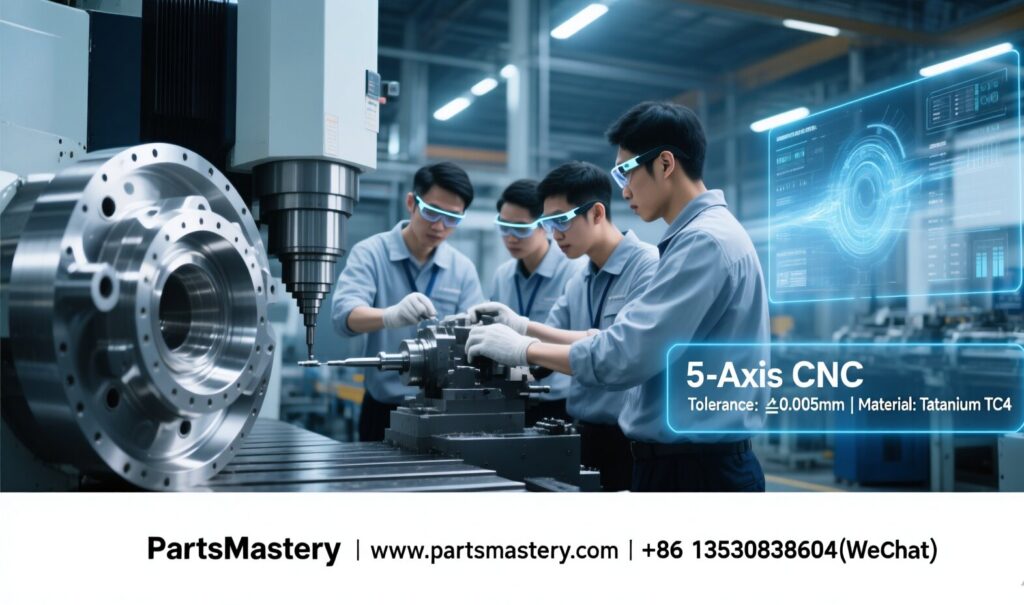
Las operaciones de desbaste eliminan la mayor parte del acero mediante fresadoras CNC de tres o cinco ejes. Para los detalles más precisos —esquinas internas afiladas, nervaduras estrechas o superficies texturizadas—, el fabricante de moldes recurre al mecanizado por descarga eléctrica (EDM). El electroerosionado por penetración (Sinker EDM) perfora cavidades complejas utilizando electrodos perfilados, mientras que el electroerosionado por hilo (Wire EDM) corta el acero endurecido con precisión microscópica. La fabricación moderna de moldes depende en gran medida del CNC y del electroerosionado para alcanzar tolerancias que los métodos manuales no pueden producir de forma constante.
Paso 4: Acabado y pulido a mano
Ninguna máquina puede conseguir un auténtico acabado especular en superficies de molde complejas. Los expertos fabricantes de moldes pulen a mano las zonas críticas hasta alcanzar acabados superficiales inferiores a Ra 0,2 µm, lo que garantiza una fácil expulsión de las piezas y superficies estéticas impecables. También pulen las superficies de cierre para evitar las rebabas, es decir, el exceso de material fino que se desborda por la línea de separación del molde. Este trabajo manual es lo que distingue a los moldes normales de los excepcionales.
Paso 5: Tratamiento térmico y recubrimiento
Tras el mecanizado en bruto, el molde se somete a un tratamiento térmico al vacío para alcanzar la dureza deseada —normalmente entre 48 y 52 HRC para los moldes de inyección o entre 50 y 55 HRC para los de fundición a presión—. Algunos moldes se recubren con recubrimientos PVD, como TiN o CrN, para reducir la fricción y resistir el ataque químico de los polímeros agresivos. Estos recubrimientos pueden duplicar o triplicar la vida útil del molde en aplicaciones abrasivas.
Paso 6: Pruebas e inspección del primer artículo
El molde terminado se monta en su bastidor y se le incorporan los pasadores de expulsión, los conductos de refrigeración y los casquillos de entrada de material. A continuación, el fabricante de moldes realiza pruebas de inyección en una máquina de inyección o de fundición real, y compara las piezas resultantes con el modelo CAD original. Solo cuando todas las dimensiones críticas se encuentran dentro de los límites de tolerancia —y las piezas no presentan hundimientos, deformaciones, rebabas ni marcas de quemaduras— se certifica el molde para la producción.
Tolerancias y acabado superficial: los sellos distintivos de la calidad
La fabricación profesional de moldes se mide en micras. Un molde de alta calidad mantiene las dimensiones de la cavidad con una tolerancia de ±0,01 mm o mejor, y los juegos de los pasadores de expulsión se miden en milésimas de milímetro. Los canales de refrigeración se sitúan a una distancia de entre 1 y 2 mm de la superficie de la cavidad, y sus trayectorias de flujo están diseñadas para eliminar los puntos calientes que provocan una contracción desigual.
El acabado superficial es igualmente importante. Una superficie rugosa de la cavidad aumenta la fricción, ralentiza el flujo de material y transfiere defectos a todas las piezas moldeadas. Los fabricantes de moldes expertos consiguen acabados de espejo por debajo de Ra 0,1 µm para componentes ópticos o cosméticos, mientras que las superficies funcionales pueden acabarse con un valor de Ra de 0,4 µm. El acabado adecuado reduce las fuerzas de expulsión, acorta los tiempos de ciclo y mejora la calidad de las piezas.
Defectos habituales en los moldes y cómo la fabricación experta de moldes los evita
Incluso los pequeños errores en la fabricación de moldes dan lugar a defectos característicos. Las marcas de hundimiento aparecen cuando el enfriamiento es insuficiente cerca de las secciones gruesas. Las rebabas se producen cuando la fuerza de cierre no puede superar la presión de inyección debido al desgaste o a un mal ajuste de las superficies de cierre. Las inyecciones incompletas se deben a una ventilación inadecuada o a entradas de material restrictivas. Las marcas de los pasadores de expulsión se hacen visibles cuando los pasadores están desalineados o los acabados superficiales son demasiado rugosos.
Un fabricante de moldes con experiencia se anticipa a estos problemas durante la fase de diseño. Incorpora canales de refrigeración conformes que siguen el contorno de la pieza, diseña vías de ventilación robustas y especifica la ubicación de las entradas de material de forma que se minimicen las marcas visibles. Además, incorpora características que facilitan el mantenimiento, lo que permite sustituir fácilmente los pasadores de expulsión desgastados o pulir las superficies corroídas de la cavidad sin necesidad de desmontar todo el molde.
Sectores que dependen de la fabricación de moldes de precisión
El ámbito de aplicación de la fabricación profesional de moldes abarca prácticamente todos los sectores industriales. En el sector de la automoción, los moldes se utilizan para fabricar componentes del salpicadero, carcasas de luces, clips para los acabados interiores y conectores bajo el capó. En el ámbito de la tecnología médica, los moldes se utilizan para fabricar cilindros de jeringas, conectores para vías intravenosas, mangos de instrumentos quirúrgicos y cuerpos de cartuchos de diagnóstico, todos ellos fabricados con materiales biocompatibles y acabados aptos para salas blancas. La electrónica de consumo recurre al micromoldeado para fabricar biseles de cámaras de teléfonos, bandejas para tarjetas SIM y marcos estructurales internos. Incluso artículos domésticos como tapones de botellas, envases de alimentos y mangos de cepillos de dientes se fabrican en moldes de múltiples cavidades que producen docenas de piezas por segundo.
El futuro de la fabricación de moldes: simulación, automatización y herramientas inteligentes
La fabricación de moldes sigue evolucionando. La simulación del flujo en el molde basada en la nube permite ahora el diseño colaborativo entre distintos continentes. La producción automatizada de electrodos y el pulido robotizado reducen los plazos de entrega. Quizás lo más emocionante sea el auge de los “moldes inteligentes”, equipados con sensores de presión en las cavidades y cámaras térmicas que envían datos en tiempo real a la máquina de inyección, lo que permite un control de calidad en bucle cerrado. PartsMastery integra activamente estas tecnologías cuando ofrecen un claro retorno de la inversión, pero nunca perdemos de vista los fundamentos: el acero adecuado, un mecanizado preciso y unas pruebas meticulosas.
Cómo elegir a tu socio para la fabricación de moldes
A la hora de evaluar a un fabricante de moldes, solicita piezas de muestra de proyectos anteriores e inspecciona con lupa. Pregunte por sus capacidades de simulación: ¿realizan análisis de flujo de molde para cada nuevo diseño? Revise sus recomendaciones de mantenimiento; un socio responsable le proporcionará un programa documentado de limpieza, lubricación y sustitución de piezas de desgaste. Por último, hable sobre la asistencia tras la entrega: ¿pueden reparar, modificar o duplicar el molde años más tarde?
Conclusión
La fabricación de moldes no es un servicio cualquiera: es una competencia clave que distingue a los líderes del mercado del resto. Un molde de precisión fabricado por un socio de confianza reduce los residuos, acelera la producción y garantiza que su producto tenga el aspecto y el funcionamiento exactos previstos, pieza tras pieza. Tanto si va a lanzar un nuevo dispositivo médico, como si va a ampliar la producción de un componente de automoción, o simplemente está cansado de la calidad irregular de su proveedor actual, invertir en la fabricación de moldes de alta calidad se amortiza con creces.
Si necesitas asesoramiento técnico, presupuestos o consultas sobre el diseño de moldes, ponte en contacto con PartsMastery hoy mismo.
PartsMastery
Teléfono / WeChat: +86 13530838604