






Como plástico técnico transparente de uso general más utilizado en el mundo, el acrílico se emplea ampliamente en expositores publicitarios, protección industrial, decoración arquitectónica, electrónica de automoción y muchos otros campos, gracias a sus prestaciones ópticas similares a las del vidrio y a su seguridad y facilidad de procesamiento, que son muy superiores. Sin embargo, muchos diseñadores y prescriptores de ingeniería carecen de un conocimiento sistemático de los límites de sus prestaciones, las diferencias entre categorías y los escenarios de aplicación, lo que a menudo conduce a errores en la selección de materiales.
Partiendo de las características del material, este artículo analiza de forma sistemática los parámetros fundamentales de rendimiento, las diferencias entre las principales categorías, las consideraciones relativas a su procesamiento y los métodos de selección del acrílico, con el fin de ayudar a los lectores a comprender rápidamente la lógica de selección de los materiales acrílicos y a adaptarlos con precisión a las necesidades concretas de los proyectos.
1. Naturaleza y propiedades básicas del material acrílico
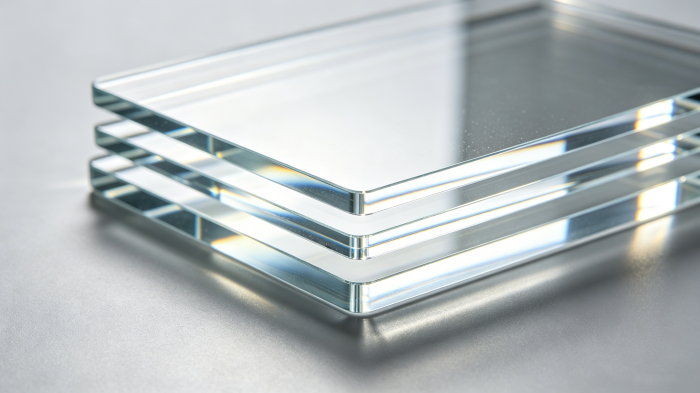
El acrílico, conocido químicamente como polimetilmetacrilato (PMMA) y denominado comúnmente «plexiglás», es un polímero termoplástico amorfo que se obtiene mediante la polimerización de monómeros de metilmetacrilato (MMA).
Como alternativa principal al vidrio, el acrílico mantiene una elevada transmitancia de la luz al tiempo que mejora considerablemente la resistencia a los impactos y la flexibilidad de procesamiento; además, su peso es significativamente inferior al del vidrio, lo que lo convierte en la primera opción entre los materiales transparentes que combinan rendimiento y coste. Desde que se inició su producción industrial en 1928, se ha ido introduciendo progresivamente en diversos ámbitos civiles e industriales.
2. Parámetros fundamentales de rendimiento del acrílico
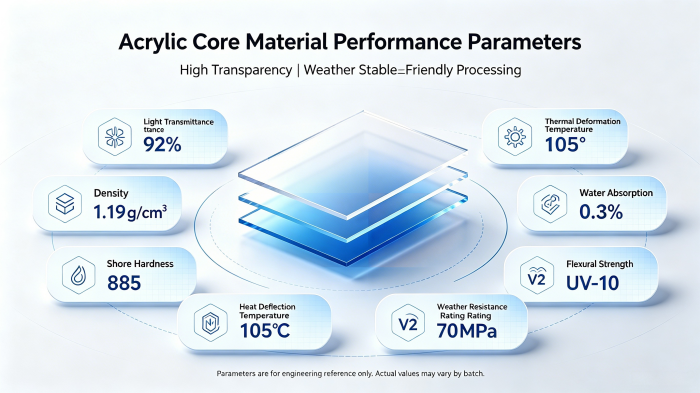
El acrílico presenta un rendimiento global muy equilibrado. A continuación se detallan sus parámetros fundamentales en siete aspectos. Todos los indicadores cumplen con las normas internacionales de ensayo de la ASTM y pueden utilizarse directamente como referencia para la selección.
2.1 Rendimiento óptico
La principal ventaja del acrílico radica en su excelente rendimiento óptico: según las pruebas realizadas conforme a la norma ASTM D1003, su transmitancia de luz visible puede alcanzar el 92%, un valor superior al del vidrio flotado común (entre el 85% y el 89%), con una opacidad extremadamente baja y una transmisión de luz uniforme.
A diferencia de otros plásticos transparentes, el acrílico de alta calidad no tiende a amarillear tras un uso prolongado y presenta una gran estabilidad óptica, lo que lo convierte en el material ideal para aplicaciones que requieren una alta transmitancia de la luz.
2.2 Propiedades mecánicas
Según las pruebas realizadas conforme a la norma ASTM D256, la resistencia al impacto sin muesca del acrílico puede alcanzar entre 10 y 17 veces la del vidrio sodocálcico común. Cuando recibe un impacto de una fuerza externa, no se rompe en fragmentos afilados como el vidrio, sino que solo presenta grietas de bordes romos, lo que le confiere unas prestaciones de seguridad excepcionales.
Su resistencia a la tracción es de entre 50 y 70 MPa, y su resistencia a la flexión, de entre 90 y 120 MPa, lo que le confiere la rigidez suficiente para satisfacer las necesidades mecánicas de la mayoría de las piezas estructurales y de protección.
2.3 Ligereza y estabilidad física
El acrílico tiene una densidad de aproximadamente 1,19 g/cm³, lo que supone solo alrededor de 50% de la del vidrio común. Con el mismo grosor y tamaño, el peso se reduce considerablemente, lo que permite reducir los costes de transporte, instalación y carga estructural.
Al mismo tiempo, el acrílico tiene una absorción de agua extremadamente baja (≤0,5%), no se dilata ni se deforma al exponerse al agua y presenta una excelente estabilidad dimensional, por lo que es adecuado para su uso en entornos húmedos.
2.4 Resistencia a la intemperie y a los rayos UV
El acrílico, por sí mismo, presenta una resistencia natural a los rayos UV y no es propenso a desintegrarse, amarillearse, agrietarse ni sufrir otros problemas tras una exposición prolongada al aire libre. El acrílico de calidad estándar puede tener una vida útil en exteriores de entre 5 y 8 años, mientras que el acrílico de moldeo celular modificado contra los rayos UV puede alcanzar una vida útil en exteriores de más de 10 años.
2.5 Rendimiento térmico
Según los ensayos realizados conforme a la norma ASTM D648 (carga de 0,45 MPa), la temperatura de deflexión térmica del acrílico es de unos 95 °C. Se recomienda mantener la temperatura de funcionamiento continuo a largo plazo dentro del intervalo de -20 °C a 80 °C para evitar deformaciones provocadas por una exposición prolongada a altas temperaturas.
Al ser un material termoplástico, el acrílico se ablanda cuando se calienta a una temperatura de entre 140 y 170 °C, y puede someterse a procesos como el termoformado o el doblado, entre otros; tras enfriarse, recupera su rigidez y sus prestaciones originales.
2.6 Resistencia química
El acrílico presenta una buena resistencia a los ácidos débiles, las bases débiles, las soluciones de sales inorgánicas, los detergentes neutros y otros medios, y ofrece un rendimiento estable en la limpieza diaria y en entornos industriales habituales.
Sin embargo, no es resistente a los disolventes cetónicos y ésteres, como la acetona y el acetato de etilo, ni a los disolventes de hidrocarburos aromáticos ni a los ácidos y bases fuertemente oxidantes. El contacto con estas sustancias provocará corrosión superficial, agrietamiento o hinchamiento.
2.7 Facilidad de procesamiento
El acrílico es uno de los materiales transparentes con mayor compatibilidad de procesamiento. Admite corte por láser, fresado de precisión CNC, taladrado, termoformado, curvado, pulido a la llama, unión con disolventes y otros procesos de transformación. El borde puede recuperar su alta transparencia tras el procesamiento, adaptándose a diversas necesidades de personalización.
3. Categorías principales de acrílicos y comparación de diferencias
En función de los distintos procesos de fabricación y las diferentes modificaciones, el acrílico se puede clasificar en varias categorías, con diferencias significativas en cuanto a prestaciones y ámbitos de aplicación. La elección debe adaptarse a las necesidades concretas.
3.1 Acrílico moldeado celular (PMMA moldeado celular)
El acrílico de moldeo celular se fabrica inyectando monómero de MMA líquido en un molde y dejándolo endurecerse a temperatura ambiente. El lento proceso de endurecimiento da como resultado un material con una excelente transparencia óptica, una elevada dureza superficial y una tensión interna extremadamente baja.
Es adecuado para aplicaciones con elevados requisitos visuales, como el mecanizado de alta precisión, las pantallas de gama alta y los componentes ópticos.
3.2 Acrílico extruido (PMMA extruido)
El acrílico extruido se obtiene mediante la extrusión de resina de PMMA fundida a través de una extrusora. Presenta una buena uniformidad de espesor, un coste más bajo y un excelente comportamiento en el termoformado, pero su tensión interna es relativamente mayor y el procesamiento de placas gruesas es propenso a la aparición de grietas.
Es adecuado para situaciones de gran volumen en las que el coste es un factor importante, como el corte por láser de formas sencillas, productos termoformados y expositores comunes.
3.3 Acrílico especial modificado
Para necesidades específicas de cada aplicación, es posible obtener acrílico con diferentes propiedades mediante la modificación de la fórmula:
- Acrílico modificado para resistir impactos: resistencia al impacto aún mayor, similar a la del policarbonato de gama baja, adecuado para situaciones que requieran un alto nivel de protección
- Acrílico antiestático: resistencia superficial estable, reduce la adsorción de polvo por efectos electrostáticos, adecuado para talleres limpios de electrónica
- Acrílico mate, de color o espejado: permite conseguir diferentes efectos visuales mediante el tratamiento de la superficie o la modificación de la mezcla de color; se utiliza principalmente con fines decorativos y para la exposición de marcas.
A continuación se presenta una comparación de los parámetros principales entre el acrílico moldeado por célula y el acrílico extruido:
| Dimensión de comparación | Acrílico moldeado celular | Acrílico extruido |
|---|---|---|
| Pureza óptica | Extremadamente alta, transmitancia 92%+, sin tensiones internas | Buen estado, con ligeras tensiones internas |
| Tolerancia de espesor | ±0,1~±0,2 mm | ±0,05~±0,1 mm, mayor uniformidad |
| Rendimiento en el mecanizado | Apto para el mecanizado CNC y el pulido; no se agrieta fácilmente | Apto para termoformado y corte por láser sencillo; chapas gruesas propensas a la fisuración por tensión |
| Nivel de costes | Más alto | Más barato que el moldeado celular, 15%-30% |
| Aplicaciones típicas | Pantallas de alta gama, componentes ópticos, piezas mecanizadas de precisión | Carteles comunes, expositores, productos termoformados |
4. Principales campos de aplicación de los materiales acrílicos
Gracias a su rendimiento equilibrado y a su excelente relación calidad-precio, el acrílico se ha implantado en diversos ámbitos de múltiples sectores. Las principales áreas de aplicación son las siguientes:
4.1 Sectores industrial y de seguridad
Se utiliza para protecciones de equipos, ventanas de máquinas, barreras de seguridad, paneles protectores de laboratorio, etc., aprovechando su resistencia a los impactos y su elevada transmisión de la luz para mejorar la seguridad operativa y garantizar al mismo tiempo la visibilidad.
4.2 Publicidad y exposición comercial
Se utiliza para cajas luminosas de exterior, rótulos de marca, expositores para tiendas, accesorios para puntos de venta, soportes para menús, etc. Su alta transmitancia de la luz mejora el efecto visual, su resistencia a la intemperie permite un uso prolongado en exteriores y se pueden personalizar en diversas formas.
4.3 Sectores de la construcción y el mobiliario para el hogar
Se utiliza para claraboyas de iluminación natural, tabiques interiores, mamparas de baño, muebles a medida, lámparas colgantes decorativas, etc. Su ligereza reduce la carga estructural y permite crear formas variadas y efectos cromáticos.
4.4 Sectores de la automoción y el transporte
Se utiliza para las pantallas de las luces de los automóviles, las ventanas de los autobuses, los ojos de buey de los barcos, etc. Su resistencia a los impactos permite soportar los golpes de la grava durante la conducción, y su ligereza contribuye a reducir el peso del vehículo.
4.5 Ámbitos civil y del consumo
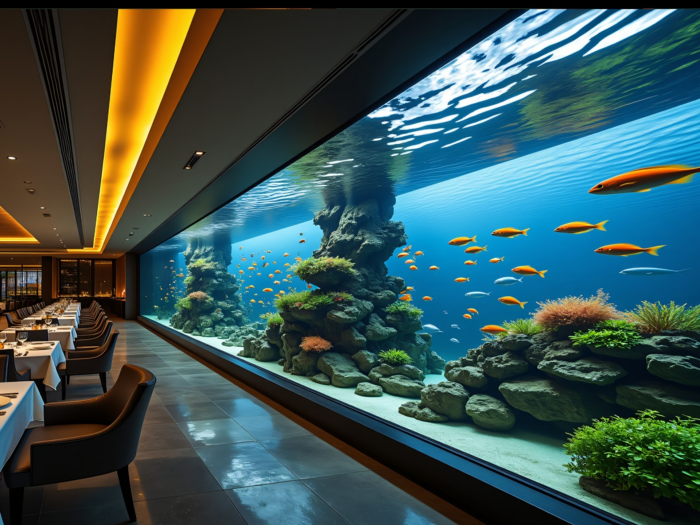
Se utiliza para acuarios grandes, cajas de almacenamiento, manualidades, mascarillas protectoras, estuches para cosméticos, etc.; es seguro y no tóxico, y ofrece un efecto visual transparente.
5. Aspectos clave a tener en cuenta en el diseño y el procesamiento
Para garantizar el resultado final y la vida útil de los productos acrílicos, es necesario tener en cuenta los siguientes aspectos fundamentales en las fases de diseño y fabricación:
5.1 Selección del espesor
El rango habitual de espesor del acrílico es de 2 mm a 20 mm; para expositores y decoración habituales se puede optar por espesores de entre 2 y 5 mm; para paneles estructurales de soporte de carga y de protección se recomienda un espesor de 8 mm o superior; en aplicaciones sometidas a alta presión, como los acuarios de gran tamaño, el espesor debe calcularse en función de la presión del agua, utilizándose normalmente placas de 15 mm o más de espesor.
5.2 Termoformado y doblado
Se recomienda mantener la temperatura de termoformado del acrílico entre 140 y 170 °C, y el radio mínimo de curvatura no debe ser inferior a 1,5 veces el espesor de la placa, para evitar el blanqueamiento por tensión o la aparición de grietas en la zona de curvatura.
5.3 Tolerancia de mecanizado
La tolerancia del corte por láser suele alcanzar los ±0,1 mm, mientras que la del mecanizado de precisión CNC puede situarse entre ±0,05 y ±0,1 mm. Durante el diseño, se debe prever una tolerancia razonable en función del proceso de fabricación para evitar problemas de montaje.
5.4 Unión y empalme
Para el acrílico se suelen utilizar el pegado con disolvente y el pegado con adhesivo UV. El pegado con disolvente permite conseguir un efecto de unión casi invisible, pero es necesario controlar la cantidad de pegamento para evitar la corrosión residual en la superficie. Las piezas pegadas deben liberarse por completo de la tensión para evitar que se agrieten posteriormente.
5.5 Tratamiento de superficies
Los bordes tratados pueden recuperar un efecto de alta transparencia mediante el pulido a la llama o el pulido con diamante; también se puede conseguir un efecto difuso mediante el mateado o el chorro de arena; para mejorar la resistencia a los arañazos, se puede aplicar un tratamiento de recubrimiento de endurecimiento superficial.
6. Comparación horizontal de materiales transparentes: acrílico, vidrio y policarbonato
Entre los materiales transparentes más comunes, el vidrio, el acrílico y el policarbonato (PC) son las tres categorías más habituales. A continuación se comparan desde distintos puntos de vista para facilitar una selección rápida:
| Dimensión de comparación | Acrílico (PMMA) | Vidrio plano común | Policarbonato (PC) |
|---|---|---|---|
| Transmitancia de la luz visible | 92% | 85%-89% | 88%-90% |
| Resistencia al impacto | Entre 10 y 17 veces más que el vidrio | Valor de referencia | entre 200 y 250 veces más que el vidrio |
| Peso relativo (mismo grosor) | 50% | 100% | 60% |
| Resistencia a los arañazos | Medio, se puede endurecer | Excelente | De mala calidad, se raya con facilidad |
| Temperatura de funcionamiento a largo plazo | -20 a 80 °C | ≤250 °C | -40~120 °C |
| Nivel de costes | Medio | Bajo | Alta, aproximadamente entre 2 y 3 veces la del acrílico |
| Ventaja fundamental | Gran equilibrio, excelente relación calidad-precio, fácil de procesar | Resistente a los arañazos y al calor, de bajo coste | Resistencia al impacto extremadamente elevada, mayor resistencia a la temperatura |
7. Guía para la selección de materiales acrílicos
A la hora de seleccionar los materiales, puedes partir de las tres dimensiones fundamentales siguientes para encontrar la categoría más adecuada:
7.1 Selección en función de los requisitos de rendimiento
En los casos en los que se exijan altos niveles de precisión óptica y acabado superficial, se recomienda el acrílico moldeado en celda; para aplicaciones sencillas de producción en serie en las que el coste sea un factor determinante, se puede optar por el acrílico extruido; y para aplicaciones con altos requisitos de protección contra impactos, se elige el acrílico modificado para resistir impactos.
7.2 Selección según el entorno de uso
Para un uso prolongado en exteriores, se recomienda el acrílico moldeado en bloque resistente a los rayos UV; para entornos de talleres electrónicos limpios, se opta por el acrílico antiestático; y para entornos expuestos a productos químicos suaves, se opta por el acrílico resistente a los productos químicos.
7.3 Selección en función de la tecnología de procesamiento
Elige el acrílico moldeado en masa para el fresado de precisión con CNC y el mecanizado de formas complejas; elige el acrílico extruido para la termoformado y el curvado en la producción en serie.
8. Preguntas frecuentes
8.1 ¿Es cierto que el acrílico se amarillea inevitablemente cuando se utiliza en exteriores?
El acrílico moldeado en masa de alta calidad y resistente a los rayos UV solo presenta un ligero amarilleamiento tras más de 10 años de uso en exteriores, y el acrílico de calidad estándar también puede mantenerse sin amarilleamiento evidente durante 5-8 años, lo que supone un resultado muy superior al de otros plásticos transparentes comunes.
8.2 ¿Cuál es el límite máximo de temperatura del acrílico?
Se recomienda que la temperatura de uso continuo a largo plazo no supere los 80 °C, y que el contacto instantáneo a corto plazo pueda soportar entre 90 y 100 °C. Por encima de la temperatura de deflexión térmica, el material se ablandará y se deformará, por lo que no podrá utilizarse en situaciones en las que se apliquen cargas a altas temperaturas.
8.3 ¿Se raya fácilmente el acrílico? ¿Cómo solucionarlo?
El acrílico normal tiene una dureza superficial de aproximadamente 2H, por lo que se raya con mayor facilidad que el cristal. Para aplicaciones que requieran una alta resistencia a los arañazos, se puede optar por acrílico con superficie endurecida, con una dureza de hasta 4H o superior, lo que mejora considerablemente la resistencia a los arañazos.
8.4 ¿Puede el acrílico entrar en contacto con los alimentos?
El acrílico apto para uso alimentario no contiene BPA, es no tóxico e inodoro, y puede entrar en contacto con los alimentos de forma segura a temperatura ambiente. Sin embargo, no se recomienda su uso para contener alimentos a altas temperaturas, a fin de evitar la liberación de sustancias nocivas que se producen al ablandarse con el calor.
Conclusión
El acrílico es, en la actualidad, el material transparente de uso general que ofrece la mejor relación calidad-precio global. Presenta un excelente equilibrio entre rendimiento óptico, seguridad, flexibilidad de procesamiento y coste, y puede aplicarse a la mayoría de los ámbitos de uso de materiales transparentes, desde el consumo civil hasta la fabricación industrial.
La clave de la selección consiste en elegir la categoría de acrílico adecuada en función de los requisitos de rendimiento reales, el entorno de uso y la tecnología de procesamiento, y lograr un control óptimo de los costes sin dejar de cumplir con los requisitos.