





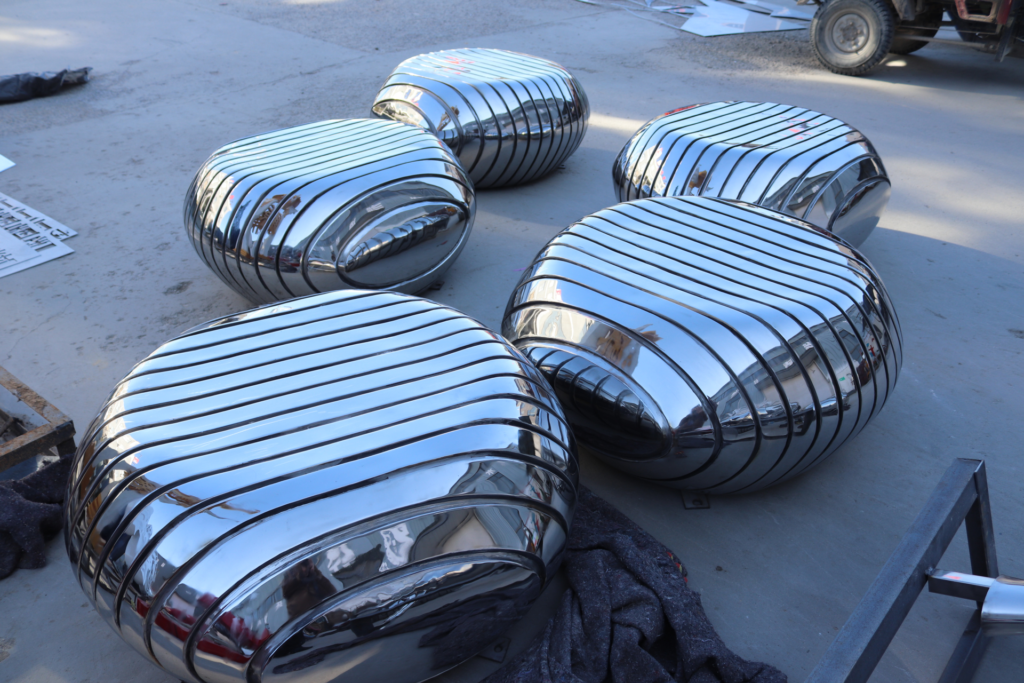
El electropulido resuelve estos problemas a nivel microscópico sin añadir recubrimientos ni materiales de relleno. Al tratarse de un método de acabado electroquímico, elimina una capa fina y uniforme del metal base para dejar una superficie más lisa, brillante y resistente a la corrosión. En el caso de las piezas médicas, farmacéuticas y aeroespaciales, suele ser el único tratamiento superficial que cumple con las estrictas normas de limpieza del sector.
En esta guía se explica cómo funciona el electropulido, qué calidad de superficie ofrece, qué materiales se benefician más de él y cómo evaluarlo para tu próximo proyecto de fabricación CNC.
¿Qué es el electropulido?
El electropulido es un proceso electroquímico de acabado superficial que utiliza corriente continua controlada para disolver el metal de la superficie de una pieza. A diferencia del recubrimiento, la galvanoplastia o el anodizado —que depositan material sobre la pieza—, el electropulido elimina material de forma selectiva, centrándose en las protuberancias microscópicas que se forman en toda superficie mecanizada.
Durante el proceso, la pieza de trabajo actúa como ánodo con carga positiva sumergido en un baño de electrolito a temperatura controlada. La corriente fluye a través de la solución, lo que provoca que los átomos metálicos de la superficie se oxiden y se disuelvan en el líquido. Dado que la corriente eléctrica se concentra en mayor medida en los picos y bordes afilados, estas zonas se disuelven más rápido que los huecos, lo que da lugar a una nivelación y un alisado naturales.
El resultado final es una superficie limpia, reflectante y no direccional, fabricada íntegramente con el metal base, que presenta una mayor resistencia a la corrosión y una menor adhesión de partículas.
Proceso completo de electropulido para componentes mecanizados con CNC
Para conseguir resultados uniformes y de alta calidad es necesario un control riguroso de todas las fases, desde el pretratamiento hasta la inspección final. Saltarse o apresurar cualquier paso puede provocar un acabado irregular, manchas o un rendimiento deficiente frente a la corrosión.
Fase 1: Pretratamiento y preparación de la superficie
El electropulido no puede compensar el estado de suciedad o contaminación de las piezas. Antes de introducirse en el baño de pulido, los componentes se someten a un riguroso proceso de limpieza:
- Limpieza alcalina: Elimina los fluidos de corte, los aceites de máquina, la grasa y los residuos de manipulación generados durante el proceso de mecanizado.
- Enjuague con agua fresca: Evita que los productos químicos de limpieza se transfieran a los baños siguientes.
- Decapado ácido (cuando sea necesario): Elimina las incrustaciones de óxido, las manchas causadas por el calor y la decoloración superficial provocada por la soldadura o el tratamiento térmico. Este paso es fundamental para las piezas que han estado expuestas a altas temperaturas.
- Enjuague con agua desionizada: Un enjuague final con agua pura evita la contaminación del baño y garantiza una distribución uniforme de la corriente.
Es importante señalar que el electropulido mejora la calidad de la superficie existente, pero no repara los daños profundos. Las piezas que presenten arañazos marcados, líneas de rectificado profundas o defectos superficiales graves conservarán esas características incluso después del pulido. Partir de una superficie mecanizada con un acabado adecuado es siempre la base para obtener un excelente resultado de electropulido.
Fase 2: Funcionamiento del baño de electropulido
Las piezas limpias se colocan en soportes especialmente diseñados y se sumergen en el depósito de electrolito a modo de ánodo. Los cátodos, fabricados normalmente con aleaciones conductoras resistentes a la corrosión, se sitúan alrededor del baño para completar el circuito eléctrico.
En la mayoría de las aplicaciones del acero inoxidable, el electrolito es una mezcla calentada de ácido fosfórico y ácido sulfúrico, que se mantiene a una temperatura de entre 60 y 80 °C. Las concentraciones y formulaciones exactas varían según el proveedor de servicios y, a menudo, se consideran información confidencial.
Los operarios aplican corriente continua controlada a densidades de entre 20 y 60 amperios por decímetro cuadrado, con tiempos de inmersión que oscilan entre los 2 y los 20 minutos. Los parámetros se calibran en función del tipo de aleación, el estado inicial de la superficie y la tasa de eliminación de material deseada.
Etapa 3: Posprocesado y pasivación
Una vez finalizado el ciclo de pulido, las piezas se sacan del baño y se enjuagan inmediatamente con agua fría para detener la reacción electroquímica. Un segundo enjuague con agua desionizada elimina todo el ácido residual.
En el caso de las piezas de acero inoxidable, a continuación se lleva a cabo una etapa final de pasivación —normalmente en una solución de ácido nítrico o cítrico— para desarrollar por completo la capa de óxido pasivo rica en cromo. En este caso, el tiempo es fundamental: los retrasos entre el pulido y la pasivación pueden provocar manchas en la superficie o una formación irregular del óxido.
A continuación, las piezas acabadas se secan y se inspeccionan para comprobar la uniformidad de la superficie, el brillo y el cumplimiento de las dimensiones.
Principios electroquímicos: cómo se consigue el alisado mediante el electropulido
La eliminación selectiva de material que hace que el electropulido sea único se basa en tres efectos electroquímicos interrelacionados.
Disolución anódica y densidad de corriente
Cuando la pieza de trabajo tiene carga positiva, los átomos metálicos de la superficie pierden electrones y se disuelven en forma de iones en el electrolito. En el acero inoxidable, el hierro, el níquel y el cromo se disuelven en la solución, pero no a la misma velocidad. El hierro se disuelve de forma preferente, dejando la capa cercana a la superficie enriquecida en cromo.
La densidad de corriente no es uniforme en toda una superficie irregular. Los picos pronunciados, las puntas de rebaba y los bordes están sometidos a un campo eléctrico más intenso y, por lo tanto, a una mayor densidad de corriente, lo que hace que se disuelvan más rápido que las zonas planas o los valles rebajados. Esta selectividad natural es la que impulsa la nivelación de la superficie sin necesidad de abrasión mecánica.
La capa límite viscosa
El electrolito ácido forma una película espesa y viscosa que se adhiere directamente a la superficie del ánodo. Esta capa de difusión limita la velocidad a la que los iones metálicos disueltos pueden alejarse de la pieza.
En los picos de la superficie, la capa límite es más delgada, por lo que los iones se difunden con mayor facilidad y la disolución se produce rápidamente. En los valles, la capa más gruesa ralentiza el transporte de iones y frena la disolución. Este efecto amplifica la eliminación selectiva de los puntos más altos, lo que da lugar a un perfil cada vez más suave con el paso del tiempo.
La ventana de pulido
Cada combinación de material y electrolito tiene un rango óptimo de densidad de corriente —lo que a menudo se denomina «ventana de pulido»— en el que la nivelación selectiva funciona mejor.
- Por debajo de este rango, predomina el grabado químico uniforme, lo que da lugar a una superficie opaca y mate en lugar de un acabado brillante.
- Por encima de este rango, la evolución excesiva de gas altera la capa límite, lo que provoca picaduras, rayas y una eliminación irregular del material.
Los operadores con experiencia equilibran cuidadosamente la corriente, la temperatura y la composición química del baño para mantenerse dentro de este intervalo y obtener resultados uniformes.
Electropulido del acero inoxidable: ventajas y aplicaciones industriales
El acero inoxidable representa la gran mayoría de los trabajos de electropulido industrial, y con razón: el proceso potencia directamente la mayor ventaja de este material: su resistencia natural a la corrosión.
Por qué el acero inoxidable ofrece tan buenos resultados
La resistencia a la oxidación del acero inoxidable se debe a una fina película pasiva de óxido de cromo que se forma de forma natural al contacto con el aire. El mecanizado daña esta película, incrusta partículas de hierro procedentes de las herramientas y crea microgrietas en las que puede iniciarse la corrosión.
El electropulido elimina la capa superficial dañada y disuelve preferentemente el hierro, dejando una superficie superior enriquecida en cromo. Esta capa enriquecida forma una película pasiva más gruesa, más uniforme y químicamente más estable que la que se forma de forma natural en las superficies mecanizadas.
Las pruebas de laboratorio demuestran sistemáticamente que el acero inoxidable electropulido ofrece mejores resultados que las muestras pulidas mecánicamente o sometidas únicamente a pasivación en cuanto a resistencia a la corrosión, especialmente en entornos ricos en cloruro o químicamente agresivos.
Casos de uso clave en el sector
| Industria | Ventajas principales | Normas pertinentes |
|---|---|---|
| Fabricación de productos sanitarios | Menor adhesión bacteriana, esterilización fiable, superficie biocompatible | ISO 13485, FDA 21 CFR |
| Producción farmacéutica | Fácil limpieza, sin residuos de producto, riesgo mínimo de contaminación | ASME BPE |
| Elaboración de alimentos y bebidas | Superficie higiénica compatible con los ciclos CIP, resistente a la corrosión provocada por los productos de limpieza | Normas sanitarias 3-A |
| Ingeniería aeroespacial | Mayor resistencia a la fatiga, protección contra la corrosión y reducción de la fragilización por hidrógeno | AMS 2700, ASTM B912 |
| Fabricación de semiconductores | Generación de partículas ultrabaja, desgasificación reducida, superficies ultralimpias | Normas SEMI |
Acero inoxidable 304 frente a 316: rendimiento del electropulido
Ambos tipos de acero austenítico habitual permiten obtener un acabado pulido brillante y de alta calidad, pero difieren en cuanto a su rendimiento a largo plazo.
El grado 304 ofrece excelentes resultados estéticos y una buena resistencia a la corrosión en entornos poco agresivos. El grado 316 y su variante de bajo contenido en carbono, el 316L, con molibdeno añadido, desarrollan una capa pasiva más estable tras el electropulido y ofrecen una resistencia a la corrosión por picaduras mucho mayor en condiciones adversas, como la exposición a la sal y los lavados con productos químicos. Para aplicaciones médicas, farmacéuticas y marítimas, el 316L es la especificación estándar.
Acabado de superficie electropulido: ¿qué calidad puedes esperar?
Propiedades visuales y táctiles
Una superficie de acero inoxidable mecanizada presenta un aspecto plateado mate con marcas direccionales visibles dejadas por la herramienta. Tras el electropulido, la superficie adquiere un brillo uniforme, es muy reflectante y queda completamente libre de marcas de mecanizado. El acabado es no direccional, lo que significa que no se aprecian líneas de pulido, un efecto difícil de conseguir y que requiere mucho trabajo con métodos mecánicos.
La reflectividad final depende en gran medida de las condiciones iniciales. Una pieza mecanizada con un acabado fino presentará un aspecto casi especular, mientras que una superficie inicial más rugosa producirá un brillo satinado.
Eliminación de microrebabas y defectos
Las microrebabas finas que se forman en los bordes y en las partes internas —del tipo que a menudo se pasan por alto en el desbarbado manual— se eliminan rápidamente durante el electropulido. Dado que las puntas de las rebabas representan los picos más pronunciados de la superficie, la corriente se concentra allí y las elimina rápidamente, a menudo en los primeros minutos del ciclo.
Esto hace que el proceso resulte especialmente valioso para piezas complejas con canales internos, orificios roscados y geometrías intrincadas, en las que el desbarbado mecánico resulta poco práctico o imposible.
Rangos de mejora de la rugosidad Ra
La rugosidad superficial, medida en Ra en micrómetros, mejora de forma previsible en función de las condiciones iniciales. En condiciones de proceso bien controladas, los resultados habituales son los siguientes:
- Ra inicial: 3,2 µm → Ra final: 1,4–1,8 µm
- Ra inicial: 1,6 µm → Ra final: 0,6–0,8 µm
- Ra inicial: 0,8 µm → Ra final: 0,2-0,4 µm
- Ra inicial: 0,4 µm → Ra final: 0,1–0,2 µm
Por término medio, el electropulido reduce el valor Ra entre 30 y 50% o más. Hay que tener en cuenta que estas mejoras requieren una limpieza previa adecuada y un control constante del baño; un control deficiente del proceso dará lugar a mejoras más limitadas y a inconsistencias entre lotes.
Consistencia entre lotes
Una de las principales ventajas prácticas del electropulido es la repetibilidad. Una vez validados los parámetros, todas las piezas de un lote obtienen el mismo acabado, un nivel de uniformidad que el pulido mecánico manual no puede igualar a los volúmenes de producción habituales. En los sectores regulados, esta previsibilidad simplifica la cualificación de los procesos y la documentación de calidad.
El electropulido frente a otros métodos de acabado de metales
Para facilitar la elección del proceso, en la tabla siguiente se compara el electropulido con otros cuatro métodos de acabado habituales.
| Criterio | Electropulido | Pasivación | Pulido mecánico | Pulido |
|---|---|---|---|---|
| Eliminación de material | Sí, entre 5 y 30 µm por cara | Prácticamente ninguno | Sí, muy variable | Mínimo |
| Mecanismo de suavizado | Disolución anódica selectiva de picos | Únicamente formación de óxido químico | Corte de materiales abrasivos | Deformación superficial + ligera abrasión |
| Reducción de Ra | 30–50%+ respecto al valor basal | Ninguno | 60–80% con mano de obra cualificada | 30–50% |
| Aumento de la resistencia a la corrosión | Significativo, mediante el enriquecimiento con cromo | Moderado, restaura la película pasiva | Mínimo | Mínimo |
| Acceso a funciones internas | Cobertura total en todas las superficies en contacto con el líquido | Sí | Limitado a superficies accesibles | Muy limitada |
| Textura direccional | Ninguna, totalmente no direccional | Sin cambios | Líneas de pulido nítidas | Marcas direccionales poco visibles |
| Intensidad de mano de obra por volumen | Muy bajo | Muy bajo | Extremadamente alto | Alta |
| Cambio dimensional | Entre 5 y 30 µm por superficie, según lo previsto | Insignificante | Depende en gran medida del operador | Insignificante |
Ventajas y limitaciones del electropulido
Ventajas principales
- Resistencia superior a la corrosión: Combina el alisado de la superficie, la eliminación de contaminantes y el enriquecimiento con cromo para lograr mejoras cuantificables en las pruebas de niebla salina y en la vida útil en condiciones reales.
- Mayor limpieza: Una menor energía superficial reduce la adhesión bacteriana, la acumulación de partículas y los residuos de producto, lo cual es fundamental para aplicaciones higiénicas y de alta pureza.
- Cobertura de geometrías complejas: El electrolito llega a los orificios internos, las roscas, los canales y los huecos a los que el acabado mecánico no puede acceder.
- Ventajas del proceso combinado: Permite eliminar rebabas, alisar la superficie y mejorar la resistencia a la corrosión en una sola operación, lo que reduce el número total de pasos del proceso.
- Consistencia en grandes volúmenes: El procesamiento por lotes permite obtener resultados uniformes en cientos o miles de piezas con un esfuerzo mínimo por pieza.
Limitaciones principales
- Restricciones relativas a los materiales: Solo funciona con metales conductores de la electricidad. Los materiales no conductores no se pueden electropulir.
- Repercusión dimensional: En las tolerancias de mecanizado hay que tener en cuenta la eliminación de entre 5 y 30 µm por superficie. Los elementos con tolerancias estrictas pueden requerir enmascaramiento o una compensación dimensional previa al pulido.
- No se pueden subsanar los defectos profundos: Tras el pulido, seguirán apareciendo arañazos marcados, marcas profundas de lijado y daños importantes en la superficie. El pulido mejora las superficies en buen estado, pero no repara las que están en mal estado.
- Coste dependiente de la geometría: Las piezas grandes y de diseño complejo, que requieren sistemas de sujeción complejos, resultan más caras de fabricar que los componentes planos sencillos.
- No todas las aleaciones tienen el mismo rendimiento: Los aceros de fácil mecanizado, los hierros fundidos y algunas aleaciones sometidas a tratamiento térmico pueden dar lugar a superficies irregulares o con picaduras.
Compatibilidad de materiales: ¿Qué metales se pueden electropulir?
Aleaciones de acero inoxidable
Prácticamente todos los aceros inoxidables austeníticos (304, 304L, 316, 316L, 317L, 321, 347) ofrecen excelentes resultados. Los grados de fácil mecanizado, como el 303, que contienen inclusiones de azufre, se pulen mal y suelen presentar una superficie irregular y con picaduras; evite el 303 si el electropulido es un requisito de diseño.
Los grados dúplex, como el 2205 y el 2507, pueden someterse a electropulido, pero requieren un ajuste de los parámetros para tener en cuenta su microestructura bifásica. Las aleaciones endurecidas por precipitación, como la 17-4 PH, producen resultados variables en función del estado de tratamiento térmico, siendo las condiciones de recocido en solución las que proporcionan un acabado más uniforme.
Aleaciones de alto rendimiento
El titanio y las aleaciones de titanio pueden someterse a un proceso de electropulido con formulaciones electrolíticas especializadas, lo que permite obtener una superficie lisa y unas prestaciones anticorrosivas similares. Este proceso se utiliza habitualmente en implantes médicos y componentes aeroespaciales, pero requiere líneas de producción específicas que no todos los talleres ofrecen.
Las aleaciones a base de níquel, entre las que se incluyen el Inconel 625 y el Hastelloy C-276, se pulen bien con soluciones ácidas modificadas y suelen prescribirse para equipos de procesos en los sectores de los semiconductores y el sector farmacéutico.
Otros metales
El electropulido del aluminio es técnicamente posible, pero requiere el uso de productos químicos diferentes y más peligrosos, y es menos habitual en la fabricación general. El anodizado brillante suele ser una alternativa más práctica para las piezas de aluminio que requieren un acabado brillante y duradero.
El acero al carbono se puede mecanizar, pero su utilidad práctica es limitada, ya que el material base presenta una escasa resistencia inherente a la corrosión. Por lo general, otros métodos de acabado resultan más rentables para los componentes de acero al carbono.
Cómo evaluar el electropulido para tu proyecto CNC
Requisitos funcionales frente a requisitos estéticos
Si el único objetivo es conseguir un aspecto brillante, el pulido mecánico o el abrillantado pueden resultar más económicos para geometrías sencillas, sobre todo en series pequeñas. El electropulido ofrece su mayor valor cuando el rendimiento de la superficie es fundamental: resistencia a la corrosión, facilidad de limpieza, biocompatibilidad o cumplimiento de la normativa.
Especificar el electropulido para un simple soporte de interior suele ser excesivo. Especificarlo para un accesorio de un proceso farmacéutico expuesto a limpiezas químicas diarias es una decisión de ingeniería acertada.
Normativa y estándares del sector
En muchos sectores regulados, la decisión ya viene determinada por las normas del sector. La norma ASME BPE para equipos biofarmacéuticos, las directrices de la FDA para productos sanitarios y las especificaciones de materiales aeroespaciales exigen, en todos los casos, que determinados componentes tengan superficies electropulidas. En estos casos, la validación del proceso y la documentación son tan importantes como el propio acabado.
Consideraciones sobre el volumen y el coste
El electropulido resulta más rentable cuanto mayor es el volumen de producción. Los costes fijos de puesta a punto —diseño de los utillajes, cualificación del proceso, inspección del primer artículo— se reparten entre un mayor número de piezas, lo que reduce el gasto por unidad. En el caso de piezas pequeñas y medianas de acero inoxidable en lotes de 500 unidades o más, el coste por pieza suele situarse en el rango de $2–$5.
En el caso de prototipos o series de bajo volumen, los costes fijos representan una parte mayor del total, lo que hace que las alternativas mecánicas resulten relativamente más atractivas. A la hora de evaluar los costes, hay que tener en cuenta el valor total a lo largo del ciclo de vida: el menor mantenimiento, la mayor vida útil y el menor riesgo de contaminación suelen justificar el gasto inicial en el acabado.
Preguntas frecuentes
¿Cuál es el objetivo principal del electropulido?
El electropulido alisa las superficies metálicas a nivel microscópico, elimina las rebabas finas, reduce la adhesión de bacterias y partículas, y mejora significativamente la resistencia a la corrosión del acero inoxidable y otras aleaciones reactivas.
¿El electropulido hace que el acero inoxidable sea más resistente a la corrosión?
Sí. Elimina los contaminantes superficiales y la capa superficial mecanizada dañada, al tiempo que enriquece la superficie superior con cromo para formar una película de óxido pasivo más resistente y uniforme. La mejora es apreciable tanto en las pruebas de corrosión como en condiciones reales de uso.
¿En qué se diferencia el electropulido de la pasivación?
La pasivación es un tratamiento químico que restaura la capa de óxido natural sin alterar la textura de la superficie. El electropulido elimina de forma activa una fina capa de metal para alisar la superficie, eliminar microdefectos y mejorar las propiedades químicas de la superficie, lo que aporta mejoras tanto estéticas como funcionales.
¿Se pueden electropulir las piezas de acero inoxidable mecanizadas con CNC?
Por supuesto. Los componentes de acero inoxidable mecanizados con CNC son las piezas más habituales que se someten a electropulido, especialmente en aplicaciones médicas, alimentarias y aeroespaciales. La calidad inicial de la superficie tras el mecanizado influye directamente en el resultado final.
¿Cuánto metal se elimina con el electropulido?
La eliminación de material suele oscilar entre 5 y 30 micrómetros por superficie expuesta, dependiendo de la aleación, los parámetros del proceso, el tiempo de inmersión y el acabado deseado. Esta eliminación es predecible y uniforme cuando el proceso se controla adecuadamente.
Resumen final
El electropulido es mucho más que un simple proceso de abrillantado estético. En el caso de las piezas de acero inoxidable mecanizadas con CNC que se utilizan en entornos exigentes, aporta mejoras cuantificables en cuanto a resistencia a la corrosión, limpieza y uniformidad de la superficie que el acabado mecánico y la pasivación por sí solos no pueden igualar.
El éxito depende de tres factores: una superficie inicial mecanizada de alta calidad, una química y unos parámetros del baño estrictamente controlados, y un margen adecuado para la eliminación dimensional de material. Cuando se aplica correctamente, constituye una solución de acabado rentable y de alto rendimiento para componentes médicos, farmacéuticos, del sector alimentario y aeroespaciales.