






Proveedor de moldes multicavidad: herramientas de alta eficacia para producción en serie
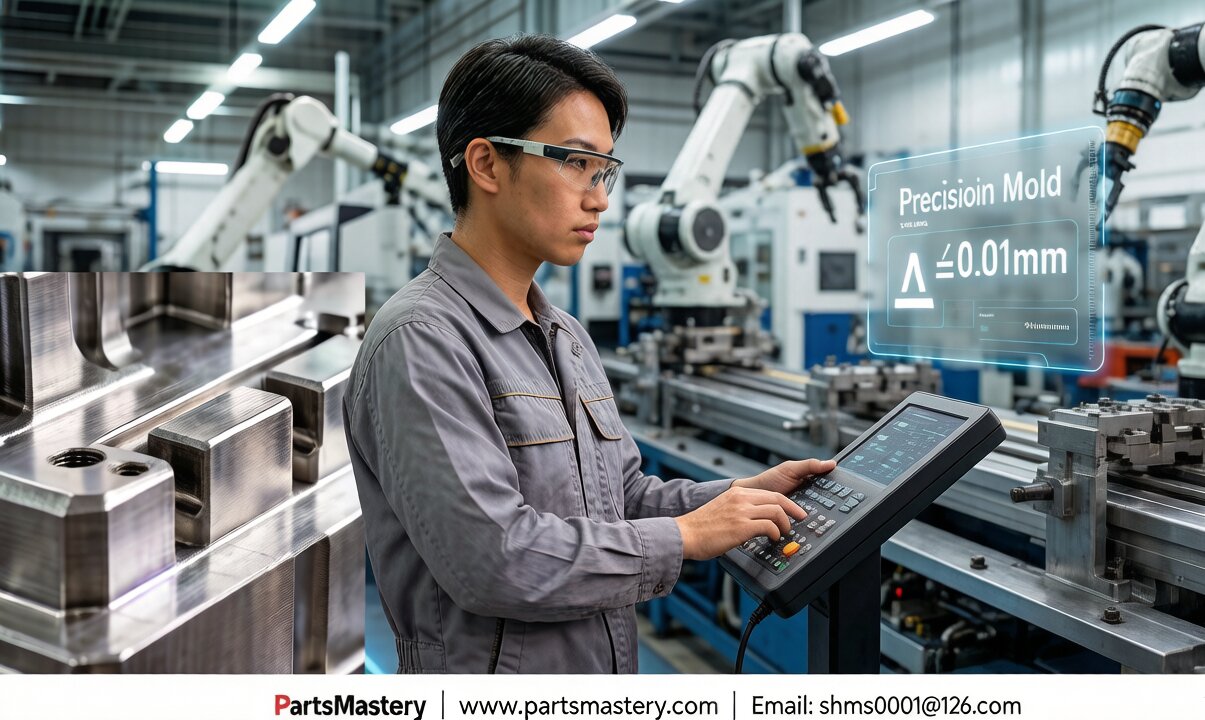
Cuando los volúmenes de producción alcanzan cientos de miles o millones de piezas al año, los moldes de una sola cavidad se convierten en un cuello de botella. El tiempo necesario para llenar, enfriar, expulsar y volver a sujetar una sola cavidad limita la producción, independientemente de la velocidad a la que funcione la máquina de moldeo por inyección. A proveedor de moldes de cavidades múltiples resuelve este problema permitiendo producir varias piezas idénticas en cada ciclo de la máquina, lo que aumenta drásticamente el rendimiento y reduce los costes por pieza.
En PartsMastery, Estamos especializados en el diseño y la construcción de moldes multicavidad que equilibran el balance de flujo, la uniformidad de la refrigeración y la fiabilidad de la expulsión en dos, cuatro, ocho, dieciséis, treinta y dos o incluso sesenta y cuatro cavidades. Este artículo explora los principios de ingeniería que subyacen a las herramientas multicavidad, las ventajas económicas y lo que debe buscarse en un proveedor cualificado.
¿Qué es un molde multicavidad?
Un molde de cavidades múltiples contiene dos o más cavidades idénticas dispuestas dentro de una única base de molde. Cada ciclo de la máquina de moldeo por inyección produce una pieza de cada cavidad. Por ejemplo, un molde de ocho cavidades con un ciclo de 30 segundos produce 960 piezas por hora, mientras que un molde de una sola cavidad con el mismo ciclo produce sólo 120 piezas por hora.
Sin embargo, la simple adición de cavidades no multiplica automáticamente el rendimiento. Un profesional proveedor de moldes de cavidades múltiples debe resolver tres retos fundamentales:
-
Balance de flujo - El plástico fundido debe llegar a cada cavidad simultáneamente y llenarse al mismo ritmo. Un flujo desequilibrado hace que algunas cavidades se llenen demasiado y otras se llenen demasiado poco.
-
Uniformidad de la presión - La presión de la cavidad debe ser constante en todas las posiciones para producir piezas de dimensiones y propiedades idénticas.
-
Balance de refrigeración - Cada cavidad debe enfriarse a la misma velocidad. Un enfriamiento desigual crea variaciones dimensionales de cavidad a cavidad.
-
Consistencia de expulsión - Cada cavidad debe expulsar limpiamente sin pegarse ni deformarse.
PartsMastery diseña cada molde multicavidad con estos principios como base de nuestro proceso de diseño.
El caso económico de las herramientas multicavidad
La decisión de invertir en un molde multicavidad implica sopesar un mayor coste inicial de utillaje frente a un menor coste de producción por pieza. Un molde proveedor de moldes de cavidades múltiples ayuda a los clientes a calcular el punto de equilibrio.
Comparación de costes de utillaje (ejemplo típico para un componente pequeño):
| Recuento de cavidades | Coste del moho | Duración del ciclo (segundos) | Piezas por hora | Coste de moldeo por pieza*. |
|---|---|---|---|---|
| 1 | $3,500 | 25 | 144 | $0.42 |
| 2 | $5,200 | 26 | 277 | $0.22 |
| 4 | $8,500 | 28 | 514 | $0.12 |
| 8 | $14,000 | 32 | 900 | $0.07 |
| 16 | $24,000 | 38 | 1,515 | $0.042 |
*Supone un ritmo de máquina de $60/hora, excluye el material y las operaciones secundarias.
Para volúmenes anuales de 500.000 piezas, un molde de ocho cavidades ahorra aproximadamente $35.000 al año sólo en tiempo de máquina en comparación con un molde de una sola cavidad, recuperando la mayor inversión en utillaje en menos de seis meses.
Sin embargo, los moldes de varias cavidades no siempre son la elección correcta. Las piezas muy grandes (más de 500 gramos) pueden requerir una sola cavidad debido a las limitaciones de tonelaje de la pinza de la máquina. Los volúmenes anuales bajos (menos de 50.000 piezas) pueden no justificar el mayor coste del utillaje. De confianza proveedor de moldes de cavidades múltiples asesora honestamente sobre si el utillaje multicavidades tiene sentido desde el punto de vista económico para su situación específica.
Retos de ingeniería en el diseño de moldes multicavidad
PartsMastery aborda cada proyecto multicavidad con un riguroso análisis de ingeniería. Los modos de fallo más comunes en las herramientas multicavidad están relacionados con el desequilibrio de flujo y la variación de temperatura.
Equilibrio de flujo. En un sistema de canal naturalmente equilibrado, la longitud de la trayectoria del flujo desde el bebedero hasta cada cavidad es idéntica. Esto requiere una disposición simétrica de los canales, normalmente dispuestos en patrones geométricos (circular, en H o radial). Sin embargo, la simetría geométrica por sí sola no garantiza el equilibrio del flujo. El calentamiento por cizallamiento en el canal puede provocar cambios de viscosidad que favorezcan determinadas trayectorias de flujo.
Utilizamos la simulación Moldflow para predecir los patrones de llenado, las caídas de presión y los efectos del calentamiento por cizallamiento en todas las cavidades. La simulación revela si alguna cavidad se llena más rápido o más despacio que otras. Si el desequilibrio supera los 5%, ajustamos los diámetros de los canales o los tamaños de las compuertas para compensarlo.
Caída de presión. A medida que el plástico fluye por el sistema de canales, la presión disminuye con la distancia desde el bebedero. Cuando el plástico llega a la cavidad más alejada, la presión puede ser insuficiente para empaquetar la pieza correctamente. Los moldes de varias cavidades requieren diámetros de canal más grandes que los moldes de una sola cavidad para mantener una presión adecuada en todas las cavidades.
Control de temperatura. Cada cavidad genera calor a medida que el plástico fluye y se endurece. En un molde de varias cavidades, las cavidades cercanas al centro del molde tienden a calentarse más que las cavidades cercanas a los bordes porque tienen menos superficie para la transferencia de calor al acero del molde. Esta variación de temperatura provoca una contracción diferencial y una variación dimensional.
Un experto proveedor de moldes de cavidades múltiples diseña circuitos de refrigeración que compensan activamente estas diferencias de temperatura. Podemos colocar los canales de refrigeración más cerca de las cavidades centrales, aumentar el caudal de refrigerante en las zonas más calientes o utilizar deflectores y burbujeadores para dirigir la refrigeración allí donde sea necesario.
Coherencia entre cavidades. La última medida de un molde de cavidades múltiples es si las piezas de la cavidad 1 son indistinguibles de las piezas de la cavidad 8. PartsMastery valida la coherencia entre cavidades mediante:
-
Pruebas de peso - Todas las piezas de un mismo ciclo se pesan individualmente. La variación aceptable suele ser inferior a 1% entre la más ligera y la más pesada.
-
Medición dimensional - Las características críticas se miden en las piezas de cada cavidad mediante MMC.
-
Inspección visual - El acabado de la superficie, el vestigio de la compuerta y las marcas de testigo del eyector deben ser idénticos.
Opciones de sistema de canal para moldes multicavidad
El diseño del sistema de canalización influye significativamente en la eficiencia del material y el tiempo de ciclo. PartsMastery ofrece dos configuraciones principales.
Corredores fríos. En un sistema de canal frío, el plástico de los canales del canal se solidifica con la pieza y se expulsa como desecho. El canal puede rectificarse y reutilizarse para muchas resinas básicas, pero el rectificado añade trabajo y puede degradar las propiedades del material. Los canales fríos son económicos para geometrías sencillas y aplicaciones no críticas.
Corredores calientes. Los sistemas de canal caliente utilizan boquillas y colectores calentados para mantener el plástico fundido en los canales del canal. Sólo se expulsa la pieza; no hay desechos de canal. Las ventajas son el ahorro de material (normalmente 15-30% menos de consumo de resina), ciclos más rápidos y la eliminación del reafilado. Sin embargo, los canales calientes cuestan mucho más y requieren un control de temperatura más complejo.
Para la producción de grandes volúmenes de piezas pequeñas, PartsMastery recomienda a menudo los moldes multicavidad de canal caliente. El ahorro de material por sí solo suele justificar la inversión adicional durante el primer año de producción.
Moldes apilables: Cavidades múltiples para piezas grandes
Cuando el tamaño de la pieza limita el número de cavidades que caben en el área de sujeción de la máquina, un molde apilado ofrece una alternativa. Un molde apilado tiene dos o más líneas de partición, con cavidades dispuestas en capas. El molde se abre en forma de acordeón, produciendo piezas de cada capa simultáneamente.
Un molde apilado típico duplica el número de cavidades sin aumentar el tonelaje de la mordaza ni el tamaño de la máquina. Por ejemplo, un molde apilado 2+2 produce cuatro piezas por ciclo y requiere la misma fuerza de cierre que un molde convencional de dos cavidades. PartsMastery diseña y construye moldes apilados para aplicaciones en las que el utillaje convencional de cavidades múltiples excedería la capacidad disponible de la máquina.
Garantía de calidad de los moldes multicavidad
A proveedor de moldes de cavidades múltiples debe aplicar rigurosos controles de calidad específicos para las herramientas multicavidad. PartsMastery sigue un protocolo documentado:
Durante la construcción:
-
Cada cavidad se mecaniza utilizando programas y herramientas CNC idénticos.
-
Los electrodos para electroerosión se queman a partir del mismo patrón.
-
Las dimensiones de las cavidades se inspeccionan individualmente y se comparan con el modelo CAD maestro.
Durante el juicio del moho:
-
Se recogen tomas cortas para verificar el llenado equilibrado.
-
Se mide el peso y las dimensiones críticas de las piezas de todas las cavidades.
-
El tiempo de ciclo se optimiza para la cavidad de enfriamiento más lento.
-
Se realiza un día completo de producción (1.000 ciclos como mínimo) para verificar la estabilidad.
Durante la producción (para programas en curso):
-
Comprobaciones periódicas del peso de cavidad a cavidad.
-
Control SPC de dimensiones críticas por cavidad.
-
Mantenimiento preventivo programado en función del número de ciclos, no del calendario.
Caso práctico: Componentes electrónicos de gran volumen
Una empresa de electrónica de consumo necesitaba 2,4 millones de pequeños biseles al año para un dispositivo portátil. La pieza pesaba 1,8 gramos y requería una tolerancia de ±0,02 mm en las características de ajuste a presión. El sistema existente del cliente proveedor de moldes de cavidades múltiples había construido un molde de canal frío de 16 cavidades que producía piezas con una variación entre cavidades superior a la especificada.
PartsMastery rediseñó el proyecto como un molde de canal caliente de 32 cavidades con control de compuerta de válvula. Decisiones de ingeniería clave:
-
Disposición equilibrada de los canales en forma de H con longitudes de flujo idénticas.
-
Refrigeración conformada alrededor de cada cavidad mediante insertos impresos en 3D.
-
Termopares individuales en cada zona de la cavidad para el control de la temperatura en bucle cerrado.
-
Identificación automática de cavidades mediante marcado láser (patrón diferente por cavidad).
Resultados tras la validación:
-
Duración del ciclo: 19 segundos (producción de 32 piezas por ciclo = 6.063 piezas por hora).
-
Variación de peso entre cavidades: 0,6% (muy por debajo del objetivo de 1%).
-
Variación dimensional (Cpk): 1,48 para la dimensión crítica de ajuste a presión.
-
Producción anual alcanzada con una máquina funcionando a dos turnos.
El cliente retiró el molde de 16 cavidades y encargó un segundo molde de 32 cavidades para un producto relacionado.
Selección de un proveedor de moldes multicavidad
Al evaluar un proveedor de moldes de cavidades múltiples, Si tiene alguna pregunta, hágales preguntas concretas sobre su experiencia y sus capacidades:
-
¿Cuál es el molde con mayor número de cavidades que ha construido? (Busque 32, 64 o más para piezas pequeñas).
-
¿Realiza análisis de flujo de molde en todos los proyectos de cavidades múltiples? (La respuesta debería ser afirmativa).
-
¿Cómo se verifica la coherencia entre cavidades? (Busque pruebas de peso y mediciones con MMC).
-
¿Cuál es su variación típica entre cavidades en partes por millón? (Una variación inferior a 0,5% es excelente).
-
¿Construye los sistemas de canal caliente internamente o los subcontrata? (La integración interna reduce el riesgo de coordinación).
PartsMastery cumple todos estos criterios y agradece las auditorías de nuestras instalaciones y sistemas de calidad por parte de los clientes.
Inicie su proyecto multicavidades
Si sus volúmenes anuales justifican la inversión, un molde multicavidad de PartsMastery transformará su economía de producción. Envíenos su archivo CAD, estimación de volumen anual y tiempo de ciclo objetivo. Nuestro equipo de ingeniería le responderá con una recomendación de recuento de cavidades, un resumen del análisis del flujo del molde y un presupuesto en firme en un plazo de 3 a 5 días laborables.
PartsMastery
Moldes multicavidad: mayor producción, menor coste por pieza
Teléfono / WeChat: +86 13530838604
Más cavidades, más eficacia, más valor.