





Fabricante de herramientas para moldes de inyección - Herramientas de precisión para grandes volúmenes de producción
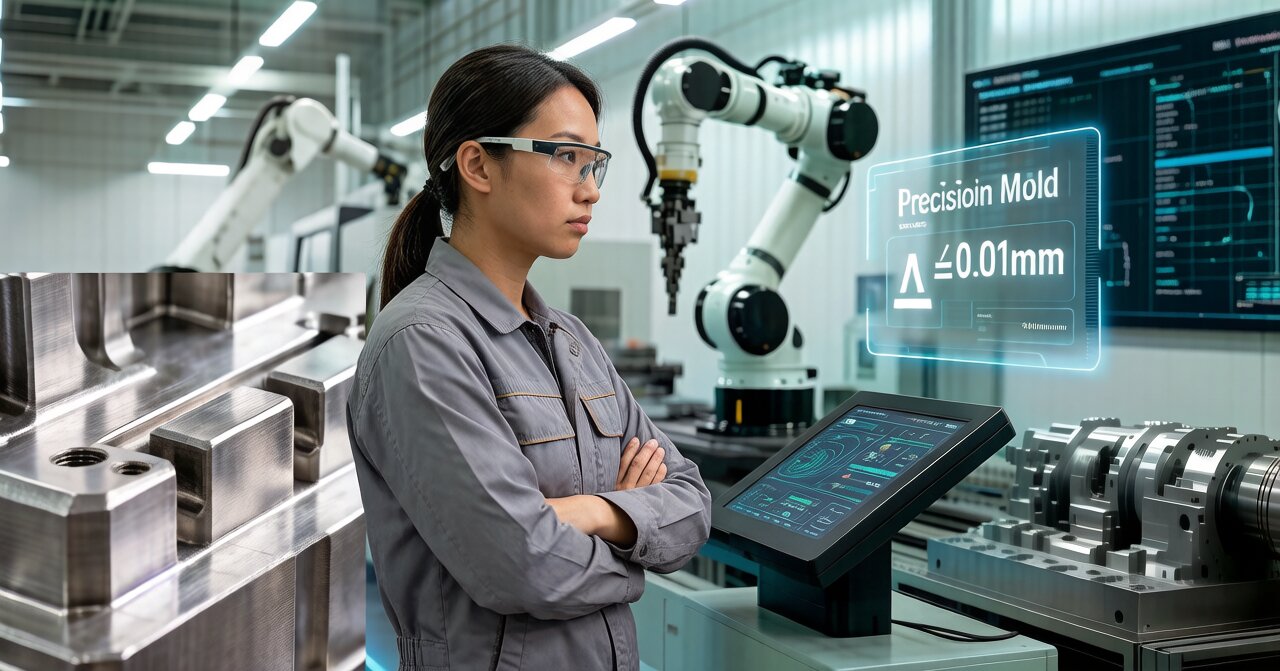
El molde de inyección es el elemento más importante en cualquier operación de moldeo por inyección de plástico. Por muy avanzada que sea la prensa de inyección o por muy pura que sea la resina, si el molde está mal diseñado o construido, las piezas resultantes serán defectuosas. Seleccionar el molde fabricante de moldes de inyección por tanto, determina no sólo la calidad de las piezas, sino también la eficacia de la producción, la longevidad de las herramientas y, en última instancia, la rentabilidad de todo su programa de fabricación.
En PartsMastery, nos hemos forjado una reputación como fabricante de moldes de inyección combinando la tecnología de mecanizado avanzada con la artesanía tradicional. Este artículo explica qué distingue a los moldes de calidad superior, cómo funciona el proceso de fabricación y por qué la disciplina de ingeniería es más importante que el número de máquinas.
¿Qué es el utillaje para moldes de inyección?
El utillaje para moldes de inyección se refiere al conjunto metálico de precisión que da forma al plástico fundido en piezas acabadas. Un molde de inyección típico consta de dos mitades primarias (la cara A y la cara B) que se cierran a alta presión. El plástico fundido se inyecta a través de un sistema de bebederos y canales en la cavidad, donde se enfría y solidifica. A continuación, el molde se abre y unos pasadores eyectores expulsan la pieza acabada.
Sin embargo, esta sencilla descripción oculta una extraordinaria complejidad. Un solo molde de producción puede contener:
-
Cavidades y núcleos - Las superficies mecanizadas de precisión que definen la geometría de la pieza.
-
Correderas y elevadores - Componentes móviles que se retraen para liberar socavones u orificios laterales.
-
Canales de refrigeración - Conductos perforados o impresos en 3D que hacen circular agua o aceite para controlar la temperatura.
-
Sistema eyector - Pasadores, manguitos o placas que empujan la pieza hacia fuera después del enfriamiento.
-
Sistema de corredores - Canales fríos o calientes que llevan el plástico de la boquilla a las cavidades.
-
Ventilación - Huecos microscópicos (normalmente de 0,02-0,05 mm) que permiten la salida del aire atrapado durante el relleno.
Un profesional fabricante de moldes de inyección debe dominar el diseño, el mecanizado, el montaje y la validación de todos estos elementos.
Por qué la calidad de las herramientas afecta directamente a la economía de la producción
Muchos desarrolladores de productos ven el molde como un gasto único que hay que minimizar. Esta perspectiva es peligrosa desde el punto de vista financiero. Un molde de alta calidad fabricante de moldes de inyección cuesta más al principio, pero ofrece una rentabilidad superior a lo largo de su vida útil:
Duración del ciclo. Un molde bien refrigerado con un diseño de canal optimizado realiza ciclos más rápidos. Ahorrar 5 segundos en un ciclo de 30 segundos aumenta la producción diaria en 20%.
Vida útil de la herramienta. Los moldes de acero endurecido con recubrimientos adecuados producen entre 500.000 y 2.000.000 de piezas. Los moldes de acero blando pueden fallar a los 50.000 ciclos. Sustituir un molde defectuoso cuesta más que comprar un molde de calidad al principio.
Consistencia parcial. Las cavidades mecanizadas con precisión y los patines equilibrados producen piezas uniformes de cavidad a cavidad. Un utillaje deficiente produce variaciones dimensionales que aumentan las tasas de desecho y los problemas de montaje.
Costes de mantenimiento. Los moldes de calidad requieren una limpieza, lubricación y reparación menos frecuentes. El tiempo de inactividad por mantenimiento del molde supone una pérdida de capacidad de producción.
PartsMastery construye cada molde teniendo en cuenta estos aspectos económicos a largo plazo. Nunca comprometemos la calidad del acero, el diseño de la refrigeración ni la precisión del mecanizado para ganar una oferta de bajo precio.
El proceso de fabricación de moldes
Un profesional fabricante de moldes de inyección sigue un proceso disciplinado desde el diseño hasta la entrega. Tomar atajos en cualquier fase crea problemas que se agravan en fases posteriores.
Paso 1: Diseño e ingeniería
El diseño del molde comienza con la geometría de la pieza. Nuestros ingenieros de PartsMastery importar su modelo CAD y diseñar el molde en torno a él, determinante:
-
Número de cavidades - Cavidad única para piezas grandes o prototipos; cavidad múltiple (2, 4, 8, 16, 32) para piezas pequeñas de gran volumen.
-
Localización de la línea de separación - Donde los lados A y B se separan. Esto afecta al aspecto estético y a la expulsión.
-
Tipo de puerta y ubicación - Compuerta de borde, compuerta submarina, punta caliente o compuerta de válvula. La colocación determina el patrón de flujo y la ubicación de la marca testigo.
-
Disposición del circuito de refrigeración - Canales rectos o conformados colocados para una distribución uniforme de la temperatura.
-
Método de expulsión - Pasador, manguito o placa separadora en función de la geometría de la pieza y las características de liberación.
Utilizamos SolidWorks para CAD y Moldflow para simulación, verificando los patrones de llenado, los requisitos de presión y la distribución de la temperatura antes de cortar el acero.
Paso 2: Selección del acero
La elección del acero para moldes determina la vida útil de la herramienta y el acabado superficial. PartsMastery mantiene un inventario de aceros para herramientas certificados y recomienda en función del volumen de producción y del material:
| Grado de acero | Aplicación | Dureza | Vida útil esperada de la cavidad | Coste relativo |
|---|---|---|---|---|
| P20 (1.2311) | Resinas no abrasivas de bajo volumen | 28-32 HRC | 50,000-100,000 | Bajo |
| H13 (1.2344) | Materiales de alto volumen rellenos de vidrio | 46-50 HRC | 500,000-1,000,000 | Medio |
| S136 (1.2083) | Resinas ópticas, médicas y corrosivas | 48-52 HRC | 500,000-1,000,000 | Medio-alto |
| D2 (1.2379) | Resinas muy abrasivas | 58-60 HRC | 1,000,000+ | Alta |
Para los clientes que requieren la máxima vida útil de la herramienta, ofrecemos recubrimientos superficiales que incluyen TiN (nitruro de titanio), CrN (nitruro de cromo) o DLC (carbono tipo diamante).
Paso 3: Mecanizado
La fabricación moderna de moldes requiere una serie de equipos de mecanizado de precisión. PartsMastery funciona:
-
Centros de mecanizado CNC de alta velocidad (hasta 20.000 RPM) para el desbaste y acabado de superficies de cavidades.
-
Electroerosión por penetración (mecanizado por descarga eléctrica) para características internas complejas y esquinas afiladas.
-
Electroerosión por hilo para agujeros pasantes, pasadores de núcleo y perfiles intrincados.
-
Amoladoras de superficies para planitud y perpendicularidad de precisión (tolerancias de hasta 0,002 mm).
-
Tornos CNC para componentes redondos como casquillos de bebedero y anillos de fijación.
Todo el mecanizado se realiza internamente en condiciones de temperatura controlada. La subcontratación de las fases de mecanizado introduce riesgos de coordinación y variaciones de calidad.
Etapa 4: Tratamiento térmico y acabado
Tras el mecanizado en bruto, los aceros templados deben someterse a un tratamiento térmico en vacío para alcanzar la dureza especificada sin oxidación ni distorsión de la superficie. PartsMastery trabaja con socios certificados de tratamiento térmico que proporcionan documentación de procesos y certificación de dureza.
Tras el tratamiento térmico, los componentes vuelven para el mecanizado de acabado y el pulido. Las superficies de las cavidades que requieren acabados ópticos (pulido espejo) son acabadas a mano por moldistas experimentados que utilizan granos progresivos de 400 a 14.000.
Paso 5: Montaje y colocación
Los componentes terminados se ensamblan en la base del molde. Esta fase requiere una atención meticulosa:
-
Alineación - Los pasadores guía y los casquillos garantizan la correcta alineación de cierre.
-
Ajustes de interferencia - Los pasadores del núcleo y los insertos deben prensarse o encogerse correctamente.
-
Movimiento de la corredera y el elevador - Los componentes móviles deben desplazarse suavemente sin atascarse.
-
Retorno de la placa eyectora - El sistema eyector debe retraerse completamente antes de que se cierre el molde.
Nuestros moldistas prueban cada función manualmente antes de que el molde pase a la prensa.
Paso 6: Prueba y validación del molde
Ningún molde debe enviarse sin una prueba de producción. PartsMastery instala cada molde terminado en una máquina de moldeo por inyección y ejecuta piezas de muestra en condiciones de producción simuladas. Lo verificamos:
-
Relleno completo - No hay tiros cortos ni marcas de quemaduras.
-
Expulsión limpia - Las piezas se desprenden sin pegarse ni deformarse.
-
Precisión dimensional - Piezas de muestra medidas en la MMC con respecto a la impresión del cliente.
-
Eficacia de la refrigeración - Uniformidad de la temperatura de la pieza y tiempo de ciclo.
-
Estado del acero - No hay rozamiento, marcas de desgaste o daños en la superficie después de 50-100 disparos.
Proporcionamos piezas de muestra, un informe dimensional y un libro de moldes que contiene diagramas de refrigeración, listas de piezas de repuesto y programas de mantenimiento recomendados.
Capacidades avanzadas: Canales calientes y refrigeración conforme
Una clase mundial fabricante de moldes de inyección ofrece funciones avanzadas que mejoran la eficacia y la calidad.
Sistemas de canal caliente. A diferencia de los canales fríos, que se solidifican y se expulsan como chatarra, los canales calientes mantienen el material fundido mediante boquillas y colectores calentados. Entre sus ventajas se incluyen la ausencia de residuos de canal, menores requisitos de fuerza de sujeción y ciclos más rápidos. PartsMastery diseña e integra sistemas de canal caliente de marcas líderes (Yudo, Mold-Masters, Husky, INCOE) o construye sistemas personalizados para aplicaciones específicas.
Refrigeración conforme. Los canales de refrigeración tradicionales se perforan en línea recta, lo que limita su capacidad para seguir la compleja geometría de las piezas. Los canales de refrigeración conformados se imprimen en 3D para adaptarse al contorno de la pieza, colocando la refrigeración exactamente donde se necesita. Las ventajas incluyen la reducción del tiempo de ciclo, la eliminación de puntos calientes y la reducción del alabeo. PartsMastery ofrece refrigeración conforme mediante DMLS (sinterizado directo de metal por láser) para aplicaciones cualificadas.
Estudio de caso: Molde médico de alta cavitación
Un fabricante de dispositivos médicos necesitaba un molde de 16 cavidades para un componente de jeringa desechable. La pieza requería una tolerancia de ±0,01 mm en el diámetro de sellado y cero rebabas en las zonas críticas. El molde anterior del cliente fabricante de moldes de inyección había entregado un molde de 16 cavidades que producía piezas con una variación entre cavidades superior a 0,03 mm.
PartsMastery Rediseñamos el sistema de canales utilizando el análisis Moldflow para equilibrar el flujo en las 16 cavidades. Especificamos acero H13 con revestimiento de DLC en los pasadores del núcleo y aplicamos refrigeración conformada alrededor de cada cavidad. Después de tres iteraciones de prueba, las 16 cavidades produjeron piezas con un margen de ±0,008 mm del nominal. Hasta la fecha, el molde ha producido más de 2,3 millones de piezas sin ninguna reparación de cavidades.
Mantenimiento y asistencia para el moho
Un responsable fabricante de moldes de inyección soporta el molde durante toda su vida útil. PartsMastery proporciona:
-
Kit de piezas de repuesto incluidos los pasadores eyectores, los pasadores de núcleo, los muelles y las placas de desgaste.
-
Calendario de mantenimiento con los intervalos de limpieza y lubricación recomendados.
-
Servicio de reparaciones - Devuelva el molde a nuestras instalaciones para su reacondicionamiento o modificación.
-
Solución remota de problemas a través de videollamada para cuestiones de producción.
También ofrecemos almacenamiento de moho en nuestro almacén climatizado con informes de inspección trimestrales.
Inicie su proyecto de utillaje
Tanto si necesita un único molde prototipo como un sistema de producción de alta cavitación, PartsMastery suministra herramientas de precisión diseñadas para ofrecer fiabilidad y eficacia. Envíe su archivo CAD, especificación de materiales y estimación de volumen anual. Nuestro equipo de ingenieros le responderá con una revisión DFM y un presupuesto detallado en un plazo de 3 a 5 días laborables.
PartsMastery
Herramientas para moldes de inyección: ingeniería de precisión para la producción
Teléfono / WeChat: +86 13530838604
Su socio de herramientas a largo plazo.