




Custom Mold Solutions: Precision, Materials, and Process Optimization for Complex Manufacturing
Published by: PartsMastery
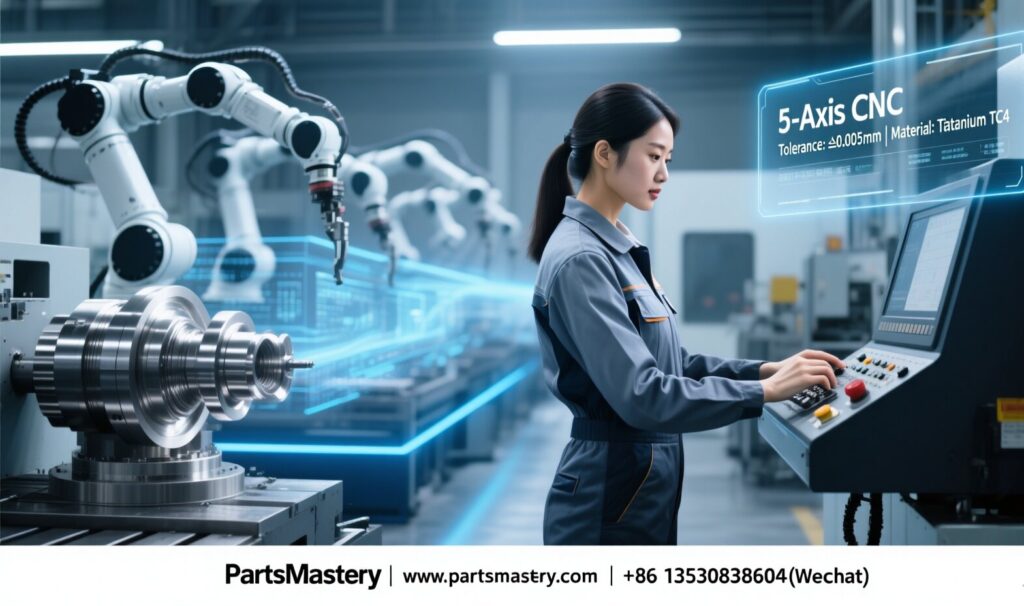
When standard manufacturing components fall short of engineering requirements, custom mold solutions become the backbone of production scalability, precision, and cost-efficiency. At PartsMastery, we have spent years refining the science and art of custom molding—serving industries ranging from automotive and aerospace to medical devices and consumer electronics. A custom mold is not merely a tool; it is an engineered system that dictates the quality, repeatability, and material integrity of every part produced.
This article explores the critical aspects of custom mold design, material selection, manufacturing processes, and quality assurance. Whether you are prototyping a new product or scaling to high-volume production, understanding these factors will help you achieve superior results.
Why Standard Molds Often Fail
Off-the-shelf molds are designed for generic applications. They cannot account for unique geometric features, specific material flow characteristics, or the thermal dynamics of your production environment. When manufacturers force a standard mold into a specialized application, they encounter defects such as warpage, incomplete filling, sink marks, or premature tool wear. A custom mold eliminates these variables by matching the tool’s geometry, surface finish, and cooling channels precisely to your part’s design and material.
Key Stages of Custom Mold Development
1. Part Design Analysis and DFM (Design for Manufacturing)
The journey begins with a thorough review of your part’s 3D model. PartsMastery engineers evaluate draft angles, wall thickness uniformity, rib placement, and gate locations. Using simulation software (Moldflow or similar), we predict how molten polymer or metal will behave inside the cavity. This step identifies potential air traps, weld lines, or excessive shear stress before a single block of steel is cut.
2. Mold Base and Cavity Material Selection
Choosing the right tool steel or aluminum alloy directly impacts mold life, cycle time, and part cost.
-
P20 steel – General-purpose, good for 500,000 to 1 million cycles.
-
H13 or D2 tool steel – High wear resistance, ideal for glass-filled or abrasive materials.
-
Stainless steel (420, 17-4 PH) – Required for medical or food-contact applications.
-
Aluminum (7075 or QC-10) – Rapid tooling for low-volume production or prototyping; faster heat dissipation reduces cycle times by 15–30%.
For high-cavitation molds (32 or 64 cavities), PartsMastery often recommends beryllium-copper inserts in hot zones to achieve uniform cooling.
3. Core and Cavity Machining
Modern custom molds are manufactured using CNC milling, EDM (electrical discharge machining), and wire EDM. Complex 3D contours—such as undercuts, threads, or living hinges—require electrode machining with tolerances as tight as ±0.01 mm. Surface finishes range from as-machined (125 Ra) to mirror polish (5 Ra), depending on the desired part appearance and release properties.
4. Cooling System Design
Cooling represents up to 60% of the total injection molding cycle. A well-designed custom mold incorporates conformal cooling channels that follow the part’s contour. This reduces cycle time by 20–40% and minimizes thermal residual stresses. PartsMastery uses additive manufacturing (3D printed mold inserts) for complex conformal cooling in high-performance tools.
5. Venting and Ejection
Proper venting (0.02–0.05 mm depth) allows trapped air to escape without causing burn marks or short shots. Ejector pin placement must be strategic to avoid visible witness marks on cosmetic surfaces. For delicate parts, we employ stripper plates or air ejectors.
Material Compatibility and Custom Mold Performance
Different polymers and metal alloys behave differently under heat and pressure. A custom mold must account for:
-
Shrinkage rate – Semi-crystalline materials (nylon, PEEK) shrink more than amorphous plastics (ABS, polycarbonate). The cavity dimensions are compensated accordingly.
-
Melt temperature – High-temperature materials (PEI, PPS, PEEK) require mold steels that maintain hardness above 200°C.
-
Corrosion – PVC or flame-retardant additives release corrosive gases; stainless steel or nickel-plated cavities are necessary.
For metal injection molding (MIM) or ceramic injection molding (CIM), the mold must withstand higher clamping forces and incorporate larger runners to accommodate higher-viscosity feedstocks.
Common Custom Mold Applications
-
Automotive – Under-hood connectors, sensor housings, lighting reflectors.
-
Medical – Syringe barrels, surgical instrument handles, IV connectors (Class 100,000 cleanroom compatible).
-
Consumer electronics – Thin-wall laptop bezels, SIM card trays, micro-USB covers.
-
Industrial – Gears, impellers, bearing cages, electrical enclosures.
Each application demands specific mold features: three-plate molds for pin-point gating, hot runner systems to reduce sprue waste, or unscrewing mechanisms for threaded parts.
Quality Assurance and Mold Validation
Before a custom mold enters production, PartsMastery performs rigorous testing:
-
First article inspection (FAI) – 30+ dimensions measured using CMM (coordinate measuring machine) and optical comparators.
-
Process window study – Injection pressure, fill time, and melt temperature are varied to identify robust parameters.
-
Mold flow correlation – Simulation predictions are compared against actual short shots and pressure transducers.
-
Cycle time optimization – Cooling efficiency is validated using thermal imaging.
A complete mold validation report includes cavity pressure curves, part weight consistency (Cpk ≥ 1.33), and dimensional capability data.
Maintenance and Lifecycle Management
Even the best custom mold requires preventive maintenance. PartsMastery recommends:
-
After every 50,000 cycles – Clean vent slots, inspect ejector pins for galling, check hot runner tips for leakage.
-
After 200,000 cycles – Polish cavity surfaces, replace worn guide bushings, recertify mold hardness.
-
After 1,000,000 cycles – Major overhaul: rework parting line, replace core pins, recalibrate hot runner controller.
Properly maintained molds made of H13 steel can exceed 5 million cycles. Storing molds with corrosion inhibitor and desiccant prevents rust, especially when processing hygroscopic resins.
Rapid Custom Molds vs. Production Molds
Not every project requires a hardened steel mold. For product development or low-volume production (under 10,000 parts), PartsMastery offers rapid custom molds machined from aluminum or soft steel. Benefits include:
-
Lead times as short as 10–15 days.
-
50–70% lower tooling cost.
-
Opportunity to validate part design before committing to high-volume tooling.
Once the design is frozen, the rapid mold can be duplicated or modified into a hardened production mold. This two-stage approach minimizes financial risk and accelerates time-to-market.
Industry 4.0 in Custom Molding
Modern custom molds are increasingly equipped with sensors: cavity pressure transducers, mold temperature sensors, and even vibration monitors. These sensors feed real-time data to a central system (MES or SCADA), enabling predictive maintenance and statistical process control. PartsMastery integrates these smart features into molds for clients who run fully automated production cells.
Why Choose PartsMastery for Your Custom Mold?
Every custom mold we manufacture is treated as a long-term partnership. From initial DFM consultation to on-site mold commissioning, our engineers work alongside your production team. We maintain a library of over 500 mold designs, allowing us to benchmark best practices across industries. Whether you need a single cavity insert or a 48-cavity stack mold with hot runners, PartsMastery delivers precision, durability, and documented process capability.
Final Thoughts
Investing in a custom mold is not an expense—it is a capital asset that defines your product’s quality and your manufacturing efficiency. Poor tooling leads to scrap, rework, and missed delivery dates. Properly engineered custom molds from PartsMastery pay for themselves within months through reduced cycle times, lower reject rates, and consistent part geometry.
If you are developing a new product or struggling with an existing mold that fails to meet specifications, reach out to our engineering team. We will analyze your part, recommend the optimal mold construction, and provide a detailed timeline and cost breakdown.
Contact PartsMastery today
For custom mold consultations, quotes, or technical inquiries:
📞 +86 13530838604 (WeChat)
Let us help you turn your design into defect-free production, cavity after cavity.