






Polyvinyl chloride (PVC) ranks among the most widely used general-purpose thermoplastics in modern industry. On top of strong chemical resistance, it offers reliable electrical insulation, stable dimensional performance and excellent cost efficiency. As demand for custom components continues to rise, CNC machining has emerged as the core manufacturing process for PVC parts.
Unlike injection molding, CNC machining requires no upfront tooling investment. Instead, it supports fast prototyping, small-batch production and complex geometry fabrication. Below, we break down PVC machinability, common CNC processes, practical optimization techniques and proven quality control methods to help you achieve consistent, high-quality results.
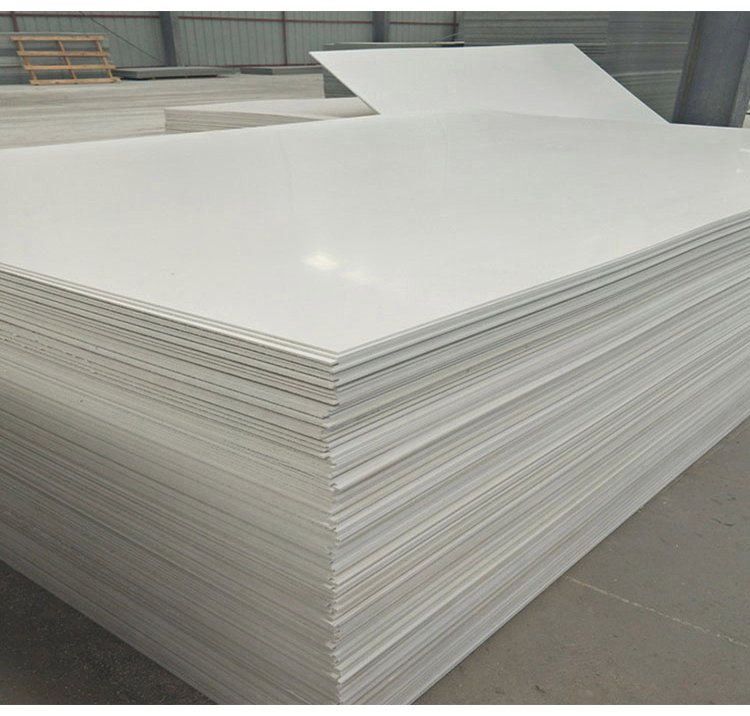
1. Core Machining Characteristics of PVC
Compared with soft plastics like PE and PP, or glass-fiber reinforced engineering plastics, PVC delivers far better overall machinability. In fact, it stands out as one of the easiest plastic materials to process, with highly predictable and repeatable results.
- Low cutting resistance: Moderate material hardness reduces tool load and supports higher feed rates for faster production.
- Good surface finish: Clean cutting edges produce smooth surfaces right out of the machine, with minimal post-work needed.
- Strong dimensional stability: Internal stress releases slowly after machining, so parts experience very little warpage or shrinkage.
- Low tool wear: PVC does not abrade cutting edges quickly, which extends tool life and lowers per-part cost.
2. Main CNC Processes for PVC Parts
PVC works well with most standard CNC machining operations. Engineers typically select specific processes based on part geometry and performance requirements. In practical production, teams often combine multiple processes to complete all features in one single setup.
| Process | Typical Applications | Key Features | Standard Tolerance |
|---|---|---|---|
| CNC Milling | Panels, housings, structural parts | Pockets, slots, contours, curved surfaces | ±0.05mm to ±0.1mm |
| CNC Turning | Shafts, sleeves, rotary parts | Outer diameter, inner bore, tapers, threads | ±0.03mm to ±0.08mm |
| Drilling & Tapping | All assembly-ready parts | Through holes, countersinks, internal threads | ±0.03mm hole position |
2.1 CNC Milling
CNC milling is the most widely used process for manufacturing PVC parts, and it works perfectly for flat panels, enclosures and irregular structural components. With 3-axis or multi-axis milling equipment, manufacturers can finish flat surfaces, pockets, slots, contours and curved surfaces all in a single operation.
This method is particularly well-suited for equipment insulation panels, chemical-resistant structures, jig bodies and custom machine guards. Compared with manual milling, it delivers far better hole positioning accuracy and contour consistency. For this reason, it remains the top choice for low-volume custom PVC parts.
2.2 CNC Turning
For rotationally symmetric PVC parts like shafts, sleeves and pipe fittings, CNC turning delivers the highest production efficiency. The machine follows programmed feed rates to complete outer diameter, inner bore, end face, taper and thread features in one setup. It also maintains excellent concentricity and roundness for every part in a batch.
Common use cases include pipe connection bushings, seal seats, insulating sleeves and roller flanges. For thin-walled PVC rotary components, teams can apply optimized cutting parameters and targeted workholding strategies. These small adjustments greatly reduce clamping deformation and preserve dimensional consistency across full production runs.
2.3 Drilling and Tapping
Almost all industrial PVC parts require pre-machined mounting holes, connection holes and threaded features. This makes CNC drilling and tapping an essential supporting process for most projects. CNC equipment controls hole position, diameter and depth with exceptional precision. It also eliminates the position drift and diameter variation that commonly occur with manual drilling operations.
This process supports through holes, blind holes, countersunk holes, stepped holes and internal threads. For parts with dense hole arrays, it operates much faster and delivers more reliable positional consistency than manual work. As a result, it is an ideal choice for batch components used in automation equipment and electrical cabinets.
?——PartsMastery深度解析-3-scaled.png)
3. Key Optimization Tips for PVC CNC Machining
Many people assume PVC is easy to machine, but poor process control still leads to issues like burrs, deformation and surface whitening. Fortunately, you can optimize three key areas to improve outcomes: cutting temperature, tool selection and workholding strategy. With these small adjustments, you can greatly boost production stability and final part quality.
3.1 Control Cutting Temperature
PVC is a thermoplastic with a relatively low glass transition temperature. Friction from high-speed machining can cause localized softening or even partial melting. This leads to visible issues like surface whitening, melt marks and unwanted dimensional deviation.
You can apply several simple strategies to optimize this part of the process. Start by matching spindle speed and feed rate properly to avoid long continuous cuts in the same area. Next, use forced air cooling to manage heat dissipation. Water cooling is generally not recommended, since moisture absorption can cause minor dimensional changes in PVC material. Finally, opt for layered light cuts on thin-walled parts to reduce heat buildup during each pass.
3.2 Choose the Right Cutting Tools
PVC causes relatively little tool wear, but cutting edge sharpness still directly impacts final cut quality. Dull tools tend to squeeze the material instead of shearing it cleanly. Over time, this leads to more burrs, edge chipping and poorer overall surface roughness.
Keep these guidelines in mind when selecting tools. For general applications, carbide end mills and single-edge end mills designed for plastics work well for most projects. When working on high-precision parts with strict surface finish requirements, polycrystalline diamond (PCD) tools deliver the most reliable results. For drilling operations specifically, opt for high-polish drills with large helix angles to improve chip flow and reduce friction. Most importantly, inspect cutting edges regularly and replace worn tools on schedule. This simple routine forms the foundation of consistent machining quality.
3.3 Optimize Chip Evacuation and Workholding
PVC cutting produces long, continuous ribbon chips. If these chips build up inside the cutting zone, they can scratch the workpiece surface or even wrap around the cutting tool. This kind of disruption directly hurts overall machining stability and part finish. At the same time, improper workholding causes workpiece vibration and deformation, which lowers final dimensional accuracy.
You can apply several practical tips to address both issues. When working with large thin panels, use a vacuum chuck to eliminate clamp marks and reduce deformation risk. For standard parts, use soft jaw vises with moderate clamping force to prevent thin-wall collapse. For deep slots and holes specifically, program dedicated chip-breaking parameters to stop long chips from accumulating. Finally, design custom fixtures for complex irregular shapes to maintain solid machining rigidity throughout the process.
4. Quality Improvement Solutions
4.1 Use Phased Machining to Release Stress
For high-precision PVC parts with uneven wall thickness, we recommend a phased machining workflow: roughing, semi-finishing, and finishing. Roughing removes most of the raw material at high feed rates, leaving a uniform finishing allowance across the part. Semi-finishing then corrects stress deformation from roughing and refines overall contour dimensions. Finally, finishing uses light, precise cuts to meet all final dimensional and surface finish requirements.
This step-by-step approach gradually releases internal material stress. It also prevents part warpage and dimensional springback that often come with large single-pass material removal. Overall, the method works especially well for long, large-format PVC sheet components.
4.2 Run Comprehensive Dimensional Inspection
Dimensional verification after machining sits at the core of any solid quality control process. Even parts with no visible flaws can carry hidden dimensional deviations. If left unaddressed, these issues may later cause assembly failure, poor sealing or other functional problems.
Teams rely on several common inspection methods for PVC parts. For quick checks of standard dimensions, they use vernier calipers, micrometers and height gauges. When measuring complex geometric tolerances like hole position, concentricity and flatness, they use a coordinate measuring machine (CMM). For mass production runs, teams perform a full first-article inspection plus regular batch sampling checks. This approach lets you quickly correct dimensional drift caused by tool wear. Over time, complete inspection records also help refine machining parameters and improve overall production yield.
4.3 Standardize Post-Processing Steps
Post-processing for PVC parts is relatively straightforward, but it directly impacts final appearance and assembly experience. Standard post-processing covers four key steps. First, deburring removes flash and burrs from all cut edges to create smooth, safe part edges. Second, chamfering adds C-chamfers or R-radii to hole edges and part corners for easier, safer assembly. Third, thorough cleaning removes chips, dust and oil residue so parts arrive clean and ready for use. Fourth, protective packaging with pearl cotton or bubble wrap prevents scratches and damage during shipping.
For parts with strict cosmetic requirements, you can also add extra polishing or bead blasting steps. These additional processes further improve surface texture and overall visual quality.
5. Frequently Asked Questions
What accuracy can CNC machining achieve on PVC?
With solid process control in place, PVC parts can consistently hold dimensional tolerances between ±0.05mm and ±0.10mm. For critical features, precision finishing operations can achieve even tighter tolerances. The actual achievable tolerance always depends on part size, structural complexity and wall thickness. For thin-walled and large-format parts, teams usually relax geometric tolerances slightly to account for natural material behavior.
How do I reduce deformation in machined PVC parts?
You can take several practical steps to reduce post-machining deformation. Start by optimizing the machining process with layered cutting and phased operations to gradually release internal stress. Next, improve workholding methods to avoid excessive localized clamping force. You can also add an aging step after roughing. This extra step lets stress fully release before you move on to finishing work. At the design stage, keeping uniform wall thickness also greatly lowers overall deformation risk.
Is CNC machining good for high-volume PVC production?
For low to medium volumes from hundreds to thousands of pieces, CNC machining offers the best cost-performance balance. For volumes over tens of thousands of pieces with mold-friendly geometry, you can evaluate injection molding as a cost-effective alternative. However, for non-standard custom products with frequent design changes, CNC machining delivers far more flexibility than injection molding. This built-in flexibility makes it the stronger choice for most custom manufacturing projects.
Summary
PVC is a high-performance general-purpose industrial plastic with strong overall material properties. When paired with CNC machining, it enables efficient production of high-precision, custom components. These parts reliably meet the needs of chemical, electronics, automation, medical and many other industries.
PartsMastery provides one-stop CNC machining services for all types of PVC materials, including milling, turning, drilling and tapping. We support full-lifecycle needs from initial prototype validation to low-volume production. Our services also include professional DFM manufacturability analysis and full-dimensional inspection. These additional quality steps ensure consistent delivery quality for every single batch of parts.