








قالب قطع غيار السيارات
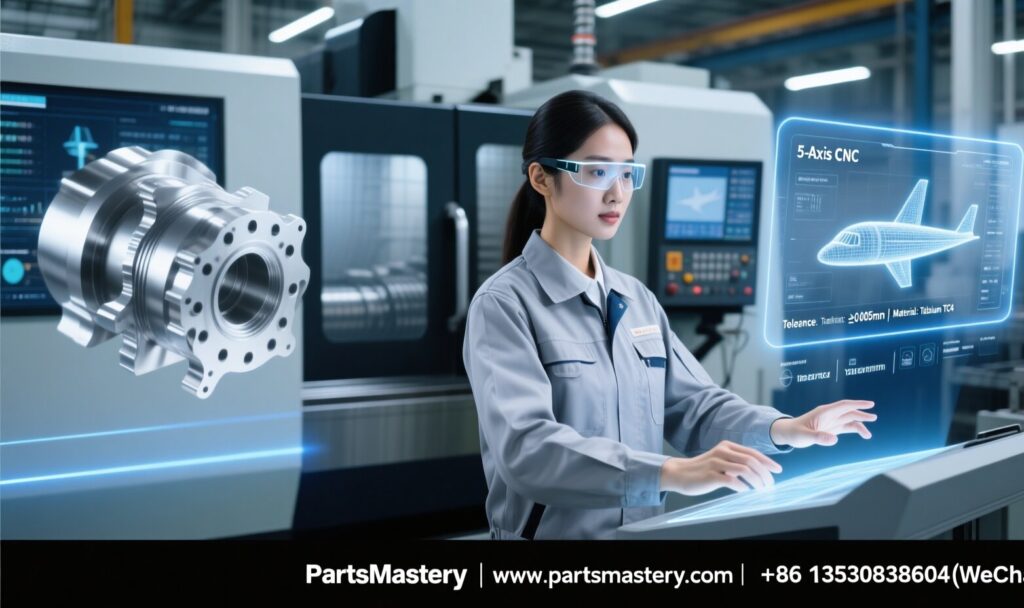
Precision, durability, and repeatability — these three pillars define the backbone of modern automotive manufacturing. At the heart of every bumper, dashboard, engine bracket, or lighting housing lies a carefully engineered auto parts mold. Without high-quality molds, mass production of consistent, safe, and cost-effective vehicle components would be impossible. For workshops, aftermarket suppliers, and OEM lines alike, understanding what makes an auto parts mold reliable can mean the difference between profitable production and recurring downtime.
An auto parts mold is not merely a metal cavity. It is a high-stakes precision tool designed to shape molten polymers, composites, or metals into exact geometries thousands — sometimes millions — of times. In the automotive industry, where tolerances are measured in microns and failure is not an option, the mold’s design directly impacts part weight, structural integrity, assembly fit, and cycle time.
The Core Anatomy of a High-Performance Auto Parts Mold
Every auto parts mold consists of several critical systems: the cavity and core (which define the part shape), the runner system (guiding material flow), cooling channels (controlling solidification), and ejection mechanisms. Advanced molds also incorporate sliders, lifters, and angle pins for complex undercuts — common in interior trim and structural brackets.
What separates a standard mold from an exceptional one? Steel selection. For high-volume automotive production, molds are typically machined from P20, H13, or S136 stainless steel, hardened to 48–52 HRC. Softer steels may suffice for prototyping or low-volume runs, but for Tier 1 suppliers producing 500,000+ parts per year, wear resistance and corrosion protection are non-negotiable.
Cooling channel design has emerged as the silent champion of modern auto parts mold engineering. Conformal cooling — where 3D-printed channels follow the contour of the part — can reduce cycle times by 20% to 40% while eliminating warpage and sink marks. For electric vehicle battery housings or under-hood components, uniform cooling is directly linked to dimensional stability under thermal stress.
Why Mold Quality Directly Impacts Production Profitability
Consider a real-world scenario: An auto parts mold for a front grille assembly runs on a 1,200-ton injection machine. Each cycle consumes material, electricity, and labor. If the mold requires frequent cleaning due to poor venting or suffers from premature wear around shut-off surfaces, the line stops. Each stop costs an average of $200–$500 per hour in lost output, plus rework or scrap.
Conversely, a precision-ground auto parts mold with optimized venting, hardened guide pins, and balanced runner geometry can run unattended for 72-hour shifts. Parts emerge flash-free, with consistent gloss and correct hole locations. That is the difference between marginal and high-margin manufacturing.
For aftermarket parts suppliers, mold quality also affects brand reputation. A poorly molded auto part may exhibit sink marks, weak weld lines, or incorrect clip geometry — leading to customer returns and negative reviews. PartsMastery understands that every auto parts mold shipped from our facility must pass coordinate measuring machine (CMM) validation and real-world assembly testing.
Material Innovation and Mold Compatibility
Automotive materials have evolved rapidly. Lightweighting drives adoption of glass-filled nylon, long-fiber polypropylene, and even carbon-fiber reinforced thermoplastics. These abrasive materials demand specialized mold coatings. Titanium aluminum nitride (TiAlN) or diamond-like carbon (DLC) coatings on cavity surfaces can multiply mold life by 3x when processing 30% glass-filled resins.
Similarly, for elastomeric components like gaskets and seals, liquid silicone rubber (LSR) molds require cold runner systems and precision venting to avoid flash. An auto parts mold designed for LSR differs fundamentally from one intended for ABS or polycarbonate — a fact many generalist toolmakers overlook. PartsMastery designs material-specific molds, matching steel grade, surface finish, and thermal expansion coefficients to the resin’s behavior.
Common Auto Parts Mold Failures and How to Prevent Them
Even the best auto parts mold will eventually wear, but predictable maintenance is far cheaper than emergency repair. The most common failure points include:
-
Gate wear or corrosion – Leads to inconsistent fill and short shots. Prevention: replaceable gate inserts and regular flow simulation checks.
-
Ejector pin binding – Causes part deformation or stuck components. Prevention: guided ejector sleeves and periodic lubrication.
-
Cooling channel clogging – Results in hot spots and extended cycle times. Prevention: deionized water loops and annual descaling.
-
Parting line damage – Creates flash and requires mold disassembly. Prevention: hardened parting line inserts and careful clamp force calibration.
Routine preventive maintenance after every 50,000–100,000 cycles extends mold life by 200% or more. PartsMastery provides detailed maintenance schedules with every auto parts mold, including recommended spare parts kits.
Custom Auto Parts Mold vs. Off-the-Shelf Tooling
For unique vehicle platforms or low-volume heritage models, custom auto parts mold design is the only path forward. Off-the-shelf molds — where they exist — rarely accommodate specific insert positions, mounting bosses, or cooling line routing required by a given assembly.
Custom design begins with 3D modeling in SolidWorks or NX, followed by mold flow analysis to predict fill patterns, air traps, and weld lines. Steel cutting via CNC and EDM follows, with final hand polishing of critical surfaces. The entire process typically takes 6 to 12 weeks for a family mold (multiple parts per shot) or 4 to 6 weeks for a single-cavity prototype mold.
For customers requiring rapid iteration, aluminum prototype molds can be produced in as little as 10 business days. While they last only 10,000–20,000 cycles, they allow functional testing and early validation before committing to production steel.
Sourcing Auto Parts Molds: What Buyers Must Verify
When procuring an auto parts mold from any supplier — including PartsMastery — buyers should request three documents: a material certification (confirming steel grade and hardness), a CMM inspection report (verifying critical dimensions within ±0.02mm), and a sample part batch (first article inspection). Additionally, clarify who owns the mold CAD data and whether future modifications require original tooling access.
Mold shipping and import terms also matter. A 1,500 kg auto parts mold requires crating with corrosion inhibitors and lift points. PartsMastery coordinates logistics to any global manufacturing hub, including documentation for customs clearance.
Future Trends: Smart Molds and Digital Twins
The next generation of auto parts mold technology integrates sensors directly into the tool. Pressure transducers, thermocouples, and even accelerometers embedded near the cavity provide real-time data to molding machines, enabling closed-loop process control. If a cavity pressure deviates due to viscosity shift, the machine adjusts injection speed or holding pressure instantly — reducing scrap to near zero.
Digital twin simulation now allows moldmakers to predict fatigue life before cutting first steel. By simulating 1 million cycles in software, potential stress risers can be eliminated, and gate locations optimized for balanced fill. PartsMastery employs these tools for every auto parts mold destined for high-volume automotive contracts.
الخاتمة
An auto parts mold is more than a tool — it is a long-term asset that determines part quality, production efficiency, and ultimately, customer satisfaction. Whether you need a single prototype cavity or a high-cavity production mold for interior, exterior, or under-hood components, the choice of design, steel, cooling, and maintenance defines your success.
At PartsMastery, every auto parts mold we deliver reflects decades of automotive tooling experience. From material selection to final sampling, we build molds that run reliably, part after part. For inquiries, engineering consultations, or to request a quote, contact قطع الغيار at +86 13530838604 (WeChat). Let us help you master your next production run.