



Large mechanical parts form the core load-bearing structure of industrial equipment, including heavy frames, machine bases, long drive shafts, large connecting flanges, and machine tool beds. Their dimensional accuracy, geometric tolerances, and structural stability directly determine the operational reliability of entire equipment sets. Unlike small precision components, the biggest challenges in large workpiece machining go far beyond size and weight. Teams must also manage deformation during heavy material removal, maintain datum consistency across multi-sided operations, preserve accuracy over long travel distances, and secure heavy workpieces reliably. Applying standard small-part machining processes directly almost always leads to insufficient travel, clamping deformation, cumulative tolerance errors, and lost efficiency.
At PartsMastery, we operate large-travel gantry machining centers, heavy-duty CNC lathes, and a complete set of precision metrology equipment. We specialize in custom CNC machining for large mechanical components, delivering one-stop solutions from DFM manufacturability review and process planning through precision machining and final inspection. Our services cover the full project lifecycle, from prototype trials and single-piece customization to small and medium batch production.
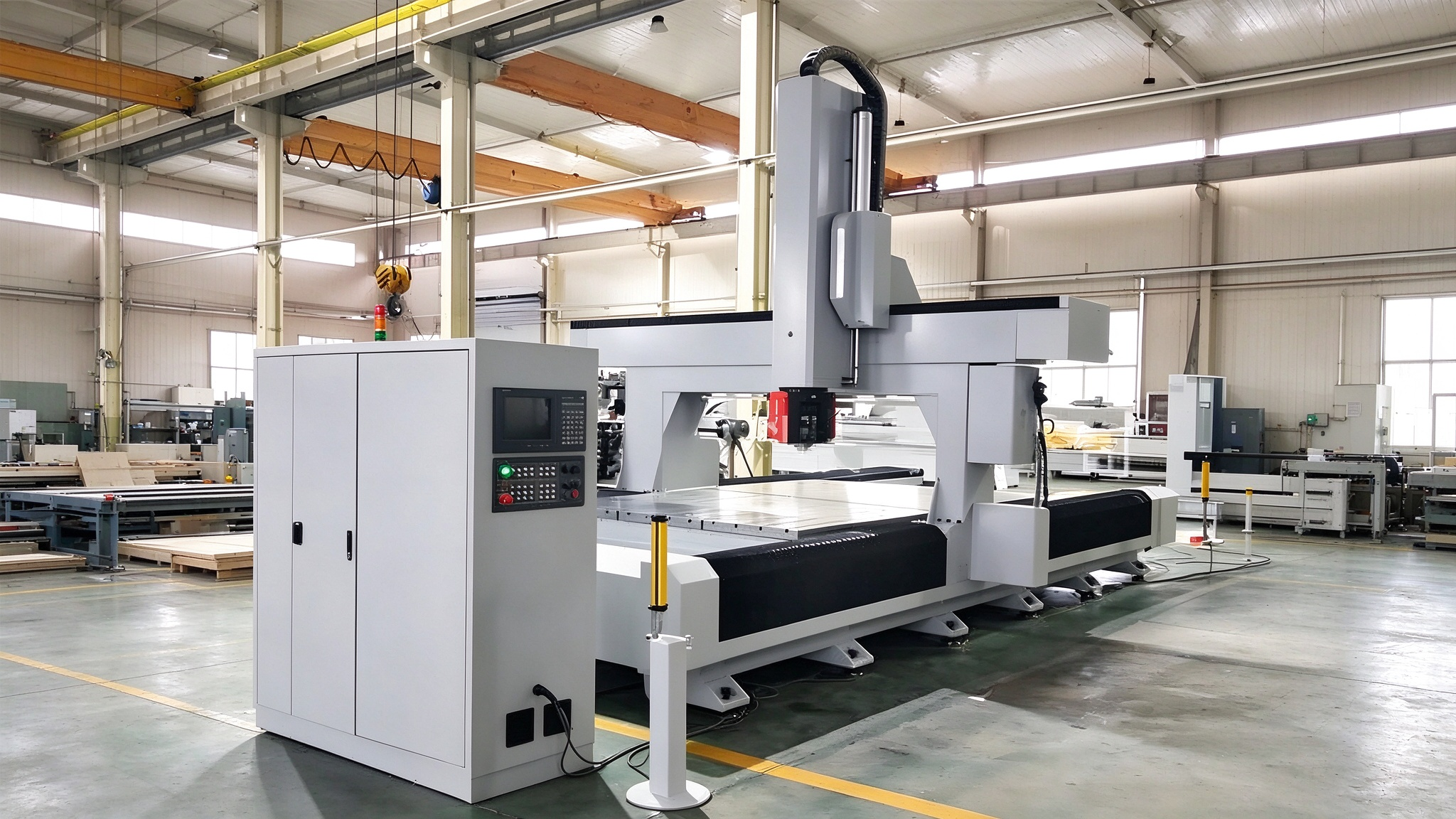
1. Core Machining Challenges for Large Mechanical Parts
1.1 Machine Travel and Clamping Boundary Limits
Before production begins, engineering teams must carefully verify workpiece length, width, height, and weight, along with clearance for tooling and fixturing. If a workpiece exceeds the machine work envelope, teams must split the job across multiple setups. This not only lengthens production cycles but also introduces cumulative positioning errors that directly degrade relative positional accuracy across multi-sided features. Evaluating machine capability up front is the essential first step for confirming process feasibility.
1.2 Heavy Material Removal and Structural Deformation Risk
Large parts typically require high material removal volumes. Cutting forces and cutting heat act continuously on the workpiece, and when combined with self-weight, clamping forces, and internal residual stress, they can easily cause elastic deformation and stress springback in long shafts, thin-wall sections, and asymmetric structures. Uneven stress release after roughing can also cause dimensional drift after finishing, which ultimately pushes geometric tolerances out of specification.
1.3 Datum Consistency Across Multi-Sided Operations
Large workpieces usually require machining on top, side, bottom, and end faces to create mounting surfaces, hole patterns, and cavities. If each operation uses a different positioning datum, errors accumulate step by step. The result is often misaligned holes and non-coplanar mating surfaces, which raise assembly difficulty at the installation site. A unified datum system is therefore the foundational principle for maintaining accuracy on large parts.
2. Core Machining Processes and Application Matching
Different large-part geometries call for matched machining processes to strike the best balance of accuracy, efficiency, and cost.
| Machining Process | Suitable Part Features | Core Process Value |
|---|---|---|
| Gantry CNC Milling | Large frames, bases, machine beds, plate-type structural parts | Completes multi-face milling and hole pattern machining in one setup for improved flatness and positional accuracy |
| Heavy-Duty CNC Turning | Long drive shafts, large flanges, rollers, sleeve-type rotary parts | Maintains stable control of OD, end face, and concentricity for heavy long-shaft workpieces |
| Precision Boring | Large-diameter deep holes, coaxial hole patterns, bearing mounting bores | Improves bore accuracy, cylindricity, and hole-to-hole concentricity for high-precision assembly requirements |
| Multi-Axis Simultaneous Machining | Complex curved surfaces, angled hole patterns, irregular structural parts | Reduces setup count and completes multi-angle features in one positioning to minimize cumulative error |
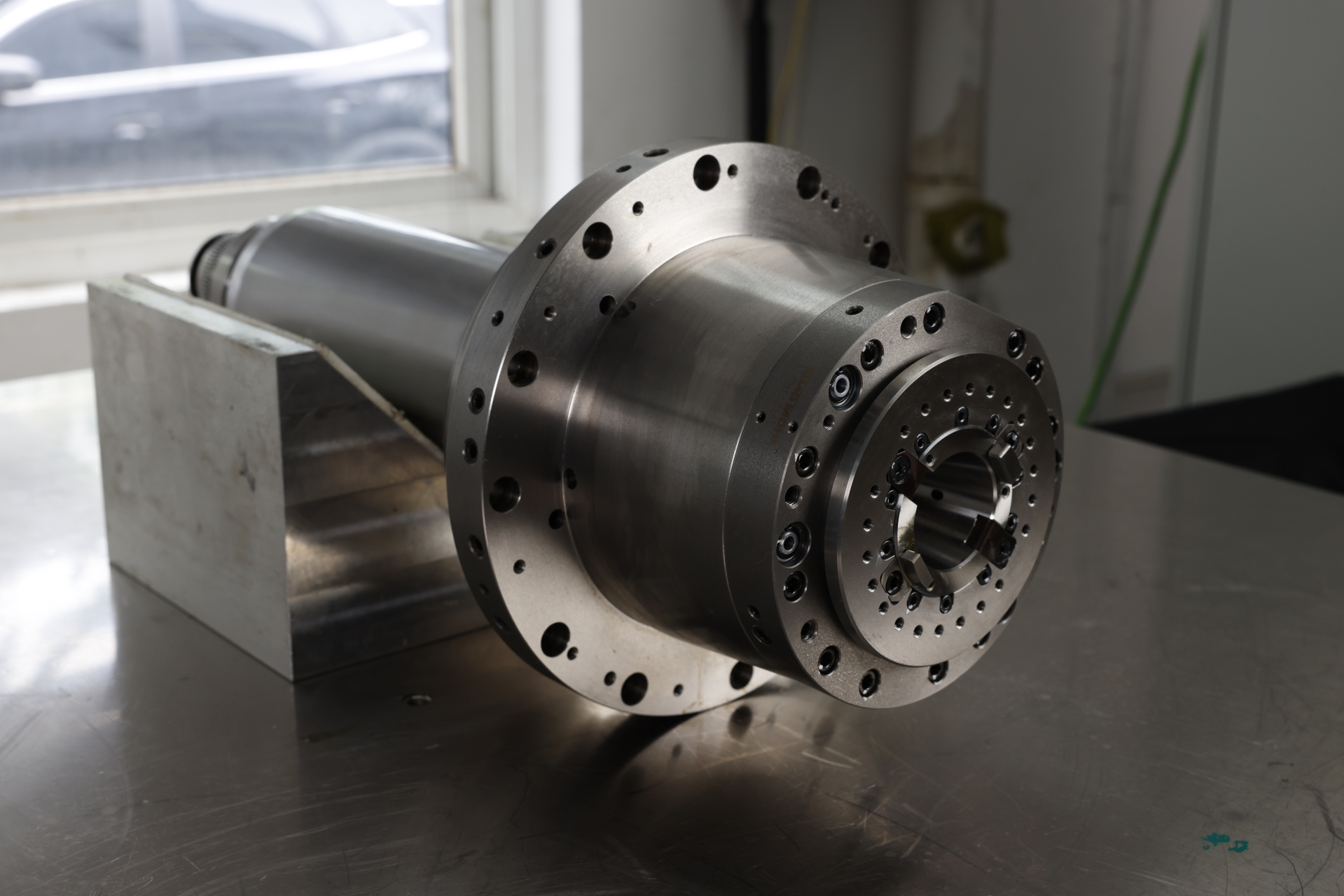
3. Systematic Control for Accuracy and Deformation
Accuracy on large parts never comes from a single operation; it depends on systematic control across the entire production flow. At PartsMastery, we apply four core measures to keep machining deformation and dimensional accuracy under stable control.
3.1 Unified Datum Strategy and Process Planning
We establish a unified positioning datum system at project kickoff and complete critical features in the same setup wherever possible. We also sequence operations carefully so later machining steps do not damage reference surfaces. This approach reduces error accumulation from datum conversions at the source.
3.2 Separated Roughing and Finishing with Stress Management
We follow a graded process route: roughing, stress relief, semi-finishing, and finishing. After roughing removes the bulk of excess material, we apply stress relief aging to release internal residual stress before moving to final finishing. Symmetrical cutting and layered toolpath strategies further reduce cutting forces and thermal deformation effects.
3.3 Custom Fixturing and Support Design
For long shafts, thin-wall sections, and asymmetric workpieces, we design dedicated fixturing with multi-point support and auxiliary jacking. This spreads clamping force evenly, prevents clamping-induced deformation, and increases overall system rigidity to suppress chatter and maintain surface quality and dimensional stability.
3.4 In-Process Inspection Between Operations
We perform in-process dimensional checks at key nodes — after datum machining, after critical surface forming, and after hole pattern machining. This lets us detect dimensional deviations early and adjust parameters before errors carry through to final operations, which greatly reduces rework and scrap costs.
4. Full-Process Quality Control and Delivery Assurance
4.1 Upfront DFM Manufacturability Review
Before production starts, we run a full manufacturability analysis based on 3D models and 2D drawings. We evaluate machine travel, clamping feasibility, structural deformation risk, and tolerance reasonableness, and we provide early optimization recommendations. This reduces production risk and manufacturing costs at the design stage itself.
4.2 In-Production Quality Control
We enforce a four-tier quality system: incoming material inspection, first-article CMM inspection, in-process patrol checks, and final full inspection. For large workpieces, we use portable measuring arms and laser trackers to verify key dimensions on-machine, which avoids the efficiency loss of repeated lifting and repositioning.
4.3 Finished Part Protection and Logistics Delivery
After machining, all parts go through deburring, edge breaking, and rust prevention treatment. For precision mating surfaces, we apply custom protective packaging. We also design dedicated support and fixation schemes matched to workpiece weight and geometry to prevent impact damage, deformation, and corrosion during transport. This ensures parts arrive on site ready for assembly.
5. Cost Optimization and Efficient Production Recommendations
Large-part machining costs depend on many interrelated factors. With thoughtful design and process planning, teams can significantly reduce total manufacturing cost while preserving functional performance.
The core cost drivers include material grade and blank specification, structural complexity and stock allowance, tolerance grade, surface treatment requirements, and production volume. Unnecessarily tight tolerances, poorly optimized wall thicknesses, and excessive machining stock all drive up machining time and total cost substantially.
For efficient production launch, we recommend the following practices:
- Provide complete 3D models and 2D engineering drawings with clear critical vs. non-critical tolerances to avoid over-machining
- Prefer standard profile sizes and common blank specifications to reduce custom blank lead time and cost
- Evaluate manufacturability during the design phase and optimize part geometry for machinability to simplify unnecessary features
- For batch orders, stabilize processes and optimize scheduling to amortize programming and setup cost across more parts
Conclusion
All things considered, large mechanical part machining is a combined test of equipment capability, process expertise, and quality systems. Only systematic control across the full chain — from datum design and fixturing strategy through cutting strategy and final inspection — can deliver consistent, high-accuracy, high-reliability manufacturing for heavy structural components.
With large-travel machining equipment and proven expertise in heavy part production, PartsMastery provides custom large-component machining services for industrial equipment, machine tools, automation, and energy customers. From single-piece customization to batch production, we maintain dimensional accuracy and delivery reliability at every stage, helping customers bring equipment development and production to market efficiently.