





Motorcycle braking systems are the core safety unit for every bike. They define deceleration performance, braking response, and overall riding stability. Beyond ride quality, brake parts directly impact rider safety. Their dimensional precision, fit consistency, and structural strength all shape reliable real-world performance.
In recent years, demand has grown sharply for high-performance and custom motorcycles. This includes track racing bikes, custom power sports builds, and electric two-wheelers. As a result, traditional machining methods are hitting clear practical limits. They struggle with complex geometries, tight tolerances, and small-batch custom orders.
To overcome these challenges, CNC precision machining offers a proven, efficient solution. It combines 3-axis, 4-axis, and 5-axis milling with precision CNC turning. This technology delivers consistent accuracy and repeatability for every brake component.
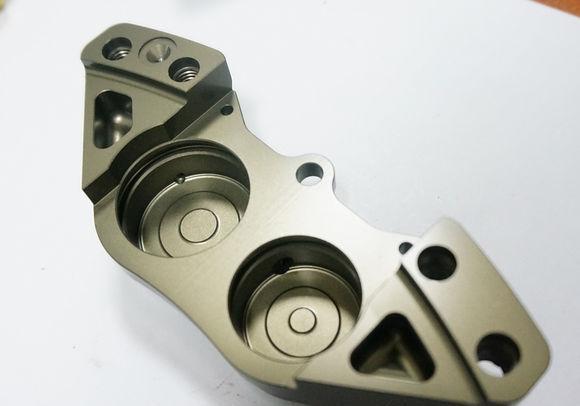
At PartsMastery, we specialize in precision component manufacturing for the power sports sector. We provide full-spectrum CNC machining services for all types of brake parts. These include caliper brackets, mounting assemblies, and other high-performance components. Our support covers the full project lifecycle, from prototype validation to full-scale mass production.
1. Core Machining Requirements for Motorcycle Brake Components
Brake component performance depends on three linked factors: manufacturing accuracy, material properties, and structural design. For motorcycles’ lightweight, high-load operating conditions, machining must meet two non-negotiable core criteria.
1.1 Strict Dimensional and Assembly Tolerance Control
First and foremost, brake parts require precise fit with surrounding vehicle components. This applies to caliper brackets, brake levers, adapters, and mounting bases. It also applies to smaller hardware like bushings and pins. Each part must align perfectly with calipers, front forks, and wheel hubs.
Even minor dimensional deviations can cause noticeable performance issues. For example, misaligned holes or poor flatness can degrade assembly fit. They may also lead to uneven brake wear or slower braking response. These risks make tight tolerance control essential for rider safety.
To meet this high standard, every production step requires careful control. This includes optimized CAD/CAM programming and precise workpiece positioning. It also covers dedicated fixturing and routine coordinate dimensional inspection.
At PartsMastery, our CNC platform delivers industry-leading precision. We hold a typical tolerance of ±0.01 mm across standard production parts. Additionally, we can adjust precision levels to match your specific design and assembly specifications.
1.2 Balance Between Lightweight Design and Structural Strength
A second core requirement is balancing structural strength with weight savings. Motorcycle brake parts must withstand high mechanical loads during hard braking. At the same time, they need to stay light for sharper handling and better power delivery.
For most structural brake parts, aluminum alloys are the preferred material choice. Common grades include 6061-T6 and 7075-T6 aluminum. They offer an excellent strength-to-weight ratio and reliable machinability. These materials work perfectly for caliper brackets and mounting supports.
For more demanding operating conditions, alternative materials deliver better results. For instance, stainless steel and alloy steel offer higher wear resistance. They also provide improved fatigue performance under sustained heavy use.
At PartsMastery, we tailor material choices to each individual project. We match materials to your use case, performance targets, and operating environment. In short, we help you strike the ideal balance of strength and weight.
2. Key CNC Precision Machining Processes for Brake Components
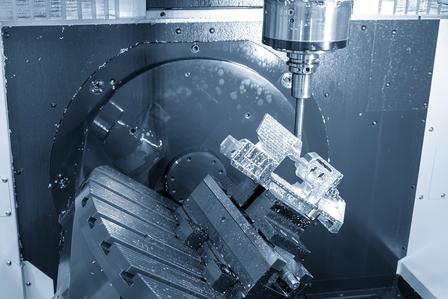
Not all brake components use the same machining approach. Different geometries and performance goals call for different production processes. Choosing the right method balances precision, production efficiency, and overall cost.
2.1 CNC Milling
CNC milling is the primary production process for many brake components. It works best for parts with multiple mounting holes and complex outer contours. Common examples include caliper brackets, mounting bases, and adapter plates.
Depending on part complexity, we deploy 3-axis, 4-axis, or 5-axis milling machines. For parts with curved surfaces or thin-wall structures, 5-axis machining is often the optimal choice. It also excels with angled features and multi-sided part geometries.
Most importantly, 5-axis machining cuts down on repeated part setups. This reduces positional error across different machined faces. It also lowers cumulative error from multiple separate operations. The end result is more consistent part quality across every production batch.
2.2 CNC Turning
By contrast, rotary brake components work best with CNC turning technology. These parts include bushings, sleeves, pins, and precision shims. Turning delivers precise control over outer diameter, inner diameter, end faces, grooves, and threads.
For motorcycle brake parts, batch-to-batch consistency is critically important. CNC turning excels at delivering uniform dimensions run after run. Furthermore, it works equally well for prototype parts and full production volumes. This gives manufacturers maximum flexibility as projects scale up.
2.3 Multi-Operation Integrated Precision Machining
Some complex brake parts require more than one type of machining process. They may need milling, drilling, tapping, boring, and chamfering all on a single component.
To handle this complexity, we use integrated multi-operation machining workflows. We pair optimized process flows with precision fixturing and in-process dimensional checks. This approach reduces cumulative error from multiple separate setups. It also ensures critical assembly dimensions stay within tight specifications.
3. Machining Solution Matrix for Typical Motorcycle Brake Components
Below is a quick reference guide for common brake component manufacturing. It matches each part with recommended materials, core processes, and key quality control points.
| Brake Component | Common Materials | Primary Machining Process | Key Quality Control Points |
|---|---|---|---|
| Brake Caliper Bracket | 6061-T6, 7075-T6 Aluminum Alloy | CNC Milling, Drilling, Tapping | Mounting hole position, flatness, dimensional tolerance |
| Brake Mounting Base | 6061-T6, 7075-T6 Aluminum Alloy | 3-axis / 5-axis CNC Milling | Hole positioning accuracy, contour dimensional tolerance |
| Brake Bushing | Aluminum Alloy, Stainless Steel | CNC Turning | Inner/outer diameter, concentricity, surface finish |
| Brake Pin | Stainless Steel, Alloy Steel | CNC Turning, Precision Grinding | Outer diameter, roundness, surface wear resistance |
| Brake Lever | Aluminum Alloy | CNC Milling | Contour geometry, hole position, grip ergonomics |
| Brake Adapter | Aluminum Alloy, Stainless Steel | Combined CNC Milling & Turning | Thread quality, hole position, assembly fit precision |
4. PartsMastery End-to-End Precision Machining Service Framework
At PartsMastery, we deliver a complete end-to-end manufacturing service chain. We support your project from initial design optimization all the way to final delivery. Our full-cycle engineering support covers every stage of brake component production.
4.1 CAD Data Intake and DFM Manufacturability Analysis
The process starts when we receive your design files. We work seamlessly with both 2D engineering drawings and 3D CAD models.
Next, our in-house engineering team runs a thorough DFM review. DFM stands for Design for Manufacturing. The review covers material selection, wall thickness, and hole placement strategy. It also evaluates overall machinability and fixturing feasibility.
This proactive step catches potential manufacturing issues early in the project. It reduces costly redesigns and avoids unnecessary delays once production begins.
We offer this engineering support for all project types and production volumes. This includes prototype development, low-volume trial runs, and full mass production. In every case, our goal is to maximize manufacturability and production efficiency.
4.2 Material Selection and Custom Process Parameterization
After design review, we select the optimal material for your specific application. We base this choice on several key performance factors. These include load requirements, weight targets, and corrosion resistance needs. We also account for your operating environment and real-world use case.
Once material is finalized, we define custom process parameters for production. This includes selecting the right cutting tools, fixturing solutions, and process sequence. We calibrate all settings to match the chosen material and part geometry. Careful upfront process planning minimizes machining deformation and dimensional variation.
4.3 High-Precision CNC Machining Execution
Once all planning is complete, we move to full production machining. We select the ideal machine tool for each part’s level of geometric complexity. This may be a 3-axis, 4-axis, or 5-axis CNC machining center.
For intricate brake brackets, we use multi-axis simultaneous machining. This cuts down on part setups and reduces cumulative alignment error. For rotary parts like bushings and pins, we use dedicated CNC turning centers. This delivers consistent dimensional accuracy and high production efficiency.
4.4 Surface Finishing and Comprehensive Quality Inspection
After primary machining, parts move to surface finishing and final quality inspection.
We offer a full range of post-machining surface treatment options. These include standard anodizing, hard anodizing, sandblasting, and precision polishing. We also provide electroplating and powder coating services. These treatments boost corrosion resistance and deliver a premium finished appearance.
Importantly, brake components require strict, focused quality inspection. These are safety-critical parts, so no detail is overlooked. We verify key dimensions, hole positions, thread quality, and surface finish. We also confirm all assembly-critical features meet your exact specifications. This rigorous process ensures every delivered part performs as intended.
5. Application Scenarios and Project Value
Our precision machining solutions serve a wide range of motorcycle market segments. They work for standard production bikes, professional racing machines, and high-end custom builds. They also fit perfectly for electric motorcycle development programs.
For new product development, CNC machining delivers clear strategic benefits. Specifically, it enables fast prototyping and rapid functional validation. This cuts overall R&D timelines significantly and speeds time to market.
Once your design is fully validated, scaling up production is straightforward. We can quickly establish stable production processes and formal quality control protocols. This lets you transition smoothly from low-volume trial runs to full mass production.
For parts with complex geometry or strict lightweight requirements, we offer fully custom solutions. We combine milling, turning, and multi-axis machining as needed to hit your targets. Every step of the workflow can be adjusted to match your unique project needs. This includes material selection, DFM analysis, prototyping, and final production.
Precision brake manufacturing is about more than just hitting dimensional targets. It is a systematic process with many interconnected, equally important pieces. Material choice, structural design, machining technique, surface finishing, and quality control all play a role. Together, they determine final component performance and long-term assembly consistency.
With the right CNC manufacturing partner, you can meet even the strictest industry requirements. PartsMastery brings full in-house CNC capabilities to every power sports project. We offer milling, turning, and multi-axis machining all under one roof.
We serve power sports customers around the world with flexible, reliable manufacturing support. Our coverage spans early prototypes, low-volume production trials, and full-scale mass manufacturing. Ultimately, we help you move efficiently from design validation to stable, high-volume production.