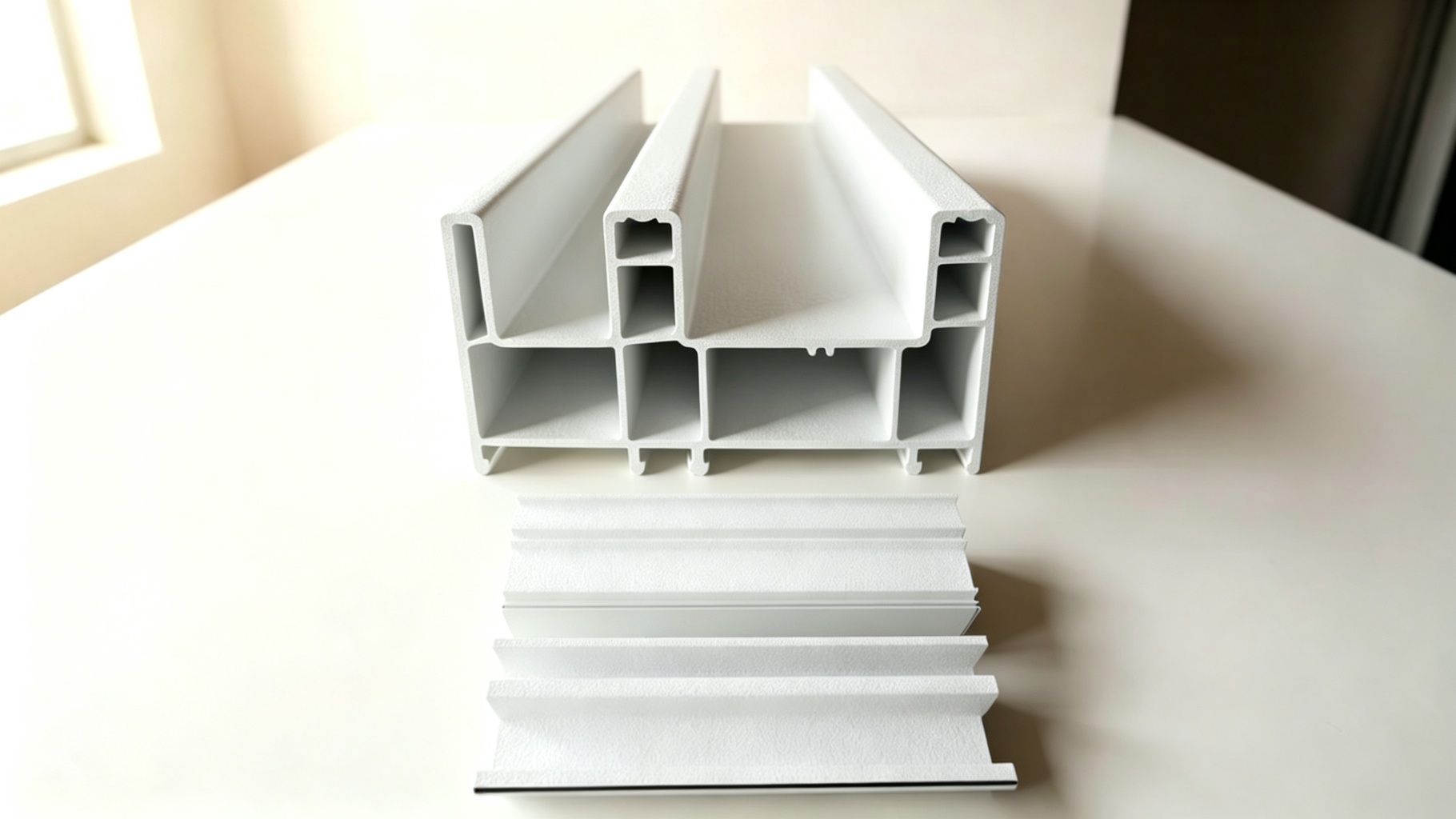
PVC extrusion represents a standard manufacturing process for continuously producing constant-cross-section parts from polyvinyl chloride. It finds widespread use in window frame profiles, electrical conduit, sealing gaskets, decorative trim, and custom extruded profiles. Compared to injection molding, PVC extrusion offers lower tooling costs, higher production rates, and better suitability for long continuous parts. However, unlike most thermoplastics, PVC has a narrower processing window and requires tighter process control.
Many engineers underestimate the process complexity of PVC extrusion during their first project. They assume that a die alone will produce acceptable parts. In reality, though, PVC compound formulation, temperature control, cooling calibration, and die flow balancing jointly determine final dimensional accuracy and surface quality. This guide starts from the basic definition of PVC extrusion. Subsequently, it systematically explains the five-stage process flow, the special processing behavior of PVC, the essential differences between rigid and flexible PVC, common profile types, process limitations, design guidelines, material comparisons, and supplier selection criteria. Ultimately, the goal is to help engineers make correct technical decisions at the early project stage.
1. What Is PVC Extrusion?
PVC extrusion is a continuous molding process. Specifically, it melts a formulated PVC compound, forces it through a die with a specific cross-section, calibrates the extrudate to target dimensions, cools it to solidify, and cuts it to length. Throughout production, the cross-section remains constant along the entire length.
In fact, PVC extrusion belongs to the broader family of general plastic extrusion processes. Its equipment principles are similar to other thermoplastic extrusion operations. The primary difference, however, lies in material behavior. Polyvinyl chloride is a chlorine-containing amorphous thermoplastic. Furthermore, it is heat-sensitive and decomposes at high temperatures, releasing hydrogen chloride (HCl). As a result, its formulation and processing temperature control require more precision than polyolefins such as polyethylene and polypropylene.
Consequently, PVC extrusion suits the following part types: constant-cross-section parts that maintain the same profile along their length; composite profiles that combine rigid and flexible materials through co-extrusion; and medium-to-high volume production runs that justify tooling costs. Parts with varying cross-sections, deep undercuts, or features on multiple faces are better suited for injection molding or machining.
2. Five Stages of the PVC Extrusion Process
The PVC extrusion process consists of five critical stages. Each stage directly affects final profile dimensional accuracy and surface quality. Furthermore, loss of control at any single stage can lead to warping, out-of-tolerance dimensions, or surface defects.
2.1 PVC Dry Blend Preparation
PVC resin is almost never extruded alone. Rigid PVC formulations require thermal stabilizers to prevent hydrogen chloride release during processing. They also need lubricants to control melt flow and prevent melt adhesion to hot metal surfaces. Additional ingredients include processing aids, fillers, pigments, and UV absorbers. Meanwhile, flexible PVC formulations require plasticizers to impart softness.
Typically, the compound mixes in a high-speed mixer to achieve uniform dispersion and preheating. It then transfers to a cooling mixer to lower the temperature and prevent premature PVC degradation. The resulting dry blend can feed directly into the extruder or be pelletized into pre-compounded granules. Ultimately, the formulation defines the processing window before material ever enters the machine.
2.2 Plastification Control
Rigid PVC dry blends typically use conical twin-screw extruders or parallel twin-screw extruders. Twin-screw machines convey powder at lower shear rates and provide more uniform mixing, which is ideal for PVC—a shear-sensitive material. On the other hand, flexible PVC and pelletized compounds typically use single-screw extruders.
Within industry-published ranges, rigid PVC extrusion melt temperatures typically run 170–200°C. Flexible PVC extrusion temperatures are slightly lower, around 150–190°C. These ranges are reference values only. Actual optimum temperatures depend on the specific compound and product requirements, following the material supplier’s datasheet. Overheating causes PVC degradation and discoloration. In contrast, insufficient temperature leads to poor fusion and rough surfaces.
2.3 Melt Flow Through the Extrusion Die
The extrusion die transforms the circular melt flow into the desired profile cross-section. However, die dimensions do not directly equal final product dimensions. The melt undergoes die swell as it exits the die, then shrinks as it cools. Therefore, the actual die dimensions are typically slightly larger than the final product size. They adjust progressively during sampling and trial runs.
Notably, flow balance matters more than the external outline. Thick-wall and thin-wall regions must fill at the same rate. Otherwise, thin sections under-fill while thick sections over-fill, causing distortion and uneven dimensions. Die design uses restrictor bars, flow diverters, and streamlined channels to balance melt velocity across all regions.
PVC extrusion die close-up: molten PVC exits the die; die flow channels and distributors determine the profile shape
2.4 Profile Calibration and Cooling
The extrudate exiting the die remains in a soft, molten state. It immediately enters a vacuum calibration tank, which applies negative pressure to draw the outer surface against the calibrated die walls. This holds the profile to precise target dimensions simultaneously. Water cooling or air cooling lowers the profile temperature below the glass transition temperature to solidify it.
Furthermore, cooling rate directly affects residual stress and dimensional stability. Slow, uneven cooling causes profile warpage. Conversely, rapid cooling of thick sections creates excessive internal-external temperature gradients, leading to stress concentration and surface sinks. Proper cooling design gradually reduces temperature according to wall thickness distribution, ensuring uniform solidification throughout the cross-section.
2.5 Pulling and Cutting
A haul-off machine pulls the calibrated and cooled profile forward at a constant speed. The pulling speed precisely matches the extrusion output. Meanwhile, an in-line cutter or saw cuts the profile to the required length without stopping the line. Consistent cut length is critical for downstream frame assembly or field installation.
In addition, secondary operations remain important for PVC extrusions. Solvent cementing and thermal welding enable rigid PVC frame assembly. Punching, slotting, and post-extrusion CNC machining create holes and mating surfaces that the die cannot form directly. Typically, these secondary processes occur after in-line cutting to length.
3. Why PVC Behaves Differently in Extrusion
Four material characteristics distinguish PVC from most other extruded thermoplastics. Understanding these characteristics is the key to mastering PVC extrusion and avoiding common design and processing mistakes.
Narrow processing window: PVC begins to degrade near its flow temperature. Most plastics tolerate a wide temperature range between melting and combustion, but PVC does not. Slight temperature deviations can cause degradation or surface defects.
Thermal decomposition releases HCl: Overheating causes hydrogen chloride to escape from the polymer. This discolors the profile from normal to yellow to brown, creates surface defects, and corrodes extruder screws and barrels.
Compound drives the process: Polyolefins run reliably based on temperature settings alone. On the contrary, PVC processing performance depends heavily on stabilizer and lubricant ratios. Two identical extruders running different PVC compounds produce different results.
High cooling sensitivity: Rigid PVC is predominantly amorphous with a relatively high coefficient of thermal expansion (approximately 50–80 × 10⁻⁶/°C). This exceeds aluminum and glass-fiber-reinforced materials, which matters for tight-fit assemblies and long profile runs.
4. Rigid vs. Flexible PVC Extrusion
Rigid PVC and flexible PVC belong to the same base polymer. The essential difference lies in plasticizer loading in the formulation. Plasticizer content determines material hardness, flexibility, low-temperature performance, and application suitability.
Rigid PVC (also written as uPVC or RPVC) can be joined by solvent cementing and thermoplastic welding, enabling convenient on-site frame assembly. Meanwhile, flexible PVC is not a single hardness grade but a continuous spectrum: plasticizer loading adjusts to the target hardness. Higher plasticizer content improves low-temperature flexibility but reduces tensile strength, tear resistance, and dimensional stability.
5. Common PVC Extrusion Product Types
PVC profile extrusion covers five major geometric families. Each family has specific design rules and typical applications.
5.1 Rigid PVC Profiles
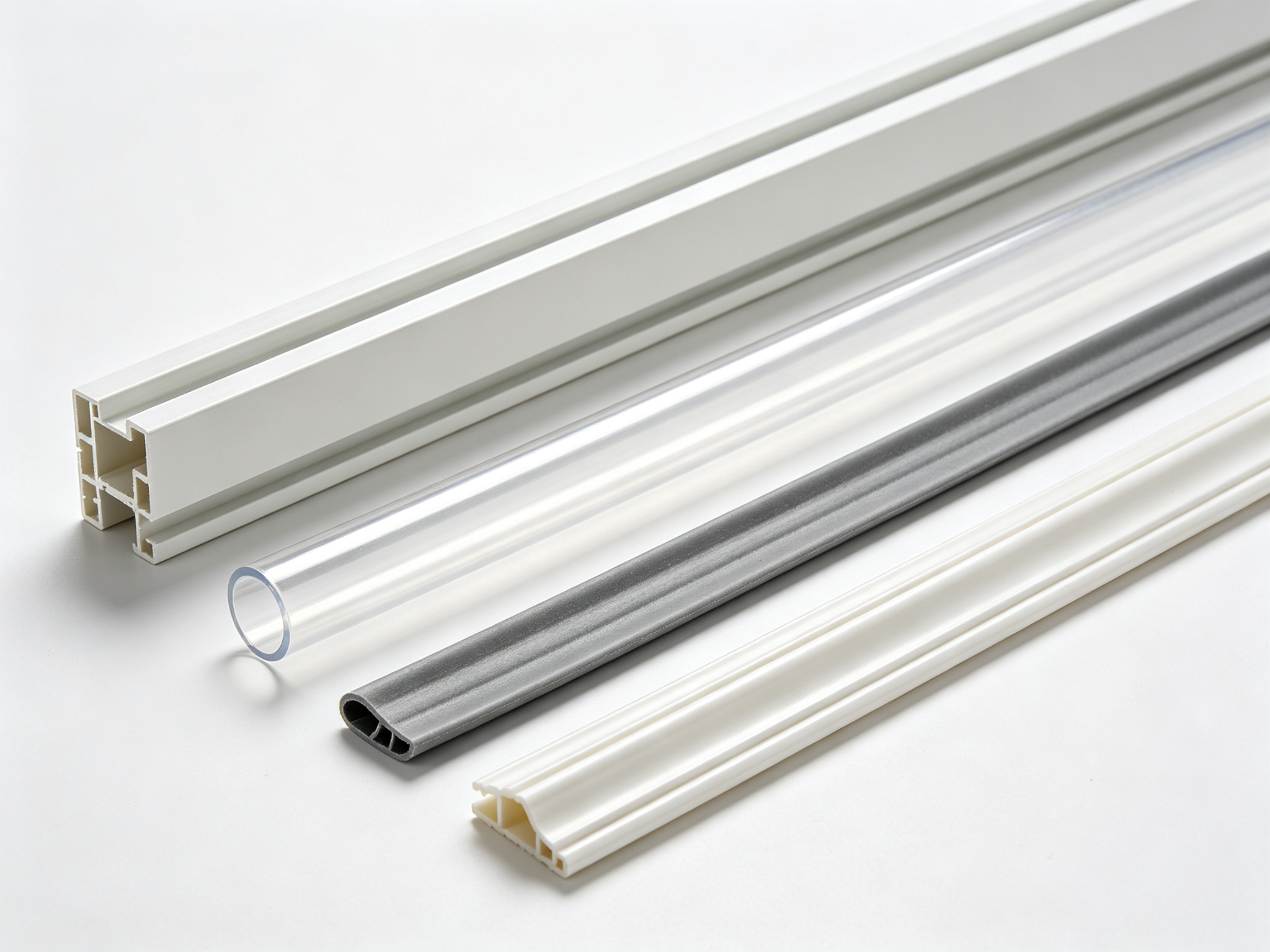
Rigid PVC profiles are rigid continuous-section parts. Common cross-sections include U-channel, J-channel, C-channel, T-section, Z-connectors, H-connectors, edge trim, frames, and mounting clips. They primarily serve structural, enclosing, separating, or protecting functions. Indeed, they represent the most widely used PVC extrusion product in building and industrial applications.
5.2 Flexible PVC Seals
Flexible PVC seals include sealing lips, bulb seals, and edge trim. They can be extruded standalone or co-extruded onto a rigid carrier. The critical dimension for a seal is the sealing lip compression, not the main body geometry. Designers determine lip geometry based on required sealing pressure and mating surface material.
5.3 PVC Tubing
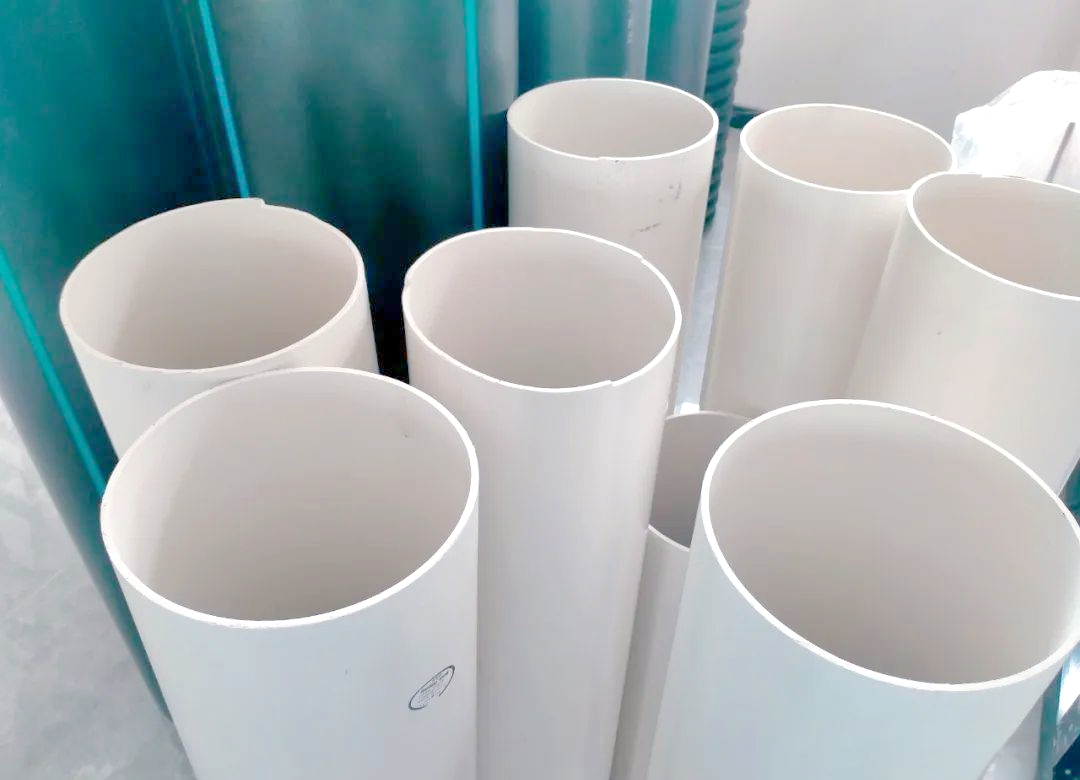
PVC tubing features circular cross-sections with controlled inner diameter and wall thickness. Single-lumen tubes convey fluids or route cables. Meanwhile, multi-lumen tubing (up to four internal cavities) separates independent conductors or fluids. Square and rectangular PVC ducts manage cables and provide edge protection.
5.4 Hollow Cellular Profiles
Hollow cellular profiles are closed sections with internal voids. They increase stiffness, thermal insulation, or sound insulation without adding solid material weight. Window profiles and floor underlay are common examples. Internal webs support the outer walls against vacuum calibration pressure and structural loads during service.
5.5 Co-Extruded PVC Profiles
Co-extrusion processes two or more materials in a single forming pass. Common combinations include flexible sealing lips on rigid carriers, UV-resistant or colored cap layers on low-cost core materials, or soft-touch grip surfaces. Consequently, co-extrusion integrates functional advantages of different materials in one cross-section, eliminating downstream assembly or bonding steps.
6. Process Limitations of PVC Extrusion
The above PVC material behaviors translate into four practical process limitations that require consideration during design and procurement.
Die swell and dimensional drift: Wall thickness, line speed, and melt temperature all affect final product dimensions. First-piece adjustment and sizing are part of tooling development cost. Therefore, one should not assume the first die produces final dimensions.
Die-specific tooling: Extrusion dies and calibrators are designed for specific profiles. Changing wall balance or cross-section geometry typically requires new tooling rather than simple adjustment.
Constant cross-section only: Features that vary along the length require secondary operations or a different process. Extrusion itself can only produce uniform cross-sections.
Long-term property drift: Plasticizer migration and filler distribution change flexible PVC hardness and dimensions over years of service. Even compounds that pass bench tests may drift in real-world use over time.
7. PVC Extrusion Design Guidelines
The following seven key design decisions determine most dimensional risk and tooling development cost. Confirming these points before drawing freeze significantly reduces first-piece rejection and die rework probability.
7.1 Wall Thickness Uniformity
Maintain a single nominal wall thickness throughout the profile whenever possible. If the design requires varying wall thickness, keep the ratio of thickest to thinnest walls near 1.5:1—a conservative industry guideline rather than a hard limit. Thick walls cool more slowly than thin walls. Uneven cooling causes warping and surface sinks. Additionally, long unsupported spans sag under their own weight, requiring planned support spacing.
7.2 Corner Radius
A general extrusion design rule states that internal corner radii should be at least half the wall thickness. Sharp internal corners impede melt flow, concentrate stress, and become crack initiation points. Moreover, larger internal radii not only improve filling but also enhance structural strength of the profile.
7.3 Internal Webs in Hollow Sections
Internal webs in hollow profiles support outer walls against vacuum calibration pressure and in-service structural loads. Web thickness should approach the outer wall thickness. Avoid excessive spans between webs that could cause outer wall sag. Similarly, multi-lumen tubing follows the same principle: leave adequate web material between cavities to maintain circular shape.
7.4 Die Swell Compensation
Die dimensions are intentionally oversized and adjusted during sampling. Do not directly dimension the die to part drawing sizes. Also, do not assume that drawing dimensions equal actual die dimensions. Instead, treat die dimensions as intermediate variables in process development. Finally, remember that final product dimensions are the design target.
7.5 Cooling Path Design
Place thick-wall sections where cooling access is easiest. Thick sections embedded within thin walls remain molten after the outer layer solidifies, pulling the profile out of shape. A rational cooling path design ensures the entire cross-section solidifies as synchronously as possible.
7.6 Co-Extrusion Material Compatibility
In PVC co-extrusion, adjacent materials require compatible processing temperatures and bonding mechanisms. If two PVC grades cannot bond well at the interface, design mechanical interlocks (such as dovetails or barbs). Do not rely on chemical adhesion alone.
7.7 Critical Tolerance Definition
Apply tight tolerances only to functionally mating dimensions. For seals and tubing, specify performance parameters rather than generic outline dimensions: seals require compression load and hardness, while tubing needs inner diameter, wall thickness, and concentricity. Mark critical dimensions and datum points clearly. Furthermore, use looser tolerances for non-functional surfaces—over-tolerancing cosmetic surfaces adds manufacturing cost without improving function.
8. PVC vs. Other Extrusion Materials
When selecting an extrusion material, engineers typically compare PVC against ABS, PE, PP, and TPE/TPU. Each material has different strengths in stiffness, flexibility, weather resistance, chemical resistance, and cost.
The material selection principle is straightforward: first screen candidates based on operating environment (outdoor exposure, chemical exposure, temperature range). Then choose between rigid and flexible PVC grades based on stiffness requirements. When structural rigidity is needed or when moderate flexibility can be tuned via plasticizer content, PVC offers clear advantages in cost and weather resistance. On the contrary, if chemical corrosion is the primary load, PE and PP are more suitable. If flexibility is the core function rather than an added feature, TPE and TPU are better choices.
9. Typical Application Fields of PVC Extrusion
PVC extrusions serve four major application fields, each with different priorities for material performance and tolerances.
9.1 Building and Construction
Rigid PVC window frame profiles, wall panel trim, floor underlay, and exterior siding represent the largest PVC extrusion market. PVC profiles offer excellent weather resistance, dimensional stability, and inherent flame retardancy. They require low maintenance and come in a wide range of colors and surface finishes. Furthermore, co-extrusion applies UV-stabilized cap layers over low-cost PVC cores, further extending outdoor service life.
9.2 Electrical and Cable Management
Rigid PVC electrical conduit, cable trunking, and wiring duct leverage PVC’s inherent flame retardancy and insulating properties. They represent the standard material in electrical installations. Meanwhile, flexible PVC cable insulation and sheathing provide electrical isolation and mechanical protection for wires and cables. PVC’s flame retardancy (UL 94 V-0) gives it an irreplaceable advantage in electrical applications.
9.3 Seals and Trim
Window and door seals, weatherstripping, edge trim, machine guards, and wear strips use flexible PVC where sealing and cushioning are needed. They use rigid PVC where shape retention is required. Consequently, co-extrusion integrates flexible sealing lips with rigid carriers in one profile, eliminating downstream assembly steps.
9.4 Fluid Handling and Consumer Goods
Flexible PVC tubing conveys water, chemical fluids, and pneumatic lines. Automotive interior trim and seals use both rigid and flexible PVC grades. Furniture and display profiles exploit PVC’s wide color range and surface finish options. Furthermore, the modifiability of PVC compounds (adding UV absorbers, flame retardants, impact modifiers) enables adaptation to diverse consumer product requirements.
10. How to Choose a PVC Extrusion Manufacturer
When selecting a PVC extrusion supplier, what truly matters is not the length of their equipment list. What matters is whether the supplier can consistently produce parts that meet your critical dimensional requirements. The following seven evaluation dimensions help screen reliable PVC extrusion partners.
Material and formulation experience: Can the supplier match PVC grades to your operating environment and review UV stabilization, flame retardancy, impact modification, and plasticizer systems during DFM?
Custom die and tooling support: Who designs and manufactures the die, who owns the tooling after project completion, and does the supplier provide complete services from cross-section design through trial run adjustment?
Profile complexity experience: Has the supplier produced similar wall thickness ratios, hollow cross-sections, or co-extruded sealing lips? Request case examples and first-article inspection reports.
Tolerance and inspection capability: Ask which dimensions they measure, what equipment they use, and how they report results. Tolerance capability should be specified for each critical dimension, not as one generic number.
Prototype and production capacity: Do they provide sample lengths before mass production? What output rate and lead time can they maintain at production volume?
Secondary operations capability: Do punching, drilling, welding, and assembly occur under one roof? Integrated secondary processing reduces transportation and handoff costs.
DFM engineering support: Does the engineering team review wall balance, corner radii, and tolerance strategy before die cutting? Free DFM review represents a strong positive signal.
11. PartsMastery Custom PVC Extrusion Services
PartsMastery provides professional custom PVC extrusion services covering rigid PVC profile extrusion, flexible PVC seals, PVC tubing, and co-extruded profiles. When drawings require holes, slots, grooves, or mating surfaces on extruded profiles, PartsMastery also offers CNC secondary machining as a complement. This one-stop delivery covers everything from extrusion to post-processing.
For material selection, PartsMastery offers both rigid and flexible PVC families. Formulations are reviewed item by item against drawing requirements. Various additives tailor specific properties: UV absorbers improve weather resistance, flame-retardant grades meet UL 94 requirements, and impact modifiers enhance toughness. Pigments and surface treatments achieve specific colors and finishes. Furthermore, all formulation decisions occur before die cutting, ensuring product performance meets design requirements from the first article onward.
The complete workflow from drawing upload to first production order follows these steps: upload 2D/3D drawings, confirm material selection and wall balance, design and fabricate extrusion dies and calibrators, extrude sample lengths for trial adjustment, release first article after dimensional inspection, then begin mass production. Critical dimensional tolerances reach ±0.25 mm or better. Actual achievable tolerances are confirmed during DFM review based on cross-section geometry, material grade, and inspection requirements—not inferred from a table alone. All products are inspected under an ISO 9001 quality system, covering cross-section dimensions, cut length, straightness, twist, and surface condition.
Additionally, PartsMastery provides secondary operations for PVC profiles including punching, cutting, heat bending, solvent cementing, and thermal welding. Whether for building window profiles, electrical conduit, sealing gaskets, or custom industrial profiles, PartsMastery delivers a complete solution from DFM review, tooling development, and extrusion production through to post-processing and inspection.
12. Summary
PVC extrusion is a low-tooling-cost, high-efficiency process for producing constant-cross-section parts. The compound formulation determines the vast majority of product performance: hardness, UV resistance, flame retardancy, impact performance, and color all come from the PVC compound. Rigid and flexible PVC belong to the same base polymer, differentiated only by plasticizer content. Consequently, co-extrusion integrates sealing and structural functions in one cross-section, eliminating downstream assembly steps.
However, PVC extrusion offers a narrow process window. Compound formulation, temperature ranges, and cooling curves matter as much as die design for final results. Most dimensional issues trace back to design decisions made before die manufacturing: uneven wall thickness, sharp internal corners, unreasonable cooling paths, or over-toleranced non-critical dimensions. These problems cost the least to resolve before drawings freeze. Through systematic DFM review, rational wall design, and reliable supplier selection, engineers can fully leverage the cost and performance advantages of PVC extrusion to develop high-quality extruded profile products.