






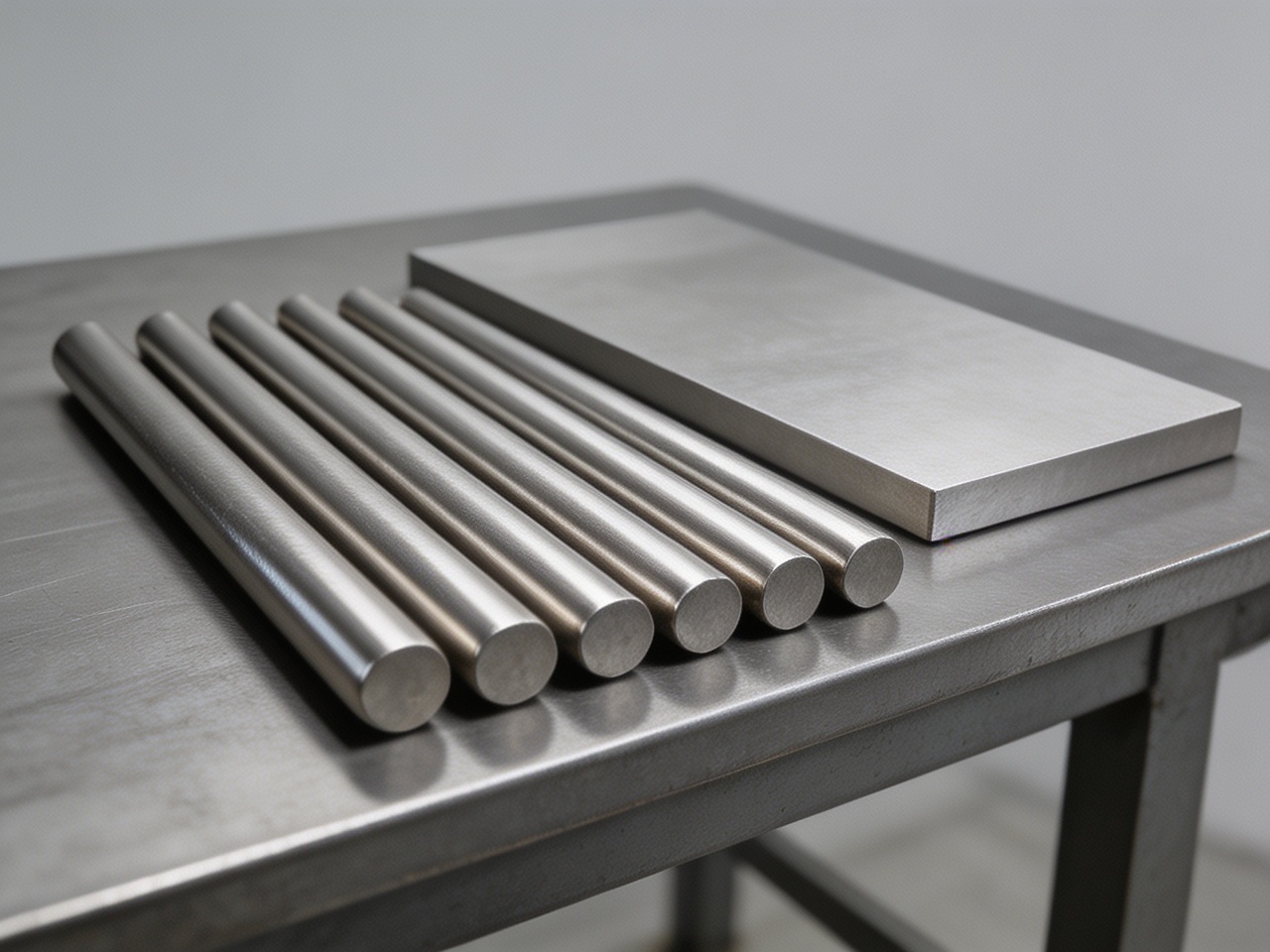
Tungsten (chemical symbol W) ranks as a strategically vital refractory transition metal in the modern industrial landscape. Notably, it stands out for its exceptional high-temperature resistance, ultra-high density and outstanding wear resistance, which makes it an irreplaceable core material across high-end manufacturing, aerospace, defense, electronics and semiconductor sectors. This guide systematically breaks down tungsten’s elemental attributes, performance specifications, material classifications, production processes and real-world applications, and provides a rigorous reference for industrial material selection and engineering design.
1. Fundamental Elemental Characteristics of Tungsten
1.1 Element Definition and Naming Origin
Tungsten is a transition metal with atomic number 74, and its chemical symbol W derives from its historical name “Wolfram” — a term rooted in European mining terminology that has endured as the standard chemical designation for the element.
In industrial practice, “tungsten metal” typically refers to pure tungsten. However, most engineering applications rely on tungsten alloys, tungsten carbide and other tungsten-based derivatives. Engineers must specify material grades accurately during selection to avoid mismatches between material performance and application requirements.
1.2 Mineral Sources and Global Production Distribution
Tungsten does not appear naturally as a free pure metal; instead, miners extract it primarily from two core ore minerals: wolframite and scheelite. Wolframite serves as the traditional primary ore and connects directly to the element’s naming history, while scheelite — identifiable by its ultraviolet fluorescence — has become a growing source of global tungsten supply.
Global tungsten mining and processing capacity remains highly concentrated, and China has held a long-standing dominant position in worldwide production. Furthermore, multiple nations classify tungsten as a critical strategic mineral, so its supply chain stability directly affects the operational continuity of downstream manufacturing industries.
2. Core Performance Parameters and Engineering Value
Tungsten delivers its strongest functional advantages in extreme operating environments. In fact, its defining material properties form the foundation of its irreplaceable role in high-end industrial scenarios.
2.1 Physical and Thermal Properties
Pure tungsten has a density of approximately 19.25 g/cm³ — comparable to gold, roughly 2.5 times that of standard carbon steel and 7 times that of aluminum alloy. As a result, this exceptional density enables high-mass counterweighting within minimal spatial footprints, and engineers choose it first for compact balance components and radiation shielding.
Thermal performance stands as tungsten’s most distinguished advantage. Specifically, it has a melting point of around 3422°C — among the highest of all pure metals — and it also exhibits an extremely low coefficient of thermal expansion, so it retains dimensional stability through repeated thermal cycling. Additionally, its low vapor pressure at elevated temperatures makes it an ideal fit for vacuum furnaces and high-temperature heating element applications.
2.2 Mechanical and Chemical Properties
Pure tungsten delivers high hardness, superior compressive strength and excellent high-temperature strength retention. However, it shows notable brittleness at low temperatures and offers limited impact resistance, so designers limit unreinforced pure tungsten to high-temperature scenarios with no impact loading. Fortunately, alloying and tungsten carbide formulations preserve core performance while improving toughness and machinability.
Chemically, tungsten demonstrates strong resistance to most acids and corrosive media at ambient temperatures. Even so, it will oxidize under high-temperature aerobic conditions, so teams must use protective atmospheres or surface coatings for elevated-temperature deployments.
2.3 Electrical Properties
Tungsten offers moderate-to-good electrical conductivity. Although it does not match the conductivity of copper or silver, its electrical stability at high temperatures far outperforms that of common conductive metals, and it also resists arc erosion and thermal damage effectively. For these reasons, manufacturers use it widely in high-temperature electrodes, electrical contacts and filament components.
| Performance Metric | Typical Value | Engineering Significance |
|---|---|---|
| Material Category | Refractory transition metal | Excels in high-temperature, high-density and high-wear conditions beyond the capability of standard metals |
| Density | ≈19.25 g/cm³ | Delivers high mass in compact volumes, ideal for precision counterweights and radiation shielding |
| Melting Point | ≈3422°C | Among the highest melting points of any pure metal, enabling extreme high-temperature applications |
| Coefficient of Thermal Expansion | Extremely low | Superior dimensional stability under thermal cycling, preserving precision component accuracy |
| Hardness | High (superior in tungsten carbide) | Exceptional wear resistance for cutting tools and friction-exposed components |
| High-Temperature Strength | Excellent | Resists softening and creep at elevated temperatures, maintaining structural integrity |
| Electrical Conductivity | Moderate to good | Reliable electrical performance at high temperatures for electrodes and specialty contacts |
| Corrosion Resistance | Good at room temperature | Chemically stable in most standard environments; protection required for high-temperature oxidizing conditions |
| Machining Difficulty | High | Requires specialized tooling and process control; alloying improves machinability |
3. Performance Comparison: Tungsten vs. Common Engineering Metals
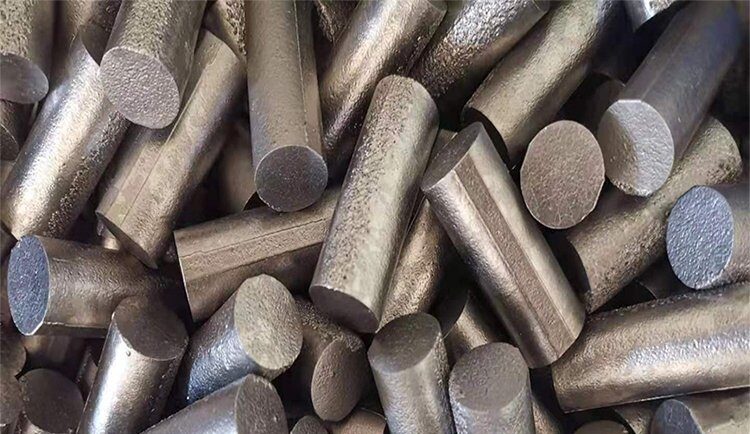
As a specialty refractory metal, tungsten occupies a distinct niche next to general-purpose structural metals. In practice, designers should drive material selection by primary performance requirements:
- Tungsten vs. Carbon Steel: First, tungsten outperforms steel in density, heat resistance and wear resistance. By contrast, steel offers superior toughness, lower cost and better weldability for large structural components. Engineers reserve tungsten only for components that demand extreme density, heat or wear performance.
- Tungsten vs. Aluminum Alloy: Next, aluminum excels at lightweight construction and formability for weight-reduction applications. On the other hand, tungsten’s strengths lie in high density and extreme heat tolerance, which suit compact counterweighting and high-temperature service perfectly.
- Tungsten vs. Titanium Alloy: Titanium earns praise for its high strength-to-weight ratio and corrosion resistance, so it serves as the standard for lightweight aerospace and medical implant components. In comparison, tungsten delivers far greater hardness, melting point and density for non-lightweight extreme environments.
- Tungsten vs. Copper: Copper sets the benchmark for electrical and thermal conductivity in power transmission and thermal management. Meanwhile, tungsten — while less conductive — provides superior arc resistance, heat tolerance and wear performance, and tungsten-copper composites combine the strengths of both materials.
- Tungsten vs. Molybdenum: Finally, both materials classify as refractory metals. Molybdenum offers lower density and better machinability for moderate-temperature furnace components. By comparison, tungsten delivers a higher melting point and greater density for more demanding thermal and high-density applications.
4. Tungsten-Based Material Systems: Classifications and Performance Differences
Pure tungsten accounts for only a limited share of industrial tungsten consumption. Instead, the majority of applications use alloys, compounds and composite formulations, and manufacturers engineer each one for distinct performance profiles.
4.1 Pure Tungsten Materials
Pure tungsten contains minimal trace impurities and delivers maximum high-temperature resistance and thermal stability. Designers specify it for applications where heat resistance takes priority over toughness, including lamp filaments, vacuum furnace heating elements, high-temperature crucibles, evaporation boats and welding electrodes. Its primary limitations include inherent brittleness and high machining difficulty, and it carries an elevated risk of cracking under impact loading.
4.2 High-Density Tungsten Heavy Alloys
Tungsten heavy alloys consist of over 90% tungsten, and manufacturers bond nickel, iron, copper or other elements to the base metal via sintering. As a result, they retain near-pure tungsten density while delivering substantially improved toughness and machinability, so they serve as the dominant material for industrial counterweighting and radiation shielding.
- Tungsten-Nickel-Iron Alloys: This is the most widely used heavy alloy family. It offers balanced density, strength and toughness, and works well for aerospace counterweights, balance masses, kinetic energy components and medical shielding parts.
- Tungsten-Nickel-Copper Alloys: These alloys stand out for their non-magnetic properties, enhanced electrical and thermal conductivity and improved corrosion resistance. Engineers specify them for precision electronic components, non-magnetic shielding devices and specialty environment counterweights.
4.3 Tungsten Carbide
Tungsten carbide is a metallic compound made from tungsten and carbon. Its hardness far exceeds that of pure tungsten metal, and it also offers exceptional wear resistance. For this reason, it forms the foundational material for manufacturing cutting tools and wear-resistant components.
Cemented carbide cutting tools, mining drill bits, stamping dies, wear-resistant nozzles and wear liners all use tungsten carbide as their core substrate. Like pure tungsten, tungsten carbide shows relatively high brittleness; manufacturers balance hardness and toughness through binder ratio optimization and coating technologies.
4.4 Specialty Tungsten Alloys
For extreme operating conditions, manufacturers offer a range of advanced specialty tungsten alloys:
- Tungsten-Rhenium Alloys: Added rhenium enhances high-temperature ductility and thermoelectric performance, so these alloys work well for extreme-temperature thermocouples, aerospace hot-section components and specialty heating elements. However, teams deploy them only in niche applications due to rhenium’s high cost.
- Tungsten-Silver / Tungsten-Copper Composites: These materials combine tungsten’s heat and arc resistance with silver or copper’s high electrical and thermal conductivity. Consequently, they serve as core materials for high-voltage electrical contacts, discharge electrodes and semiconductor heat sinks.
- Tungsten-Tantalum Alloys: This dual refractory metal formulation delivers exceptional high-temperature strength and corrosion resistance. Engineers specify it for extreme-environment components in aerospace and nuclear energy applications.
5. Manufacturing and Precision Machining of Tungsten Materials
Tungsten has an extremely high melting point and exceptional hardness, so it prevents the use of conventional smelting and casting processes. For this reason, production requires specialized forming and fabrication routes.
5.1 Powder Metallurgy and Sintering
Powder metallurgy serves as the foundational production process for tungsten materials. First, refiners chemically process tungsten ore into tungsten oxide, then reduce it to tungsten powder, compact it via die pressing or isostatic pressing, and finally sinter it at high temperature into fully dense billets, bars, plates and semi-finished forms.
The same process works for tungsten alloys and tungsten carbide production as well. Importantly, sintering parameters directly determine final material density, grain structure and mechanical performance.
5.2 Precision Cutting and 5-Axis CNC Machining
Machining tungsten and its alloys poses significantly greater challenges than machining standard metals. Specifically, operations require cemented carbide or diamond tooling, low feed rates, controlled cutting speeds and rigid workholding with vibration damping, all to prevent chipping and cracking from stress concentration.
For complex geometries, 5-axis CNC machining cuts down on setups and maintains geometric accuracy across multi-sided features. Additionally, tungsten-nickel-iron and similar alloys offer better machinability than pure tungsten, so they support more intricate component designs.
5.3 Grinding and Electrical Discharge Machining
Grinding serves as the primary finishing process for high-precision tungsten components, and it delivers tight geometric tolerances and low surface roughness.
For complex cavities, micro-features and geometries that conventional cutting cannot reach, Electrical Discharge Machining (EDM) achieves stress-free material removal via controlled electrical erosion. As such, it acts as a critical enabling technology for precision tungsten components.
5.4 Surface Treatment and Quality Control
Surface quality directly affects tungsten components’ wear resistance, electrical performance and corrosion behavior. Available finishing options include lapping, polishing, precision cleaning and the application of specialty functional coatings.
Comprehensive quality inspection covers dimensional accuracy, surface roughness, density verification, hardness testing and material certification. In this way, it ensures full compliance with rigorous industrial specifications.
6. Key Industrial Application Sectors
Manufacturers deploy tungsten mainly in extreme operating environments where conventional metals cannot perform. Its primary application areas include:
6.1 Cutting Tools and Wear Components
Tungsten carbide forms the backbone of this sector. Cemented carbide end mills, turning inserts, drills, reamers and mining tooling all rely on tungsten carbide’s extreme hardness and wear resistance. Overall, it acts as a core enabling material for the machining, mining and die manufacturing industries.
6.2 Aerospace and Defense
Thanks to its high density and extreme environment stability, manufacturers use tungsten and its alloys in aircraft balance weights, radiation shielding assemblies, kinetic energy penetrators and high-temperature hot-section components. Furthermore, its compact mass-to-volume ratio enables precision counterweighting within constrained aerospace envelopes, and it also withstands flight-induced thermal and mechanical stresses effectively.
6.3 Electronics and Electrical Engineering
Designers specify tungsten materials for incandescent filaments, high-temperature electrodes, high-voltage contacts, semiconductor package heat sinks and vacuum tube components. Meanwhile, tungsten-copper and tungsten-silver composites dominate high-voltage switching and EDM electrode applications, as they balance electrical conductivity with arc erosion resistance.
6.4 Medical Imaging and Radiation Protection
Tungsten’s high density delivers excellent X-ray and gamma-ray attenuation. For this reason, it serves as a lead-alternative material for medical collimators, shielding blocks and radiotherapy positioning components, and it offers non-toxic, space-efficient shielding for CT, radiation therapy and nuclear medicine equipment.
6.5 High-Temperature Industrial Furnace Systems
Pure tungsten and tungsten alloys form critical components of vacuum and controlled-atmosphere high-temperature furnaces, including heating elements, support structures, crucibles and heat treatment fixtures. In particular, they provide reliable long-term service at temperatures of thousands of degrees Celsius.
6.6 Precision Counterweight and Balance Systems
Engineers prefer tungsten heavy alloys as counterweight materials for precision instruments, robotics, motor rotors and aerospace systems. Because of their exceptional density, they enable precise mass tuning with minimal volume, which in turn optimizes equipment packaging and dynamic balance performance.
7. Market Supply Dynamics and Industrial Material Selection Guidelines
7.1 Global Supply Chain and Pricing Dynamics
As a strategic mineral, tungsten has highly concentrated global production, and regulatory policy and production planning strongly influence overall supply. In addition, ore availability, cemented carbide demand, energy costs and geopolitical factors all drive price volatility.
Cost structures vary significantly across product forms — powder, bar, plate and custom-machined components — and finished parts carry additional costs for machining loss, tool wear and inspection. Moreover, tungsten scrap recycling acts as a meaningful supply chain supplement. Spent cemented carbide and industrial tungsten offcuts retain high recovery value, so they reduce primary ore dependency and lower overall material costs.
7.2 Core Principles for Industrial Material Selection
Designers should base tungsten material selection on primary functional requirements to avoid unnecessary costs from performance redundancy. The core principles include:
- Density-driven selection: First, choose tungsten heavy alloys for compact counterweight and radiation shielding applications, as they balance density with machinability. Engineers reserve pure tungsten only for maximum density requirements.
- Temperature-driven selection: Second, prioritize pure tungsten or tungsten-rhenium alloys for extreme high-temperature service, and pair them with appropriate protective atmospheres to prevent oxidation. For moderate temperatures, by contrast, molybdenum or standard tungsten alloys may offer better cost efficiency.
- Wear-driven selection: Third, select tungsten carbide for cutting and high-abrasion applications, and adjust binder content and coating formulations to match specific impact loading conditions.
- Machinability and cost-driven selection: Fourth, prefer tungsten alloys over pure tungsten to reduce machining difficulty and lower scrap rates. Additionally, optimize manufacturability by avoiding sharp corners, thin walls and deep, narrow grooves in component design.
- Supply chain-driven selection: Finally, verify material grade availability, lead times and traceability early in the design phase. For critical programs, plan alternate suppliers and maintain safety stock accordingly.
8. Frequently Asked Questions
Q1: Is tungsten a precious metal? What is its general price level?
A: Tungsten does not classify as a precious metal. Even so, its complex production process and high industrial value result in significantly higher pricing than common structural metals such as steel, aluminum and copper. Ore grade, purity, alloy composition and machining complexity all influence final costs, and custom precision components carry an additional price premium.
Q2: Is tungsten stronger than titanium?
A: You must evaluate “strength” by specific metrics. On one hand, tungsten exceeds titanium in hardness, compressive strength and high-temperature strength. On the other hand, titanium delivers superior specific strength (strength-to-weight ratio) and tensile toughness. Engineers prefer titanium for lightweight structures, while they specify tungsten for high-density, high-wear and ultra-high-temperature applications.
Q3: Is tungsten a ferrous metal?
A: No. Ferrous metals are iron-based materials including carbon steel, alloy steel, stainless steel and cast iron, and tungsten is an independent transition metal element. Although manufacturers add tungsten to steel as an alloying element to enhance hardness and heat resistance, pure tungsten and tungsten-based alloys do not count as ferrous materials.
Q4: Is tungsten a metal or a metalloid?
A: Tungsten is a definitive transition metal. Specifically, it exhibits all characteristic metallic properties — metallic luster, good electrical and thermal conductivity, and high-temperature ductility — so it does not classify as a nonmetal or metalloid.
Conclusion
Tungsten remains an indispensable high-performance refractory metal in the modern industrial ecosystem. Its unmatched melting point, density and wear resistance solve material challenges that conventional engineering materials cannot address. From general-purpose cutting tools to advanced aerospace components, and from electronics manufacturing to medical radiation protection, the application boundaries of tungsten materials continue to expand year by year.
PartsMastery delivers custom precision component manufacturing services for high-demand industrial sectors. We provide precision CNC machining, 5-axis machining, EDM and grinding services for tungsten and tungsten alloys, stainless steel, titanium alloys, engineering plastics and more, and we fully support low-volume custom production. With mature process expertise and rigorous quality control for challenging tungsten materials, we offer comprehensive support — from material selection guidance and manufacturability assessment all the way to production-ready custom component delivery.