




China OEM Die: Your Gateway to Custom Tooling and Brand Ownership
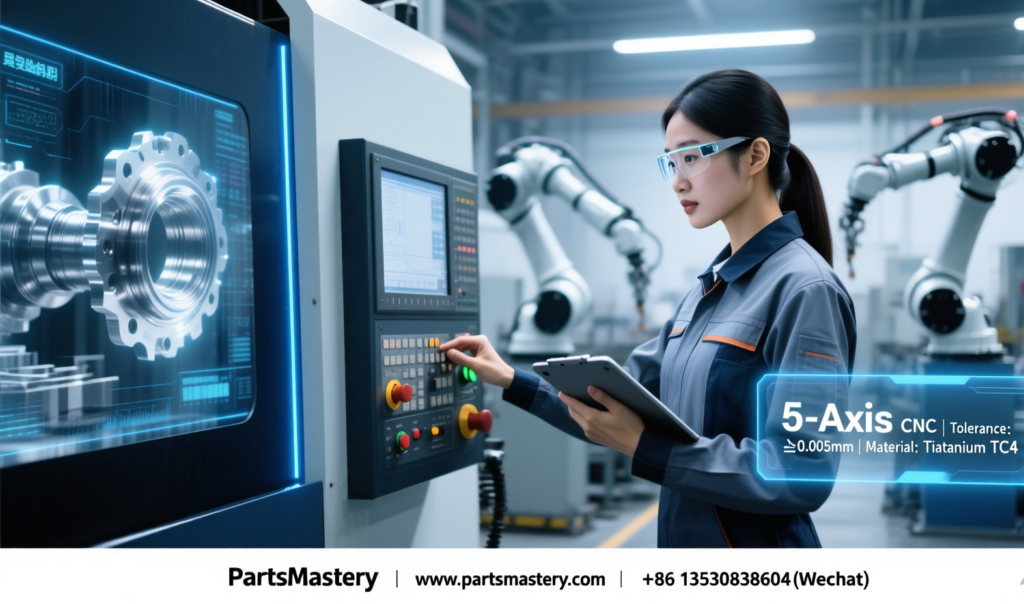
In the global manufacturing landscape, China OEM die services have become a cornerstone for businesses that want high‑quality tooling without the prohibitive costs of in‑house development. OEM, or Original Equipment Manufacturing, means that a Chinese die maker produces dies according to your technical specifications, and you retain full ownership of the design, the tooling, and the resulting parts. This model gives you complete control over your supply chain while leveraging China’s manufacturing efficiency.
This guide explains everything you need to know about OEM die manufacturing in China—its advantages, how the process works, quality considerations, and why partnering with the right supplier like PartsMastery can transform your production capabilities.
What Does “China OEM Die” Mean?
An OEM die is a custom‑built tool—such as a stamping die, injection mold, or die‑casting die—manufactured by a Chinese supplier but owned and branded by you, the buyer. Unlike off‑the‑shelf or generic tooling, an OEM die is exclusively yours. You control the design, the steel specifications, the heat treatment, and the final inspection criteria. The Chinese factory acts as your contract manufacturer, producing the die to your exact requirements and often also producing production parts under a separate agreement.
This model is popular among international companies because it allows them to:
-
Protect intellectual property – The die design and part geometry remain your property.
-
Ensure consistent quality – You specify every tolerance, surface finish, and material.
-
Scale production efficiently – Once the OEM die is validated, you can run high volumes or authorize the factory to run parts on your behalf.
-
Reduce capital expenditure – You avoid investing in your own toolroom and machining equipment.
Why Choose China for OEM Die Manufacturing?
China has earned its reputation as the world’s preferred destination for OEM die manufacturing. Here’s why:
1. Cost Advantage Without Compromising Quality
Chinese OEM die makers typically charge 30‑50% less than their European, American, or Japanese counterparts. The savings come from lower labor costs, efficient supply chains, and economies of scale. Yet, top‑tier Chinese factories use the same CNC machines (5‑axis, high‑speed milling), EDM equipment (Sodick, Mitsubishi), and inspection tools (CMM, optical comparators) as any Western shop.
2. Vast Engineering Talent Pool
China produces thousands of mechanical engineers and tooling specialists every year. Many have decades of hands‑on experience in industries ranging from automotive to medical devices. They are adept at DFM (Design for Manufacturability) analysis, mold flow simulation, and solving complex tooling challenges.
3. Fast Lead Times
Thanks to well‑organized production floors and round‑the‑clock shifts, Chinese OEM die factories can deliver prototype tooling in 2‑4 weeks and production tooling in 4‑8 weeks. Rush services can shorten these times further.
4. Integrated Supply Chain
From steel mills and heat treatment plants to standard component suppliers (guide pins, bushings, hot runners), everything is available locally. This integration reduces procurement lead times and lowers costs.
5. Export Expertise
Major Chinese OEM die manufacturers are experienced in international trade. They understand export packing, customs documentation, and logistics. Many have dedicated teams that speak English, German, or Japanese, ensuring smooth communication.
The China OEM Die Manufacturing Process
A typical OEM die project follows a structured workflow. When you work with a professional supplier like PartsMastery, you can expect the following steps:
Step 1: Requirement Definition
You provide your part drawings (2D) or CAD models (3D), along with specifications such as:
-
Material type (e.g., DC01 steel, ABS plastic, ADC12 aluminum)
-
Production volume (prototype, pilot run, mass production)
-
Tolerances and surface finish requirements
-
Press or injection machine details (tonnage, stroke, mounting dimensions)
Step 2: DFM Analysis and Design
The OEM die maker performs a Design for Manufacturability review. Any potential issues—such as insufficient draft angles, sharp corners that cause stress risers, or non‑uniform wall thickness—are flagged and discussed. After your approval, detailed die design begins using CAD software (UG/NX, SolidWorks, or Cimatron). For injection molds, mold flow analysis predicts filling, cooling, and warpage.
Step 3: Steel Selection and Procurement
Based on your volume and material, the appropriate steel grade is selected:
-
Low volume (<50,000 shots): P20, 718H
-
Medium volume (50,000‑500,000): D2, A2, S7
-
High volume (>500,000): H13, M2, powder metallurgy steels
Certificates of analysis are provided for full traceability.
Step 4: Precision Machining and Heat Treatment
CNC machining, wire EDM, sinker EDM, and grinding create the die components. Heat treatment (vacuum hardening, nitriding) is applied according to the material grade. Surface coatings (TiN, CrN, DLC) can be added to improve wear resistance and release properties.
Step 5: Assembly and Try‑Out
All components are assembled, and the complete die is mounted on a try‑out press or injection machine. Sample parts are produced and measured. Adjustments are made until the parts meet your print. A first‑article inspection (FAI) report documents all critical dimensions.
Step 6: Approval and Shipment
You receive sample parts (often via courier) and the FAI report. Once you approve, the die is disassembled (if needed), coated with rust preventive, and packed in a wooden crate. The supplier provides:
-
Die maintenance manual
-
Spare parts list (including part numbers)
-
Material and heat treatment certificates
-
Try‑out video or photos
Step 7: After‑Sales Support
A reliable OEM partner offers ongoing support, including spare parts, repair services, and design modifications for future revisions.
Industries That Rely on China OEM Dies
Almost any sector that needs custom metal or plastic parts benefits from China OEM die services:
-
Automotive: Body panels, brackets, engine components, interior trim.
-
Consumer electronics: Smartphone frames, laptop housings, connector shells.
-
Medical devices: Surgical instrument handles, syringe bodies, implantable device components.
-
Home appliances: Refrigerator liners, washing machine drums, AC grilles.
-
Industrial machinery: Gear blanks, pump housings, valve bodies.
-
Aerospace: Brackets, clips, interior fittings (non‑critical structural parts).
Quality Assurance for OEM Dies
When you invest in a China OEM die, quality assurance is paramount. Reputable suppliers follow strict protocols:
-
ISO 9001:2015 (basic quality management) and often IATF 16949 (automotive) or ISO 13485 (medical)
-
Incoming inspection of raw materials and purchased components
-
In‑process inspection using CMM, optical comparators, and precision gauges
-
Final inspection including dimensional report, hardness test, and try‑out sample measurement
-
Documentation package that provides full traceability
Some suppliers also offer video inspections or live streaming of the try‑out process, so you can witness the results remotely.
Intellectual Property Protection for OEM Dies
One concern businesses have about OEM manufacturing in China is intellectual property (IP) protection. While risks exist, you can minimize them by:
-
Signing a non‑disclosure agreement (NDA) and a die ownership contract.
-
Working with established suppliers who have a track record of respecting IP.
-
Registering your design or patent in China (if the volume justifies the cost).
-
Splitting the tooling components across multiple suppliers (for very sensitive projects).
PartsMastery takes IP protection seriously. We sign clear agreements that state the die remains your property, and we never reuse your designs for other clients.
Cost Structure of China OEM Dies
The cost of an OEM die depends on:
-
Complexity (number of cavities, slides, lifters, etc.)
-
Size (larger dies require more steel and machining time)
-
Steel grade (premium steels cost more but offer longer life)
-
Tolerances (tighter tolerances increase machining and inspection time)
-
Surface finish (mirror finish or texturing adds cost)
Typical ranges: simple blanking dies 3,000‑6,000; progressive dies 10,000‑50,000; complex injection molds 8,000‑80,000. Always request a detailed breakdown.
Why PartsMastery Is Your Ideal China OEM Die Partner
Choosing the right OEM partner is critical to your success. PartsMastery combines the best of Chinese manufacturing with Western standards of communication, quality, and reliability. We offer:
-
End‑to‑end service – From DFM analysis to final sampling and after‑sales support.
-
Full transparency – Regular photo/video updates, inspection reports, and open dialogue.
-
IP protection – Strict confidentiality and die ownership agreements.
-
Flexible volumes – Whether you need one prototype die or a hundred production tools.
-
Responsive communication – English‑speaking project managers answer your questions promptly.
When you choose PartsMastery for your China OEM die, you are not just buying a tool—you are building a manufacturing partnership that scales with your business.
Ready to own your custom die?
📞 Phone / WhatsApp / WeChat: +86 13530838604
🌐 Website: https://partsmastery.com
Contact PartsMastery today. Let us manufacture your OEM die with the precision, care, and professionalism your brand deserves.